
To find what wine goes with your meal, focus on balance. The best wine pairing matches the wine's intensity to the food's richness, using flavors that either complement or contrast. A bold Cabernet Sauvignon, for example, pairs with steak because its structure stands up to the rich meat, while a crisp Sauvignon Blanc cuts through a creamy sauce. This guide provides the core principles for making confident wine choices.
Your Go-To Guide for Perfect Wine Pairings
Choosing the right wine shouldn't be complicated, whether you're at a restaurant or a store. The goal is simple: find a wine that makes your food taste better, and food that makes your wine taste better. A perfect match creates an experience greater than the sum of its parts.
Think of a bold Cabernet Sauvignon with a juicy steak, the wine's structure complements the rich meat. Or consider a crisp Sauvignon Blanc that cuts through a creamy pasta sauce, refreshing your palate with each sip. We'll explore the fundamentals behind these great pairings, helping you move from memorizing rules to making intuitive choices.
Why Pairing Matters to Wine Drinkers
The art of pairing has moved from fine dining to everyday life. A recent Wine Market Council survey revealed that 67% of wine consumers actively consider food pairings when buying a bottle, highlighting how important the right match has become.
The best wine pairing is the one you enjoy the most. While there are classic guidelines that work beautifully, your personal preference is always the most important factor in the equation.
When you need an instant, personalized recommendation, technology can help. An AI tool like Sommy can scan a menu or wine list to provide tailored suggestions on the spot. It acts like a personal sommelier, removing the guesswork from your decision. For a deeper look at pairing principles, our complete wine pairing guide builds on the concepts discussed here.
Understanding the Fundamentals of Wine Pairing
To master the question, "what wine goes with what?" you need to understand the why behind the match. It’s less about strict rules and more about how wine and food interact on a sensory level. The core concept is balance, where neither the food nor the wine overpowers the other.
This balance is achieved by considering five key elements in every bottle of wine. Understanding these building blocks will give you the confidence to create your own memorable pairings.
The Five Pillars of a Great Wine Pairing
A wine’s components are the tools for building a perfect match. Each characteristic plays a distinct role in how the wine tastes and interacts with the ingredients on your plate.
These are the five most important characteristics to pay attention to:
- Acidity: The tart, mouth-watering quality in wine. Acidity is a powerful tool against richness, acting like a squeeze of lemon on grilled fish. It cuts through fat, cleanses the palate, and brightens the food’s flavors.
- Tannin: Primarily in red wines, tannins create a drying sensation in your mouth. Tannins bind with fat and protein, which is why a high-tannin Cabernet Sauvignon is a classic match for a rich steak. The fat softens the tannins, while the tannins cleanse the palate.
- Sweetness: A wine’s sweetness (or dryness) is excellent for balancing spice and salt. A slightly sweet wine, like an off-dry Riesling, soothes the heat of spicy Thai or Indian food, allowing other flavors to emerge.
- Body: This refers to how heavy or light the wine feels. A light-bodied wine feels like skim milk, while a full-bodied wine is more like whole milk. Match the wine’s body to the weight of the dish: a delicate fish calls for a light-bodied wine, while a hearty stew needs something full-bodied.
- Aroma:The wine's scent profile (fruity, earthy, herbal, or floral) can either complement or contrast the food's flavors to create a more complex experience.An earthy Pinot Noir with a mushroom dish is a classic example of a complementary aroma pairing.
This diagram helps visualize how these elements work together to achieve balance.
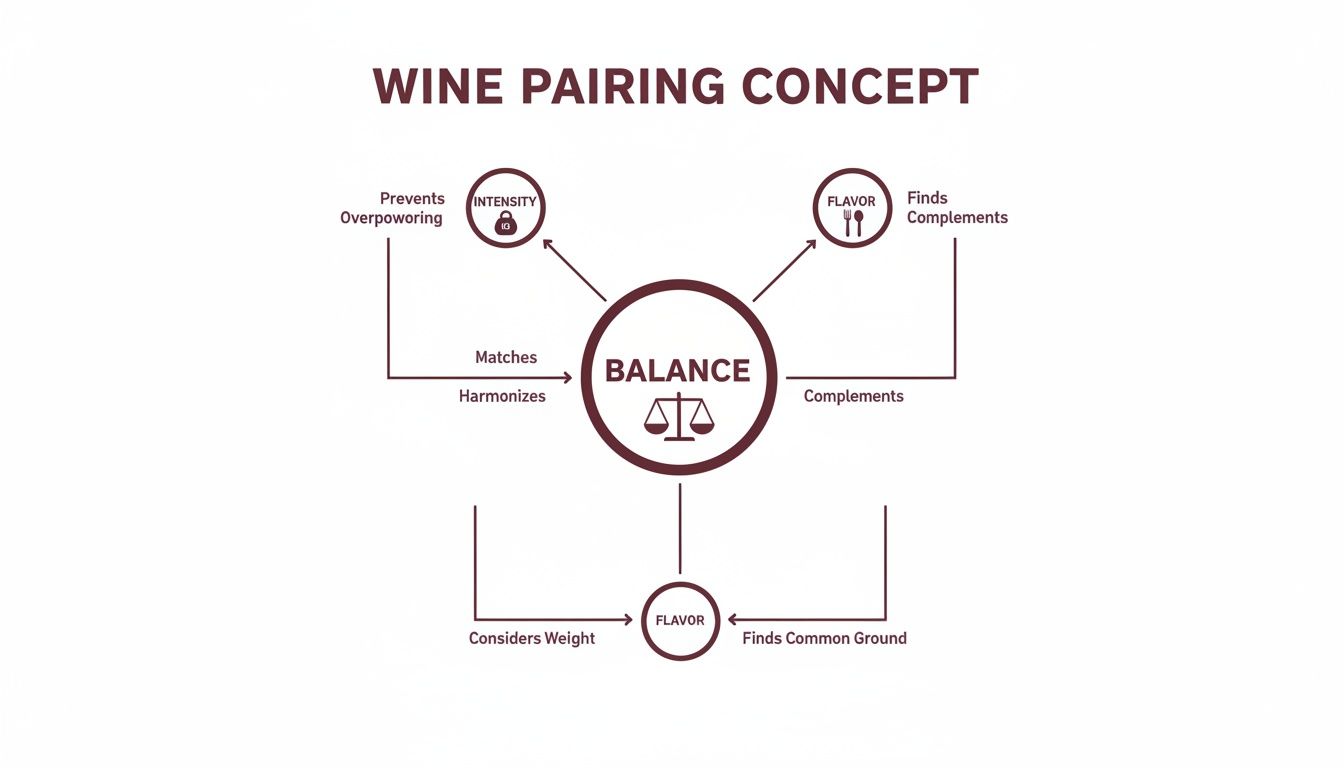
The goal is to align the intensity and flavor profiles of both the wine and the food so they exist in harmony.
Putting It All Together in Practice
Once you start identifying these elements in wine, you can make educated pairing decisions. For a creamy Alfredo pasta, you'll want a wine with high acidity, like a crisp Pinot Grigio, to cut through the richness.
For a deeper dive, our guide explains in more detail how to match wine with food and gives you more real-world examples for common dishes.
The key takeaway is to think in terms of either complementary or contrasting pairings. A complementary pairing matches similar flavors (like an earthy Pinot Noir with a mushroom dish), while a contrasting pairing uses opposing elements to create balance (like that sweet Riesling with spicy food).
This foundational knowledge is your starting point. It’s what will help you confidently answer "what wine goes with this?" in any situation.
Matching Wine With Your Favorite Dishes
With the principles of acidity, tannin, and body in mind, let's apply them to real food. Understanding why classic pairings work will empower you to choose a bottle with confidence, whether you're grilling, roasting, or ordering takeout. This knowledge transforms the question of "what wine goes with dinner?" into an enjoyable puzzle.
Let's explore a few iconic matchups to see how these concepts click.
Classic Pairings and Why They Work
Some food and wine combinations are timeless because they create an experience more delicious than either element could be alone. Let's break down a few legendary duos.
Cabernet Sauvignon with Grilled Steak
This is a universally known pairing for a reason. A grilled steak is rich in fat and protein, and the high tannins in a bold Cabernet Sauvignon provide the perfect counterbalance. The wine's structure cuts through the steak's richness, while the fat softens the wine’s tannins, making it feel smoother and allowing its fruit flavors to shine. For a deeper look at this match, see our guide on the best wine for a steak dinner.
Pinot Noir with Earthy Mushroom Dishes
This pairing is all about complementary flavors. Pinot Noir often has a savory, earthy character alongside its red fruit notes, reminiscent of a forest floor. When paired with a mushroom risotto or grilled portobellos, these similar profiles amplify each other, creating a deep and cohesive flavor experience.
Balancing Spice and Creaminess
Beyond red meat, the principles of acidity and sweetness are crucial, especially with spicy cuisines or creamy sauces.
Riesling with Spicy Thai Food
Spicy food can overwhelm a dry, high-alcohol wine, accentuating only the heat. An off-dry Riesling is the perfect solution. Its residual sugar cools the chili heat, while its high acidity keeps the pairing fresh and balanced. This is a classic example of a contrasting pairing that creates harmony.
Chardonnay with Roasted Chicken
Chardonnay and roasted chicken is a global favorite. A creamy, oaked Chardonnay often has a buttery texture and notes of vanilla that beautifully mirror the flavors of a golden-brown roasted bird. The wine's medium-to-full body matches the weight of the chicken, resulting in a seamless and satisfying meal.
Chardonnay's magic with poultry isn't just a hunch. An analysis of 50 million user ratings revealed that 35% of global consumers named it their top choice for chicken or turkey, a trend that really took off in California back in the 1970s.
Whether you stick to classics or experiment, considering these simple interactions will guide you toward a great choice. When you're facing a restaurant menu, a tool like Sommy can do the work for you, finding the ideal match on the list for your chosen dish.
How to Navigate Real-World Pairing Situations
Knowing the theory is one thing, but applying it in a busy grocery store or at a restaurant with friends is another. The secret is that you don't need to be a sommelier to succeed. A few simple strategies can help you pick a great bottle with confidence, making the meal better without the stress.
Decoding the Restaurant Wine List
A long restaurant wine list can be intimidating. However, you can simplify it by starting with your food choice and working backward.
First, consider the main flavors and weight of your dish. Is it a light, zesty fish or a rich, savory steak? This single question can eliminate half the list, directing you toward either a lighter-bodied white or a more structured red. Our guide on how to read a wine list offers more detailed strategies for this scenario.
Next, look for pairings the menu already suggests or ask for the house specialty. Restaurants design their wine lists to complement their food, making these options safe and often delicious choices.
Choosing a Crowd-Pleasing Wine
For dinner parties where guests are eating different dishes, you need a versatile "bridge" wine that pairs well with a variety of foods.
Look for wines with these key characteristics:
- Medium-bodied: Not too light or too heavy.
- High in acidity: To keep the wine fresh and food-friendly.
- Low to moderate in tannin (if red): To avoid overpowering delicate dishes.
Dry Rosé, crisp Sauvignon Blanc, or a light-bodied Pinot Noir are excellent choices. These wines are adaptable and pair well with everything from salads and chicken to lighter pork dishes.
Don’t be afraid to pull out your phone. A quick scan of a wine list with an app like Sommy gives you instant recommendations based on what everyone at the table is eating. It turns a group puzzle into a simple, confident choice right in your hands.
Finding Value at the Grocery Store
The grocery store wine aisle offers great value if you know where to look. To find an excellent pairing without a high price tag, explore lesser-known regions that produce wines in a similar style to their famous counterparts. Instead of an expensive Sancerre from France, try a Sauvignon Blanc from Chile or South Africa.
Another strategy is to choose famously food-friendly grapes. A Spanish Verdejo offers the bright acidity needed for seafood, while an Italian Barbera is a versatile red that works with everything from pizza to a Sunday roast. These bottles consistently deliver quality far above their price.
Common Pairing Mistakes You Can Easily Avoid
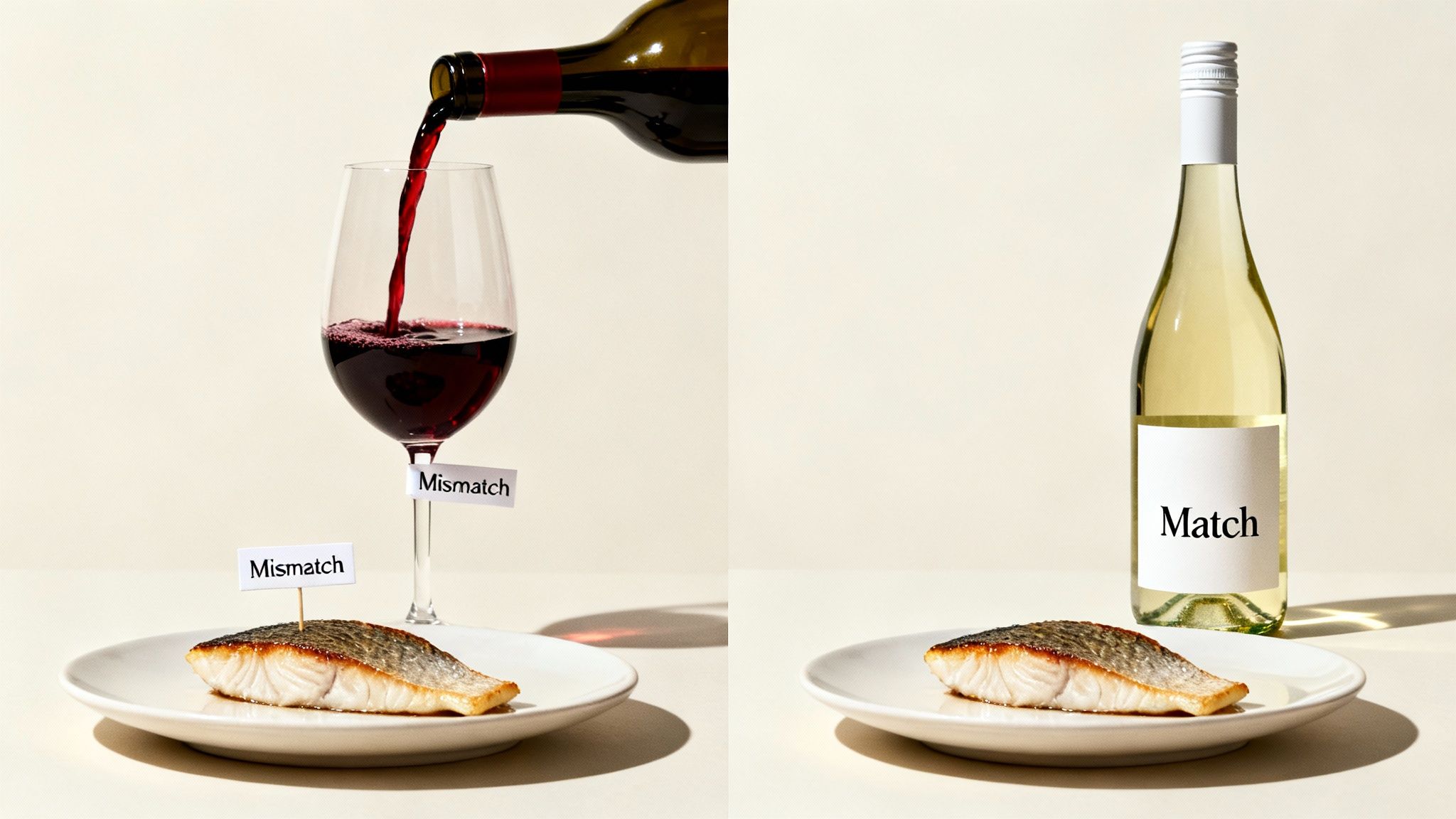
Learning what not to do is one of the fastest ways to improve your pairing skills. By avoiding a few common pitfalls, you can ensure your food and wine elevate each other nearly every time.
A classic mistake is pairing a big, tannic red wine like Cabernet Sauvignon with delicate fish. The tannins in the wine clash with fish oils, creating an unpleasant metallic aftertaste that ruins both the wine and the meal.
Dessert is another tricky area. Serving a dry wine with a sweet dessert is a common error; the sugar in the food makes the wine taste thin and sour. A simple rule to remember is that your dessert wine should always be sweeter than the dessert itself. This creates harmony rather than a competition on your palate.
Overwhelming Subtle Dishes
A powerful, full-bodied wine can easily overpower a light, elegant dish. Imagine pairing a big, oaky Chardonnay with a delicate sole meunière: the wine would completely dominate the fish. The goal is balance, not a knockout.
To avoid this, match the wine’s intensity to the food’s weight:
- Light dishes like salads or poached fish require light-bodied wines like Pinot Grigio or Sauvignon Blanc.
- Hearty dishes like braised short ribs or rich lasagna need a full-bodied wine like Syrah or Merlot that can stand up to their intensity.
This simple check ensures that neither the food nor the wine is overwhelmed.
Clashing with High-Acid Foods
Certain ingredients, especially high-acid foods, can be challenging to pair. A salad with a sharp vinaigrette or a dish with a lot of lemon can make most wines taste flat and lifeless.
The secret is to fight fire with fire. Your wine needs to have an equal or higher level of acidity than your food. This is why a zesty Sauvignon Blanc sings next to a goat cheese salad with citrus. Its own bright acidity is up for the challenge.
By learning to avoid these few classic blunders, you’ll find your pairing success rate goes through the roof. It’s not about memorizing a thousand rules, but about understanding a few key interactions that can make or break a great meal.
Your Wine Pairing Questions, Answered
Once you understand the basics, practical questions arise. What do you do in complex situations, like a dinner party with multiple dishes or when facing a vast selection of bottles? Let's address some of the most common pairing questions.
What’s the Single Most Food-Friendly Wine I Can Buy?
While no single bottle works with every dish, some wines are incredibly versatile and rarely create a bad pairing.
For red wine lovers, Pinot Noir is an excellent choice. Its bright acidity, gentle tannins, and earthy red fruit notes allow it to pair well with a wide range of foods, from roasted chicken and salmon to mushroom risotto.
For white wines, a dry Riesling is the champion of flexibility. Its zippy acidity and aromatic profile can cut through rich sauces, cool down spicy food, and complement pork or poultry. A good dry Rosé is another great all-rounder, bridging the gap between red and white.
How Do I Pick One Wine When Everyone’s Eating Something Different?
This is a common dinner party challenge. When your guests order steak, fish, and salad, the solution is to choose a "bridge" wine.
A bridge wine is agreeable and doesn't steal the show. Look for something medium-bodied with good acidity, avoiding heavy tannins or oak that could overpower lighter dishes.
Here are a few safe bets:
- For reds: A French Beaujolais offers juicy red fruit without a heavy structure. A younger Spanish Tempranillo (like a Rioja Crianza) also works well.
- For whites: An unoaked Chardonnay or a Pinot Blanc provides enough texture without the polarizing buttery notes that can overwhelm delicate meals.
These wines are diplomatic, pairing well with a steak without drowning out a piece of fish.
Does My Wine Really Need to Be More Acidic Than My Food?
Yes, absolutely. If you remember only one rule, make it this one. It’s the key to pairings that feel fresh and vibrant.
When the wine has higher acidity than the food, each sip cleanses your palate, preparing you for the next bite. The experience is crisp and bright.
However, when the food is more acidic than the wine, like a salad with a sharp vinaigrette, it makes the wine taste flat and lifeless. The food’s aggressive acidity strips all the vibrancy from the wine.
This is why high-acid wines like Sauvignon Blanc are such successful pairings for so many foods. Ensuring your wine can at least match the acidity of your dish is a reliable path to success.
What's the Best Way to Figure Out My Own Pairing Tastes?
The best way to discover your preferences is to experiment, pay attention, and trust your palate.
Start with classic pairings to understand why they work, then begin to experiment. When you try a new combination, take a moment to analyze it. How did the food change the wine? How did the wine affect the food? Taking brief notes will help you build your own internal taste map.
Using a journal or an app like Sommy can be a game-changer. By logging what you drink with what you eat, you can create a personal playbook of what works for you. Sommy uses this information to suggest new pairings based on your previous favorites, making discovery easy and fun.
Ready to stop guessing and start discovering your perfect pairings? Sommy is the AI sommelier that learns your taste. Scan any wine list or menu for instant, personalized recommendations that turn every meal into a memorable experience. Find your next favorite bottle with confidence by exploring the app at https://www.sommy.ai.