
Trivento Golden Reserve Malbec is a 100% Malbec from old vines in Luján de Cuyo, Mendoza, aged 12 months in oak and sold at a suggested retail price of about $20. It tastes of plum and black cherry with oaky spice and a dry, lightly grippy finish, and it suits steak, lamb and other rich savoury food. If you want one full-flavoured Argentine red that behaves predictably every time you open it, this is a sensible bottle to keep on the list.
What exactly is in the bottle?
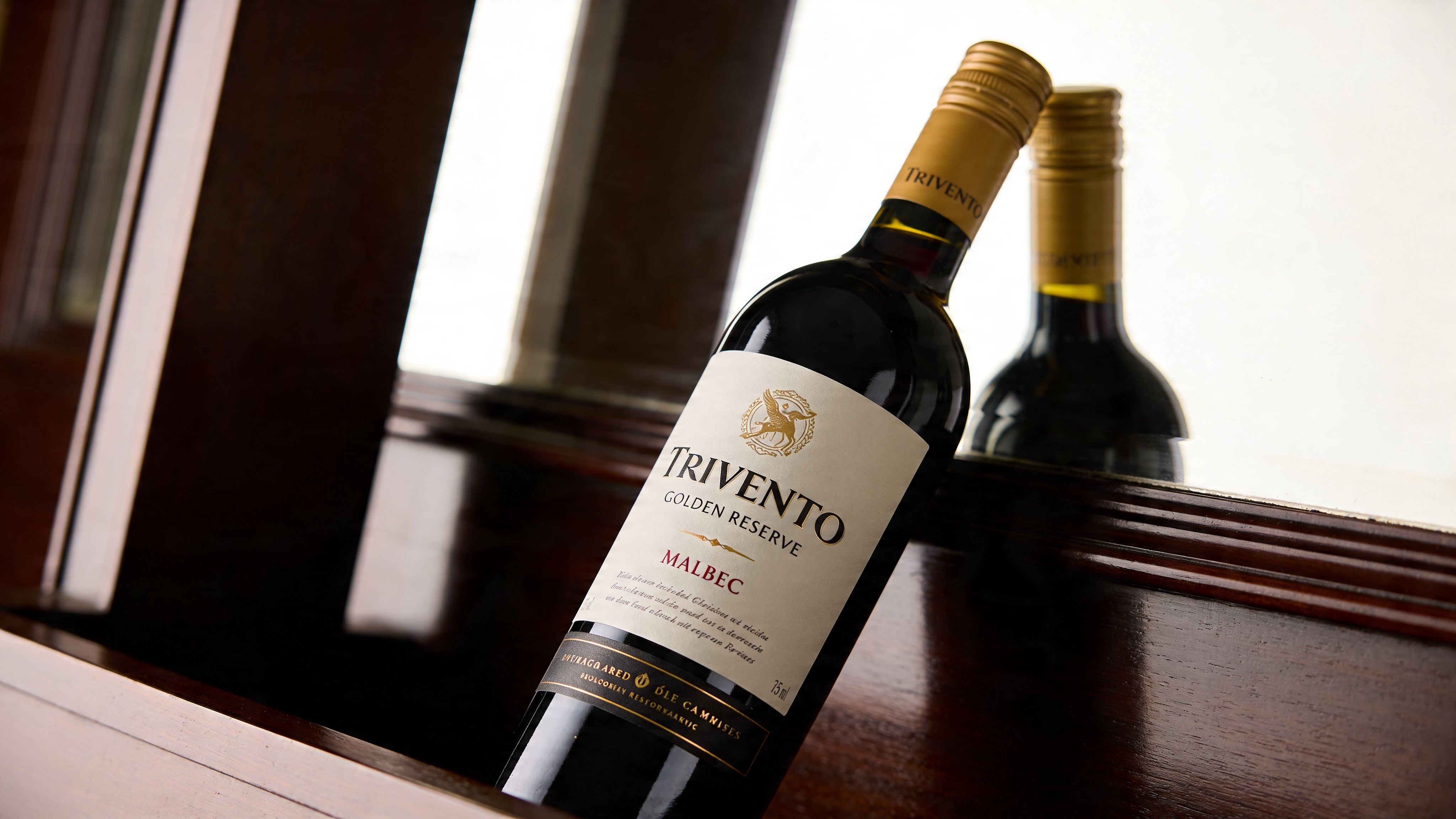
It’s a single-variety Malbec from some of the oldest vineyard land in Mendoza. Reverse Wine Snob, which transcribes the back label in its review of the wine, records it as 100% Malbec drawn from Vistalba, Las Compuertas, Agrelo and Perdriel in Luján de Cuyo, aged mostly in oak barrels for 12 months, and bottled at 14% alcohol. The label itself claims vineyards over 100 years old in Luján de Cuyo.
That 14% figure is worth noticing before you buy, because it tells you how the wine will feel rather than how it will taste. This is a full-flavoured red with real warmth to it, not a light everyday pour, and it wants food with some richness to balance it. The same review notes the wine is vegan friendly, which is not something every Malbec at this price can say.
The word Reserve carries no legal definition in Argentina the way it does in Spain, so it isn’t a guarantee of anything on its own. What it does here is mark a step up from Trivento’s standard Reserve line, and the old-vine sourcing is the concrete part of that claim rather than the name on the front.
What does Trivento Golden Reserve Malbec taste like?
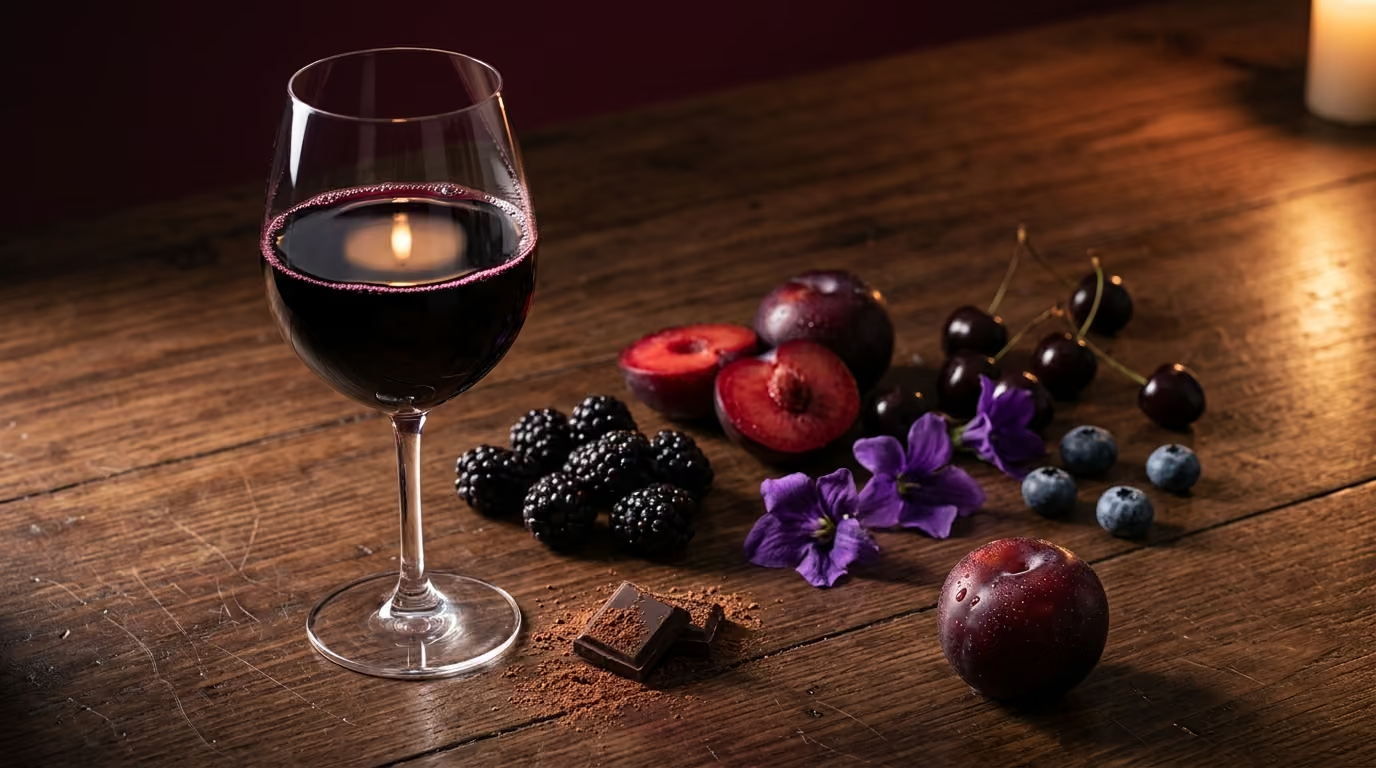
Expect plum and black cherry on the nose, with floral notes and oaky spice behind them. Reverse Wine Snob describes the 2022 as medium-bodied with good depth and complexity, plenty of juicy fruit and a smooth mouthfeel, finishing dry, long and slightly grippy with lingering spice.
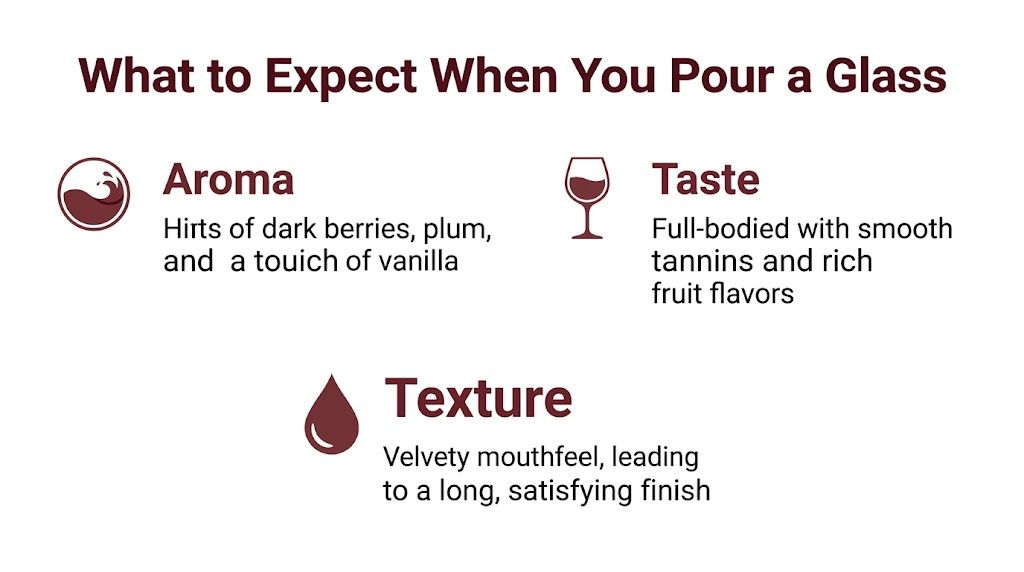
The practical translation is that this tastes like dark fruit with a roasted, spiced edge rather than a sweet or jammy red. It isn’t sharp and it isn’t sugary, and the grip on the finish is what makes it work with fatty food instead of feeling cloying by the second glass. If you’re trying to get better at naming what you notice in a glass, our walkthrough of how to taste wine properly covers the method without turning it into homework.
One honest caveat: medium-bodied is the description from the most recent independent review, while several retailer listings call the same wine full-bodied. Body is partly a matter of palate, and at 14% alcohol this sits at the fuller end of medium either way, so treat it as a substantial red without expecting something as dense as a big Cabernet.
Is the 2022 better than the 2020?
Yes, according to the only reviewer who has published notes on both. Reverse Wine Snob reviewed the 2020 and found it likeable but lacking depth, then reviewed the 2022 and called it clearly better, with more depth and complexity and better balance. Its summary lists quality varying by vintage as the wine’s main weakness, which is a fair thing to know about a bottle marketed on consistency.
In a shop this matters less than it sounds. If both vintages sit on the shelf at similar prices, take the 2022. If only the 2020 is there, it’s still a perfectly good bottle for a steak dinner, just a slightly simpler one. Vintage variation at this price point rarely turns a good wine into a bad one.
What should Trivento Golden Reserve cost?
The suggested retail price is $20, and Reverse Wine Snob records it selling for as low as $17. That range is the number to carry into a shop with you, because it tells you when a price tag is out of line rather than when it’s a bargain.
Anything at or under $20 is straightforwardly fair for what’s in the bottle. Above the mid-twenties you’re paying a markup, and at that point there are plenty of other Argentine Malbecs worth considering instead. Restaurant pricing will naturally run higher than shelf pricing, which is normal and not a reason to avoid ordering it.
What food goes with it?
Rich, savoury and ideally a little charred. The combination of dark fruit, oak spice and a dry, grippy finish is built for grilled red meat, and the tannin cuts through fat in a way that lighter reds can’t manage.
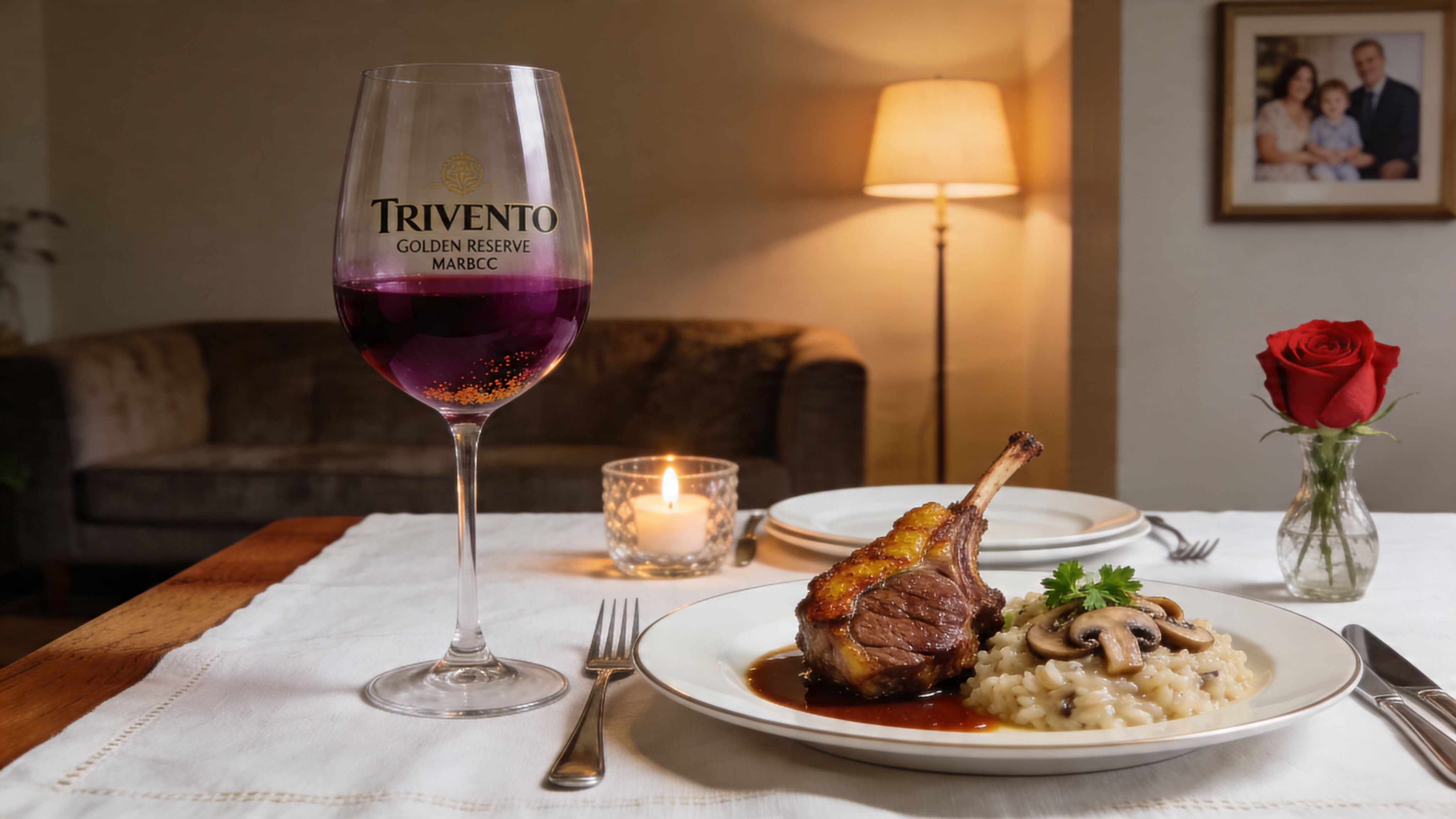
Steak is the most obvious match and the most reliable one, whether that’s ribeye, sirloin or a good burger, and our guide to the best wine for a steak dinner goes further into matching by cut and sauce. Grilled lamb is arguably an even better fit, since the herbal edge of lamb meets the oak spice nicely. Barbecue works for the same reason, with smoke and char echoing the roasted side of the wine.
Empanadas and a Sunday roast both sit comfortably in range too, and so does anything cooked long and slow with tomato, since the wine’s acidity keeps up with the sauce while the tannin handles the fat. Hard-charred vegetables work better than you might expect for the same reason, so a plate of grilled aubergine and peppers isn’t a compromise.
For a vegetarian option, mushroom dishes are the strongest choice, because their savoury depth gives the wine something to push against. Aged hard cheeses and cured meats on a board also work well, since salt makes the fruit read as sweeter and rounder. The one place it struggles is delicate food, so keep it away from white fish and anything built around lemon and fresh herbs.
How should you serve and store it?
Serve it slightly cool rather than at a warm room temperature, since heat exaggerates the alcohol and flattens the fruit. Twenty minutes in the fridge before dinner is enough if your kitchen runs warm, and opening the bottle a little ahead of the meal lets the oak spice settle back into the fruit.
There’s no need to cellar it. This is made to drink on release and it will be good the evening you buy it, though a bottle kept for a year or two will soften a little as the tannins relax. A cool, dark cupboard does that job perfectly well, and our notes on storing wine at home explain which of the usual rules actually matter. A regular wine glass with a bit of space in it is all the stemware this needs.
Why does Luján de Cuyo matter on the label?
Because it’s the piece of information on this bottle that actually predicts the style. Luján de Cuyo sits in the upper Mendoza valley and was recognised as an appellation by the International Organisation of Vine and Wine in 1993, which makes it one of Argentina’s earliest defined wine regions. Many of its vineyards sit at around 1,000 metres, roughly 3,280 feet, on alluvial soils of sand and stone over clay.
Altitude is the part that reaches your glass. Vineyards that high get strong daytime sun and cold nights, and that swing lets the grapes ripen fully while holding onto acidity. In practice that’s why a good Luján de Cuyo Malbec tastes generous and dark without going flabby or soupy, and why this bottle finishes dry rather than sweet despite all that ripe fruit.
The old-vine claim works alongside it. Older vines produce smaller crops of smaller berries, which concentrates flavour, and Luján de Cuyo holds some of the oldest Malbec plantings in Argentina. Neither altitude nor vine age guarantees a good wine on its own, but together they explain why this sits a tier above supermarket Malbec rather than simply costing more than it.
How do you find something similar on a shelf?
Read the region before the brand, since Mendoza alone covers a very wide range of quality. Luján de Cuyo and the Uco Valley are the two sub-regions worth looking for on an Argentine Malbec label, and either one tells you more about what you’re buying than any word in the wine’s name does.
After that, look for a stated oak ageing period, because twelve months in barrel is what gives this style its spiced, savoury edge rather than pure fruit. Alcohol between about 13.5 and 14.5 percent is normal for the category and signals the fuller style. If you want to work through that decision more broadly, our guide to choosing wine with confidence covers the same logic across other regions.
Who should buy it, and who should skip it?
Buy it if you reliably enjoy fuller reds and want something dependable for a dinner where the food is the point. It’s a good host gift, a safe restaurant order alongside red meat, and a sensible bottle to bring when you know the meal will be hearty but not the specifics. The appeal is consistency rather than excitement.
Skip it if you prefer lighter, higher-acid reds, or if you’re drinking without food. At 14% alcohol with a grippy finish, it can feel heavy on its own, and someone who normally reaches for Pinot Noir will likely find it too much. Our comparison of Pinot Noir and Malbec lays out that difference if you’re not sure which camp you fall into.
A dependable bottle, worth knowing by name
Trivento Golden Reserve earns its place by being predictable in a category where a lot of bottles aren’t. You get 100% old-vine Malbec from Luján de Cuyo, a year in oak, around 14% alcohol and a dry, spiced finish, for roughly $20. That’s a fair deal, and knowing the specifics means you can tell when a shop is charging too much or when a different vintage is the better buy.

What an article can’t tell you is whether this particular style suits your palate, or what to reach for on the night the shop has sold out. Sommy learns what you actually like as you record what you drink, so it can suggest a close alternative to a bottle like this one rather than handing you a list of facts about a wine you can’t buy. Our piece on what an AI wine assistant gets right and wrong is honest about where that helps and where it doesn’t.
Questions people ask about Trivento Golden Reserve Malbec
Is Trivento Golden Reserve Malbec a good wine?
It’s a well-made, consistent Argentine Malbec that reviewers rate positively, particularly the 2022 vintage. The strength is dependability rather than surprise, so it works best when you want a red you can count on with a rich meal rather than something unusual to explore.
How much alcohol is in Trivento Golden Reserve Malbec?
It’s bottled at 14% alcohol, according to the back label as transcribed by Reverse Wine Snob. That puts it at the fuller end of everyday red wine, which is why it pairs better with substantial food than it drinks on its own.
What is the difference between Trivento Reserve and Golden Reserve?
Golden Reserve sits above the standard Reserve line in both price and sourcing, drawing on old-vine fruit from Luján de Cuyo and spending 12 months in oak. Reserve has no legal meaning in Argentina, so the sourcing and the oak ageing are the real differences rather than the name.
How long does Trivento Golden Reserve Malbec keep?
It’s made to drink on release and doesn’t need cellaring at all. A bottle held for a year or two in a cool, dark place will soften slightly as the tannins settle, but there’s no benefit in waiting if you want to open it this week.
Is Trivento Golden Reserve Malbec vegan?
Reverse Wine Snob records the wine as vegan friendly in its review. Production practices can change between vintages, so it’s worth checking the specific bottle in front of you if that matters to your buying decision.
What can I drink instead if Trivento Golden Reserve is sold out?
Look for another Malbec from Luján de Cuyo or the Uco Valley at a similar price, ideally one that mentions oak ageing on the label. Failing that, a Cahors from south-west France is made from the same grape in a firmer style, and a ripe Syrah will give you comparable weight and spice.
Is Trivento Golden Reserve the same as Trivento Golden Malbec?
They’re different wines from the same producer, and the names are easy to confuse on a shelf. Golden Reserve is the old-vine Luján de Cuyo bottling described here, so check that both words appear on the label if this is the one you came for.
Should I decant Trivento Golden Reserve Malbec?
Decanting isn’t necessary, though it doesn’t hurt. Opening the bottle twenty or thirty minutes before dinner achieves most of the same effect, letting the oak spice settle back into the fruit so the wine reads as rounder from the first glass.