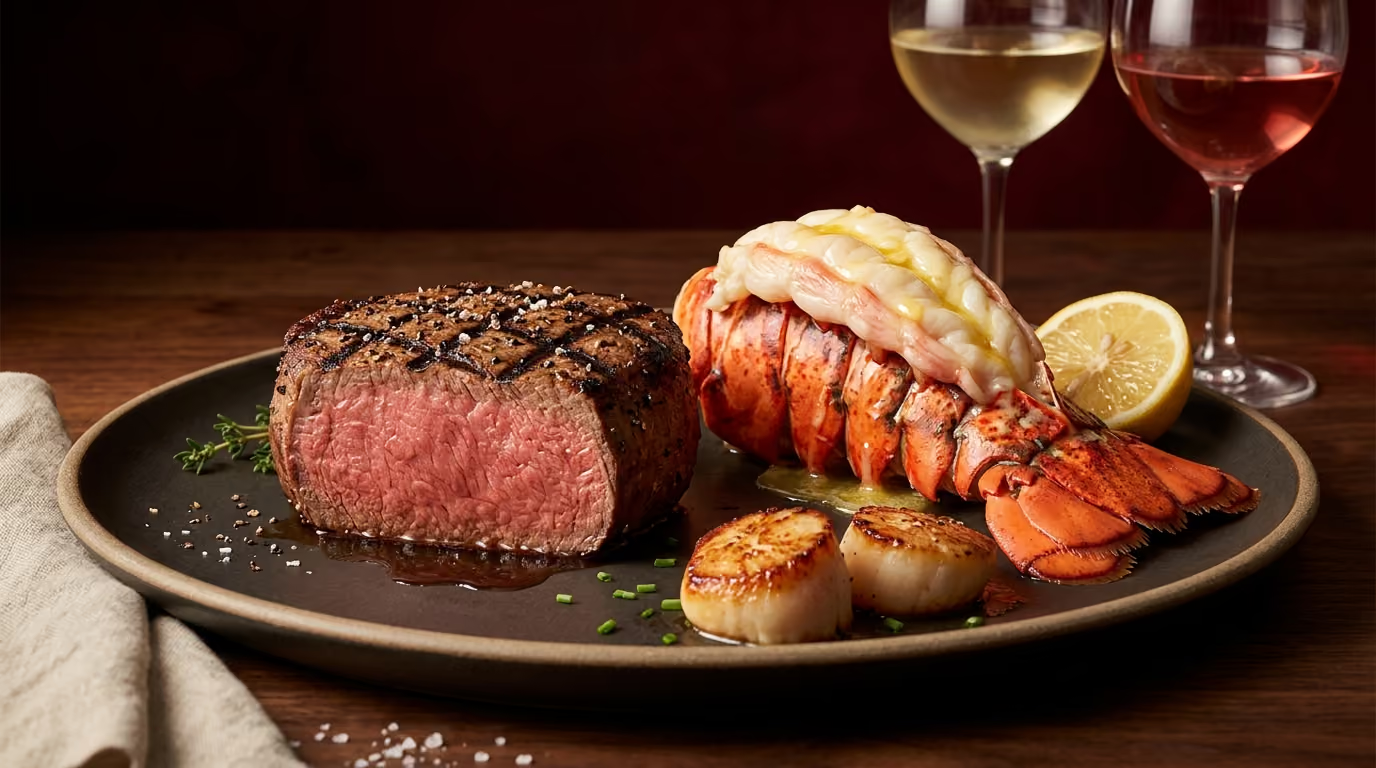
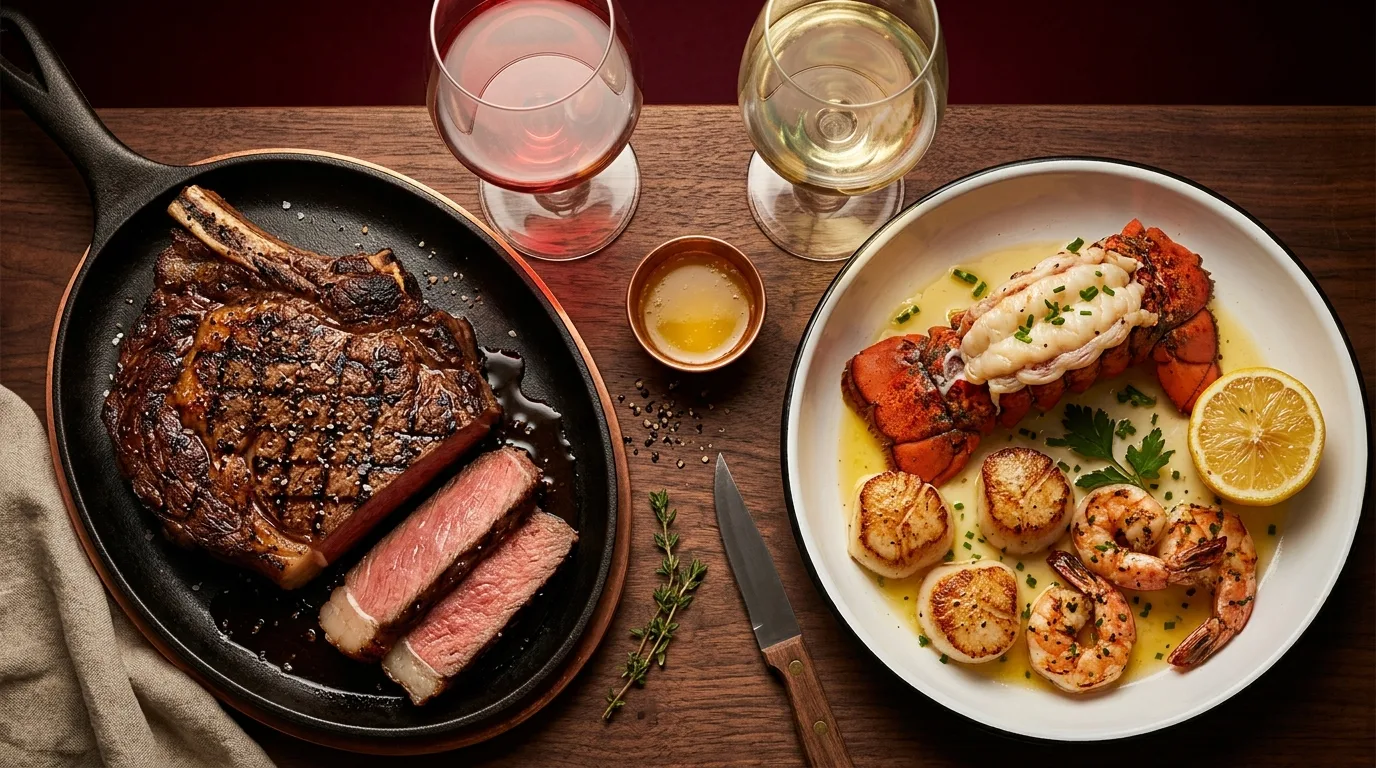
The best wine for surf and turf is one with real acidity and soft tannin, which in practice means Champagne, a white Burgundy with some weight, or a lighter red like Pinot Noir. The trap is treating the plate as a two-protein problem and looking for a wine that splits the difference between steak and lobster. What actually decides the pairing is the richest treatment on the plate, which is almost always drawn butter or a cream sauce rather than either protein, and butter is cleared by acidity rather than by tannin.
Surf and turf is the single most common reason people ask a sommelier for help, because the plate seems to contain a contradiction. Everything most of us were taught says red with beef and white with seafood, and here they both arrive under one dome. The good news is that the old rule was never about the color of the meat, and once you know what it was really tracking, the choice gets easier rather than harder.
What's the best wine for surf and turf?
Champagne is the strongest single answer, and it isn't a compromise pick. High acidity cuts drawn butter better than anything else on a wine list, the yeasty depth of a bottle with some age on it has enough savor to sit beside grilled beef, and the bubbles reset your palate between two very different bites. If you'd rather have still wine, a weighty white Burgundy or a lighter, low-tannin red both work for reasons the table below sets out.
| Wine | Why it works with surf and turf | Best when |
|---|---|---|
| Vintage or non-vintage Champagne | Acidity and bubbles clear butter, and autolytic depth stands up to grilled beef | You want one bottle that genuinely suits both halves |
| White Burgundy, Meursault or a serious Chablis | Weight and texture for the steak, citrus acidity for the shellfish | The seafood is lobster or scallops and the beef is a lean filet |
| Pinot Noir, cool climate and lightly oaked | Low tannin and bright red fruit, so it never turns metallic against shellfish | You want a red on the table but the seafood matters most |
| Grenache or Cotes du Rhone, restrained style | Soft, warm and low in tannin, generous enough for ribeye | The beef is fatty and the seafood is grilled rather than buttered |
| Dry rose from Provence or Bandol | Split the difference honestly, with acidity and a little red-fruit weight | It's summer, the surf and turf is off the grill and it's casual |
| Cabernet Sauvignon or Bordeaux | Only when the beef genuinely dominates and the seafood is a token garnish | Two shrimp beside a twenty ounce ribeye |
Weight matching does most of the work here, which is the same principle our guide to pairing wine with food applies to simpler dishes. The difference with surf and turf is that you have two weights on one plate, so you match the wine to the heavier one and then check that it won't wreck the lighter one. Champagne and white Burgundy both pass that second test easily, and a young Cabernet almost never does.
Why does red wine taste metallic with shellfish?
Because of iron, and this is one of the few pairing rules with a peer-reviewed answer behind it. Researchers at Mercian's product development laboratory in Japan tested 38 red wines and 26 whites alongside scallops and published the results in the Journal of Agricultural and Food Chemistry, and they found strong positive correlations between the intensity of the fishy aftertaste and the concentration of both total iron and ferrous ion in the wine. When they added a compound that binds iron, the unpleasant aftertaste diminished.
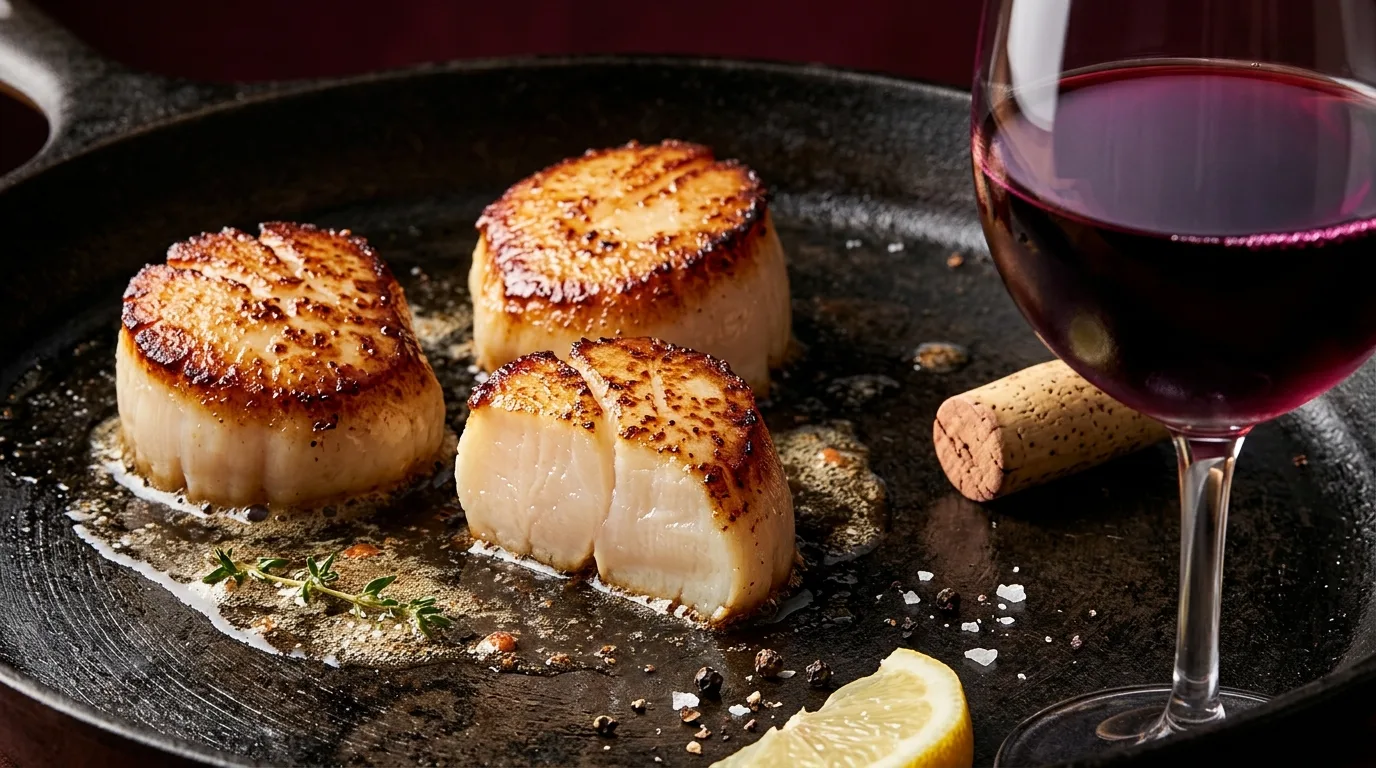
That result matters for surf and turf specifically, because scallops are exactly what the study used and they turn up on these plates constantly. It also explains why the effect feels so out of proportion: a red that tasted fine with the steak two seconds earlier can leave a genuinely unpleasant tinny, fishy finish once shellfish enters the picture, and no amount of swirling fixes it. That's a chemical reaction rather than a matter of taste, so it isn't something you can train yourself out of noticing.
The practical takeaway isn't that red is banned. It's that low-iron, low-tannin reds are much safer bets, and that lighter styles from cooler places tend to sit at the gentler end. Our guide to spotting a low-tannin red is a useful shortcut here, because tannin and heavy extraction usually travel together with the qualities that make a red aggressive against seafood.
Should you rank the plate by protein or by sauce?
By sauce and cooking method, almost always, because those carry far more flavor intensity than either protein does on its own. A filet mignon and a lobster tail are both fairly mild proteins, and they only become powerful once something is done to them. Char from a grill, a butter bath, a béarnaise, a garlic butter, a peppercorn cream: those are the loudest things on the plate, and they're what your wine actually has to answer to.
So run through the plate in order of intensity rather than in order of protein. If the loudest element is drawn butter or a cream sauce, you need acidity and you should be looking at Champagne, Chablis or Meursault. If the loudest element is hard char and a peppery crust on the beef, the balance tips toward a red and the seafood becomes the thing you protect by keeping tannin low. If both are loud, which happens with a charred ribeye beside butter-poached lobster, that's the strongest case for opening two bottles rather than forcing one.
The same logic runs through our best wine for a steak dinner picks, where the cut and the char matter more than the word beef. Surf and turf just adds a second variable, and once you know that butter beats lobster and char beats beef, the plate stops being confusing. A lobster tail served plain with lemon is a much lighter pairing problem than the same tail swimming in clarified butter.
Is Champagne really the best single bottle?
Yes, for most versions of this meal, and it's underused mainly because people file sparkling wine under celebration rather than under dinner. Champagne carries three things this plate needs at once: high acidity to cut butter, carbon dioxide that physically scrubs fat off your palate between bites, and in an aged or vintage bottle a bready, nutty savor with enough presence to meet grilled beef rather than disappearing under it.

Choose a fuller style rather than the lightest one on the list. A blanc de noirs, made from Pinot Noir and Pinot Meunier, has noticeably more red-fruit weight and body than a lean blanc de blancs, which makes it the better bet when there's a real steak on the plate. Vintage Champagne with some bottle age brings toasted, mushroomy depth that flatters beef in a way a young non-vintage doesn't quite manage.
If Champagne is out of budget, the same logic points to a traditional-method sparkler from elsewhere: a Franciacorta from Lombardy, a good Cremant, or a vintage English sparkling wine. Prosecco is the one to skip here, because it's made in a different way, carries less structure and tends to read as simple and slightly sweet against a savory plate. Our comparison of Prosecco, Cava and Champagne covers why those three behave so differently at the table.
When should you just open two bottles?
Whenever both halves of the plate are getting a full treatment, and whenever you're cooking for more than two people. Surf and turf is the classic case where a half bottle of white and a half bottle of red beats one compromise bottle, and nobody suggests it because pairing advice is written as though every meal gets exactly one wine. There's no rule against pouring a glass of Chablis with the lobster and a glass of Pinot Noir with the steak.
The practical version at home is to open a white and a red and pour smaller measures of each, which costs no more than one bottle if you're two people. Serve the white first while the seafood is hot, then move to the red for the beef, and go back to the white if there's shellfish left. Wine preservation is easier than it used to be, and the leftover half of each bottle keeps a couple of days in the fridge with a stopper.
In a restaurant, ask whether they pour anything by the glass that suits each half rather than committing to a bottle. Most steakhouses have a deep by-the-glass list precisely because their tables order across the whole menu, and our steakhouse wine pairing piece goes through how those lists are usually built. Two well-chosen glasses will beat one bottle chosen by committee nearly every time.
What should you order at a steakhouse?
Ask what the seafood actually comes with before you look at the wine list, because that's the piece of information that decides everything and it's rarely printed on the menu. Whether the lobster arrives with drawn butter, whether the scallops are seared with a pan sauce, whether the shrimp are grilled or come in a garlic butter: each of those pushes the answer somewhere different, and your server knows and will tell you.
Then read the list for acidity rather than for prestige. The most expensive Napa Cabernet on a steakhouse list is usually the worst possible choice for surf and turf, because it's built for a plain grilled ribeye and it will turn tinny the moment shellfish arrives. Our guide to pairing wine with shellfish is a useful reference for which whites hold up next to a big plate.
If you'd rather not interrogate a wine list at the table, Sommy's Current Venue filters the restaurant's actual list down to what suits your taste once you've arrived, which is genuinely the moment this decision gets made. A steakhouse list can run to dozens of pages, and knowing that you want acidity narrows it far more slowly by hand than it does on a phone.
Frequently asked questions
What is the best wine for surf and turf if I want one bottle?
Champagne, ideally a blanc de noirs or a vintage bottle with some age. It has the acidity to cut drawn butter, the bubbles to reset your palate between seafood and beef, and enough savory depth that it doesn't vanish next to a grilled steak.
Can you drink red wine with surf and turf?
Yes, as long as you keep tannin and iron low, which means Pinot Noir, Gamay or a soft Grenache rather than Cabernet Sauvignon. Heavy reds react badly with shellfish and can produce a genuinely metallic aftertaste, which is a chemical effect rather than a matter of preference.
What wine goes with steak and lobster together?
Match the richer treatment rather than either protein. Butter-poached lobster beside a filet points to Champagne or a weighty white Burgundy, while a charred ribeye with a plain grilled tail can take a light, low-tannin red without any trouble.
Does Chardonnay work with surf and turf?
A weighty, mineral Chardonnay works very well, particularly white Burgundy from Meursault or a good Chablis. Avoid the heavily oaked, buttery styles, because they add richness to a plate that already has plenty and leave you with nothing cutting through.
Is rose a good choice for surf and turf?
It's the most reliable casual answer, especially for a summer grill. A dry Provence rose has the acidity for shellfish and just enough red fruit and body to sit beside beef, and a sturdier Bandol handles a fattier cut better than a pale one does.
Should I match the wine to the sauce instead of the meat?
Almost always, since sauces carry far more flavor intensity than mild proteins like filet or lobster do. Drawn butter, béarnaise and cream sauces all demand acidity, while a hard char and a peppercorn crust push you toward a red.
How to choose in ten seconds
Start by looking for butter on the plate, because it decides this pairing far more reliably than either protein does. If there's drawn butter, a cream sauce or a béarnaise anywhere, the answer is Champagne or a serious white Burgundy, and it stays that answer no matter how big the steak is. If the plate is dry-grilled on both sides with lemon rather than butter, a low-tannin red comes back onto the table and Pinot Noir is the safest one to reach for.
The bottle to avoid is the one most people order, which is the biggest Cabernet in the room. It's built for beef with a hard crust and nothing else, its tannin has no job on a plate this soft, and its iron will find the shellfish and leave a metallic finish that neither half of your dinner deserves. Spend the same money on Champagne instead and the whole plate improves at once.