

What Is Amarone Wine? Taste, Price, and Who It's For
Amarone della Valpolicella is a dry, full-bodied red from the hills above Verona in northeast Italy, made from grapes that are laid out to dry for roughly 100 to 120 days before they're ever pressed. That drying step, called appassimento, concentrates everything in the fruit and produces a wine of at least 14% alcohol with flavors of dried cherry, fig, chocolate and warm spice. If you already drink big Cabernet Sauvignon or Shiraz and want something with more depth and a savory edge, Amarone is worth the money. Expect to pay around $38 to $71 for a well-made bottle from a widely distributed producer.
One thing worth settling immediately, because it's the single most common confusion: Amarone isn't a grape. It's a place and a method, and the grapes inside it are Corvina, Corvinone and Rondinella.
Why is Amarone different from other Italian reds?
The difference happens in a drying loft rather than in the vineyard. After harvest, the best bunches are set aside and rested in a ventilated room the Veronese call a fruttaio, where they sit for about 100 to 120 days according to the Consorzio Tutela Vini Valpolicella. Over those months the berries shrivel and lose water while their sugars, acids, tannins and aromatic compounds stay put, so everything that gives wine its character gets packed into a much smaller volume of juice.
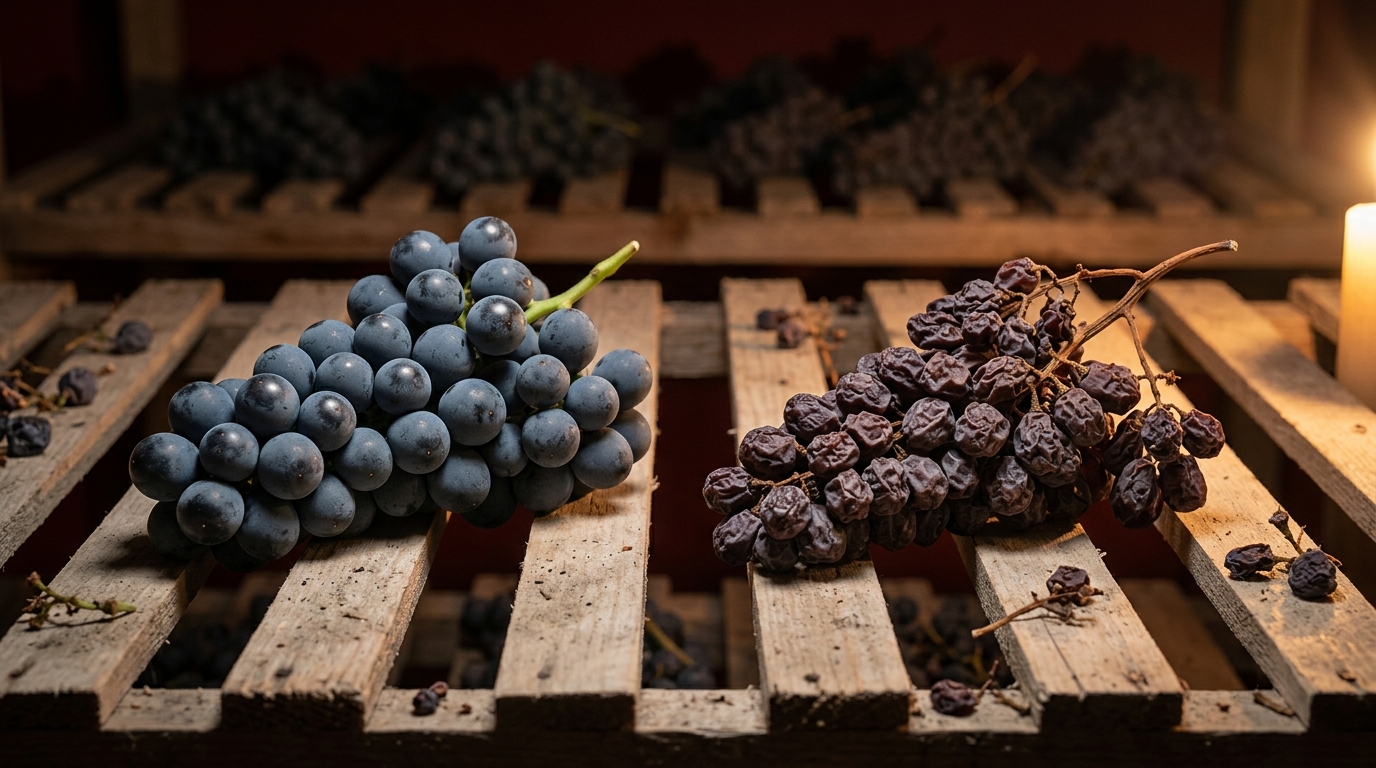
The scale of that concentration is written into law. The official DOCG production regulations cap the yield of finished wine at 40% of the grape weight, meaning a producer can extract no more than 40 liters of wine from every 100 kilos of grapes they started with. A conventional red wine gets rather more than that from the same fruit. The dried grapes have to reach a minimum natural alcohol level of 14% before fermentation even begins, and the rules forbid pressing them before 1 December, so the whole process runs through late autumn while everyone else has finished.
The risk explains part of the price. Grapes resting for four months in a humid Italian autumn can develop rot, and a producer who loses a batch has lost their most expensive fruit after already paying to pick and handle it. The regulations allow fans and air conditioning to manage this, though not dehumidifiers that work with heat, which would cook the grapes rather than dry them.
Which grapes actually go into Amarone?
Three native Veronese varieties do nearly all the work, and the DOCG rules set the proportions precisely. Corvina Veronese and Corvinone together make up 45% to 95% of the blend, Rondinella contributes 5% to 30%, and other permitted local varieties can fill up to 25% of the total.
| Grape | Share of the blend | What it brings |
|---|---|---|
| Corvina and Corvinone | 45% to 95% combined | Sour cherry fruit, acidity, the backbone of the wine |
| Rondinella | 5% to 30% | Darker fruit, herbal lift, reliability in the drying loft |
| Other local varieties | Up to 25% | Producer's own seasoning, varies house to house |
Corvina and Corvinone sit in one bracket in the regulation rather than two, which is worth knowing because plenty of articles report them separately and get the numbers wrong. They're genuinely distinct varieties, with Corvinone carrying larger berries and a looser bunch that dries particularly well, and the law treats their combined share as the thing that matters.
Rondinella earns its place partly through durability. It holds up through months on the drying racks without falling apart, which is a practical virtue when your fruit has to survive until December. None of these grapes appears on the front label, because the wine is named for its place and its method rather than its varieties. Our guide to DOCG on Italian wine labels covers what that designation guarantees and what it doesn't.
What does Amarone taste like?
Dried dark fruit leads: black cherry, fig, prune and raisin, laid over dark chocolate, leather, tobacco and sweet baking spice. The texture is thick and enveloping, and the regulation describes the finished wine as full, satiny and warm on the palate, with a deep red color that turns garnet as it ages.
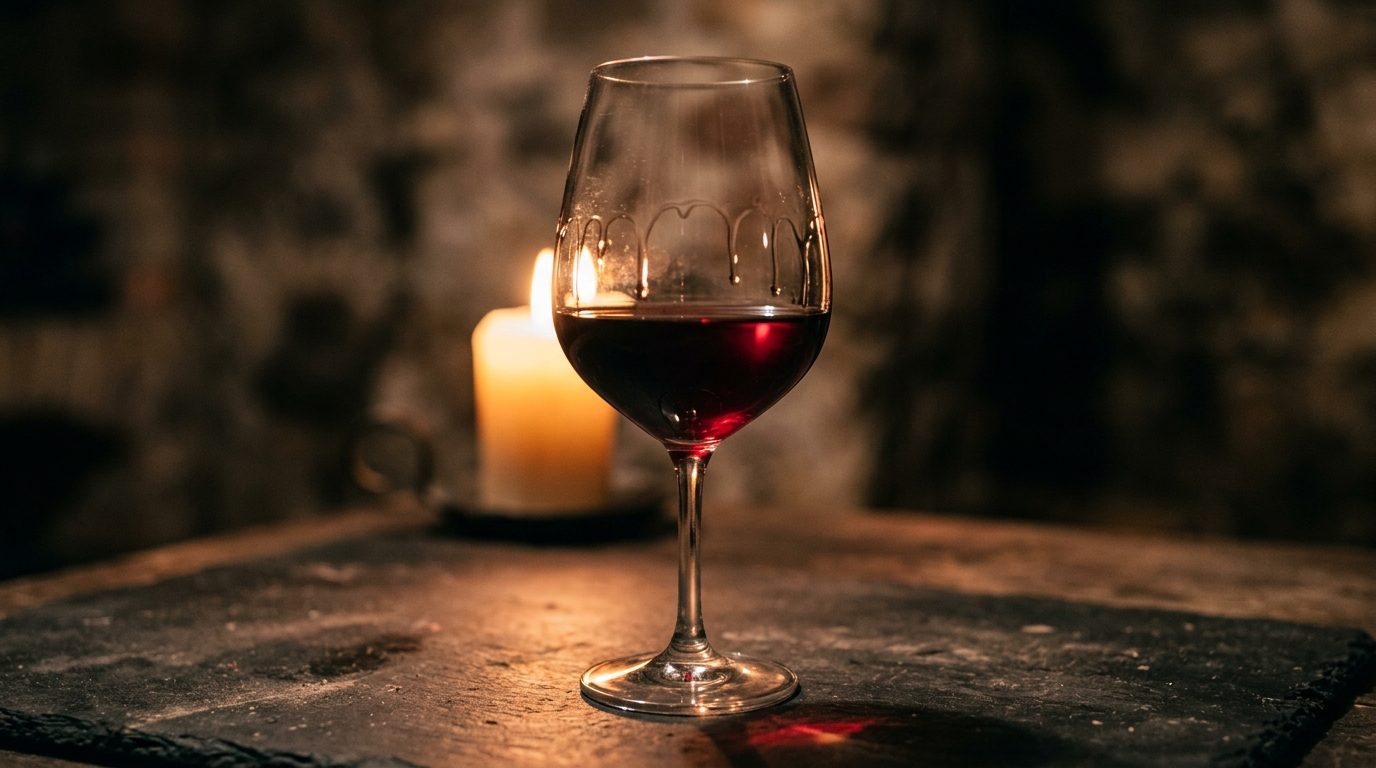
The warmth is real and you'll feel it. Minimum alcohol is 14%, and most commercial Amarone lands between 15% and 16%, which is high enough that a single large pour does the work of two glasses of Chianti. This is the reason the Veronese call it a vino da meditazione, something to drink slowly on its own after dinner rather than through a long meal.
What separates it from a big New World red is the acidity underneath. Corvina keeps its sharp sour-cherry edge even after drying, so the wine stays lively rather than turning jammy, and the finish runs long and slightly bitter in a way that stops all that concentration from becoming cloying. The name itself points at this: amaro means bitter in Italian, and Amarone was originally the dry counterpart to Recioto, the sweet dried-grape wine the region had been making since antiquity. Our guide to full-bodied wine sets it against the other heavyweights if you want the comparison.
Is Amarone sweet?
Amarone is a dry wine, and the regulation puts a hard number on it: a bottle at 14% alcohol may carry no more than 9 grams per liter of residual sugar, with a small sliding allowance as the alcohol climbs higher. For comparison, that ceiling sits below what most people can reliably detect as sweetness in a tannic red.
People taste sweetness in it anyway, and the impression is genuine even though the sugar isn't there. Intense dried-fruit aromas, high alcohol and a soft glycerol texture all read to the brain as sweet, so a wine can smell like fig jam and finish completely dry. Our piece on dry versus sweet wine goes through why that gap between aroma and actual sugar trips so many people up.
The wine to watch for is Recioto della Valpolicella, which comes from the same dried grapes in the same region. Fermentation there is stopped early so the sugar stays in, making it a genuinely sweet dessert wine. The labels look similar at a glance, so read for the word Recioto if you're buying for a main course.
What should you expect to pay?
Among producers you'll actually find in a good wine shop, Amarone runs roughly $38 to $71. Antiche Terre Venete sits near $38 and Farina around $48, while the widely distributed names most people meet first, Masi Costasera and Tommasi and Zenato, cluster between $69 and $71. Allegrini and Speri sit a little above that in the $80s and $90s, and the long-established Bertani Classico runs closer to $147. Those figures come from Wine-Searcher's Amarone listings and move with vintage and stock.
The market does keep going well past that. Dal Forno Romano and Giuseppe Quintarelli trade in the hundreds, and Quintarelli's Riserva runs close to $975, which tells you the ceiling exists without telling you anything useful about what to buy for Saturday. Nothing in the $38 to $71 range is a compromise version of the wine, because the drying, the yield cap and the minimum two years of aging apply to every bottle carrying the DOCG.
Two words on the label change what you're holding. Classico means the fruit came from the five original hillside communes of Negrar, Marano, Fumane, Sant'Ambrogio and San Pietro in Cariano. Riserva means at least four years of aging instead of two, and those bottles cost meaningfully more. Standard Amarone must age a minimum of two years starting from the January after harvest, so even the cheapest bottle on the shelf has had time in the cellar you didn't pay rent on.
What food goes with Amarone?
Rich braised meat is the natural match, and the reason is structural rather than traditional. The wine's tannin and acidity cut through fat while its concentration stands up to long-cooked flavors that would flatten a lighter red.
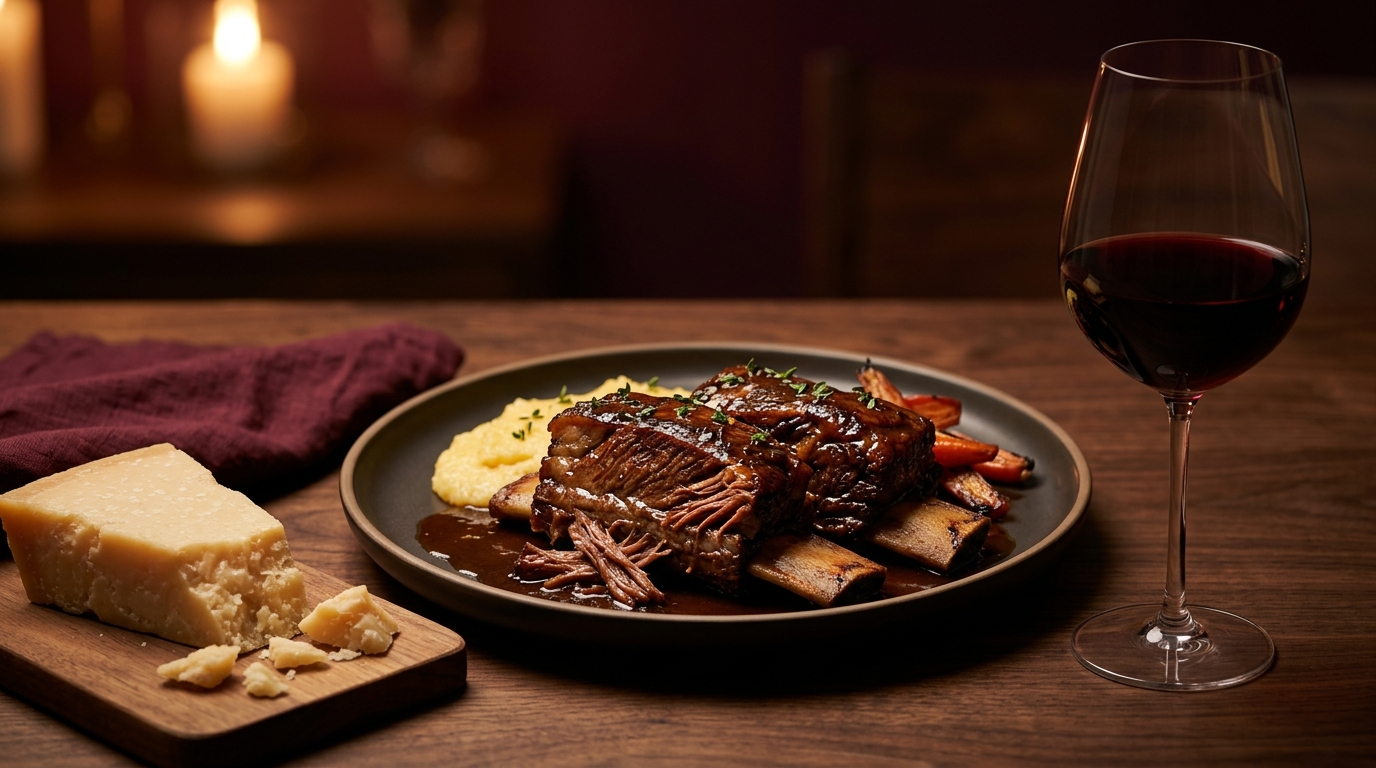
Braised short ribs, osso buco, venison, slow-roasted lamb shoulder and a mushroom-heavy beef ragu all work extremely well. In Verona itself the local pairing is pastissada de caval, a long-braised stew, and the regional logic transfers to anything cooked for hours in its own juices. Our guide to wine for Italian food covers how this fits alongside the rest of the Italian repertoire.
Aged hard cheese is the other classic, and arguably the better one. Parmigiano-Reggiano aged 24 months or more, mature Pecorino and an old Gouda all meet the wine's intensity with salt and nuttiness, and the pairing works without any cooking at all. Our cheese board guide has more on building that around a single serious bottle.
Delicate food is worth skipping entirely here. Fish, salads, light pasta and anything built on fresh herbs will be flattened, and there's no technique that rescues the match. Amarone also drinks perfectly well with nothing at all, which is what the meditation wine idea is really about.
Should you buy Amarone or Ripasso?
Valpolicella Ripasso is the sensible midweek answer, and it costs about a third as much. The Consorzio describes it as base Valpolicella refermented on the pomace left over from making Amarone or Recioto, which is exactly what ripasso means in Italian, a re-pass. The young wine picks up extra alcohol, phenolics and extract from those still-warm skins and comes out noticeably richer than plain Valpolicella without the full weight of Amarone.
Priced in the shop, Ripasso from the same houses runs roughly $20 to $32, with Pasqua near $25, Tommasi near $26 and Zenato Ripassa around $29. That makes it the obvious choice for a Tuesday ragu, and it leaves Amarone for the meals where the wine is part of the occasion rather than an accompaniment to it.
Every guide like this one hits the same honest limit. Everything above describes what Amarone is, and none of it can tell you whether you personally will enjoy a wine this concentrated, because some people find 16% alcohol and dried-fruit intensity thrilling and others find it exhausting. If you're standing in front of a wine list looking at a three-figure Amarone and genuinely don't know which of those you are, Sommy's Fit Check reads a specific bottle against what you've actually rated and tells you straight whether it suits you.
Common questions about Amarone
Why is Amarone so expensive?
Two reasons, and both are structural rather than marketing. Drying the grapes for 100 to 120 days ties up space, labor and risk, and the DOCG caps the finished wine at 40% of the grape weight, so it takes close to twice the fruit to fill a bottle of Amarone as it does a bottle of ordinary Valpolicella. On top of that, every bottle must age at least two years before sale, and four for a Riserva, which means the producer is carrying the cost of that wine long before any money comes back.
How long does Amarone keep?
A good bottle from a solid producer will hold and improve for ten to twenty years, and the structure that makes it worth aging is the same high alcohol, firm tannin and real acidity you taste when it's young. Bottles in the $38 to $71 range are made to drink now and won't punish you for opening them on purchase. Store any of them on their side somewhere cool and dark rather than in a kitchen rack above the oven.
Should you decant Amarone?
Give it an hour in a decanter, especially a younger bottle. The wine is dense enough that air genuinely opens it up, and older bottles throw real sediment that's worth leaving behind. Serve it around 18 Celsius, which is cooler than most rooms, so twenty minutes in the fridge before dinner usually gets it right.
The short version
Amarone is a dried-grape red from Valpolicella, dry despite smelling of fig and raisin, high in alcohol, and built for braised meat, aged cheese or a quiet hour on its own. Buy in the $38 to $71 band from Masi, Tommasi, Zenato or Farina and you'll get the real thing, and keep Ripasso at $20 to $32 in the cupboard for the nights that don't call for the full version.
It's one of the few wines where knowing how it's made genuinely changes how you drink it. Once you understand that the fruit spent a winter drying before anyone pressed it, the price stops looking strange and the slow pace it asks for starts making sense.
