
The best wine for pork tenderloin depends entirely on the sauce and seasonings, not the pork itself. For a simple herb-roasted tenderloin, a light red like Pinot Noir is a perfect choice. If you're using a sweet fruit glaze or a spicy rub, a white wine with a touch of sweetness, like an off-dry Riesling, will be a much better match. This simple trick makes choosing the right bottle easy.
How To Choose Wine For Pork Tenderloin
Staring at a wine list or a crowded store shelf can be intimidating. You just want a great bottle for dinner, but that little pang of anxiety creeps in—what if you pick the "wrong" wine? It’s a totally normal feeling. The solution is surprisingly simple and doesn’t require you to become a wine expert.
The trick is to stop thinking about the pork and start thinking about the sauce. The tenderloin is a blank canvas. Your wine should match the loudest flavors on that canvas, whether it’s a savory herb crust, a sweet apple glaze, or a spicy marinade. Shifting your focus like this makes the whole decision feel much easier.
A Simple Decision Framework
Instead of memorizing complicated rules, just ask yourself one question: What are the strongest flavors in my pork dish?
- Savory & Earthy? If you’re using herbs like rosemary and thyme, or maybe mushrooms, an earthy, light-bodied red is your best bet.
- Sweet & Fruity? For glazes made with apple, apricot, or cherry, a white wine with a hint of sweetness will be perfect.
- Spicy or Tangy? For spicy rubs or sharp mustard sauces, a crisp, refreshing wine is the perfect partner to cut through the heat.
This flowchart breaks it down visually. Just start with your sauce style, and it will point you straight to the right kind of wine.
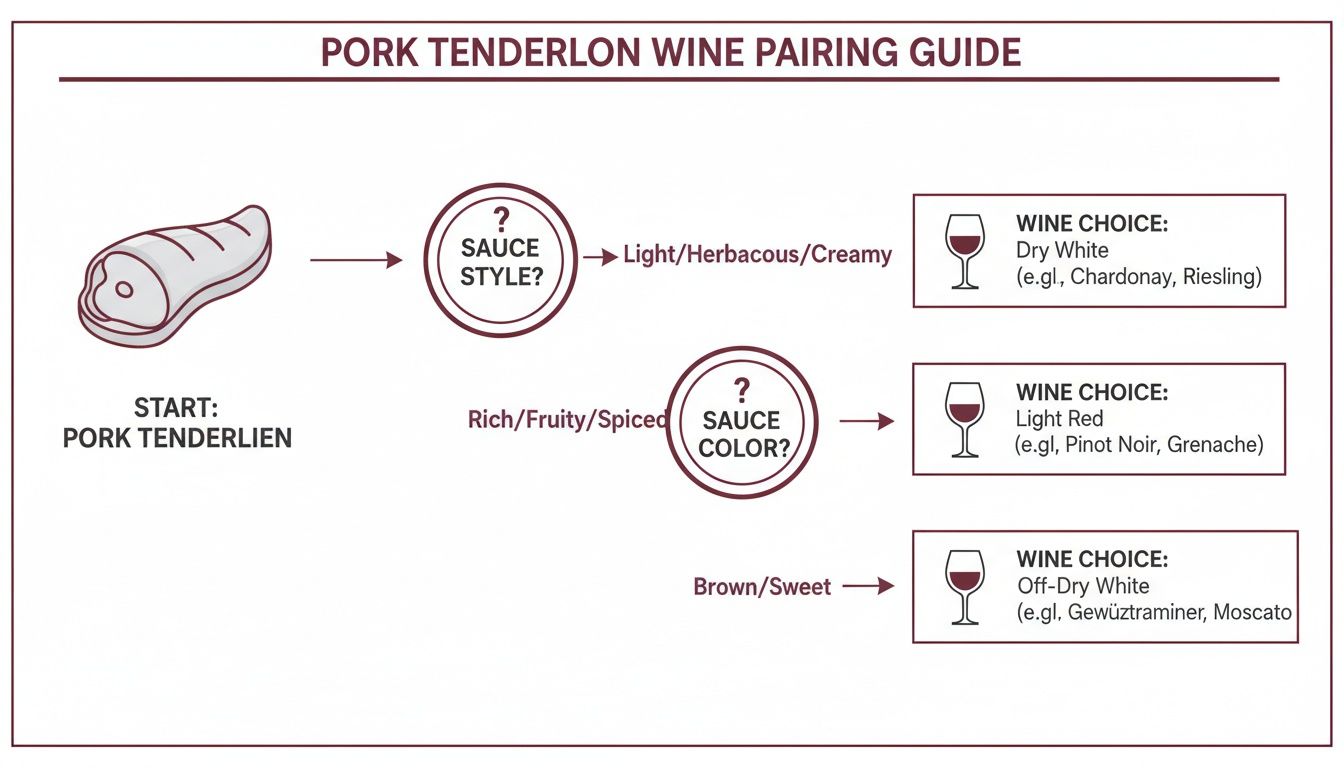
Once you’ve identified the main flavor of your sauce, picking the right wine becomes a clear, simple next step. For more tips, our complete guide on finding the perfect wine match for pork offers even more ways to build your confidence.
The goal is to create harmony between your plate and your glass. When the wine complements the sauce, it makes both the food and the wine taste even better. This is exactly the kind of in-the-moment decision Sommy was designed to help with, giving you a confident recommendation without any stress.
Why Pinot Noir Is The Classic Go-To Choice
When you just want a reliable, can't-go-wrong bottle for your pork tenderloin, Pinot Noir is your answer. Think of it as the perfect supporting actor—it makes the star of the show (the pork) shine without stealing the spotlight. It's the classic for a reason, especially for a simple, herb-roasted tenderloin.
The magic here is all about balance. Pork tenderloin is very lean, so a heavy, powerful red wine would completely overwhelm its delicate flavor. Pinot Noir, on the other hand, is a light-bodied red with soft, gentle tannins.
That means it has a smooth, silky texture that won’t clash with the tender meat. Its bright acidity and subtle red fruit flavors—like cherry and raspberry—cut through just enough richness to refresh your palate between bites. It’s a pairing that feels thoughtful and intentional, even if it’s the easiest choice you could make.
A Pairing That Just Works
This isn't some new trend; it's a partnership with history. Because pork tenderloin is one of the leanest cuts, it has always needed a wine that complements rather than steamrolls. You can trace this duo back to European feasts where light-bodied red wines were a staple alongside roasted pork.
Choosing Pinot Noir is about more than just playing it safe; it's about making a classic, time-tested choice that works. It delivers a delicious experience without any guesswork.
When to Pick Pinot Noir
This wine is your best friend for pork dishes that lean more savory than sweet. It truly shines when paired with flavors that bring out its earthy, subtle side.
- Herb-Crusted Tenderloin: Think rosemary, thyme, and sage. The herbal notes in the wine will beautifully echo the seasoning on the meat.
- Mushroom Sauces: The earthy character of many Pinot Noirs is a perfect match for savory, umami-rich mushroom sauces.
- Simply Roasted: When the pork is the star with just salt and pepper, Pinot Noir lets the meat's natural, delicate flavor come through.
Ultimately, picking Pinot Noir gives you confidence. It’s a smart, informed choice that consistently delivers. If you're ever stuck between a few reds, our comparison of Merlot vs. Pinot Noir can help. This is exactly the kind of decision Sommy helps with, giving you a clear recommendation in seconds.
Choosing A White Wine For Sweet Or Spicy Pork
Sometimes, a white wine isn't just a good choice for pork tenderloin—it's the best one. This is especially true when your dish features a sweet fruit glaze, like apple or apricot, or a tangy, spicy marinade.
Forget any old-school rules you've heard about only drinking red wine with meat. This is about matching the wine to the boldest flavors on your plate, and a crisp white often does that job beautifully.
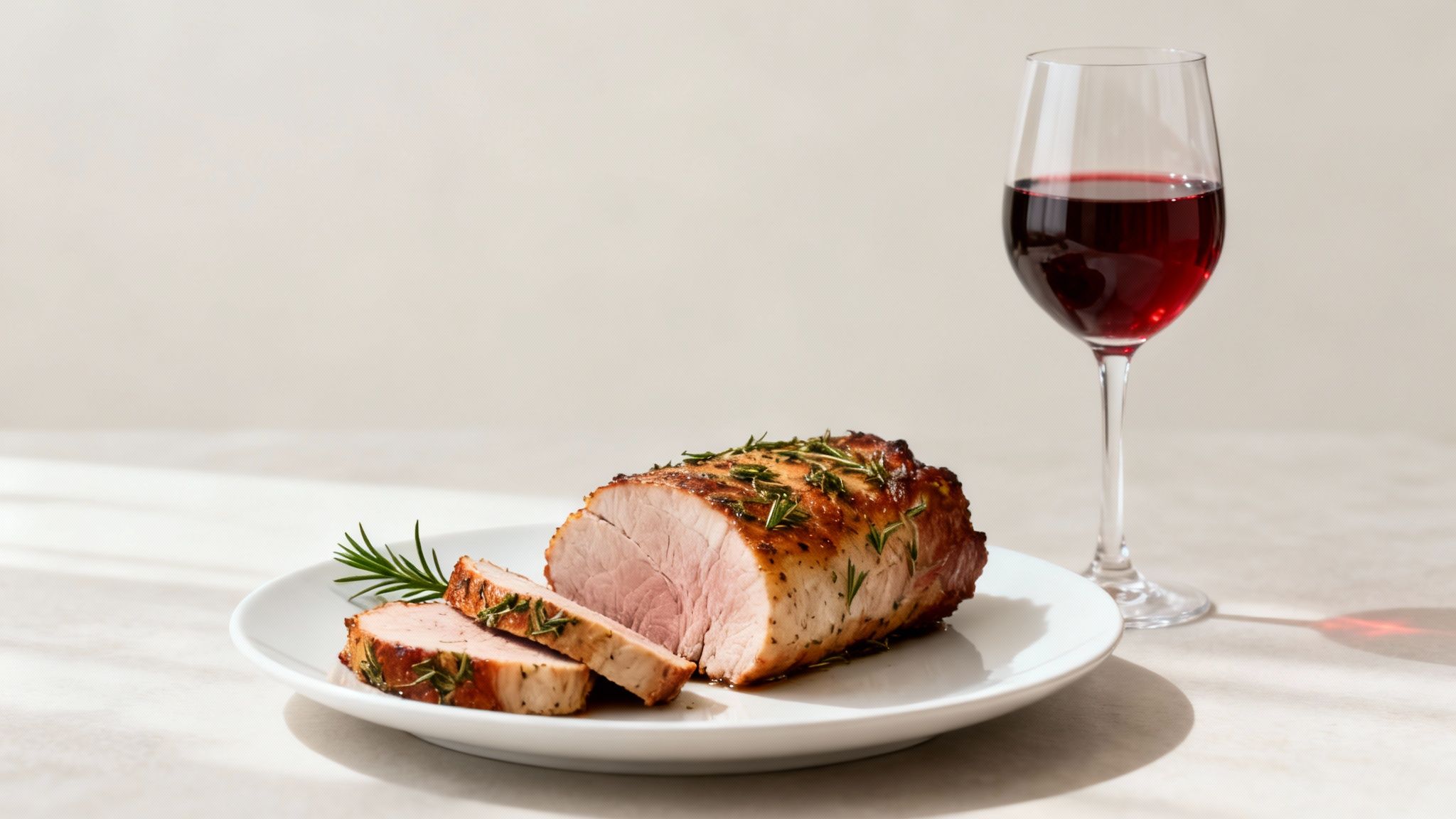
A crisp white wine with just a little sweetness, like a Riesling or an off-dry Chenin Blanc, strikes a perfect balance. Its bright acidity cuts right through the richness of a glaze, cleaning your palate with every sip. At the same time, that touch of sweetness is the perfect counterpoint to any spice, preventing the heat from getting out of control.
Why White Wine Works So Well
Think of it this way: a sweet and sour pork dish needs something to handle both the sweet and the sour. A dry red wine would clash with the sweetness, making the wine taste bitter and the dish fall flat.
A slightly sweet white wine, on the other hand, meets the dish on its own terms. It has enough fruit and flavor to stand up to a bold sauce without overwhelming the delicate pork. The result is a refreshing and harmonious pairing that just makes sense.
The right white wine doesn't just go with your meal; it elevates it. The goal is to find a wine that refreshes your palate, making each bite of the pork as delicious as the first. This is exactly the kind of in-the-moment pairing that Sommy can help you nail down.
The Best White Wines For The Job
When you’re in the wine aisle, you don’t need to get lost in the details. Just look for these styles, which are fantastic partners for sweet or spicy pork tenderloin.
- Off-Dry Riesling: This is the superstar here. Its bright acidity and notes of green apple and pear are a natural fit for fruit glazes. That subtle sweetness is also brilliant at taming the heat from spicy marinades.
- Chenin Blanc: Look for bottles from South Africa or France's Loire Valley. Chenin Blanc has a wonderful balance of honeyed fruit flavors and zesty acidity that works well alongside dishes with apricot or peach glazes.
- Gewürztraminer: If your pork has bold aromatic spices like ginger or chili, this is your wine. Its signature notes of lychee and ginger can stand up to even the most intense flavors.
In a recent poll, 37% of wine lovers voted Riesling as the best white for pork, especially with fruit-forward recipes. Choosing a white wine for pork isn't breaking a rule; it's making a smarter, more delicious choice for your meal.
Exploring Italian Reds for Richer Pork Dishes
When your pork tenderloin comes with more robust, savory flavors—think mushrooms, prosciutto, or a rich tomato sauce—it's time to reach for a different kind of red. This is where a classic Italian red like Chianti really shines. Its bright cherry flavor and savory, earthy notes are a natural fit for Italian-style herbs, while its zesty acidity cuts right through richer sauces without overwhelming the tenderloin.
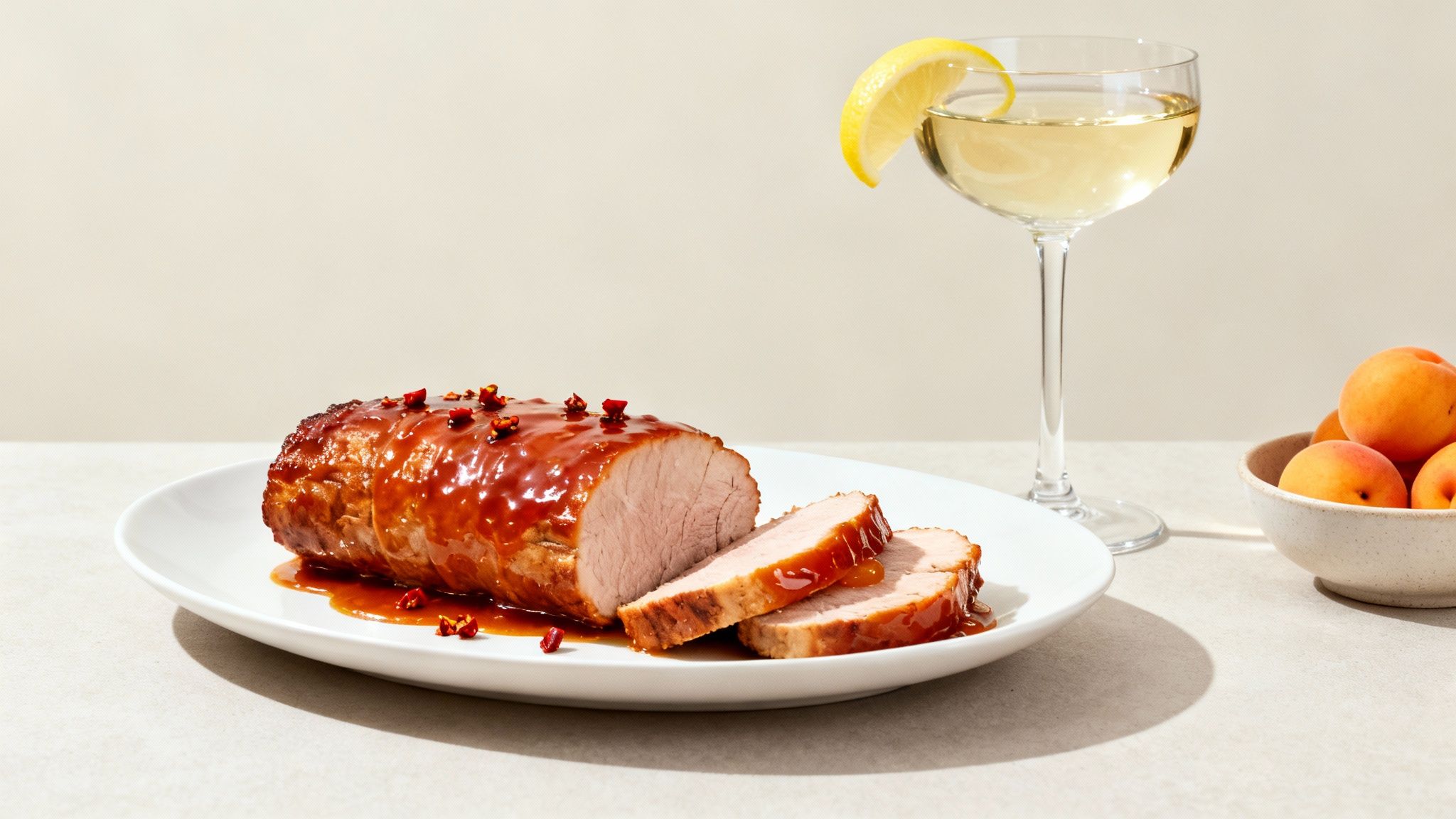
This gives you another simple tool for your wine pairing pork tenderloin decisions. It all comes back to the main idea: you're just matching the wine to the sauce. Shifting your focus like this removes the anxiety from the choice.
Why Chianti Works So Well
Think of Chianti as a wine that grew up with this exact kind of food. Its whole structure is built for savory, herb-driven meals. Unlike a heavier red, Chianti has a medium body and a kick of acidity, which is the key to its magic.
That acidity acts like a squeeze of lemon on a rich dish—it cleanses your palate and keeps each bite tasting fresh and lively. The wine is assertive enough to handle bold flavors but graceful enough not to crush the delicate texture of the pork.
The right Italian red doesn't compete with your food; it converses with it. The wine’s savory character and bright fruit notes make the herbs in your dish pop, creating a more complete and satisfying meal.
This pairing has history, rooted deep in Tuscan traditions of roasting lean pork with local herbs. In Italy, where pork is a staple, this combination is a classic. Modern analysis of over 10,000 pairings still ranks Chianti as a top choice for tenderloin with richer sauces.
When to Choose an Italian Red
So, when should you grab that bottle of Chianti? Reach for it when your pork tenderloin recipe includes these types of ingredients:
- Tomato-Based Sauces: The wine's bright acidity is a perfect dance partner for the acidity in tomatoes.
- Prosciutto or Pancetta: The salty, savory notes of cured meats are beautifully balanced by the wine's earthy character.
- Mushrooms and Herbs: If your recipe is loaded with rosemary, sage, or an earthy mushroom sauce, this is the wine you want.
Making these connections is a great way to build your pairing confidence. If you're cooking Italian-inspired food, an Italian wine is almost always a safe and delicious bet. For more ideas, check out our guide on the best wine for Italian food. This is exactly the kind of shortcut Sommy provides, giving you a clear recommendation so you can choose calmly and get back to cooking.
How To Order Wine Confidently At A Restaurant
Navigating a restaurant wine list can feel like a pop quiz you didn’t study for. The pressure is on, the server is waiting, and that long list of unfamiliar names only cranks up the anxiety.
But you don’t need to be a wine expert to order with complete confidence. Your goal is simple—get a delicious bottle that works with your pork tenderloin, not to impress anyone.
The easiest way to nail it is to ask for help with a little bit of direction.
Simple Phrases That Get Great Results
Instead of a vague "what's good?" give the server or sommelier some information to work with. This simple shift puts you in the driver's seat and makes sure you end up with something you'll actually enjoy.
Here are a few easy, effective lines you can use:
- "I'm having the pork tenderloin. Could you recommend a light-bodied red that's not too dry?"
- "We're ordering the pork with the apple glaze. Do you have a crisp white wine that would go well with that?"
- "I usually enjoy Pinot Noir. Is there something similar on your list that you'd suggest for the pork?"
These questions make it clear what you like and what you're eating, which is all the information a pro needs to point you to a fantastic recommendation for your wine pairing pork tenderloin dinner.
The secret to ordering wine isn't knowing all the answers; it's knowing how to ask the right questions. A simple, direct request shows confidence and makes the whole experience stress-free.
This is also a perfect moment for a tool like Sommy. Instead of guessing or feeling put on the spot, you can discreetly use your phone to find a great option. Sommy can give you a personalized recommendation from the restaurant's list based on your taste, turning a moment of anxiety into a quick, confident choice.
How To Choose A Bottle At The Wine Shop
Walking into a wine shop can be completely overwhelming. You're faced with an entire wall of bottles, and that quiet pressure to pick the “right” one for your pork tenderloin dinner can trigger instant decision fatigue.
You can turn this whole experience around. With a simple, three-step game plan, you can walk in, grab a great bottle, and walk out feeling confident.
First, decide on your wine style before you go to the store. Based on your recipe, you already have a good idea of what you need—maybe a light red like Pinot Noir for an herby roast, or a crisp white like Riesling for a sweet fruit glaze. Making this one decision immediately cuts down your options by about 90%.
Next, once you're in the shop, find that specific section. Most stores organize their wines by grape (like Pinot Noir) or by region (like Burgundy, France). This makes it easy to head straight for what you need while ignoring everything else.
A Simple Shopping Plan
You're in the right aisle. The final step is just to pick a bottle that fits your budget. You don't need to get bogged down trying to decipher every detail on the label. Just focus on the essentials: the grape and the price. The rest is mostly marketing noise.
Your new, stress-free shopping list looks like this:
- Decide Your Style: Know what you're looking for (e.g., "a light, fruity red").
- Find Your Section: Go directly to that aisle (e.g., "the Pinot Noir section").
- Pick Your Price: Choose a bottle that fits your budget.
This straightforward method takes the guesswork out of the equation, turning a potentially stressful task into a calm and efficient one.
Of course, this is precisely the kind of overwhelming moment a tool like Sommy was designed for. Instead of staring blankly at the shelf, you can scan bottles with your phone and get an instant recommendation that fits your taste, your meal, and your budget. For a detailed walkthrough, check out our guide on how to use Sommy in a crowded supermarket aisle.
The goal isn’t to find the single "best" wine in the store; it's to find a wine you'll enjoy with your dinner. A simple plan turns an overwhelming task into a quick, confident decision.
A Few Final Questions Answered
Even with a good game plan, a few questions always seem to pop up right when you’re standing in the wine aisle. Let’s clear up a few common ones so you can feel completely confident with your choice.
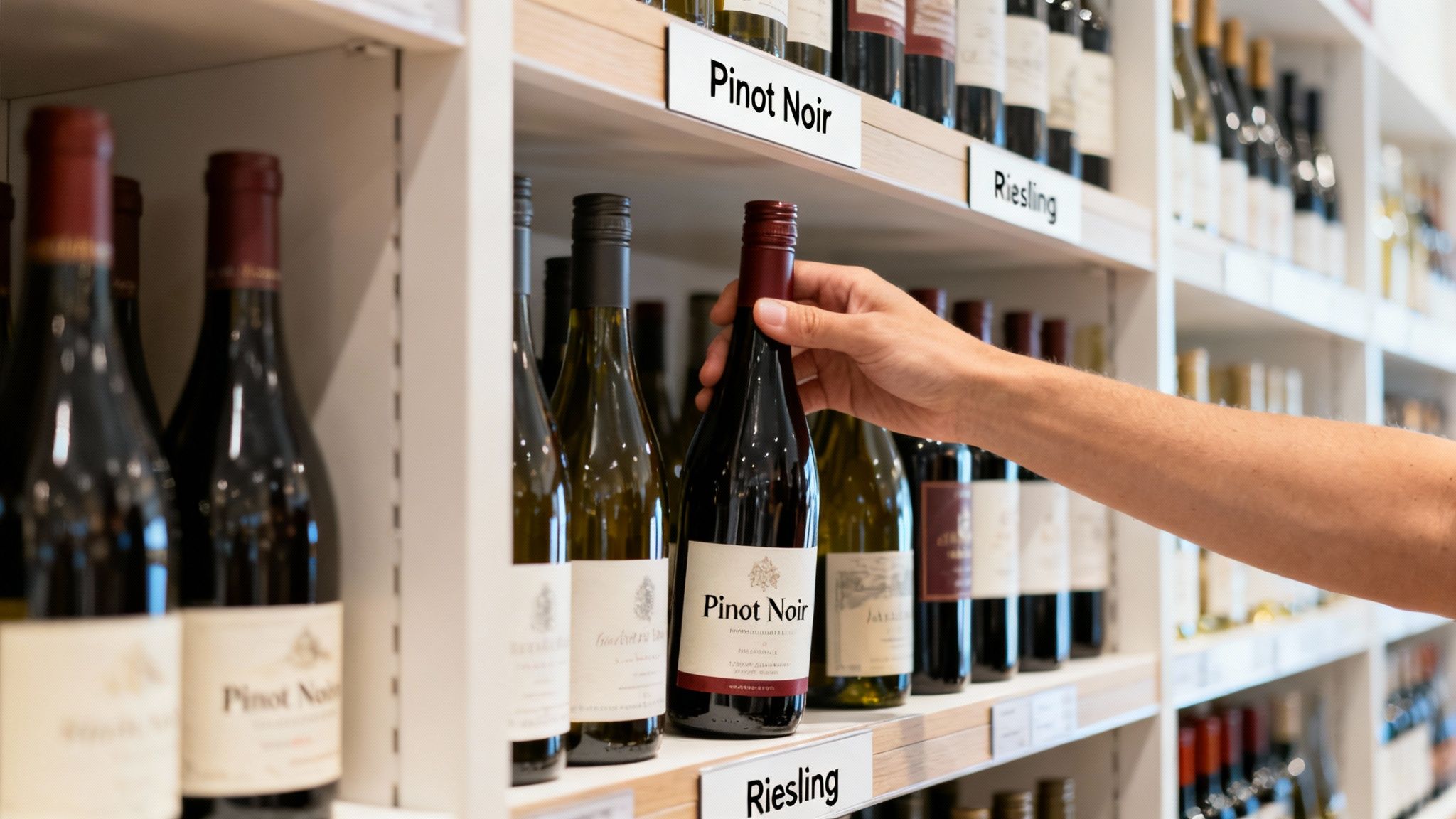
Think of this as a quick cheat sheet for those last-minute moments of doubt.
What If My Pork Tenderloin Has A Bold BBQ Sauce?
Once you bring in a smoky, tangy, and sweet BBQ sauce, you need a wine that won't get bullied. A classic choice is a fruit-forward Zinfandel from California. Its jammy berry flavors and hint of spice are a perfect match for those big, bold flavors. If you’re not in the mood for a big red, a dry Rosé with plenty of bright fruit can also work beautifully.
Can I Serve Rosé With Pork Tenderloin?
Absolutely! Rosé is one of the most versatile food wines out there, and it’s a brilliant choice for pork tenderloin, especially at a casual dinner. A dry Rosé, like those from Provence in France, has the zippy acidity to cut through the pork’s richness and lovely red fruit notes that complement the meat. It’s also the perfect peacemaker when some guests want red and others want white.
The best wine is one that makes the meal more enjoyable for everyone. Rosé is a perfect example of a versatile, crowd-pleasing option that works in many situations.
Does The Serving Temperature Of The Wine Matter?
Yes, but don’t stress about getting it perfect. For reds like Pinot Noir, serving them slightly cooler than room temperature makes their flavors pop. Just stick the bottle in the fridge for about 15-20 minutes before you open it. For whites like Riesling, you want them chilled but not ice-cold. Taking the bottle out of the fridge about 20 minutes before pouring is a great rule of thumb.
What's A Good Budget-Friendly Wine For Pork Tenderloin?
You don't need to spend a lot to get a fantastic bottle. If you're looking for an affordable red, try a Beaujolais from France. It has a similar light, fruity profile to Pinot Noir but often comes with a much friendlier price tag. For a white, a crisp Spanish Albariño or an Italian Pinot Grigio are refreshing, wallet-friendly options that work well with simply prepared pork.
If you want help choosing wine in the moment, that's exactly where Sommy can help. Instead of searching for answers online, you can use the AI assistant to get a clear, personalized recommendation that fits your meal and your taste. You can learn more at https://www.sommy.ai.