
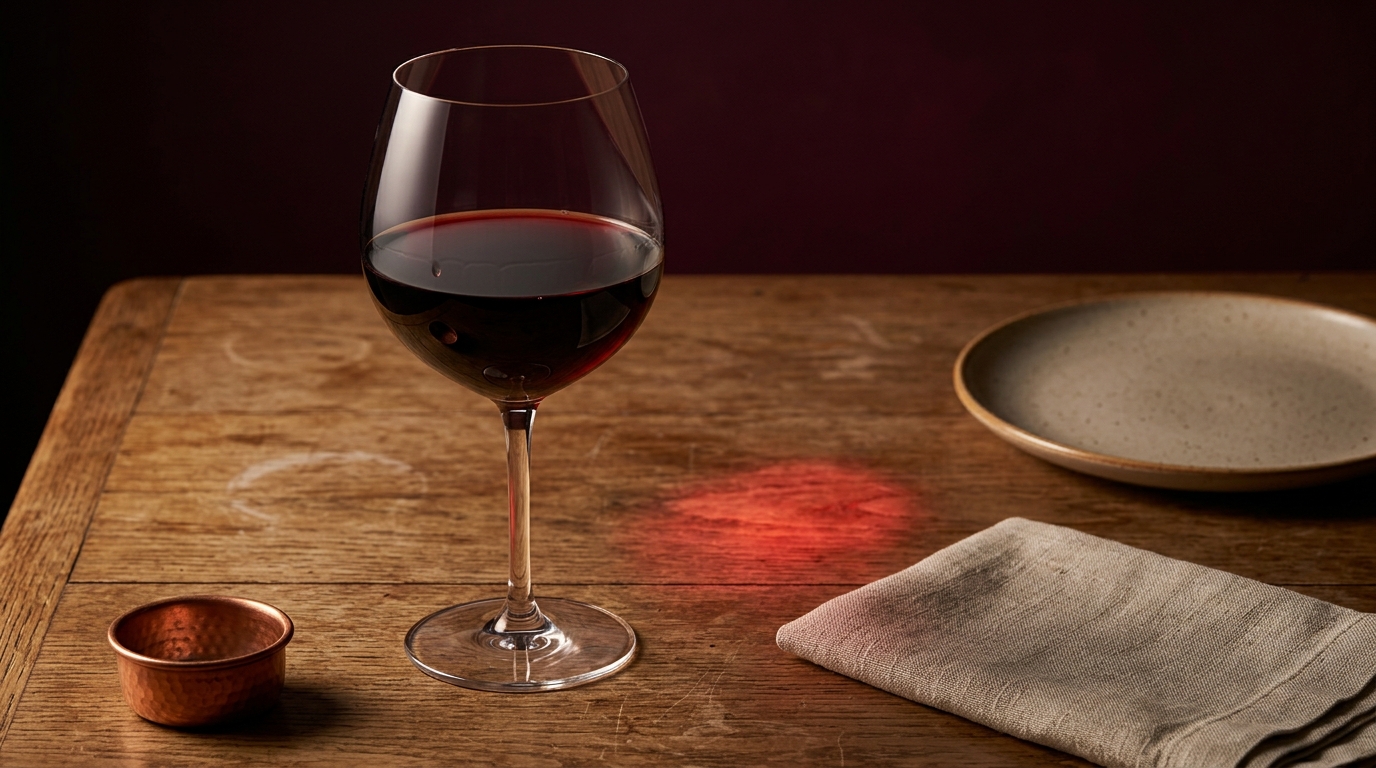

Sterling Vintner's Collection Cabernet Sauvignon is a Central Coast California Cabernet at 13.5% alcohol that usually sells for about $10 to $15, and it's made deliberately soft: ripe blackberry and plum fruit, cocoa and toffee from oak, and tannins that stay out of your way. Buy it if you want a red that behaves itself on a Tuesday alongside burgers, sausage pasta or roast chicken. Skip it if you want a Cabernet with grip, structure and something to argue about, because this bottle isn't built for that and isn't priced for it either.
What is Sterling Vintner's Collection Cabernet?
Sterling Vintner's Collection is the entry tier of Sterling Vineyards, the Calistoga winery best known for the aerial tram that carries visitors up to its hilltop tasting room. The Cabernet in that range is a broadly sourced California wine rather than a Napa bottling, and recent releases carry the Central Coast appellation on the label. It sits at 13.5% alcohol, which is modest for a modern California Cabernet.
The distinction between the winery and this particular wine matters more than most people realise when they pick it up. Sterling's estate bottlings from Napa and its single-vineyard wines are a different proposition at a different price. Vintner's Collection is the volume line, built for national distribution and priced to compete on a supermarket shelf, and it should be judged on that basis rather than against the winery's Calistoga reputation.
Sterling belongs to Treasury Wine Estates, the Australian company that also owns Penfolds, Beringer and Beaulieu Vineyard. That matters for how easy the wine is to find, since a portfolio that size gets shelf space almost everywhere, and it turns out to matter in a second way covered further down.
What does Sterling Vintner's Collection Cabernet taste like?
It tastes of ripe blackberry and plum wrapped in cocoa, vanilla and toffee, with tannins soft enough that the wine never scrapes. Wine Enthusiast describes the 2023 as opening with blackberry aromas accented by caramel and mocha, then delivering plum, blackberry pie and toffee on the palate, finishing on soft and chocolaty tannins.

What that adds up to in the glass is a Cabernet whose oak character reads as sweet baking spice rather than cedar or tobacco. The dark fruit arrives first and stays generous throughout, the mid-palate is round instead of taut, and the finish fades gently rather than gripping your gums. Nothing about it is shy, and nothing about it is demanding either.
If you've only met Cabernet through bigger, firmer bottles, this one will feel unusually easy. Our Cabernet Sauvignon taste guide walks through the range the grape covers, from the lean and herbal end to exactly this kind of ripe, oak-sweetened style, which helps explain why two bottles of the same grape can seem barely related.
The honest limitation is that it doesn't develop much. There's no reason to lay it down, no real reward for an hour in a decanter, and no hidden second act. What you smell in the first minute is what you get for the rest of the bottle, and for a weeknight wine that's a feature rather than a failing.
Is Sterling Vintner's Collection Cabernet sweet?
It isn't a sweet wine, though plenty of drinkers read it as slightly sweet, and both reactions make sense. The impression comes from very ripe fruit and from oak contributing vanilla and toffee, which your brain files under sweetness even when the sugar is low. Cocoa and caramel notes push the same button.
This is worth naming because "smooth" and "sweet" get used interchangeably in wine shops and they aren't the same thing. Smoothness here comes from soft tannins and a rounded texture. Sweetness would mean sugar left in the wine. A wine can be one without the other, and this one leans heavily on the first. Our guide to wine terms that actually predict taste covers which descriptors on a shelf talker mean something and which are decoration.
If you genuinely dislike any impression of sweetness in a red, this style will probably irritate you, and a leaner Old World Cabernet will suit you better. If you've been told you should drink dry reds but keep finding them harsh, this is close to the opposite problem and might be exactly right.
How does it compare to other everyday Cabernets?
It's softer and more oak-sweetened than most Old World Cabernet at the price, and much less structured than a serious Napa bottle, which places it squarely in the friendly middle of the value shelf.
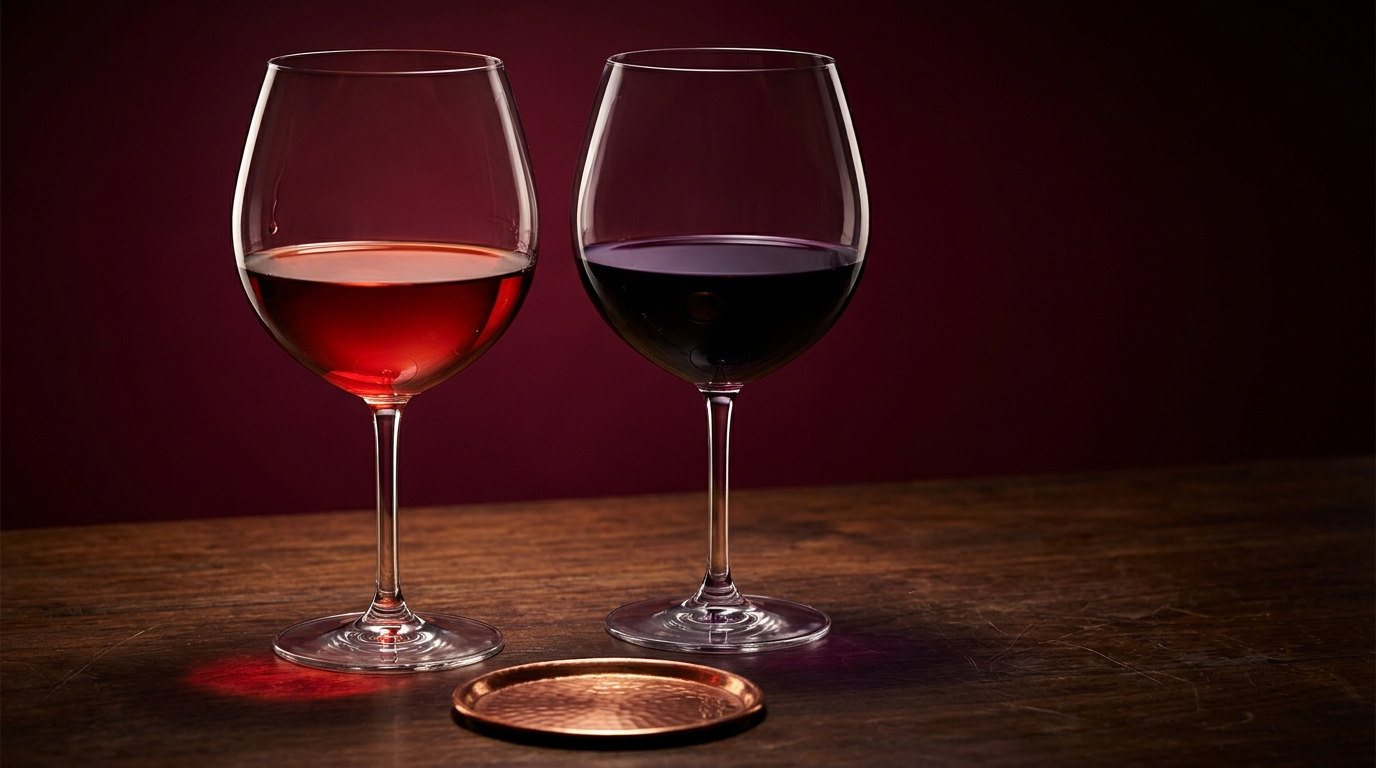
| Style | Body and texture | Tannin | What it costs |
|---|---|---|---|
| Sterling Vintner's Collection | Round, ripe, oak-sweetened | Soft | About $10 to $15 |
| Napa estate Cabernet | Dense and structured | Firm and grippy | $40 and well beyond |
| Bordeaux or Chilean Cabernet at a similar price | Leaner, more savoury and herbal | Moderate, drier feel | About $12 to $20 |
| Other California value Cabernet | Similar round, fruity style | Usually soft | About $8 to $15 |
The closest comparison most American shoppers will actually make is against Costco's house Cabernet, which plays a similar game at a similar price, and our piece on Kirkland Signature Cabernet Sauvignon covers why that range varies so much by which region is on the label. Sterling is the more consistent of the two from bottle to bottle, because it's blended to a house style across a broad appellation rather than tied to one district's vintage.
For the broader question of what you're actually buying as the price climbs, cheap wine versus expensive is the relevant read. The short version is that at this price you're paying for consistency and ripeness rather than complexity, and Sterling delivers both reliably.
What food goes with Sterling Vintner's Collection Cabernet?
Grilled burgers, sausage pasta, pepperoni pizza and roast chicken in a rich sauce all work, because the wine has enough dark fruit and oak spice to stand up to fat, char and salt without needing the dish to be elegant.
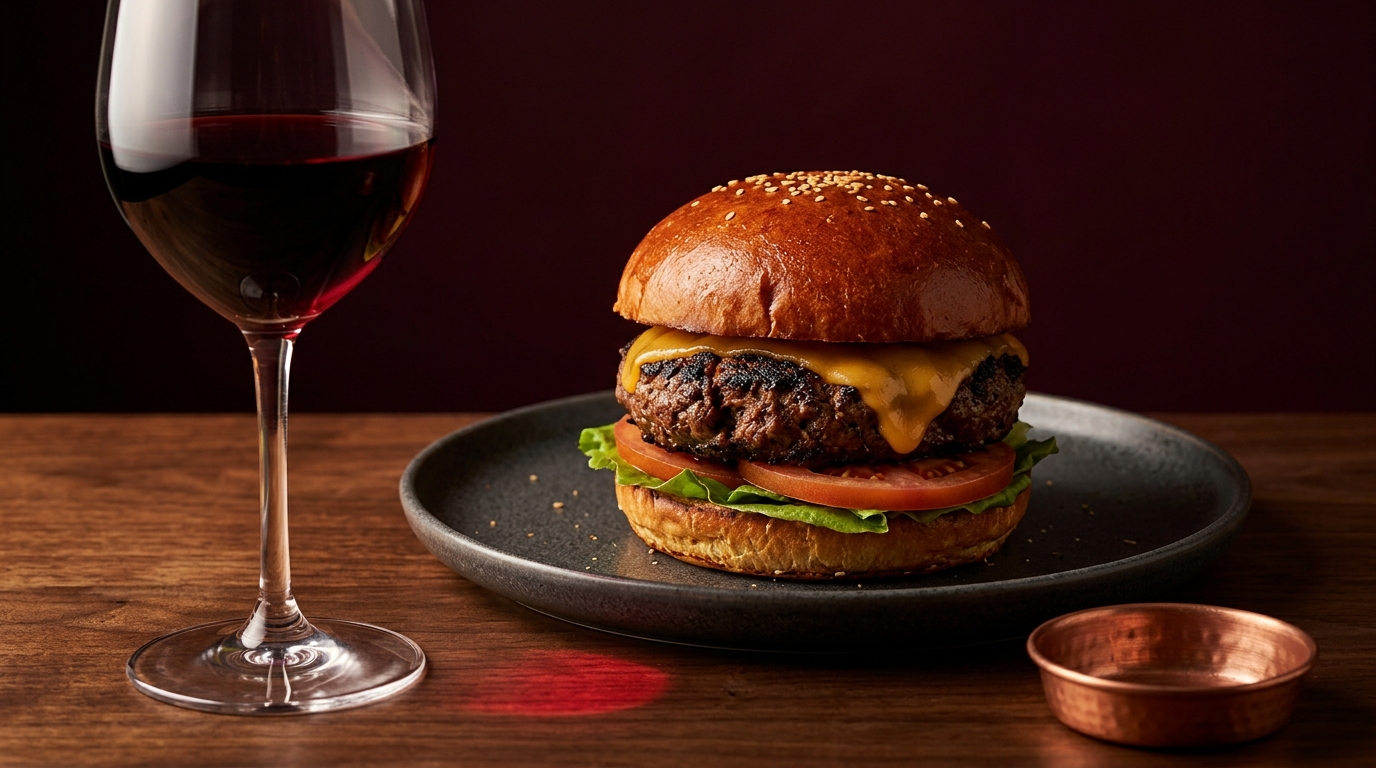
A cheeseburger is the clearest example of why it works. Char and rendered fat soften what tannin there is, the wine's ripe berry fruit plays against the salt, and the oak's smoky edge echoes the grill. Sausage pasta works on the same logic, and a tomato-based sauce is no obstacle here because the fruit is ripe enough not to turn sour against the acidity.
Where it struggles is at the delicate end. Plain grilled chicken breast, white fish and light salads leave the wine sounding louder than the plate, and nothing on the table brings its fruit into focus. Very spicy food is the other weak spot, since the ripeness and oak tend to amplify chilli heat rather than cool it.
Steak is the genuinely interesting case here. For a casual midweek steak this wine is good value and won't fight the meat. For a steak that's the centre of an occasion, you'll probably want more structure, and our steak dinner pairing guide matches wines to the cut and the sauce rather than to the word "steak".
How should you serve it?
Serve it slightly cool, around 60 to 65 degrees Fahrenheit, which for most kitchens means twenty minutes in the fridge before dinner. Warm Cabernet at room temperature loses its shape and pushes the alcohol forward, and this wine is soft enough already that it doesn't need any help going flabby.
A standard red wine glass is plenty. There's nothing here that special stemware will reveal, and decanting is optional at best, since the wine is open and ready from the moment you pour it. If dinner is on the table, pour it and get on with the evening.
An opened bottle keeps two or three days with the cork pushed back in and the bottle in the fridge. The ripe fruit actually holds up better than a more delicate red would over that stretch, which suits the way most people drink a $12 bottle across a couple of nights.
Is it worth the money, and what's happening to Sterling?
At roughly $10 to $15 it's honest value, and there's one piece of news worth knowing before you get attached to it. Treasury Wine Estates told investors on 4 June 2026 that it plans to cut its portfolio from 76 brands to fewer than 30 and concentrate on around ten, and the San Francisco Chronicle reported that the ten named were Penfolds, Daou, Beaulieu Vineyard, Frank Family Vineyards and Stags' Leap Winery among others, with Beringer and Sterling not on the list and their futures uncertain.
Treasury's own spokesperson told the paper that Beringer and Sterling "play important roles in the U.S. market and will continue to support customer and consumer needs during the transition period", while declining to comment on specific brand timelines. So nothing is disappearing from shelves tomorrow. What it does mean is that a wine whose main virtue is consistency may change hands, and a new owner can change sourcing, blending and price without changing the label much at all.
For a bottle you buy on autopilot, that's genuinely worth a moment's thought. Sterling itself was badly damaged in the 2020 Glass Fire and reopened after a large renovation, so the brand has already been through one upheaval. None of this makes the wine in front of you worse. It's a reason to taste the next vintage rather than assume it, which is decent practice with any value wine anyway.
The value case holds up regardless. You're getting a technically clean, ripe, food-friendly Cabernet at a price where a lot of competitors taste thin or confected, and grocery store wines under $15 is where this bottle competes and generally does well.
Who should buy it, and who should skip it
Buy it if you want one dependable red in the house for burgers, pasta and roast chicken, or if you're hosting people whose taste you don't know and need a bottle that almost nobody actively dislikes. It's also a sound pick if you've found big Cabernets harsh and want to work out whether the grape or the style was the problem.
Skip it if you like your reds savoury, herbal, earthy or firm. Skip it too if the bottle itself needs to carry an occasion, because this wine will do its job quietly and nobody will ask about it. Anyone chasing structure, age-worthiness or a sense of place will find the money better spent elsewhere, and that isn't a criticism of a wine that never claimed to offer any of those things.
The awkward truth about a bottle like this is that "easy to like" and "you will like it" are different claims, and no tasting note settles the second one. If you're standing in the aisle weighing it up, Sommy's Fit Check gives you a straight verdict on whether a specific bottle suits your palate, which is a more useful answer than any score. For the broader habit of choosing without agonising, how to choose wine with confidence covers the rest.
Common questions about Sterling Vintner's Collection Cabernet
Is Sterling Vintner's Collection Cabernet a dry wine?
Yes, it's made as a dry red, though its ripeness and sweet oak spice lead some drinkers to perceive a touch of sweetness. The rounded, soft texture comes from gentle tannins rather than from sugar.
Where is Sterling Vintner's Collection Cabernet from?
It's a California wine, and recent releases carry the Central Coast appellation rather than Napa Valley. The Vintner's Collection is Sterling's broadly sourced entry range, separate from the Napa estate and single-vineyard bottlings.
How much does Sterling Vintner's Collection Cabernet cost?
Expect roughly $10 to $15 for a 750ml bottle in most of the United States, with the exact shelf price varying by state and retailer. It's positioned as an everyday wine rather than an occasion bottle.
Does Sterling Vintner's Collection Cabernet need to be decanted?
This wine doesn't need decanting at all. It's approachable straight from the bottle and doesn't hold back tannin or reduction that air would need to soften, so pour it and drink it.
How long does Sterling Vintner's Collection Cabernet keep after opening?
Two to three days, recorked and refrigerated. Its ripe fruit holds together better over that window than a lighter, more delicate red would.
Should Sterling Vintner's Collection Cabernet be aged?
No, it's built for drinking on release. There's no tannic structure or acidity to reward cellaring, and a few years in a cupboard will cost it the fresh fruit that makes it enjoyable.
