

Kirkland Signature Cabernet Sauvignon isn't one wine, it's at least four, and the place name on the front label is what separates them. Costco sells Sonoma County around $6.99, Columbia Valley around $7.99, Napa Valley around $14 and Stags Leap District around $19.99, all made by different winemakers under the same brand. All four are honest bottles for the money. Which one you want depends on the dinner, not on which label looks fanciest.
Who makes Kirkland Signature Cabernet Sauvignon?
Costco doesn't own a winery, so every Kirkland Signature wine is made by an outside producer and the back label usually says who. That's the single most useful thing on the bottle, and almost nobody turns it over to look.
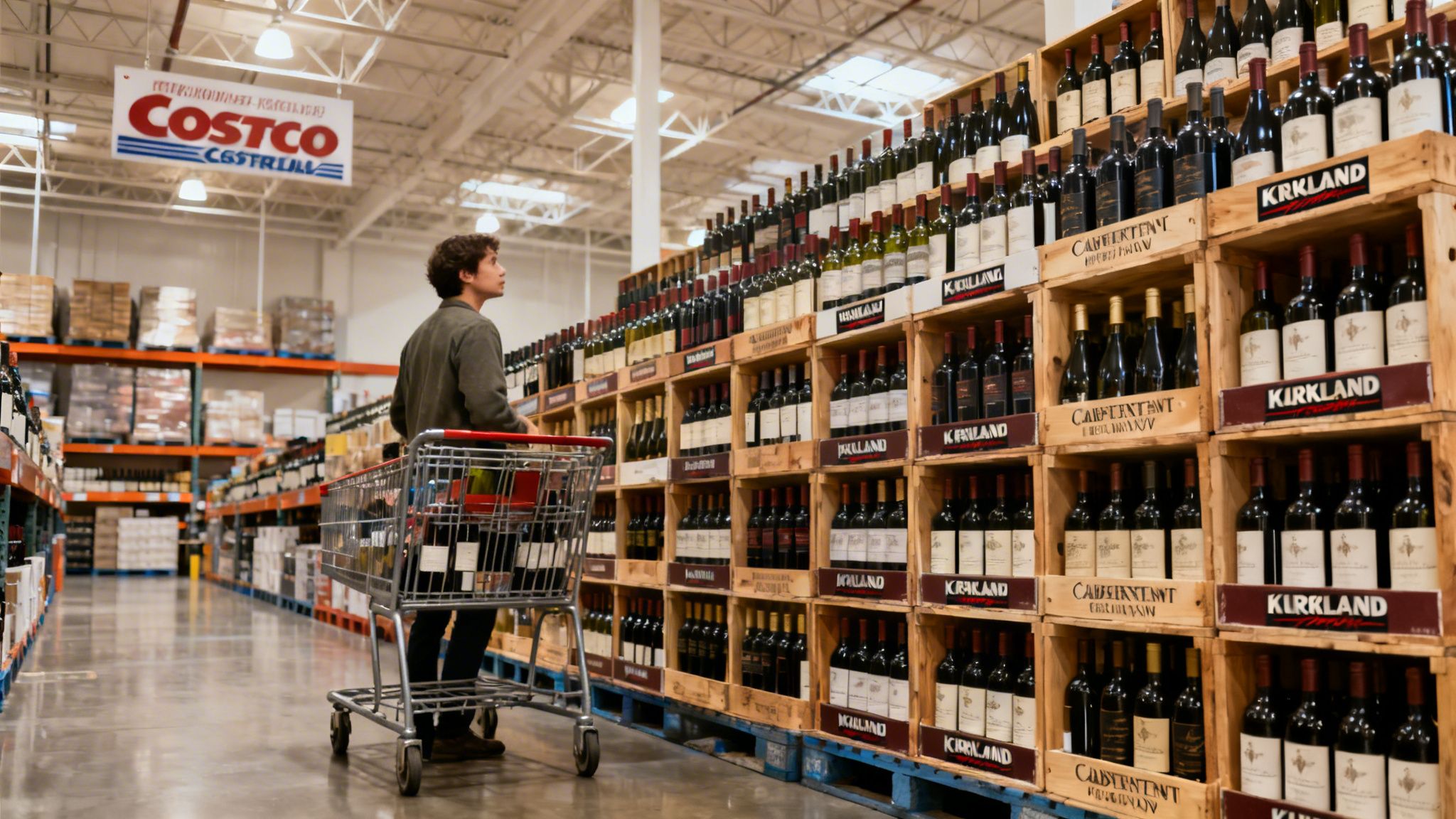
The 2023 Sonoma County Cabernet lists Grape and Grain Imports on the back, which is a division of Precept Wine, one of Costco's largest suppliers, as Costco Wine Blog reported when the bottle first appeared. The Columbia Valley bottling names Brandon Rice as winemaker and Wahluke Way as the cellar, a custom crush facility connected to Milbrandt Vineyards in Washington, which Reverse Wine Snob read straight off the back label. The Napa Valley bottle has been made by Alison Crowe for years running.
Those names matter because they explain the consistency people notice. You're not buying a mystery blend that changes hands every vintage. You're buying a specific winemaker's work with a warehouse-club price on the front, and the marketing budget of a named brand stripped out of the middle.
What does the place name on the label actually promise?
Every one of those place names is a legal minimum, not a marketing flourish, and the minimums are different depending on which kind of place it is. This is the part that makes the Kirkland range readable once you know it.
Under US federal wine labelling rules, a wine that names an American Viticultural Area on the label must be at least 85 percent from grapes grown inside that area's boundaries (27 CFR 4.25(e)(3)). A wine that names a state or a county instead only has to be 75 percent from there (27 CFR 4.25(b)). And to print "Cabernet Sauvignon" on the front at all, 75 percent of the wine has to be Cabernet Sauvignon, grown inside whatever appellation the label claims (27 CFR 4.23).
Read the Kirkland ladder with that in hand and the prices stop looking arbitrary. Sonoma County is a county appellation, so the promise is 75 percent, and the bottle is $6.99. Napa Valley and Stags Leap District are both AVAs, so the promise tightens to 85 percent, and Stags Leap is a small district sitting inside the larger Napa Valley boundary. The smaller and more specific the named place, the less fruit there is to draw on, and the more the bottle costs.
Nobody on the first page of search results for this wine explains that, because the reviews cover one bottle at a time. Once you can read the label as a promise with a number attached, you don't need a review for each new vintage. You can work out roughly what you're holding in the aisle.
Which Kirkland Cabernet should you buy?
Pick by what the evening is, since all four are drinkable and the gap between them is smaller than the price gap suggests. Here's the current range with the prices and ratings Costco Wine Blog and Reverse Wine Snob recorded on recent vintages.
| Bottling | Recent price | Appellation promise | Independent rating | Good for |
|---|---|---|---|---|
| Sonoma County (2023) | $6.99 | County, 75% minimum | 86 points, Costco Wine Blog | A weeknight bottle where price is the point |
| Columbia Valley, WA (2024) | $7.99 | AVA, 85% minimum | 16 months in American and French oak | Burgers, pizza, anything off the grill |
| Napa Valley (2024) | $14 | AVA, 85% minimum | 88 points, Costco Wine Blog | The cheapest honest route into Napa Cabernet |
| Stags Leap District (2024) | $19.99 | Sub-AVA, 85% minimum | 93 points, a Costco Wine Blog Top Pick | A steak dinner you actually care about |
The Napa bottle is the interesting one for consistency. Costco Wine Blog has scored it 88 points on the 2018, 2019, 2020, 2023 and 2024 vintages, five readings in a row at the same number, and the 2024 arrived a dollar cheaper than the year before. That's an unusually steady result for a wine at this price, and it's the strongest argument for treating Kirkland as a default rather than a gamble.
The Stags Leap District bottle is the one worth grabbing on sight. Costco Wine Blog made it a Top Pick at 93 points for $19.99, which is the sort of number that normally sits on a $50 label. It also doesn't stay on the shelf, so if you see it and you were going to buy Cabernet anyway, buy that one.
What does Kirkland Cabernet Sauvignon taste like?
All four bottlings land in the same broad place: dark fruit, soft tannins, a little oak spice, and enough weight to sit beside red meat without disappearing. They're built to be opened and drunk rather than studied, and none of them has the grippy, drying edge that makes some Cabernet hard work.
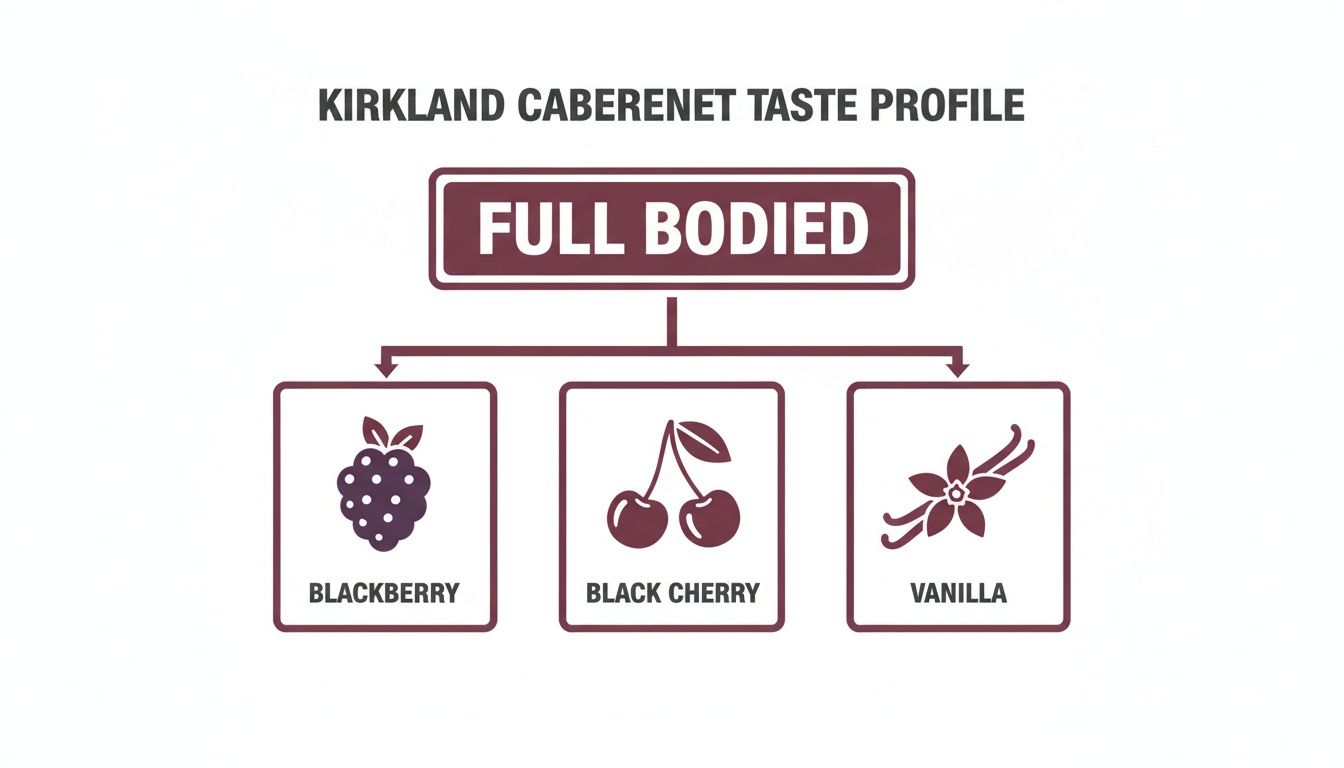
The published tasting notes differ in the details, and the details are where you'd choose between them. The Columbia Valley bottle shows black currant, spice and vanilla after its 16 months in barrel, and Reverse Wine Snob picked up leather, mint and cedar alongside the ripe dark fruit. The Sonoma bottle reads younger and fruitier, with black cherry, raspberry and plum, and a touch of mocha into the finish. The Napa bottle runs to blueberry and blackberry with baking spice and a light oak tail.
All four sit at 14.5 percent alcohol, which tells you something the tasting notes don't. That's a ripe, warm, full-bodied style across the board, so if you already know you prefer lighter reds, none of these is going to convert you. If you like bold red wines and what makes them enjoyable, you'll feel at home with any of them.
Worth saying plainly: not everybody loves this style. Readers commenting on the Stags Leap bottle split between calling it a tremendous value and calling it too sweet and too fruit-forward for a dinner wine. Both reactions are fair, and which one you have depends on whether you like modern California Cabernet, not on whether the wine is well made.
What food goes with Kirkland Cabernet?
Match the weight of the wine to the weight of the food and you'll be right most of the time. A full-bodied red with soft tannins and ripe dark fruit wants something savoury and substantial across the table from it, and it gets lost next to anything delicate.
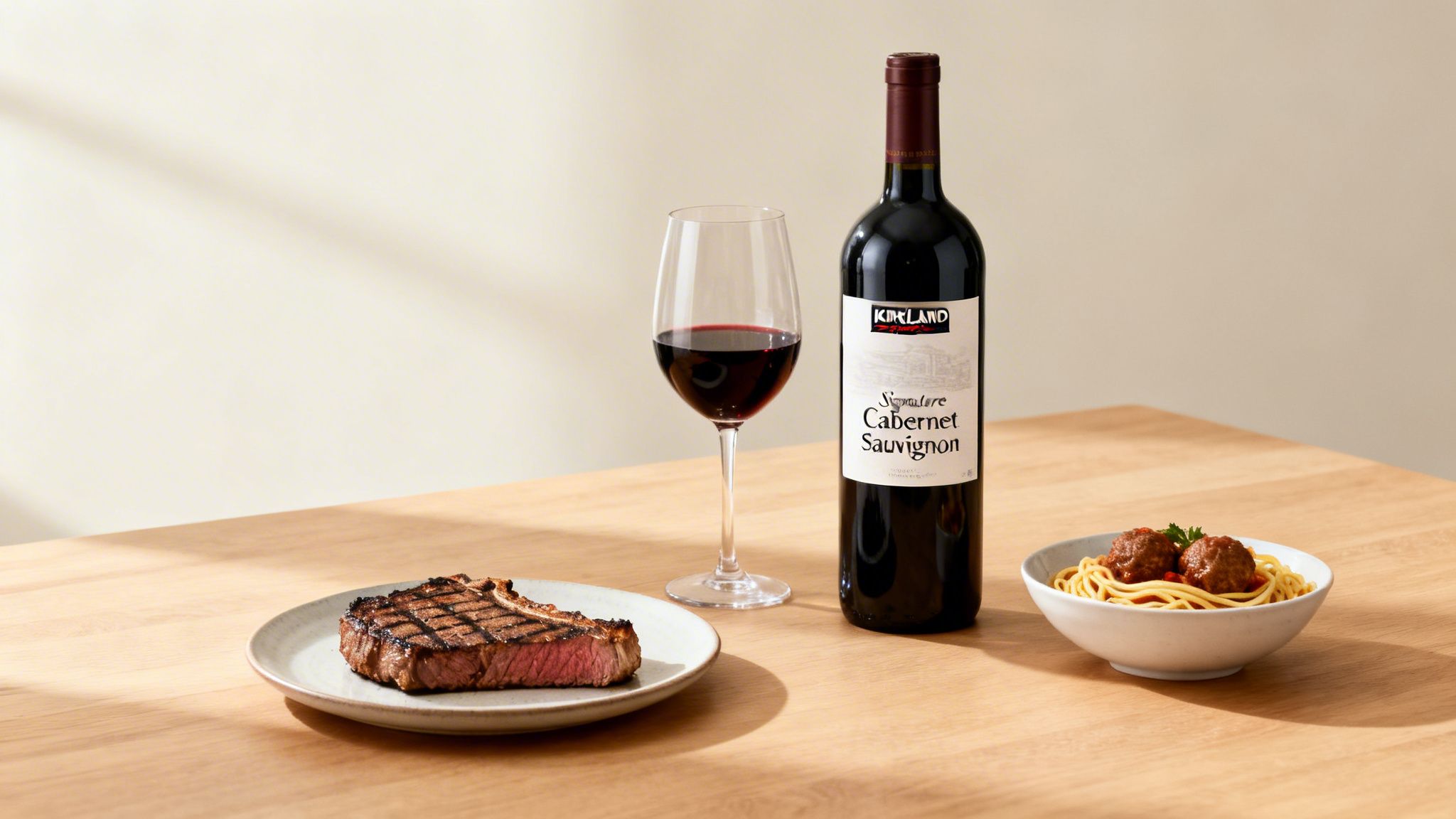
A grilled burger is the easiest answer, because the char and the fat both have somewhere to go against the wine's fruit. Spaghetti and meatballs works for the same reason once you account for the tomato, which needs the wine to have enough body to not taste thin beside it. A slow-cooked beef stew with root vegetables suits the richer Napa and Stags Leap bottles, and a simple grilled sirloin doesn't need an expensive cut to make the pairing land. For more on the general principle, our guide to food to pair with red wine covers the reasoning rather than just the list.
If you're pouring the cheaper bottles for a crowd, they handle pizza, chilli and barbecue without complaint, which is most of what a $7 Cabernet gets asked to do.
Is Kirkland Cabernet Sauvignon good value?
At $6.99 to $19.99 for wines that independent reviewers score between 86 and 93 points, yes, and the Stags Leap bottle at 93 points for $19.99 is the clearest bargain of the four. Value here means you're paying for the liquid and very little else, because Costco buys in volume and the Kirkland label carries no advertising cost.
There are still evenings when a different bottle makes more sense. A milestone birthday or an anniversary usually wants a wine with a story attached, and a store brand doesn't have one no matter how it tastes. The same goes for a gift, where the label is part of what you're handing over, which is why our guide to choosing wine as a gift treats it as a separate problem. And if you're actively trying to learn what you like, tasting across different producers teaches you more than repeat-buying one reliable bottle.
For the ordinary Tuesday, though, a $7 Kirkland Cabernet is difficult to argue with. If you want to think harder about where the line sits between an everyday bottle and an upgrade, we work through it in our guide to cheap wine that tastes good.
How do you find the one you want in stock?
Costco rotates wine harder than almost anything else it sells, so the bottle a review praises is often gone by the time you go looking. The item number is the way around that, and it's printed on the shelf tag rather than the bottle.
Costco Wine Blog publishes the item number with every review for exactly this reason, and the Costco app lets you search a warehouse by that number to see whether your local store has it. The Sonoma County Cabernet is item 1907651, the Napa Valley is 929290, and the Stags Leap District is 505081. Checking before you drive out beats standing in front of an empty space where a Top Pick used to be.
Two practical things follow from the rotation. The cheaper bottlings, Sonoma and Columbia Valley, restock reliably and you can treat them as always available. The Stags Leap District bottle behaves like a limited release, so when it's there, buy more than one if you liked the last vintage. Readers commenting on the 2024 release described clearing their local shelf within a day of the review going up, and at least one turned up to find the last bottle already gone.
What does the Kirkland Signature label actually change?
The Kirkland Signature program is a private label, which means Costco commissions the wine and puts its own name on it rather than reselling somebody else's brand. The producer stays the same, the fruit stays the same, and what disappears is the distributor margin and the advertising spend that a national wine brand builds into its shelf price.
That's the honest version of why these bottles undercut comparable wines. It isn't a secret stash of famous-winery juice sold cheap, a story that follows Kirkland wine around and has never had much evidence behind it. It's a large retailer buying in volume, commissioning a known winemaker, and skipping the parts of the supply chain that add cost without adding flavour.
One consequence worth knowing: because the producer can change between vintages, the wine can change too. The Napa bottle's five straight 88-point scores suggest it hasn't changed much, but a Kirkland label is a promise about origin and grape rather than a promise that this year's bottle tastes like last year's. If a vintage disappoints you, the next one is a genuinely different wine, not the same mistake repeated.
How do you remember which one you liked?
This is the real problem with the Kirkland range. You buy one, you enjoy it, and three weeks later you're back in front of the same stack unable to remember whether it was the Washington bottle or the Sonoma one. The labels look alike on purpose.
Photographing the back label on your phone before you leave the store solves it for free. If you'd rather it were organised, Sommy's Label Scan reads the bottle from a photo and files it against your Taste Profile, so the next time you're standing in that aisle you can check what you thought last time instead of guessing. Getting better at reading the bottle itself helps too, and our guide to how to read wine labels starts with the parts that carry legal meaning.
Kirkland isn't the only Cabernet people come to Costco for, either. Our guide to Precision, the other Napa Cab Costco shoppers hunt for covers what you're getting for the money there.
Questions people ask about Kirkland Cabernet Sauvignon
Who makes Costco Kirkland Cabernet Sauvignon?
Different producers make different bottlings, and the back label names them. The Sonoma County wine comes through Grape and Grain Imports, a division of Precept Wine. The Columbia Valley wine names winemaker Brandon Rice and the Wahluke Way cellar in Washington. The Napa Valley wine has been made by Alison Crowe across several vintages. Costco itself owns no winery and never has, so every bottle under the label is somebody else's work.
Is Kirkland Cabernet Sauvignon any good?
They're good for what they cost, which is the only fair way to judge them. Costco Wine Blog has rated recent vintages between 86 and 93 points, with the Napa Valley bottle landing on exactly 88 points across five separate vintages. None of them is a complex wine you'd cellar, and all of them are sound, ripe, easy-drinking Cabernet at prices between $6.99 and $19.99.
What is the best Cabernet Sauvignon at Costco?
Among the Kirkland bottlings, the Stags Leap District Cabernet is the standout, scored 93 points and named a Top Pick by Costco Wine Blog at $19.99. The Napa Valley bottle at around $14 is the better everyday choice if the Stags Leap has sold out, which it often has.
Does Kirkland Cabernet need to breathe?
You can pour it straight away without losing much. If you have 15 to 30 minutes, letting it sit in the glass softens the edges and brings the dark fruit forward, and you don't need a decanter to get that. These are young, fruit-forward wines rather than tight, tannic ones, so the difference is real but modest.
How long can you keep a bottle of Kirkland Cabernet?
Drink it within one to three years of the vintage on the label. These are made to be enjoyed young and they won't improve with age the way a serious Cabernet might. Store the bottle on its side somewhere cool and dark so the cork doesn't dry out, and it'll be fine for a couple of years.
Why are there so many different Kirkland Cabernets?
Costco sources from several regions at once and labels each one with its actual origin, which is a legal requirement rather than a choice. A wine naming an AVA like Napa Valley must be at least 85 percent from that area, and one naming a county like Sonoma must be at least 75 percent, so each source region has to get its own bottling rather than being blended into a single house wine.
Kirkland Cabernet Sauvignon rewards about thirty seconds of label reading and nothing more than that. Check the place name, know what percentage it promises, and pick the tier that matches the meal. If you'd like a second opinion on the bottle actually in front of you, Sommy can tell you whether it fits what you already know you like.