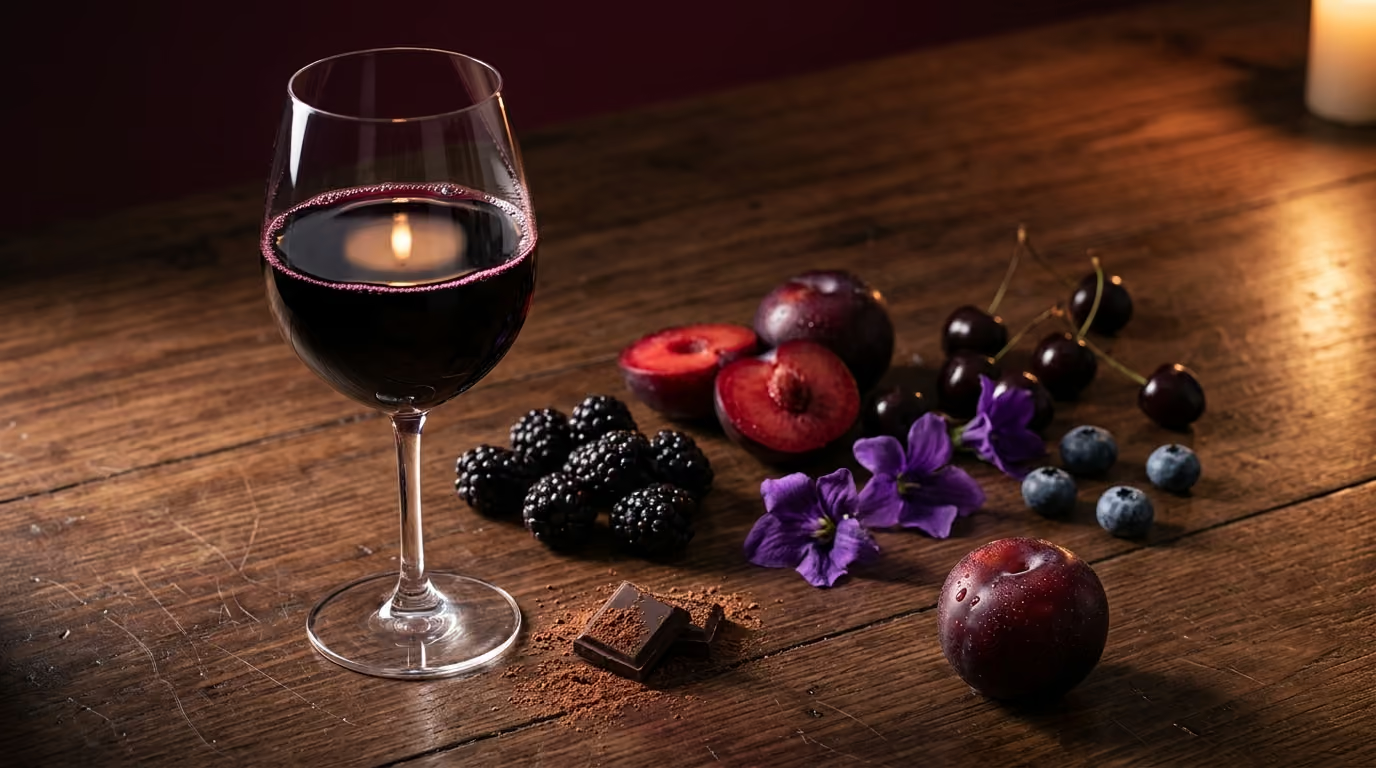
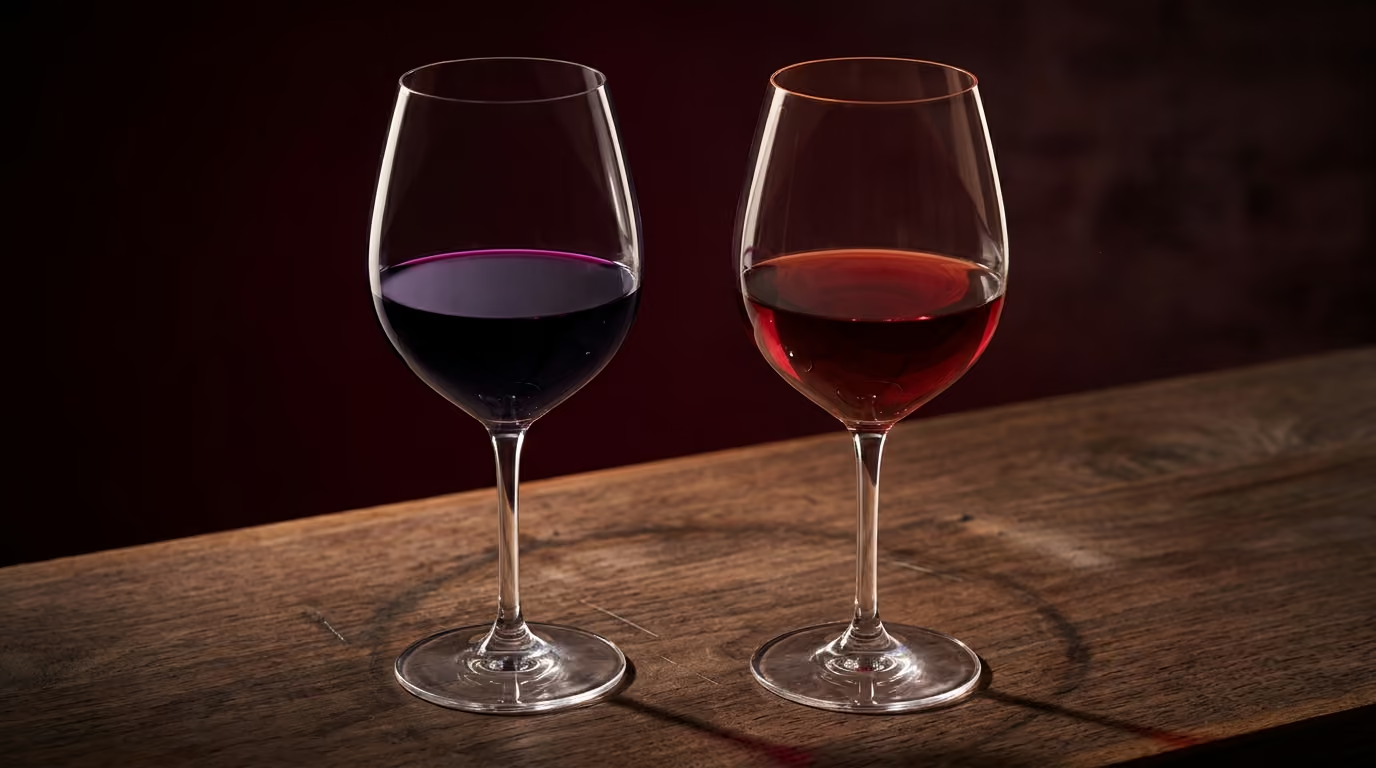

Malbec and Merlot are both dry red wines that started in France, and the usual one-line summary of them is backwards. Nearly every page you'll find says Malbec is the firm, tannic one and Merlot is the soft one, but the reference profiles measure Malbec at medium tannin with a full body and medium-low acidity, against medium-high tannin and medium acidity for Merlot. Both sit at 13.5 to 15 percent alcohol. What actually separates the two bottles in front of you is where the grapes grew and what you paid, so if you want dark plum, cocoa and an almost opaque glass, reach for an Argentine Malbec, and if you want red cherry, plum and a rounder finish, reach for a Merlot from Chile or entry-level Bordeaux.
What's the real difference between Malbec and Merlot?
Malbec is Argentina's signature red and Merlot is Bordeaux's most planted grape, and that single sentence explains most of what you'll taste. Malbec has thick skins loaded with color pigment, which is why the wine pours a deep purple with a bright magenta rim, and why it needs sunshine to ripen properly. Merlot has thinner skins and pours a lighter ruby, and the grape ripens earlier and more easily in the damp, moderate climate it came from.
The geography is not a small detail here, because both grapes travelled and only one of them became famous somewhere new. Malbec comes from southwest France, where it's still called Côt, and it was planted in Mendoza in 1868 by the French botanist Michel Pouget, who had been hired to improve the quality of Argentine wine, and it worked better than anyone involved can have expected. Today 40 percent of Argentina's red grape vineyard area is Malbec, and the high-altitude sites in Mendoza and the Uco Valley give it the cold nights it needs to hold onto acidity.

Merlot never needed rescuing, because it's the second most planted grape in the world after Cabernet Sauvignon, and its home region is still its center of gravity, which means a great deal of the Merlot on any shelf is either Bordeaux or made in the Bordeaux image. Chile, Washington, Tuscany and California all grow a lot of it, and the style swings widely across those places, from restrained and medium-bodied to lush and chocolatey. If you want the full picture of how that one grape manages to taste so different from bottle to bottle, we wrote about Merlot's texture before its flavor separately.
Which one is actually softer, Malbec or Merlot?
On the reference numbers, Merlot is the grippier of the two, and almost everything written about this pair says the opposite. Wine Folly's grape profiles measure both varieties the same way, which makes them worth reading side by side rather than one at a time.
| Malbec | Merlot | |
|---|---|---|
| Tannin | Medium | Medium-high |
| Body | Full | Medium-full |
| Acidity | Medium-low | Medium |
| Alcohol | 13.5% to 15% | 13.5% to 15% |
| Primary flavors | Red plum, blackberry, vanilla, sweet tobacco, cocoa | Cherry, chocolate, plum, bay leaf, vanilla |
Read the columns and the popular version of this comparison falls apart in two places. Malbec is rated medium for tannin while Merlot is rated medium-high, and the alcohol band is identical, so the idea that one of these is a big structured wine and the other is a gentle one isn't coming from the grapes. Tannin is the drying, gum-scrubbing sensation that makes a red feel firm rather than smooth, and our explainer on what wine tannins actually do covers the sensation without the chemistry.
What the popular version is describing is mostly a price comparison wearing a grape comparison's clothes. The Merlot that taught a generation of American drinkers what Merlot is was inexpensive, warm-climate and deliberately soft, because warmer sites give softer tannins along with higher alcohol and more body. Set that against Malbec, where the cheap bottles are genuinely dark and concentrated rather than watery, and the inky one feels like the serious one. The adjectives are real descriptions of real bottles. They just belong to the bottles rather than to the varieties.
Where Malbec is genuinely fuller is body, which is the weight of the liquid on your tongue rather than the grip at the end. Full against medium-full is a small gap on paper and a noticeable one in the glass, and it's amplified by the color, because a wine you can't see through reads as heavier before you taste it. Malbec's medium-low acidity adds to that impression, since acidity is what makes a red feel lifted and refreshing, and having less of it leaves the fruit sitting heavier.
You can settle this for yourself in about ten minutes, and it's the fastest way to stop trusting anyone's adjectives, including ours. Open one bottle of each at a similar price, pour both, and ignore the aromas entirely for the first pass. Take a sip of the Malbec, swallow, and wait five seconds for the drying feeling to arrive at your gums and the inside of your cheeks. Then do the same with the Merlot. Most people are surprised to find the grip lasts longer on the Merlot while the Malbec feels thicker and warmer in the middle of the mouth, which is exactly what the profiles predict and the opposite of what they expected.
Why do Malbec and Merlot keep turning up in the same bottle?
They're half-siblings, and they still grow side by side in Bordeaux. The Vitis International Variety Catalogue records Merlot Noir's parentage as Magdeleine Noire des Charentes crossed with Cabernet Franc, confirmed by genetic markers. Malbec is a natural cross of Prunelard and that same Magdeleine Noire des Charentes, which makes the two grapes relatives through a shared parent almost nobody has heard of.
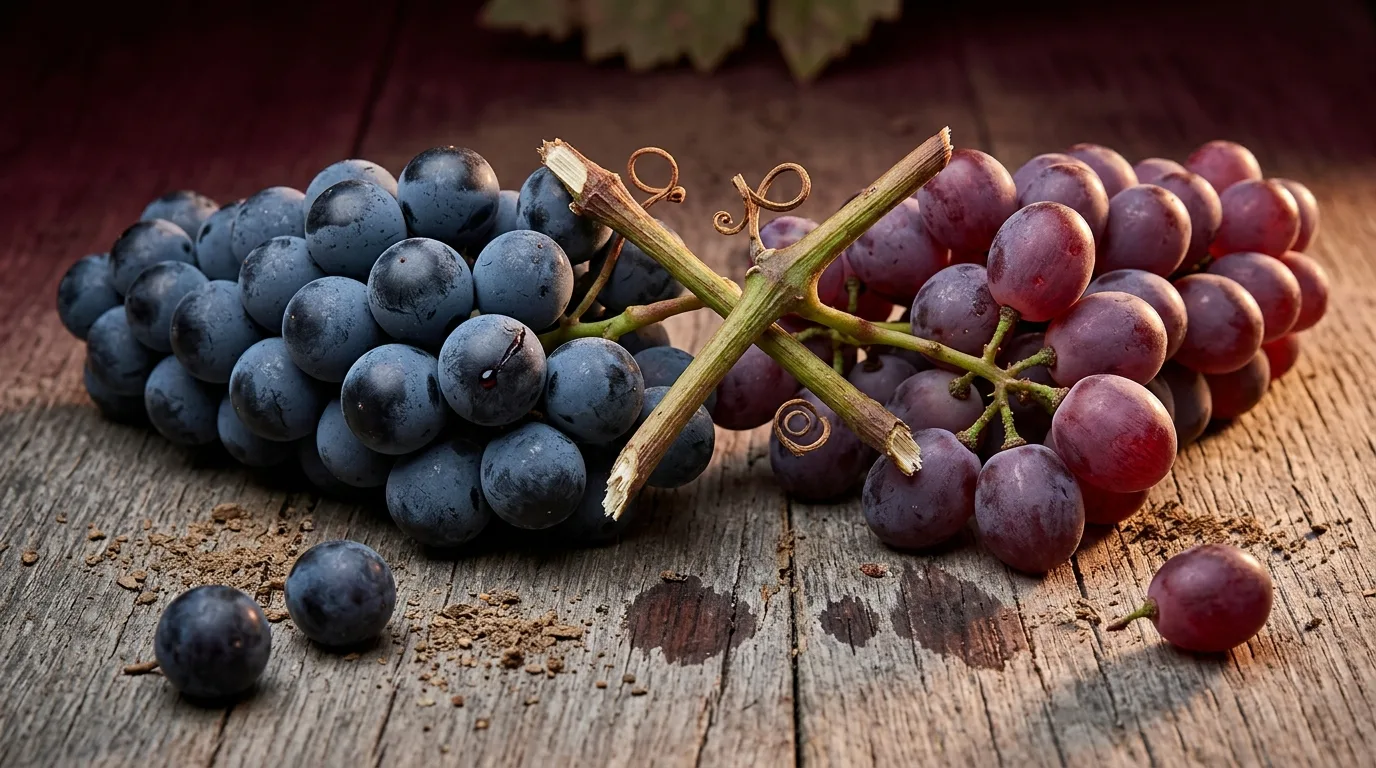
The family connection shows up in the vineyard too. Both are permitted red varieties in Bordeaux, and the Bordeaux Wine Council publishes the split: Merlot is 66 percent of the red vineyard, Cabernet Sauvignon 22.5 percent, Cabernet Franc 9.5 percent, and the auxiliary varieties, Petit Verdot, Malbec and Carménère together, account for the remaining 2 percent. Two-thirds against a share of 2 percent is a lopsided relationship, and it wasn't always that way. Malbec was a significant Bordeaux grape and lost the argument on farming rather than flavor, because it resists fungal disease and pests poorly in a region where rain at the wrong moment is the main risk. The same thick-skinned, sun-loving habit that struggles in a damp maritime climate is exactly what thrives in a high desert.
This matters when you're reading a label rather than a textbook. A Bordeaux blend can legally contain both grapes, and so can the American wines made in that style, which is why a Napa Bordeaux blend isn't called Cabernet even when Cabernet leads it. Choosing between Malbec and Merlot as though they were opposing teams misreads how often winemakers use them in the same glass.
Why is Malbec so cheap?
Malbec isn't an inexpensive grape, but the Malbec that fills American shelves is high-volume Mendoza fruit, and that's a different thing. Argentina planted its red vineyard around this one variety, so there's simply a lot of it, and it grows in a dry, sunny, irrigated region where the disease pressure that ruined its Bordeaux career barely exists. Dependable ripening in a place with no fungal problem means dependable yields, and dependable yields are what make a wine affordable at scale.
The second half of the answer is that Argentina's expensive Malbec exists and most people have never bought it. High-altitude single-vineyard bottlings from the Uco Valley are a serious category with serious prices, and they taste nothing like the entry-level version, because elevation and cold nights preserve the acidity that the warmer, lower sites lose. Nobody encounters those bottles in a supermarket, so the grape's reputation gets set by its cheapest tier.
Merlot's floor is lower than its reputation suggests too, for the same structural reason in reverse. It's Bordeaux's workhorse at 66 percent of the red vineyard and the world's second most planted red grape, which means enormous quantities of ordinary Merlot are made every year alongside the famous ones. The difference is that Merlot's prestige end is more famous than Malbec's, so the grape keeps the glamour even when the bottle costs nine dollars.
Which one is the safer buy at your price?
At the bottom of the shelf, Malbec is the more reliable pick, and that's our honest view rather than a measurement. Cheap Mendoza Malbec has an unusually high floor, because the climate delivers ripe fruit almost every year and the style doesn't depend on expensive winemaking to taste like itself. Inexpensive Merlot is more variable, since the grape ripens early and can turn flat and vaguely jammy when it's grown somewhere too warm and picked for volume.
Spend a little more and the advantage flips. The step up from the cheapest tier buys Merlot a great deal, because that's where Right Bank Bordeaux, better Chilean bottlings and Washington State Merlot live, and those wines use the grape's acidity and tannin rather than hiding them. The same step up in Malbec often buys more oak and more alcohol instead of more detail, which is a style choice some people love and others find tiring by the second glass.
Above that, you're not really comparing grapes anymore, you're comparing two different ambitions. A high-altitude Uco Valley Malbec and a Saint-Émilion or Pomerol Merlot are both trying to be serious wines, and they get there by opposite routes, one through altitude and concentration and the other through blending and age. Either can be worth the money, and neither is a safer bet than the other.

None of which tells you whether you'll enjoy the specific bottle you're holding, which is the gap a chart can't close. If you're standing in the aisle deciding between a fourteen-dollar Malbec and a fourteen-dollar Merlot, Fit Check gives you a verdict on whether that exact bottle suits your style, which is a narrower and more useful question than which grape is better.
What should you pour with each one?
Malbec wants grilled red meat and smoke, and Merlot wants roast chicken and tomato sauce. Malbec's dark fruit and cocoa stand up to barbecue, hearty stews and leaner red meats, and Wine Folly makes the specific point that melted blue cheese brings out its fruitiness, which is a better recommendation than it sounds. A burger with blue cheese on it is close to a perfect Malbec pairing, and the wine's low acidity is no handicap against a rich dish because the smoke and char do that work instead.
Merlot's range makes it the more flexible of the two at the table. An easy entry-level bottle is happy with pizza, barbecue chicken or a creamy mushroom pasta, and a Merlot-dominant blend from Bordeaux handles roast turkey, beef short rib or a rustic ratatouille. Push into the lush warm-climate styles from Napa and you're into rack of lamb and filet mignon territory. If pork is what's actually for dinner, our pork chop pairing guide goes cut by cut and sauce by sauce, since the sauce usually decides the wine more than the meat does.
The place both grapes struggle is the same place most reds struggle, which is a dish with real heat or sharp acidity in it. Alcohol amplifies chili heat, and both of these wines can reach 15 percent, so a spicy stir fry will taste hotter rather than better. Vinaigrette-heavy salads and anything built on lemon will make a medium-low-acid Malbec taste flabby, and Merlot handles that slightly better without being the right answer either.
If you're cooking for a group and want one bottle to cover a mixed table, Merlot is the safer single choice of the two. Its acidity means it doesn't collapse next to a tomato sauce, its tannin is gentle enough that nobody finds it harsh, and it sits comfortably with poultry, pork and beef in a way a full-bodied Malbec does not. Malbec is the better choice when the menu has one clear center, and that center involves a grill.
Is Malbec a good wine for beginners?
Malbec is one of the best red wines to start with, mainly because it's forgiving in the two ways beginners care about. Medium tannin means it won't dry your mouth out the way a young Cabernet Sauvignon or Nebbiolo can, the dark plum and cocoa flavors are easy to recognize and name, and the price floor is low enough that an experiment costs very little. If you want the longer version, we covered what Malbec tastes like on its own and which bottles show it most clearly.
The honest caveat is that the same qualities get monotonous. Malbec's softness and its low acidity mean the wines can blur together after a while, and at 15 percent alcohol a second glass arrives heavier than you expected. Merlot is a slightly harder first red to love and a more interesting one to keep drinking, because the acidity gives it somewhere to go with food. Plenty of people start on Malbec and end up on Merlot, and that's a sensible path rather than a change of mind.
Common questions about Malbec and Merlot
Is Malbec sweeter than Merlot?
Neither one of them is sweet, and the profiles are explicit about it. Wine Folly lists Malbec as dry and Merlot as bone dry, so any sweetness you taste in either is ripe fruit flavor rather than sugar. Malbec's dark plum and cocoa notes do read as sweeter than Merlot's cherry and bay leaf, which is why the impression is so common.
Which is nicer, Merlot or Malbec?
That depends on what you want from the glass, and the two are closer than their reputations suggest. Malbec gives you a fuller, darker, lower-acid wine with dark fruit and cocoa, and Merlot gives you more grip, more acidity and a red-fruit profile that works with a wider range of food. For a cheap bottle we'd take the Malbec, and once you're spending a little more we'd take the Merlot.
Is Malbec stronger than Merlot?
They're the same strength on paper, and the published profiles agree. Both grapes are profiled at 13.5 to 15 percent alcohol, so a Malbec is not inherently more alcoholic than a Merlot. The difference you notice is body and color rather than alcohol, since Malbec is fuller-bodied and nearly opaque while Merlot is medium-full and ruby.
Is Malbec the same grape as Côt?
Yes, Côt is Malbec's French name, and you'll also see it called Auxerrois in parts of southwest France. A bottle from Cahors labelled Côt or Malbec holds the same variety that Mendoza made famous, usually in a firmer and more savory style.
Is Merlot a Bordeaux grape?
Merlot is the most planted grape in Bordeaux at 66 percent of the red vineyard, according to the Bordeaux Wine Council. Malbec is permitted there too, as one of the auxiliary varieties that share the remaining 2 percent with Petit Verdot and Carménère, which is why the two grapes can appear in the same blend.
Can you cook with Malbec instead of Merlot?
You can, and the dish will come out a little darker and sweeter in flavor. Malbec's lower acidity makes it slightly less useful for cutting through a rich braise, so for something like a beef stew built on wine, a Merlot or a Bordeaux blend gives you a cleaner result. Either beats a bottle labelled cooking wine.
What to check on the shelf next time
Look at the region before you look at the grape name, because it tells you more. Mendoza on a Malbec label means ripe, dark and dependable, and the Uco Valley or a stated altitude means something tighter and more structured. Bordeaux or Chile on a Merlot label points toward restraint and acidity, and Napa or a warm California appellation points toward lush and chocolatey. The grape narrows the field; the place and the price decide the bottle.
The thing neither label can tell you is whether this particular wine is one you'll want to finish. Both of these grapes make bottles people adore and bottles the same people quietly leave half full, and the variety on the front is a poor predictor of which one you're holding.