
Finding good red wine bottles is about knowing what you like, not memorizing wine theory. To confidently pick a bottle that fits the moment, just match the wine to your personal taste, the occasion, and your budget. This simple approach turns a confusing choice into an easy one, ensuring you get a wine you'll actually enjoy.
Why Does Choosing Red Wine Feel So Hard?
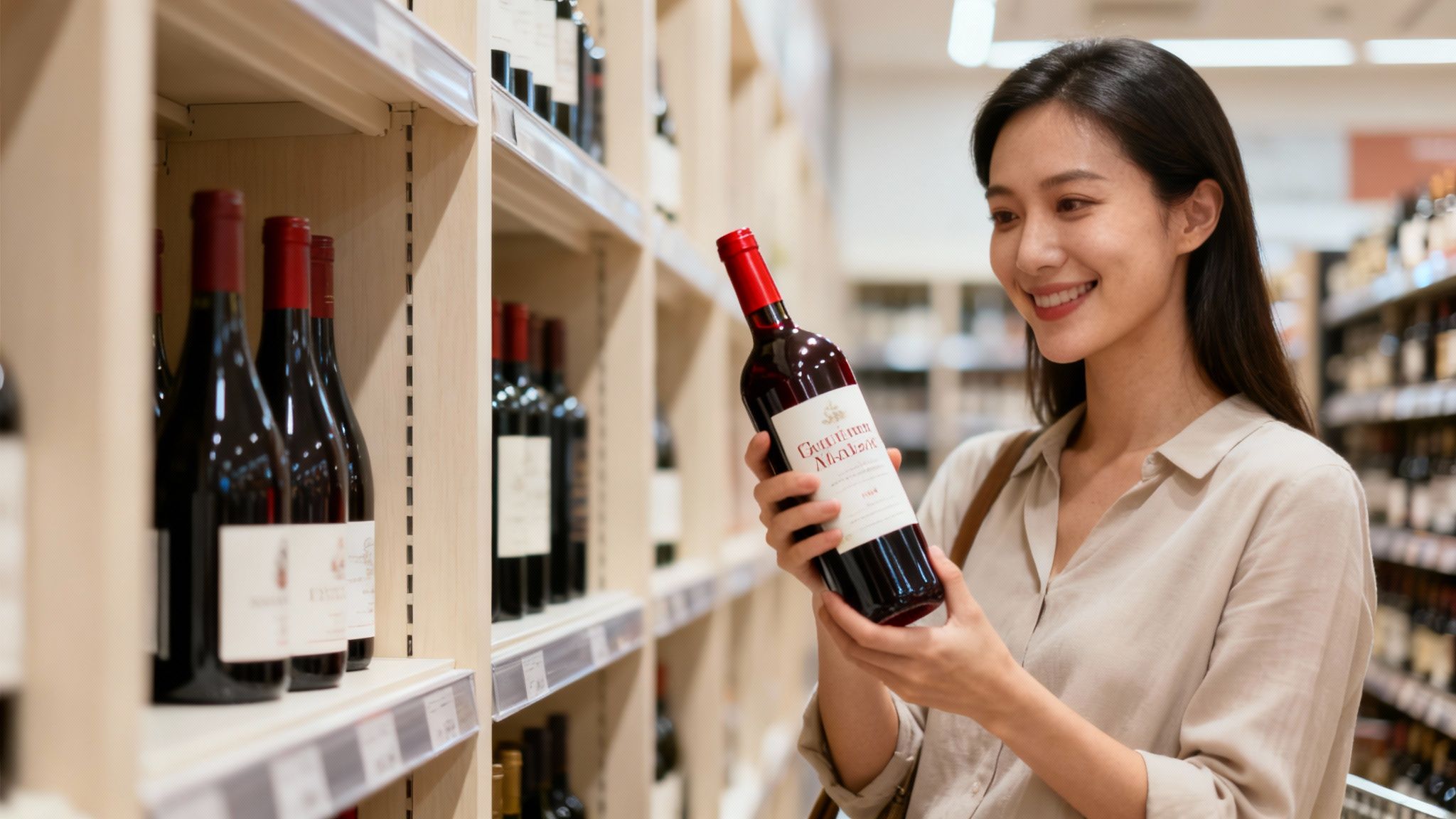
Standing in the wine aisle can feel like a pop quiz you didn't study for. You're surrounded by hundreds of bottles with unfamiliar labels, and it’s easy to feel overwhelmed and just grab the one with the coolest design. Your goal is simple: find a good red wine. But the sheer number of options often triggers a familiar sense of anxiety.
That feeling is completely normal. Wine is often presented as a complex subject packed with jargon and strict rules. This creates a fear of choosing the "wrong" bottle—the one that tastes strange, disappoints your guests, or just feels like a waste of money.
Ditch the Rules, Trust Your Taste
Here’s the truth: you don’t need to become an expert to make a great choice. The most important factor in finding a good red wine is your own preference. This guide cuts through the noise and gives you a simple, practical framework to help you decide calmly and quickly.
Instead of trying to memorize dozens of grape varieties or regions, you’ll learn to focus on a few key questions. These questions lead you straight to a bottle you'll genuinely enjoy, turning a stressful experience into a straightforward one. It’s no longer about what experts say you should like, but about what you actually like.
Choosing a good red wine isn't about passing a test; it's about confidently picking something that makes you happy. The best bottle is the one that tastes good to you, right now.
This is exactly the kind of in-the-moment decision-making an AI assistant like Sommy is built for. When you’re standing in the store and just need a clear, personalized recommendation, Sommy helps you choose based on your taste, not generic ratings. The goal is to make every wine choice an easy one.
To cut through the confusion right now, here's a simple checklist to keep in mind. It helps you zero in on what truly matters for your next purchase, whether you're at a cozy wine shop or a massive supermarket.
Your Quick Guide to Choosing Red Wine
| Decision Point | What to Consider | Simple Question to Ask Yourself |
|---|---|---|
| The Occasion | Is it a casual Tuesday pizza night or a special anniversary dinner? | "What's the vibe for this wine?" |
| Your Taste | Do you prefer bold, powerful flavors or something lighter and smoother? | "Do I want something big and fruity or something soft and elegant?" |
| The Food | Are you pairing it with a rich steak, a light pasta, or just sipping it solo? | "What am I eating with this?" |
| Your Budget | How much do you comfortably want to spend? | "What's my price range for this bottle?" |
Think of these four points as your compass. Answering them honestly will guide you to a much better choice than just picking a pretty label. They turn a wall of options into a handful of great possibilities.
What Does "Good Wine" Mean to You?
The phrase “good red wine” doesn’t point to a specific bottle or a high score from a critic. It’s much simpler: it’s a wine you enjoy drinking. The fastest way to feel confident is to stop worrying about what you’re “supposed” to like and start listening to your own taste.
Forget the confusing jargon. Instead, think about red wines on a simple spectrum. On one end, you have wines that are light, juicy, and smooth. On the other, you find wines that are big, rich, and bold.
Neither style is better. They’re just different. Finding your spot on this spectrum is way easier than it sounds, and it all starts with a few straightforward questions.
Your Personal Taste in Three Questions
To quickly narrow down your options, you only need to consider three things. Your answers act as a personal filter, helping you ignore the bottles that aren't for you and zoom in on the ones you’ll probably love.
- Light and Smooth or Big and Bold? Think about other drinks you like. Do you prefer the easy feel of iced tea or the rich texture of a milkshake? A light-bodied wine feels silky and delicate, while a full-bodied wine feels weightier and more powerful.
- Fruity Flavors or Earthy Notes? Are you a fan of fresh strawberries and cherries, or do you lean toward more savory flavors like mushrooms or a hint of spice? Some reds are packed with bright fruit, while others offer more complex, savory notes.
- With Food or By Itself? What’s the plan for this bottle? A wine to sip on its own while you unwind, or something to pair with a meal? Bolder wines can sometimes overpower lighter dishes, while more delicate wines can get lost next to a hearty steak.
The best guide to finding a good red wine isn't a magazine rating—it's your own palate. Trusting what you like is the first and most important step to choosing confidently.
Putting Your Preferences into Action
Let's see how this works. Imagine you’re looking for a wine to go with a simple roasted chicken. You know you prefer smoother textures (light-bodied) and enjoy fruity flavors. That combination points you toward something like a Pinot Noir, which enhances the meal without overpowering it.
Now, picture another night where you’re having a rich, saucy lasagna. This time, you might want something with more muscle (big and bold) and savory notes. A Cabernet Sauvignon or a Syrah has the power to stand up to the richness of the dish.
By thinking in these simple terms—light vs. bold, fruity vs. earthy—you build a reliable framework for making choices. This isn’t about memorizing wine facts; it’s about understanding what you enjoy. For more on this simple method, see our guide on building your personal wine profile without fancy jargon.
This is exactly the kind of personal preference that Sommy learns. The more you use it, the better it understands your tastes, serving up recommendations that feel right for you every single time.
How to Read a Wine Label for Quick Clues
A wine label can feel like a secret code, but you don’t need to decipher every word. Think of the label as a cheat sheet with a few quick clues to help you find a red wine you’ll like.
By focusing on just three pieces of information, you can turn a confusing label into a practical tool. This isn’t about memorizing wine theory; it’s about quickly spotting hints that tell you what the wine is like before you buy it.
The Three Clues That Matter Most
When you pick up a bottle, ignore the fancy fonts and gold foil. Instead, scan for these three practical clues that tell you the most about what’s inside.
- Grape Type: This is your best hint at the wine's core flavor. Is it a Pinot Noir, which is often lighter and smoother, or a Cabernet Sauvignon, which is typically bolder and richer? If you know you like one, you have a great starting point.
- Region: Where the wine comes from matters. A red from a warm, sunny place like California or Australia will often taste riper and more fruit-forward. One from a cooler climate, like parts of France, might be more savory and earthy.
- Alcohol Percentage (ABV): Look for the "Alc. by Vol." number, usually in tiny print. A higher ABV (like 14.5% or more) often signals a bigger, bolder wine. A lower ABV (around 12.5%) can suggest a lighter-bodied style.
Think of these three clues as a quick filter. If you want something bold and fruity for a steak dinner, a California Cabernet Sauvignon with 14.5% ABV is a safer bet than a French Pinot Noir with 12.5% ABV. No expertise required—just a quick scan.
You don't need to understand the entire label to make a great choice. Finding the grape, region, and alcohol percentage gives you enough information to confidently predict the wine's general style.
This map helps visualize how those clues connect to the experience you want.
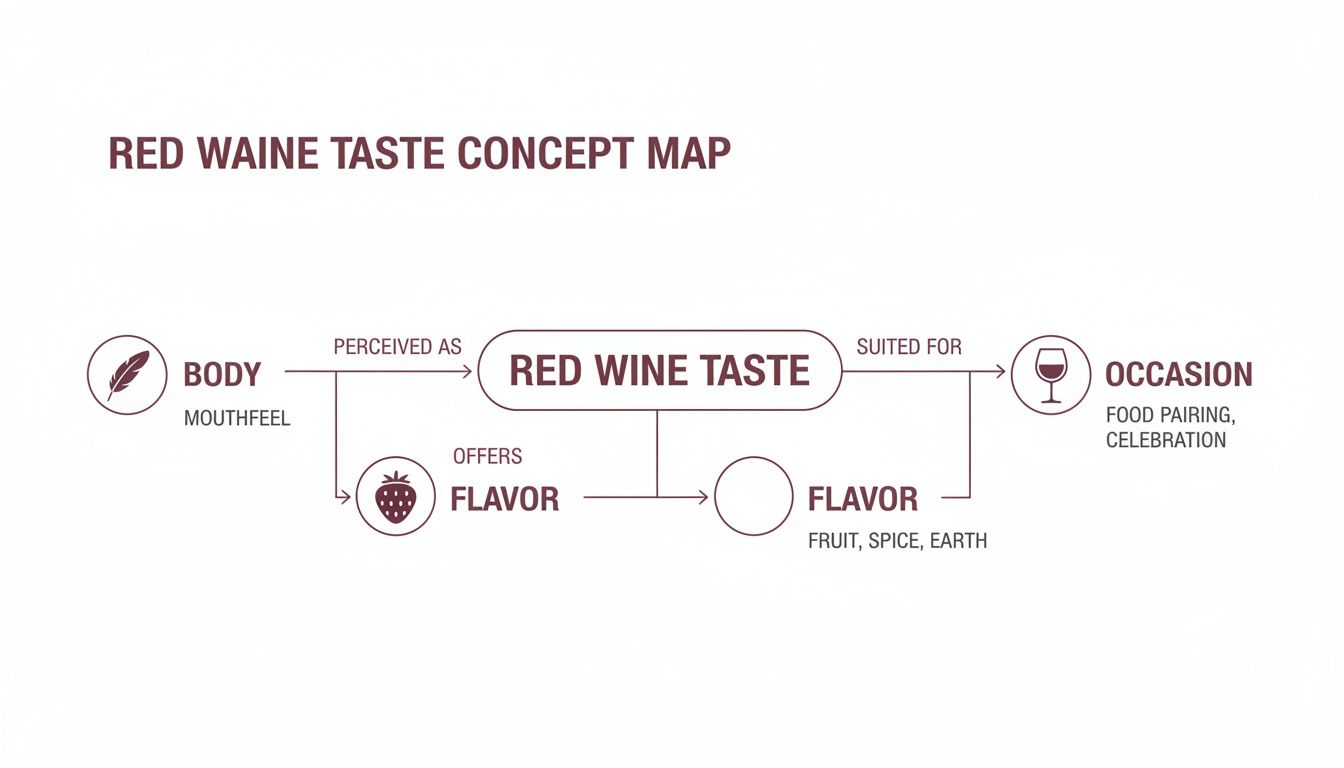
It’s all about matching these simple elements—body, flavor, and occasion—to make a choice you’ll be happy with.
Turning Clues into a Confident Choice
Let’s put this into practice. You're at the store and see two bottles. One is a Merlot from Bordeaux, France, with 13% ABV. The other is a Shiraz from Australia with 14.8% ABV.
Based on our clues, you can guess the French Merlot will likely be more savory and medium-bodied. The Australian Shiraz, from a warmer climate with a higher ABV, will probably be big, bold, and packed with ripe fruit. Now, instead of guessing, you can choose based on whether you're in the mood for something elegant or something powerful.
Learning to spot these key details takes the mystery out of the process. For more practical tips, check out our guide on how to read wine labels to build even more confidence. If you want help making these decisions in the moment, Sommy can scan any label and instantly tell you if the wine inside matches your personal taste.
How Price Connects to Red Wine Style
Does a more expensive wine automatically mean it’s a better wine? Not at all. You can find fantastic, good red wine bottles at every budget. The trick is to know what you're paying for.
Think of it like buying a t-shirt. You can get a perfectly good one for $15 that's comfortable and does its job. You can also buy a $75 designer shirt where you're paying for the specific cotton and brand reputation. Both are good shirts, but they serve different needs. Wine is a lot like that.
Under $15: Easy and Enjoyable
Wines in this price range are all about immediate enjoyment. They're crafted to be smooth, fruity, and easy to drink right after you pop the cork. Winemakers in this space are masters of consistency, aiming for a crowd-pleasing style.
You can expect:
- Simple, clear fruit flavors: Think of straightforward notes like cherry, blackberry, or plum.
- A smooth texture: These wines generally have soft tannins, so they don’t have a mouth-drying feeling.
- Reliability: This is your go-to for a casual pizza night or a last-minute bottle for a friend’s house.
You don't need to spend more to find a perfectly good red wine bottle.
$15 to $30: The Sweet Spot for Character
This is often the sweet spot for discovering wines with more personality without breaking the bank. In this mid-range, you start to see wines that express a sense of place or a more defined style.
In this tier, you might notice:
- More layers of flavor: Beyond simple fruit, you might pick up on notes of spice, vanilla, or subtle earthy hints.
- A more defined structure: These wines might have a bit more body and a more noticeable texture.
- Greater versatility with food: They often have the balance to pair well with a wider variety of meals.
This is a great price range to explore if you're curious about different grapes and regions.
Over $30: Complexity and Craftsmanship
Once you move into the premium category, you’re often paying for things like rarity, age, and very specific winemaking practices. These wines might come from famous regions or have been aged in expensive oak barrels.
A higher price tag doesn't guarantee you'll like a wine more. It often just means the wine was more expensive to produce. The best value is always the bottle that matches your personal taste and your budget.
Instead of guessing, this is exactly where Sommy can help. You can scan the shelf, and Sommy will highlight good red wine bottles that fit both your personal taste profile and the budget you set, making sure you always find the best value for you.
Simple Food Pairing That Always Works
Pairing wine with food shouldn't feel like a high-stakes exam. Forget complicated charts and rigid rules. The secret to getting it right most of the time is surprisingly simple: match the weight of the wine to the weight of the food.
Think of it like this: you wouldn’t pour a thick, heavy gravy over a delicate piece of fish. In the same way, you don't want a big, powerful wine to completely steamroll a light meal. The goal is balance.
Matching Weight for a Perfect Pair
Let’s break this down. Imagine your food and wine on a scale from light to heavy.
- Lighter Foods: Think roasted chicken, pork loin, or mushroom pasta. These foods have flavors that are easily overwhelmed.
- Heavier Foods: This is your steak, lasagna with meat sauce, or barbecued ribs. They have bold flavors that need a wine that can hold its own.
Now, let's apply this to finding good red wine bottles.
- Light-Bodied Reds: Wines like Pinot Noir or Gamay are perfect partners for those lighter dishes. They act as a complement, lifting the food's flavors.
- Full-Bodied Reds: Bold wines like Cabernet Sauvignon or Syrah are built for those heavy, rich meals. They have the structure to stand up to strong flavors.
The easiest way to avoid a food and wine pairing mistake is to simply ask, "Is this a light meal or a heavy meal?" Then, pick a wine with a similar intensity. This single guideline works successfully almost every time.
A Quick Pairing Cheat Sheet
Feeling confident is about having a few go-to ideas. Instead of guessing, use these reliable pairings as a starting point.
| If you're eating... | Look for a wine style that is... |
|---|---|
| Roasted Chicken or Turkey | Light and smooth, like a Pinot Noir. |
| Pizza with Red Sauce | Medium-bodied and fruity, like a Chianti or Merlot. |
| Spaghetti and Meatballs | Medium-bodied with good acidity, like a Sangiovese. |
| Grilled Steak or Burgers | Bold and structured, like a Cabernet Sauvignon. |
| Hearty Beef Stew | Rich and savory, like a Syrah or Rhône blend. |
| Mushroom Risotto | Earthy and elegant, like a Pinot Noir. |
This approach removes the anxiety of making the "wrong" choice. By focusing on a simple concept like weight, you can confidently select a wine that will make your meal even better. Our guide on what food to pair with red wine offers more simple ideas.
If you’re staring at a restaurant menu, this is the exact kind of in-the-moment decision Sommy helps with. Scan the menu, and Sommy can suggest the best wine pairings for your dish, making you feel like a pro instantly.
Your Checklist for Buying Red Wine
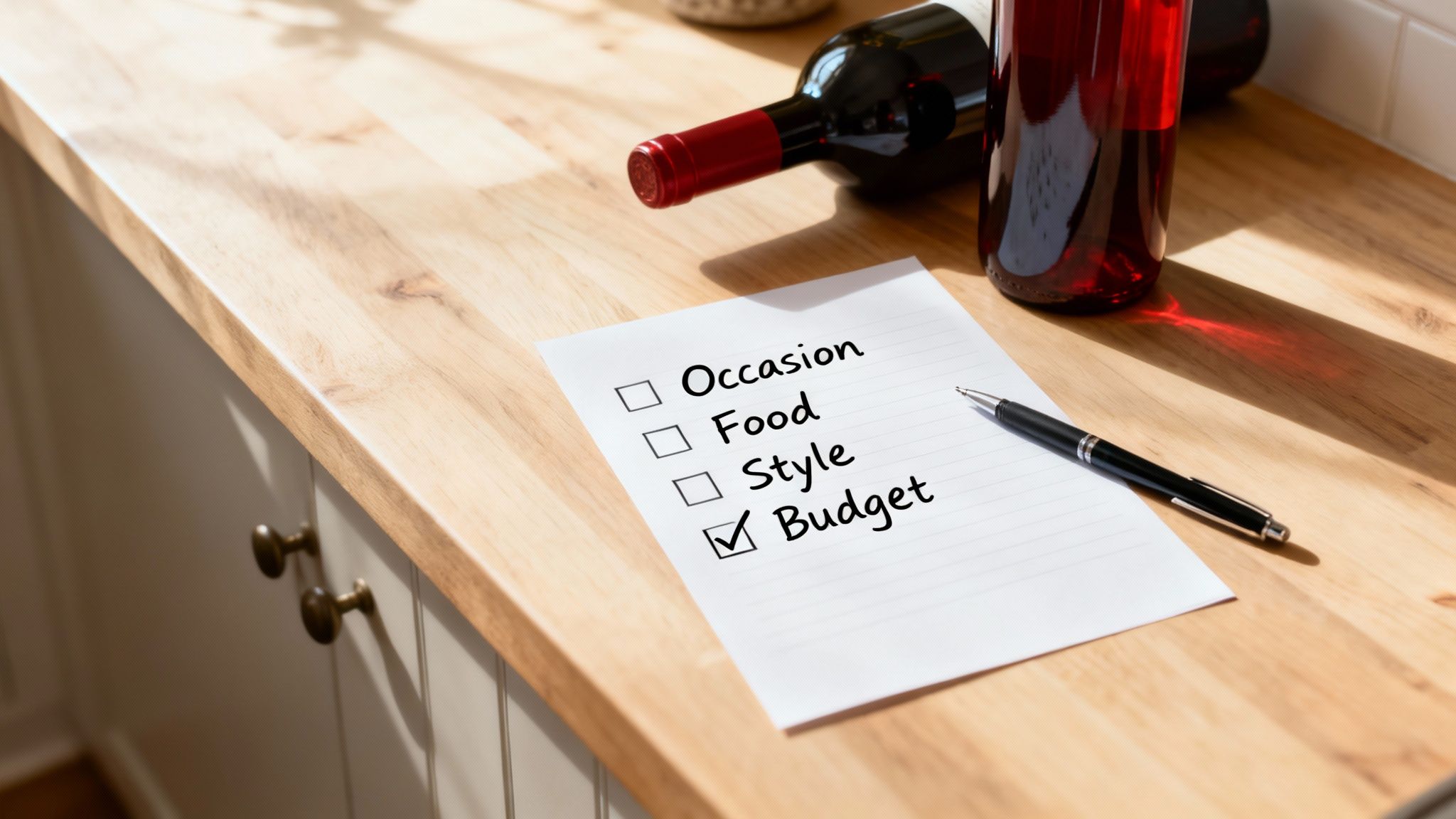
You don't have to remember all this information when you’re in a busy wine shop.
Choosing a great bottle of red boils down to a few simple questions that have everything to do with you. This short checklist is your mental shortcut for making a confident decision, right in the moment.
Your Four-Step Plan For Choosing a Bottle
Instead of trying to recall regions or grape varieties, just walk through these four simple steps. Answering them honestly will point you directly to a wine that fits the moment perfectly.
1. Consider the Occasion
First, think about the "why." Are you grabbing a bottle for a casual Tuesday pizza night, or is this for a special anniversary dinner? A simple, easy-drinking red is perfect for a relaxed evening.
- Ask Yourself: "What's the vibe for this wine?"
2. Think About Your Food
Next, what's on the menu? Matching the weight of the wine to the weight of the food is a simple rule that always works. A light pasta dish calls for a lighter red; a rich steak begs for a bold one.
- Ask Yourself: "What am I eating with this?"
3. Decide on a Style
This is all about your personal preference. Are you in the mood for something light, smooth, and fruity, or do you want a wine that’s rich, bold, and powerful? Trust your gut—there is no wrong answer.
- Ask Yourself: "Do I feel like light and fruity, or bold and rich?"
4. Set a Budget
Finally, decide what you're comfortable spending. You can find excellent good red wine bottles at every price point. Setting a number beforehand makes the final choice so much easier.
- Ask Yourself: "What am I comfortable spending today?"
This checklist is your path to a stress-free choice. It proves that picking a good wine is a simple, personal process, not a test of your knowledge. Use it to feel confident every time.
Navigating a crowded supermarket can be stressful. If you'd like to see how an AI assistant can make this faster, learn how to use Sommy to pick the right bottle in a crowded supermarket aisle with just your phone's camera.
Common Questions About Finding Red Wine
Even with a solid plan, the real world can throw you a curveball. What happens when your favorite bottle is sold out? Or when you have to pick one wine for a whole group of people?
Let's walk through some common questions. A little know-how can keep you feeling calm and confident.
What if my go-to wine isn't available?
It’s a familiar feeling: you scan the shelf, and the one bottle you know and love is gone. But this is a great opportunity, not a dead end.
Instead of hunting for an exact replacement, think about why you like that wine.
Is it a light, fruity Pinot Noir from California? Don't just look for another Pinot. Ask a store employee for another light-bodied red with bright fruit flavors. You might walk out with a Gamay or a light Grenache that you end up loving even more. The goal isn't to replace the bottle, but to find another one that gives you the same feeling.
This is exactly where an AI assistant like Sommy shines. You can tell it a wine you love, and it will instantly suggest similar bottles based on its taste profile, not just its brand name.
How do I choose one wine for a big group?
Picking a single red for a group with different tastes can feel impossible. The secret? Aim for the middle of the road. Steer clear of the extremes—nothing super light and nothing massively bold. Your best bet is a medium-bodied red that’s a known crowd-pleaser.
Think about wines that are:
- Smooth and Fruity: A good Merlot or a solid Chianti Classico almost always works. They have pleasant fruit flavors and a smooth texture that appeals to most people.
- Versatile: A Côtes du Rhône from France is another fantastic choice. It hits that sweet spot with a nice balance of fruit and savory notes.
- Not Too Tannic: Avoid reds known for aggressive, mouth-drying tannins, as that can be a turn-off for some drinkers.
When choosing for a group, your goal is a "good-for-everyone" wine, not a "perfect-for-someone" wine. A balanced, medium-bodied red is your safest play.
This strategy ensures pretty much everyone at the table will find the wine enjoyable.
Can I send a wine back at a restaurant?
Yes, you absolutely can, but only if the wine is actually flawed, not just because you don't like the taste. A flawed wine has gone bad, usually because of a faulty cork or bad storage.
So how do you tell if a wine is bad? Look for these clear red flags:
- It Smells Like a Damp Basement: If the wine smells like wet cardboard or a musty old cellar, it’s "corked." This is the most common reason to send a bottle back.
- It Tastes Like Vinegar: A sharp, acidic taste is a sure sign the wine has been exposed to too much air and has oxidized.
- It Looks Brownish and Tastes Flat: A red wine that has lost its vibrant color and just tastes dull has likely been damaged by heat.
If you notice any of these, just politely get your server's attention and say, "I think there might be something wrong with this bottle." They’ll almost always give it a quick smell and bring you a fresh one. Don't feel anxious about it—restaurants expect this to happen.
Answering these kinds of questions in the moment is exactly why Sommy was created. Instead of feeling stressed or taking a wild guess, you can use the AI assistant to get a clear, confident recommendation based on your taste, your food, or even a wine you've loved in the past. If you want a calm, smart way to choose your next bottle, learn more about how Sommy can help.