
Standing in a wine shop or staring at a restaurant list, it is easy to freeze when every bottle starts to look the same. Cotes de gascogne is one of the simplest good choices you can make if you want a fresh, easy-to-like, affordable white. You do not need to know grapes, producers, or French geography to use it well. You just need a few clues, and once you know them, picking one gets much easier.
Why You See This White Wine Everywhere
You notice it after a while.
You are in a store, trying to avoid wasting money on a bottle you may not enjoy, and the same phrase keeps showing up on labels. Côtes de Gascogne. Sometimes it is tucked among entry-level French whites. Sometimes it is on a restaurant list in the “crisp and light” section. Sometimes it is the bottle a friend brings to dinner because they wanted something safe but not boring.

That is not random. It is a clue.
Côtes de Gascogne is common because a lot of it is made and a lot of it is shipped abroad. The Gers department alone is authorized to produce up to 830,000 hectoliters annually, equal to more than 100 million bottles per year, and about 75% of that production is destined for export markets according to the Côtes de Gascogne overview on Wikipedia. In plain terms, shops and restaurants around the world can get it consistently, so you keep seeing it.
Why that is good news
When a wine shows up often at reasonable prices, people sometimes assume it must be basic.
That is the wrong read here.
A widely exported region can be a gift for regular drinkers. It usually means:
- You can find it without hunting. Good for weeknight shopping and restaurant lists.
- Styles stay familiar. If you liked one bottle, the next one from the region is less of a gamble.
- Prices tend to stay approachable. Not because it is low quality, but because it is built for real drinking, not trophy collecting.
Quick takeaway: If you want a French white that feels fresh, easy, and low-risk, cotes de gascogne is one of the smartest labels to notice.
The simple trick
A lot of people think confidence comes from knowing more wine facts.
Usually, confidence comes from knowing one reliable category. Côtes de Gascogne can be that category. It is often the answer when you want a bottle that tastes bright, works with food, and does not feel like a special-occasion splurge.
If you want another low-stress bottle idea in the same spirit, cheap wine that tastes good is a helpful place to keep your options practical.
What to Expect When You Pour a Glass
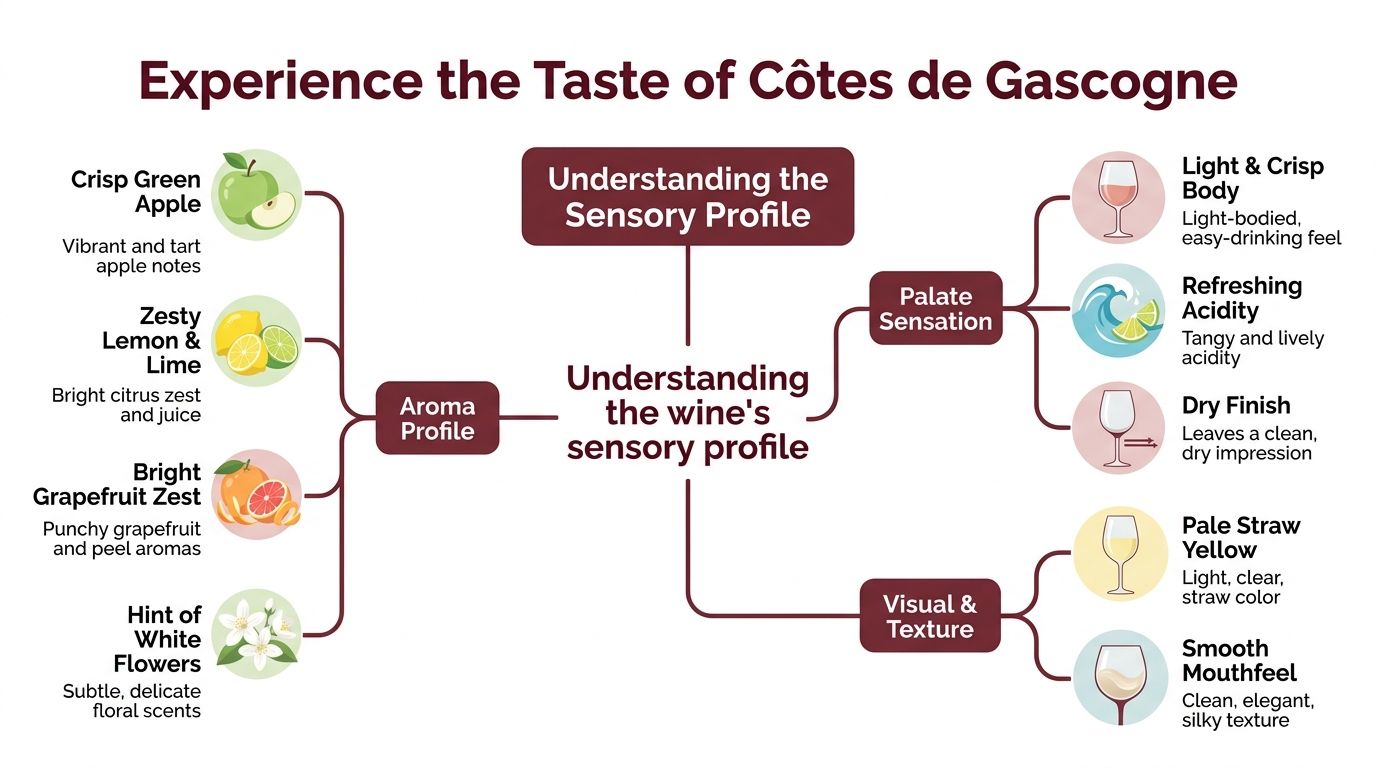
Cotes de gascogne usually tastes like the kind of white wine people hope they ordered when they ask for “something crisp.” It is generally light, dry, fresh, and citrusy, not heavy or creamy.
That matters because many white-wine mistakes come from style confusion. Someone wants a refreshing glass and ends up with something richer than they meant to order. Côtes de Gascogne is often the safer move when you want lift, not weight.
The easiest taste picture
Think in everyday flavors, not wine-school terms.
Most bottles land somewhere around:
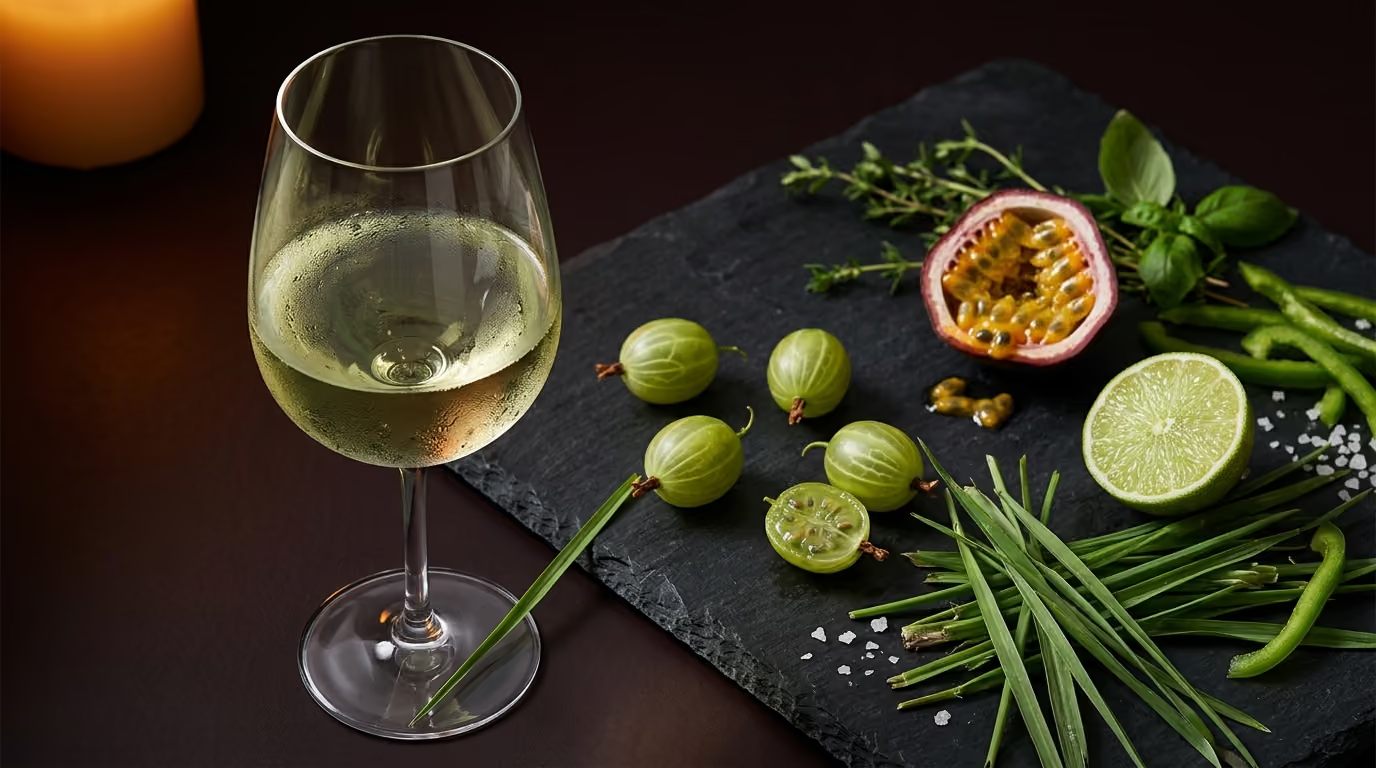
- Citrus notes like lemon, lime, or grapefruit
- Green fruit like green apple or pear
- A light floral feel rather than sweet perfume
- A dry finish that leaves your mouth feeling refreshed
If you like whites that feel cold, lively, and clean, this style usually makes sense.
If you usually dislike whites because they seem buttery, oaky, or soft, cotes de gascogne may change your mind.
What it is not
Sometimes the best way to understand a wine is to know what it will probably not do.
Côtes de Gascogne is usually not the bottle to choose if you want:
- A rich, creamy white for sipping slowly by itself
- Vanilla or toast flavors from oak
- A heavy texture that fills the whole palate
- A sweet, fruity finish that feels candy-like
It is more about freshness than richness.
Why it tastes that way
The region has a long wine history, with documented production going back to Roman times, and the modern IGP designation was established in 1979. About 40 authorized grape varieties are permitted, and Colombard represents roughly half of all white plantings in the region, which helps explain why the area is known for a zesty, aromatic white style, as noted by WineTourism’s page on Côtes de Gascogne.
You do not need to memorize Colombard. You only need to know what it often delivers in the glass. It tends to point the region toward the bright, lively side of white wine.
A quick taste test for yourself
If you are trying to decide whether this is “your kind of wine,” use this shortcut.
You will probably enjoy cotes de gascogne if you tend to order or enjoy:
- Sauvignon Blanc when you want something sharp and refreshing
- Pinot Grigio when you want something easy and clean
- A cold white before dinner instead of a cocktail
You may be less excited by it if your favorite whites are richer and rounder.
Practical tip: When you want a bottle for a mixed group, cotes de gascogne is often safer than a very rich white because more people find crisp wines easy to drink.
How to talk about it without sounding like a wine person
You do not need fancy words to order it well.
Try any of these:
- “I want a dry, crisp white.”
- “Something light and fresh.”
- “A French white that is easy to drink.”
- “Not buttery. More citrusy.”
If you want help finding words that match what you like, how to describe wine taste makes that easier without turning it into homework.
When to Drink Côtes de Gascogne
Some wines ask for a special meal. Cotes de gascogne usually does not. That is part of the appeal.
It works best in real-life situations where you want the wine to make the meal feel easier, not more serious. A cold bottle on a weeknight. A glass at lunch. A low-pressure dinner with friends. Something before food arrives when you want a white that wakes up your appetite instead of tiring it out.

Perfect moments for it
A few settings suit this wine especially well.
- Patio lunch
Think grilled shrimp, a salad with herbs, or a simple sandwich with something bright on the side. - Weeknight chicken dinner
Lemon, garlic, herbs, and lighter sauces tend to make this style shine. - Picnics and snacks
Cheese, olives, salty bites, and anything that likes a cold white. - Before dinner
If guests are arriving and you want one bottle that starts the evening gently, this is often a smart pick.
Great with and maybe skip with
Use the wine’s freshness as your guide.
Great with:
- Seafood
- Roast or grilled chicken with herbs
- Salads with citrus or vinaigrette
- Goat cheese or lighter cheeses
- Vegetable dishes
- Simple pasta with lemon, olive oil, or herbs
Maybe skip with:
- Heavy cream sauces
- Very smoky barbecue
- Big steaks
- Rich, buttery dishes where the wine may feel too lean
- Very sweet food
When the food is fresh, salty, tangy, or herbal, cotes de gascogne usually feels at home.
Côtes de Gascogne pairing cheat sheet
| Meal or Occasion | Perfect Pairings | Why It Works (In Simple Terms) |
|---|---|---|
| Casual dinner at home | Lemon-herb chicken, roast vegetables | The wine feels bright and keeps the meal from tasting heavy |
| Seafood night | Shrimp, white fish, shellfish | Crisp white wine and seafood usually move in the same direction |
| Picnic or outdoor lunch | Cold chicken, sandwiches, salads, cheese | It is refreshing and easy to drink without needing a formal meal |
| Pre-dinner glass | Olives, nuts, light appetizers | The dry, lively style wakes up the palate |
| Restaurant order when unsure | Fish dishes, lighter pasta, vegetable starters | It is a safe bridge wine that fits many lighter menu choices |
Simple pairing rule: Match cotes de gascogne with foods that feel fresh rather than heavy.
What works better than overthinking
People often get stuck trying to “perfectly pair” wine.
You do not need a perfect pairing here. You just need a meal that does not fight the wine. If the dish is lighter, brighter, or saltier, you are usually in good shape. If the dish is creamy, sweet, or heavily charred, another style may work better.
That makes cotes de gascogne especially useful in restaurants. If the table is ordering mixed starters, seafood, salads, or chicken, it is often the easiest bottle to share without creating problems.
Picking the Right Bottle in a Shop or Restaurant
When you are in front of the shelf or the wine list, the goal is not to find the one “best” bottle. The goal is to find a bottle that gives you the style you want with the least stress.
That is where cotes de gascogne becomes practical. The selection process can stay very simple.
The first thing to look for
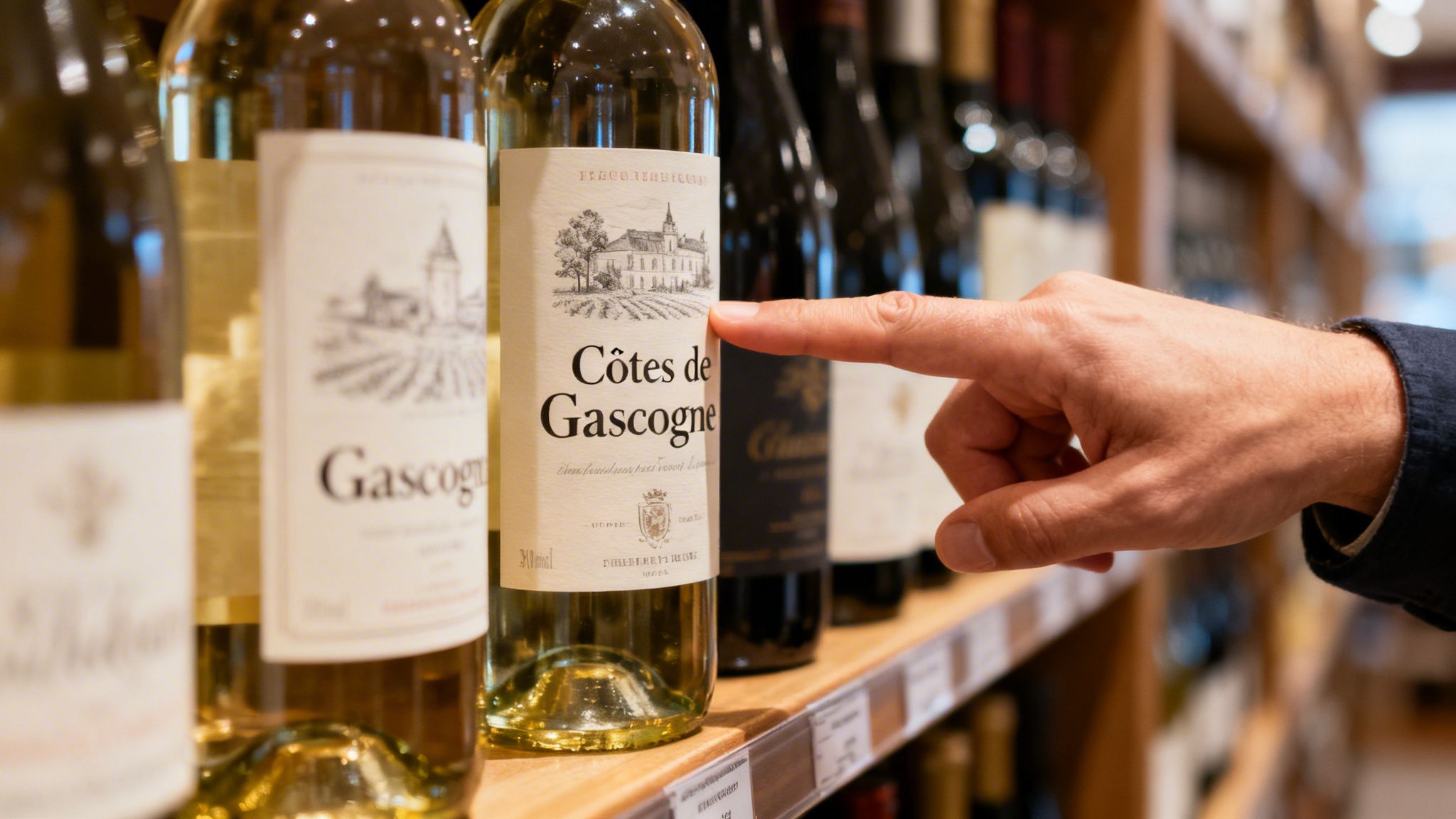
On the label, scan for IGP Côtes de Gascogne.
That phrase gets you close to the style you came for. Do not worry if the producer name is unfamiliar. In this category, the region cue often matters more than chasing a famous name.
If the front label feels confusing, turn the bottle around and look for short taste hints like dry, fresh, crisp, citrus, or aromatic. You are trying to confirm the general direction, not decode every word.
Vintage matters more here than in many people’s heads
For a fresh white like this, a recent vintage is often a good sign.
The reason is simple. Many consumers buy cotes de gascogne for brightness and energy. Younger bottles usually deliver that more clearly than older ones.
There is also a real style difference between recent years. The 2024 vintage produced wines with “great acidity level and freshness”, while the warmer 2023 vintage brought enhanced aromas and lower acidity, according to mt.wine’s Côtes de Gascogne vintage notes. In plain English, 2024 is likely to feel zestier, while 2023 may feel a bit rounder and richer.
Neither is wrong.
Choose based on mood:
- Pick 2024 if you want extra zip, especially for seafood or hot weather.
- Pick 2023 if you want a slightly softer, more generous feel.
- Pick the most recent available bottle if you just want the easiest default.
What works in restaurants
Restaurant lists can make straightforward choices look harder than they are.
If you see more than one cotes de gascogne by the glass or bottle, use this simple filter:
- Choose the one listed as dry or crisp
- Pick the newer vintage if the prices are similar
- Use the style as your tie-breaker, not the producer name
If you are talking to staff, keep the ask short. Say, “I’d like the fresher, crisper cotes de gascogne.”
That usually gets a better result than trying to sound knowledgeable.
What does not help
A few things lead people off track.
- Over-focusing on a fancy label
A prettier bottle does not tell you much about freshness. - Assuming lower price means bad
In cotes de gascogne, value is often part of the appeal. - Picking the oldest vintage because it sounds more serious
That logic works for some wines. It is not usually the point here.
Store shortcut: For cotes de gascogne, recent vintage plus “dry/crisp” language is often enough to make a solid choice.
If the label starts to blur together
French labels can feel like tiny puzzles. You do not need to solve all of them.
Focus on three clues only:
| What to scan for | Why it matters | What to do |
|---|---|---|
| IGP Côtes de Gascogne | Confirms the region and likely style | Use it as your starting filter |
| Vintage year | Helps you judge how fresh the wine may feel | Lean recent |
| Dry or crisp language | Confirms the taste direction | Choose the bottle with the clearest freshness cues |
If label wording still throws you off, how to read wine labels can help you strip the noise away and find the part that matters.
Beyond the Classic White Rosé and Blends
Many encounter cotes de gascogne through its crisp white wines. That is still the main event. But if you notice a rosé or a bottle with multiple grapes listed on the label, there is no need to assume you made a wrong turn.
The region has some range.
Why one bottle may taste a little different from another
Not every cotes de gascogne bottle tastes identical, even when the overall style stays fresh.
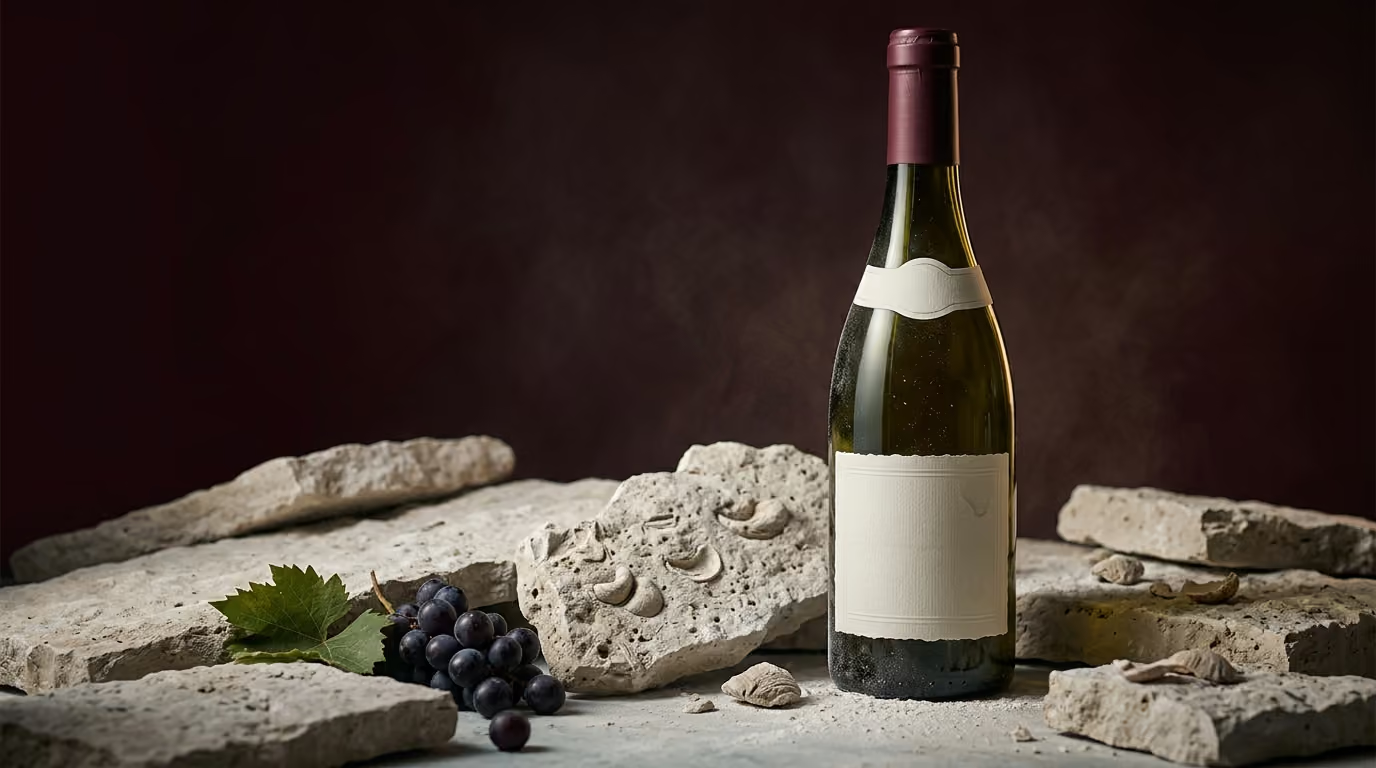
Part of that comes from the region itself. It has three distinct zones. Bas-Armagnac includes sandy boulbènes soils that help create expressive white wines, while Ténarèze has more limestone and tends to favor different grapes, as explained by the Côtes de Gascogne terroir page from the regional wine body.
You do not need to remember those names.
The useful part is simpler. Slight differences between bottles are normal. One may feel a bit more citrusy. Another may seem a touch rounder or more mineral. That does not mean one is better. It means the region has enough variation to stay interesting without becoming unpredictable.
What blends mean for you
A label may list one grape or a blend.
For regular drinkers, the practical meaning is straightforward:
- A blend often gives a balanced result.
- One grape may push the wine slightly more toward sharp citrus, while another may soften the edges or add floral notes.
- If you already know you like the general cotes de gascogne style, a blend is usually not a risk.
The mistake is thinking you need to decode every grape on the label before buying. You do not.
A quick note on rosé
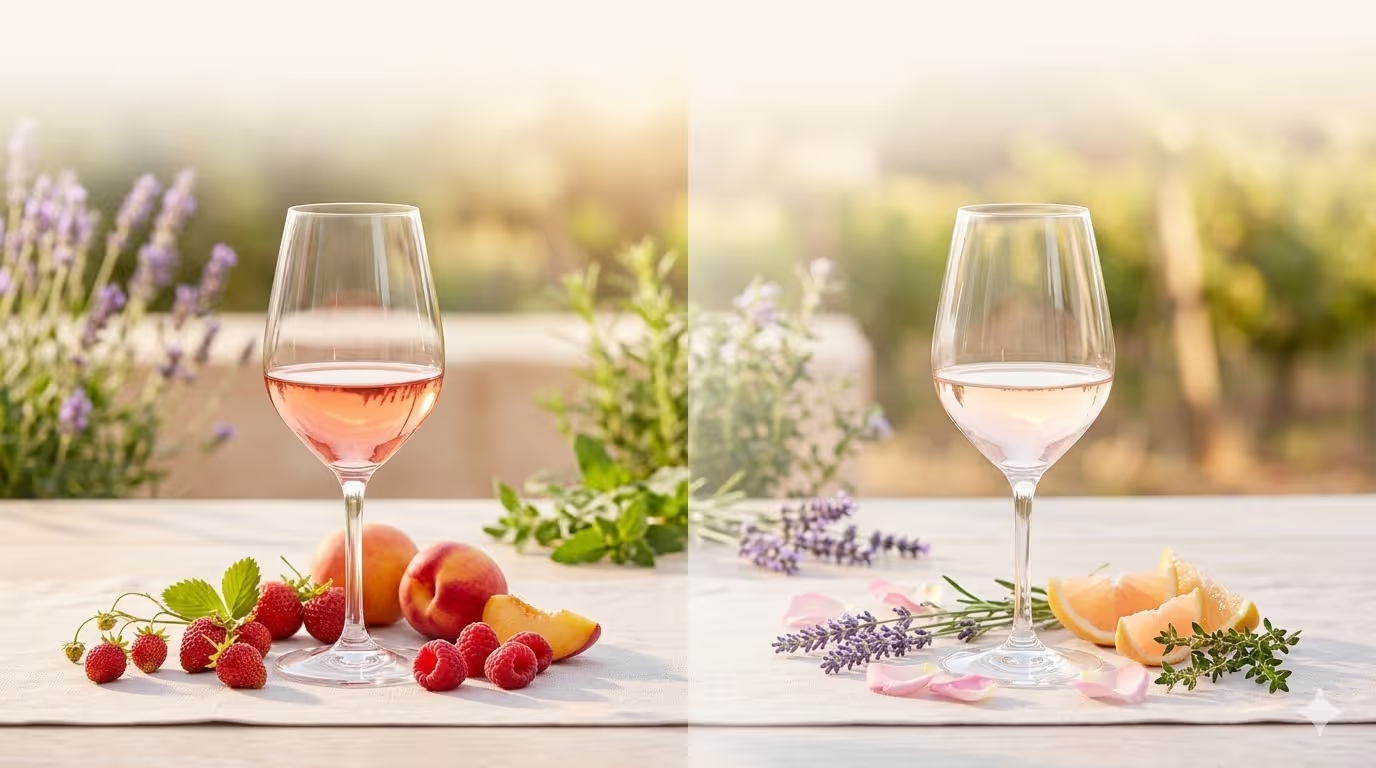
If you spot a cotes de gascogne rosé, expect a different mood than the classic white.
It can be a good warm-weather option when you want something easy and dry but not as zippy as the whites. If your meal sits between white-wine food and red-wine food, rosé can bridge that gap nicely.
For most buyers, though, the white remains the easiest place to start.
If you ever feel torn between familiar European regions and easier fruit-forward styles from elsewhere, old world vs new world wines can make that choice less abstract.
Get a Perfect Recommendation in Seconds with Sommy
You do not need to memorize any of this.
That is the useful part.
Knowing that cotes de gascogne is often a smart, fresh, affordable white already puts you ahead. But in a real store or restaurant, you still may have a shelf full of bottles, a menu full of dishes, or a group with different tastes.
That is exactly the kind of moment where Sommy helps.
What to ask instead of guessing
Keep your request plain and specific.
Try prompts like:
- “Find me a crisp French white I can order with grilled shrimp.”
- “Which cotes de gascogne should I choose if I like dry, citrusy wine?”
- “I want a white that is fresh, not buttery.”
- “What should I buy for roast chicken and salad?”
- “Show me the safer bottle for people who do not know wine.”
A personal wine decision assistant is most helpful when it removes pressure fast. That is the value here. You do not need to become fluent in labels, vintages, or regions before dinner starts.
Why it works better than memorizing rules
Wine stress usually comes from fear of choosing wrong in public.
An AI that learns your taste preferences can turn that into a simpler choice. Instead of remembering what Colombard usually tastes like, or whether a newer vintage might suit your meal better, you can ask for the result you want.
That is more useful in the moment.
Best use case: Standing in front of a shelf, open the app and ask for a crisp, affordable white based on your meal or your usual taste. Let the tool narrow the list.
The true benefit
Many consumers do not want more wine facts.
They want a bottle they will enjoy. If you want help choosing wine in the moment, instead of guessing, Sommy can recommend a bottle that fits your taste, budget, and meal with much less friction.
Your Quick Questions Answered
Is cotes de gascogne sweet
Usually, no.
Most bottles are best thought of as dry and refreshing. If you want a white that feels crisp rather than sugary, this is one reason the category works so well.
Is it good for beginners
Yes.
It is often one of the easiest French white styles for newer drinkers because it tends to be fresh, straightforward, and food-friendly without being heavy.
Should I drink it very cold
Serve it chilled, but not ice-dead.
If it is too cold, you may mute the flavor. A normal refrigerator chill works well. If the bottle has been sitting out a bit during dinner, that is usually fine too.
Can I keep it for years
For most, cotes de gascogne is not intended for long storage.
The main appeal is freshness, so it usually makes more sense as a drink-soon bottle than a cellar project.
Is it only for seafood
No.
Seafood is a natural match, but it also works nicely with chicken, salads, vegetable dishes, lighter pasta, and simple snacks before dinner.
What if I am choosing for a group
Cotes de gascogne is often a smart compromise bottle.
If the group wants a white and no one is asking for something rich or sweet, a fresh, dry style usually keeps more people happy than an extreme choice.
What is the one thing to remember
If you forget everything else, remember this:
When you want an affordable white that feels fresh, dry, and easy to like, cotes de gascogne is a very safe bet.
If you want help choosing wine in the moment, Sommy.ai is built for exactly that. You can ask in plain language, compare bottles fast, and get a recommendation that fits your taste, budget, and meal without needing to become a wine expert.