
A wine rating tells you how much one critic liked a wine relative to others they taste, and almost nothing about whether you'll enjoy it tonight. The numbers cluster far more tightly than the hundred point scale suggests, with most reviewed wines landing between 88 and 95, and they've drifted upward over the last two decades for reasons that have more to do with competition between critics than with wine getting better. That doesn't make scores useless, it makes them a measure of one thing when you're shopping for another. Knowing what the number actually encodes is what lets you use it properly and then get on with choosing by style instead.
This piece covers where scores come from, why 90 stopped meaning what it once did, what the research says about small differences between numbers, and the practical method to use in a shop or a restaurant instead.
What does a wine rating actually measure?
It measures how much a particular critic liked a particular bottle on a particular day, expressed as a number so it can be compared with the other wines they tasted. Jamie Goode, who writes at Wine Anorak and holds a doctorate in plant biology, puts it plainly in an unusually candid piece about his own scoring, saying a score sounds like a data point but isn't, and that there's no real science behind it.
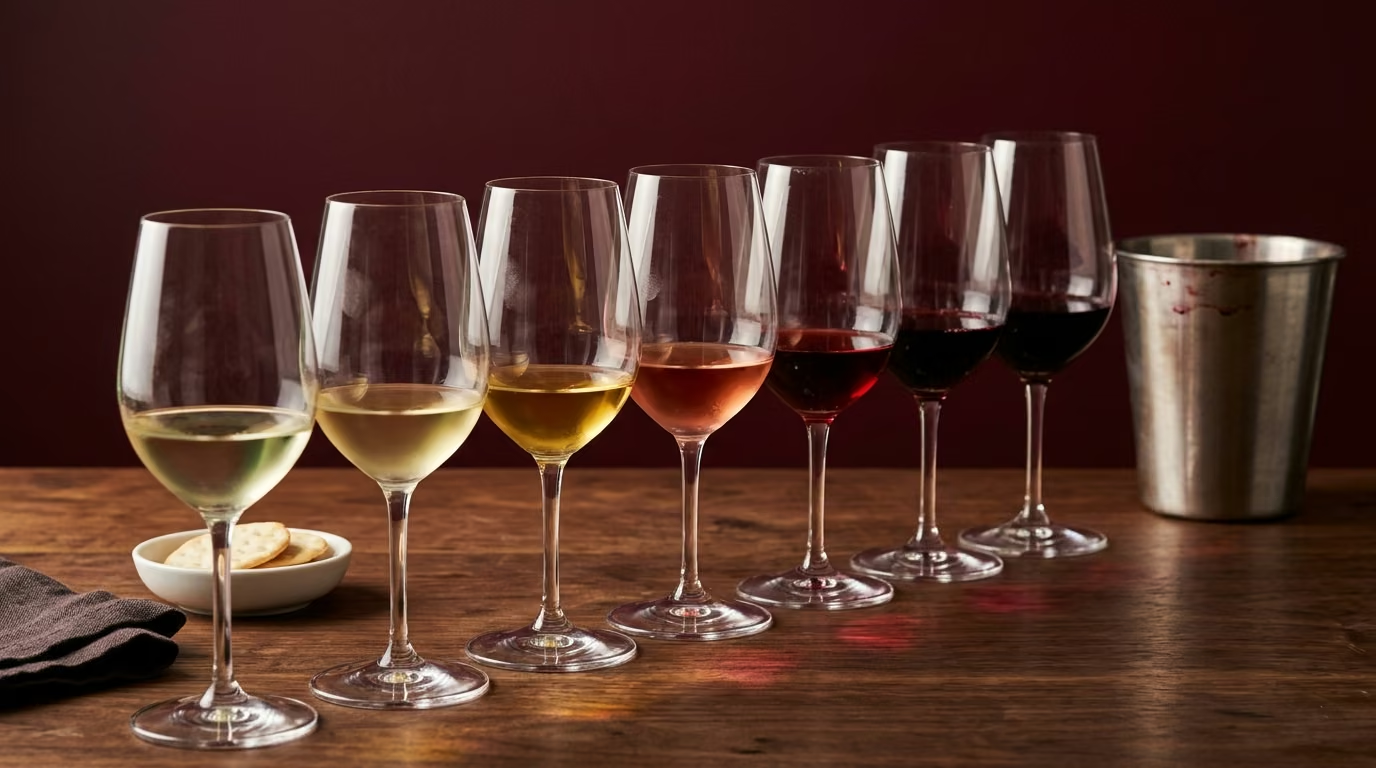
The setting matters as much as the scale. Scores come out of tastings where a critic works through dozens of wines in small measured pours, often blind, in a quiet room with neutral crackers and a spit bucket. Nothing about that resembles a Tuesday evening with roast chicken and a conversation going on. A wine built to stand out in a lineup of forty is not necessarily a wine built to be pleasant across a whole bottle.
The mechanics of that room push in one direction. Palate fatigue sets in over a long flight, so tannin and alcohol register harder later on, and a wine's position in the running order affects how it shows against whatever preceded it. Tasters guard against this with breaks, water and neutral crackers, but nobody claims it disappears. A score is therefore a reading taken under conditions designed for comparison, which is a different goal from the one you have when you're choosing a single bottle to drink.
Goode is also open about the compression in his own numbers, explaining that most wines on his site land between 90 and 94 and that he uses 94 a lot. The reason is selection rather than generosity, since the wines scoring in the 80s at trade tastings mostly never get written up at all. What reaches the reader is the top slice, which makes the visible range look far narrower than the scale implies.
Why has 90 points stopped meaning much?
Because the whole scale has inflated, and the critics know it. Goode describes his own scores rising over twenty years as a deliberate move to stay in range with his peer group, since other critics raised theirs, presumably so that they would be the ones getting quoted. He notes that scoring a wine 72 would be nearly impossible to explain to a producer, because for most critics that number reads as a fail.
The scale's origins explain the shape of it. Robert Parker, a Baltimore lawyer, popularized the hundred point system in the 1980s and modeled it on the American school grading system, where anything below 70 is failing. In Parker's original framing wines became interesting around 85, 90 was a genuinely good score, and 95 was rare. Goode's summary of where that has ended up is blunt, that 90 isn't an exceptional score at all any more and 95 seems to be the new 90.
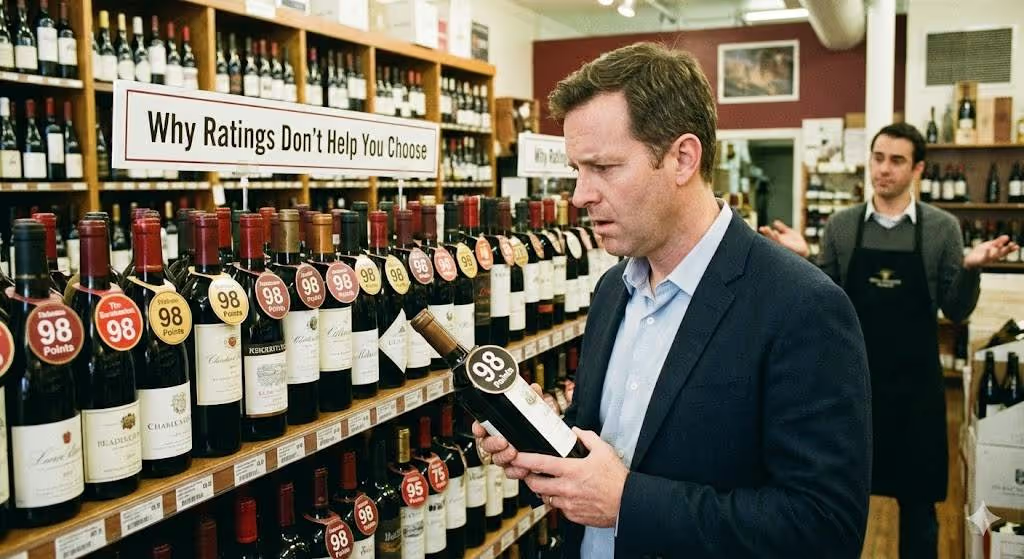
The practical consequence is that the useful part of a hundred point scale is now about ten points wide. When almost everything worth reviewing sits between 88 and 96, the difference between two numbers carries far less information than the format implies, and a shelf covered in 90-plus scores is telling you very little.
The retail end amplifies all of this. A shelf talker shows the number and the publication and drops everything else, including the tasting note that might have told you the wine is oaky or sweet or built to age for a decade. Shops also choose which score to display, so a wine reviewed by four critics can be presented with only its best figure. None of that is dishonest exactly, but it means the card on the shelf is a marketing selection rather than a summary of critical opinion.
Is a 91-point wine better than an 89-point wine?
Not reliably, and that exact question is the opening line of a peer reviewed paper on the subject. Gianni De Nicolò of the Carey Business School at Johns Hopkins published Wine ratings and commercial reality in the Journal of Wine Economics in February 2025, and it opens by asking whether the quality of a 91-point wine is significantly different from that of an 89-point wine.
His approach is to stop treating every point as meaningful and instead sort wines into ranked groups he calls quality equivalence classes, built from score differences large enough to be statistically significant and commercially relevant. He applies it to the Judgment of Paris results, to Bordeaux en primeur scores and prices, and to a large database of Italian wines. The underlying premise is the useful takeaway for a shopper, which is that small gaps between scores often sit inside the noise rather than describing a real difference you could taste.
Read a score as a broad band rather than a precise ranking and it becomes much more honest. A wine in the low 90s is somewhere in the same general territory as another wine in the low 90s, and which of the two you prefer is a question about style that the numbers were never designed to answer.
Used that way a score still earns its keep. If you're staring at forty bottles and thirty of them are unreviewed, the rated ones give you a shorter list of wines somebody with experience thought were worth writing about. Take the band as a filter, then pick within it on grape, region and style, and you get the genuine benefit of the number without pretending it knows your palate.
Competition medals work slightly differently and are worth reading differently too. A gold or silver from a large blind competition reflects a panel rather than one person, which smooths out individual preference, but it also means the award describes a consensus about technical quality rather than anything about style. A medal tells you a room full of judges found no faults and liked it, which is genuinely useful and still says nothing about whether it's the light fresh red you were after.
Why do two people disagree about the same rated wine?
Because a score compresses several independent qualities into one figure, and people differ on which of those qualities they want. Body, sweetness, acidity, tannin, oak and alcohol all move separately, and a single number gives you no way to read any of them.
Critics also tend to reward intensity, concentration and structure, since those are the qualities that make a wine stand out in a long lineup. If you like big, dense, powerful reds, that bias works in your favour and high scores will often match your taste. If you prefer something light, fresh and easy to drink through an evening, the same bias works against you, and you can dislike a highly rated bottle without either of you being wrong.
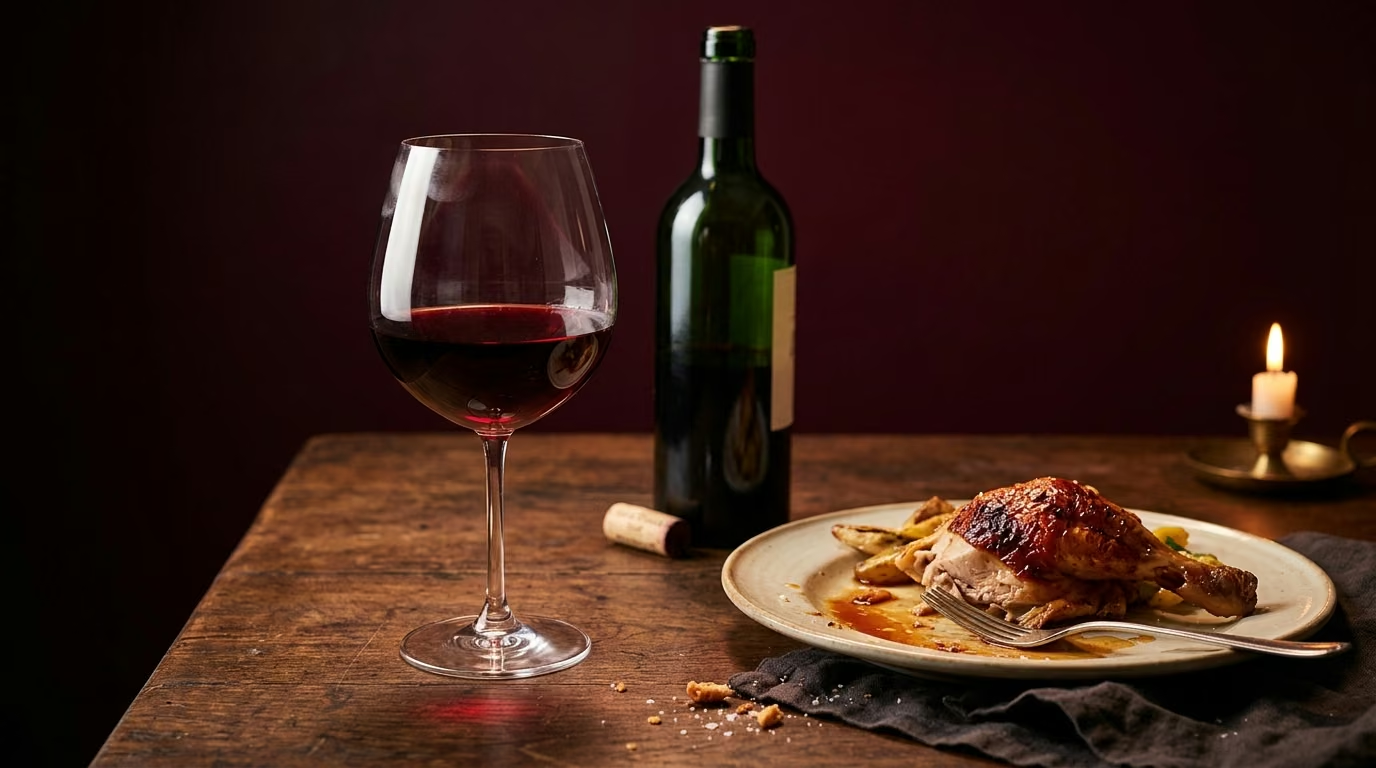
Context finishes the job of pulling two drinkers apart, because the same wine tastes different depending on serving temperature, glass shape, what you ate beforehand and what's on the plate now. A red served too warm reads as boozy, a white served too cold tastes of nothing much, and a tannic wine turns harsh alongside something salty or bitter. Our guide to wine serving temperatures covers the part of that you can control most easily.
This is why the tasting note is worth more than the score attached to it. The note is where the critic actually tells you the wine is lean and citrusy, or dense and oaky, or needs five years before it opens up. Those are the details that let you decide whether the bottle suits you, and they're the first thing dropped when the number gets printed on a card. If you only have room to read one of the two, read the words.
How should you choose a bottle instead?
Choose by style, using a short description of what you want the wine to feel like, because that's the information a score leaves out. Six dimensions cover nearly everything worth specifying, and you can hold them in your head after a couple of tries.
Think about body first, meaning whether you want something light, medium or full. Then sweetness, which for most people means dry or slightly off dry. Then acidity, which is the difference between crisp and soft. Then tannin, the grippy or smooth quality in reds. Then oak, which shows up as vanilla, toast and a creamy texture. Then whether you want fruit driven or more earthy and savory flavors.
Turn that into one sentence and hand it to whoever is helping you. Asking for something dry, medium bodied and not too oaky around fifteen dollars will get you a better bottle than hunting the shelf for the highest number, and shop staff far prefer it because it tells them what to actually look for. Our walkthrough on how to choose wine with confidence goes further into the conversation, and how to describe wine taste helps if the vocabulary is the part that feels awkward.
How do you learn your own preferences?
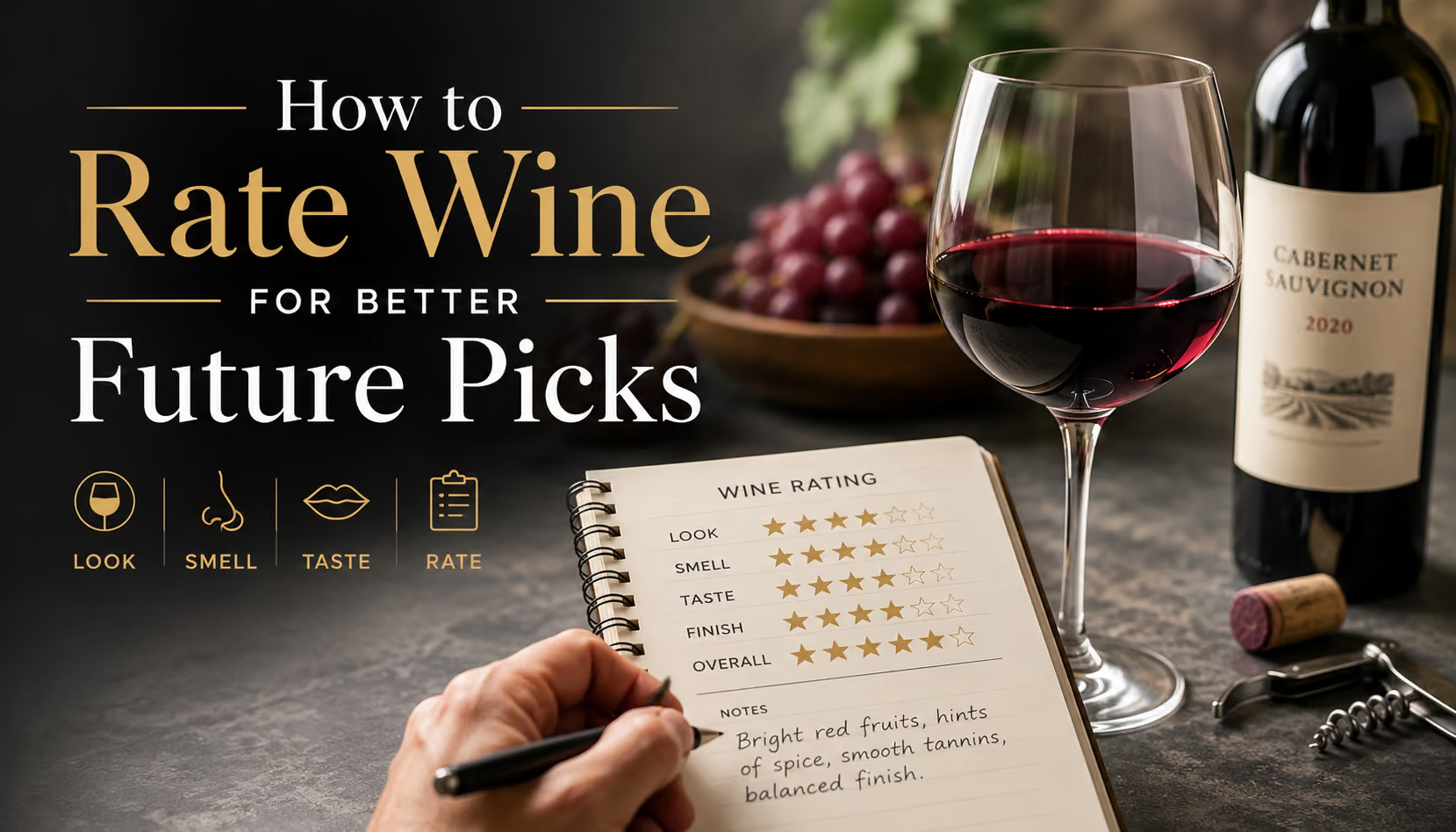
Keep a short record of what you drank and what you thought, because patterns emerge much faster than people expect. Two or three words after each bottle is enough, covering what you liked, what you didn't and what you ate alongside it.
After a month of that you'll usually be able to name your house style, and the whole exercise stops feeling random. You'll notice, for example, that the reds you enjoy are consistently the lighter ones, or that oaked whites keep disappointing you regardless of price or score. That's more actionable than any critic's number, because it's built from your own palate rather than someone else's.
Our guide to building a personal wine profile without the jargon lays out the process without turning dinner into homework. If you'd rather not keep notes by hand, this is exactly what Sommy's Taste Profile does in the background, refining a picture of your palate from what you rate so the recommendations get sharper over time.
Frequently asked questions
What do wine ratings mean on a scale of 100?
They express how much a critic liked a wine compared with others they've tasted, on a scale modeled after American school grading where below 70 is failing. In practice the reviewed range runs from about 85 to 100, and most wines that get written up land between 88 and 95.
Do wine ratings actually matter?
They matter for narrowing a long list and for spotting wines a professional found genuinely interesting, and they matter to producers because scores move sales. They don't tell you whether a wine suits your taste, which is usually the question you're actually asking.
Who decides wine scores?
Individual critics and tasting panels, each using their own interpretation of the scale, which is why the same bottle can carry different numbers from different publications. There's no governing body and no standard method behind the figures.
Why are almost all wine scores above 88?
Partly score inflation across the industry and partly selection, since critics often don't publish notes on the wines they didn't rate highly. Jamie Goode explains both effects in his own scoring, noting that the lower scoring wines from trade tastings mostly never reach his site.
Is an expensive highly rated wine worth buying?
It's worth buying if the style matches what you enjoy, and not otherwise. A high score on a big, oaky, tannic red is a poor reason to buy it if what you actually like is something light and fresh.
Do different critics give the same wine the same score?
Often not, and the gaps can run to several points because each critic interprets the scale their own way and brings their own preferences. Seeing the same bottle at 89 from one publication and 93 from another is normal rather than a sign that somebody made a mistake.
What should you use instead of ratings?
A short style description covering body, sweetness, acidity, tannin, oak and flavor character, given to a shop assistant or used to filter a list. It takes one sentence and it targets the thing you care about, which is whether you'll enjoy the wine.
Reading the number without being ruled by it
Scores aren't a con, they're a compressed opinion from someone whose job is comparing wines against each other. Treat them as a rough band rather than a ranking, remember that the visible range is about ten points wide rather than a hundred, and don't assume a two point gap describes anything you could taste.
Then choose the way that actually works, by naming the style you want and matching it to the meal and the mood. Your own record of what you liked will beat any critic's number within a month, because it's the only assessment built around your palate rather than somebody else's.