
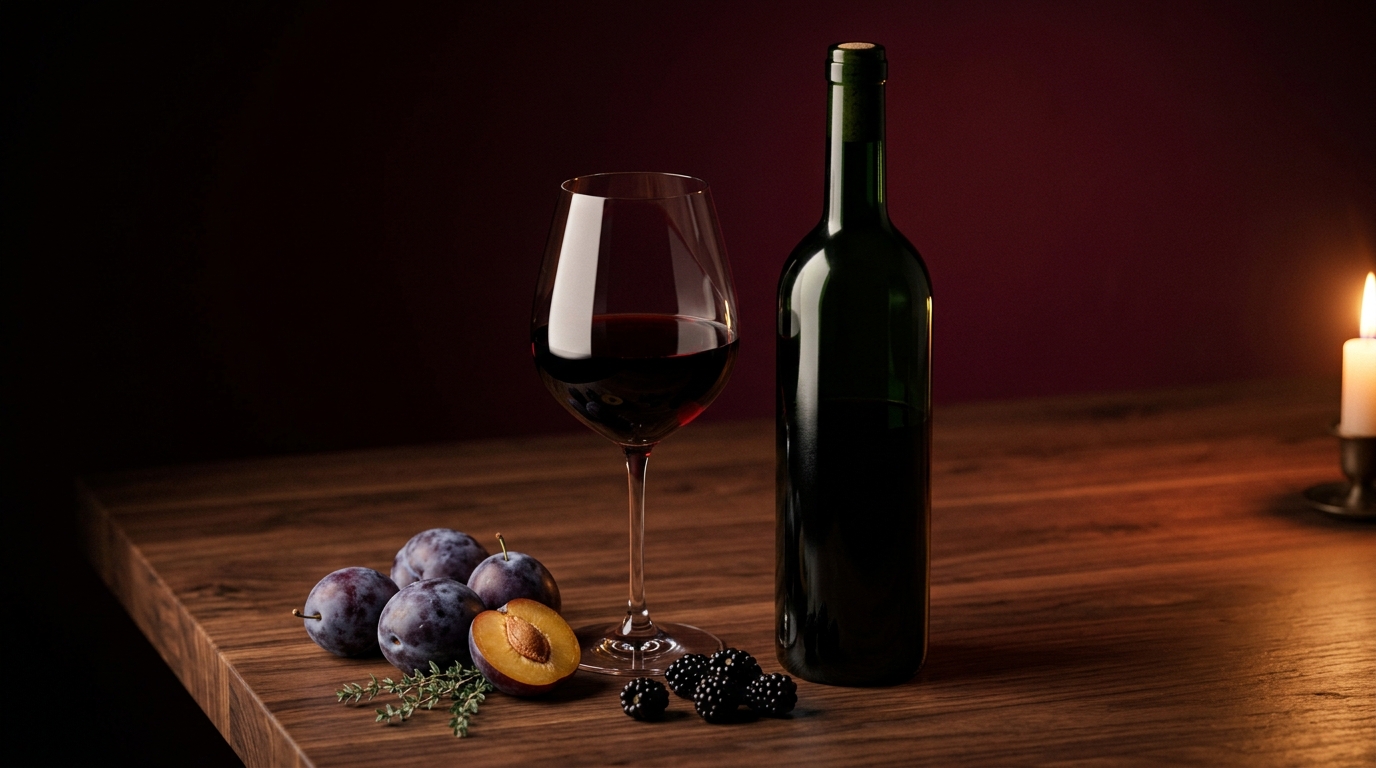

Carménère tastes of dark plum and blackberry wrapped around a savory, herbal note that can read as anything from a faint whisper of dried herbs to a full mouthful of green bell pepper. It's a dry red, softer in tannin than Cabernet Sauvignon, and closest in feel to a plummy Merlot. The green streak is the only thing about it that's genuinely unpredictable, and it's the reason two bottles with the same grape on the label can feel like different wines.
Here's what almost nobody tells you: that green note isn't random. It tracks how ripe the grapes were and how much sunlight reached them, and both of those leave fingerprints you can read on the bottle before you pay for it. This guide is about reading them.
What does Carménère wine taste like?

Start with the fruit, because that's what leads in most bottles you'll find in a US shop. Carménère gives you dark plum, blackberry and sometimes black cherry, usually ripe rather than tart. The color in the glass is deep, close to opaque at the center, and the texture is medium bodied with tannins that feel soft and fine rather than gripping.
That softness matters if you've been burned by a young Cabernet. Wikipedia's grape entry puts it plainly: Carménère's tannins are gentler and softer than those in Cabernet Sauvignon, and the wine sits at medium body rather than full. You get the dark fruit of a serious red without the mouth-drying finish that makes some people put the glass down. If tannin is the thing you're trying to avoid, our guide to wine tannins explains what you're actually tasting.
Behind the fruit sits a savory layer. Depending on the bottle, that shows up as dried herbs, black pepper, tobacco, cocoa, or the green bell pepper note that Carménère is famous for. A well made, properly ripe bottle keeps that layer in the background where it adds interest. A less ripe one puts it front and center, and then you're drinking something that tastes more like a vegetable than a plum.
Oak aging changes the picture as well. Producers who age in barrel often add vanilla, coffee or dark chocolate on top, which can mask the herbal side almost completely. That's worth knowing when a shelf talker promises cocoa and you're wondering where the grape went.
Why do some Carménère bottles taste green and others don't?

Because of a family of compounds called methoxypyrazines, and because of a harvest problem that's specific to this grape's history in Chile.
Take the chemistry first, because it explains the rest. The methoxypyrazine that matters most in wine is IBMP, and it smells like fresh green bell pepper. Writing for SevenFifty Daily, Alex Russan explains that methoxypyrazines accumulate early in berry development and then fall sharply at veraison, the point where grapes change color and start ripening in earnest. Most of that breakdown happens between veraison and the middle of ripening, and it slows down considerably after. Riper fruit means less green, and that relationship is reliable enough that Bordeaux winemakers have used the absence of the pepper note as a maturity check.
Sunlight is the second lever, and it's the bigger one. Dominique Roujou de Boubée, who led University of Bordeaux research on these compounds, told the same publication that removing shoots and leaves to expose the fruit reduced pyrazine concentration in the grapes. Shade on the fruit keeps that green character in. A vigorous vine with a dense canopy, a water-retaining soil, a cool site, or a north-facing slope in the southern hemisphere all point the same direction.
Now for the part that belongs specifically to Chile. For most of the twentieth century, Chilean growers thought their Carménère vines were Merlot and picked the two together. The trouble is that Merlot ripens two to three weeks earlier. Pick when the Merlot is ready and the Carménère is still green; wait for the Carménère and the Merlot turns jammy. The grape was only identified as distinct in 1994, by the French ampelographer Jean Boursiquot, and Chile's agriculture department didn't officially recognize it until 1998. Chile now grows more Carménère than anywhere else on earth and treats it as a signature variety, which means growers finally get to harvest it on its own schedule.
One practical consequence that gets missed constantly: pyrazines are very stable in finished wine. Decanting a green bottle for an hour will not fix it. If you open one and the pepper is dominant, that's the wine you have.
How do you pick a riper bottle on the shelf?

You can't taste through glass, but you can stack the odds. Four things on the bottle correlate with less green character, and you can check all of them in about twenty seconds.
| What to look at | Points to less green | Points to more green |
|---|---|---|
| Alcohol on the back label | 13.5% and up | Below 13% |
| Region | Colchagua, Rapel, Maipo, Cachapoal | Cool or coastal sites |
| The producer's own tasting note | Leads with plum, blackberry, cocoa | Leads with herbs, pepper, "fresh" |
| Oak treatment | Barrel aged, Reserva or above | Unoaked, stainless steel only |
Alcohol is the most useful of the four and the one people skip. Sugar becomes alcohol, so a higher figure is a reasonable proxy for riper fruit, and riper fruit means fewer pyrazines. It isn't a guarantee, because a producer can chaptalize or pick a hot site, but as a free signal printed on every bottle it's hard to beat.
The region printed on the label narrows things further. Carménère grows chiefly in the Colchagua Valley, the Rapel Valley and Maipo Province, and Wines of Chile's regional guide shows how those sit in the warmer interior rather than out toward the coast. A warmer site generally means riper fruit. That's a tendency rather than a rule, since a single valley holds both sun-baked slopes and cool corners, but it beats guessing.
The tasting note on the back is the closest thing to a direct answer. Producers write these themselves and they're describing the actual wine in the bottle, not the grape in the abstract. When the note opens with ripe plum and mocha, they're telling you the green stayed in the background. When it opens with fresh herbs and spice, believe them.
Price is the signal that doesn't work. There's no tidy ladder where $30 buys you a rounder wine than $14. A cheap bottle from a warm vintage can be softer and fruitier than an expensive one from a cool site, so treat price as your budget rather than your flavor guide.
This is exactly the moment Sommy's Fit Check was built for. You're standing in the aisle with a bottle you've never had, and you want a straight answer on whether it suits you specifically rather than whether it's objectively good. Type the name, say it out loud, or scan the label, and you get a verdict based on what you've already rated instead of a stranger's opinion.
Is Carménère dry, and will a Merlot drinker like it?
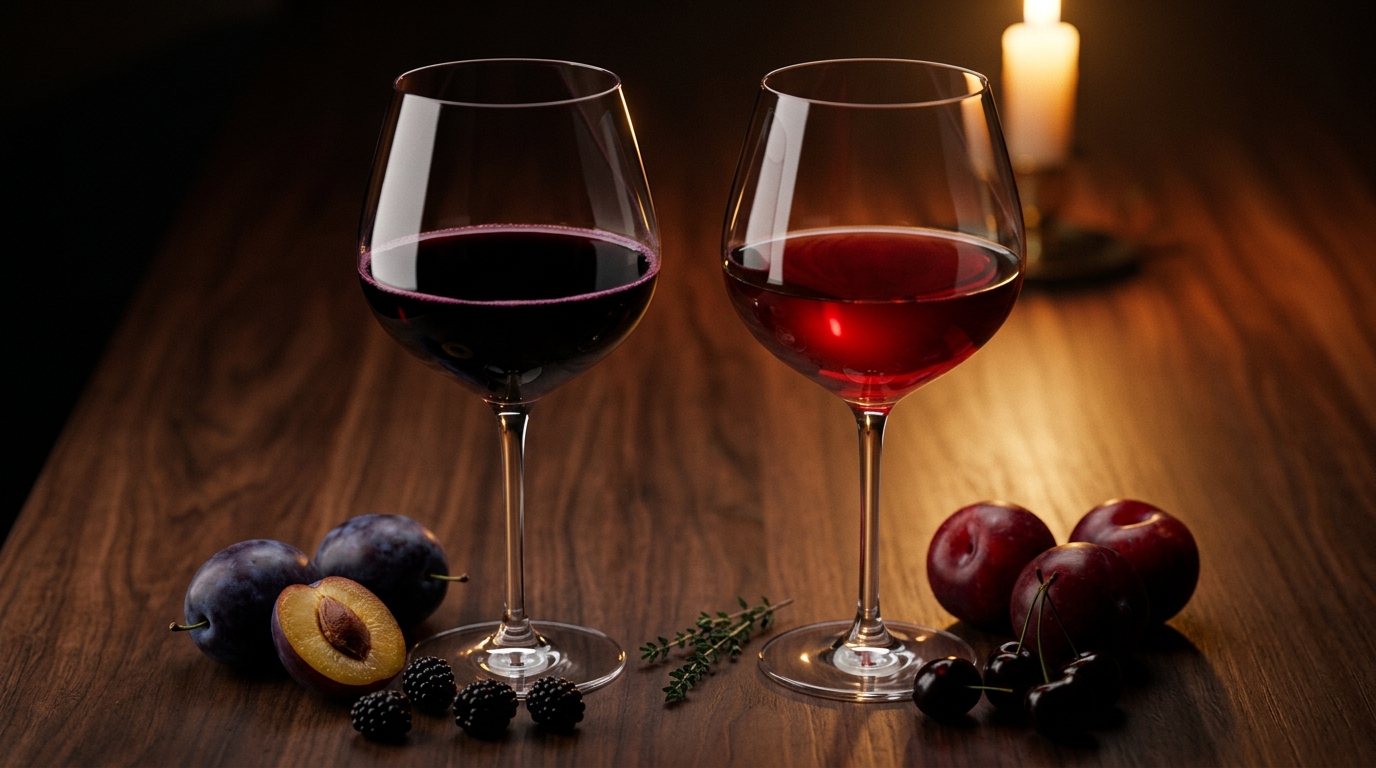
Carménère is dry, essentially without exception. Effectively every bottle you'll meet in a US shop is made as a dry red, with no meaningful sugar left in it. Ripe dark fruit can create a sweet impression on the palate, which is a different thing and catches people out regularly, but the wine itself isn't sweet.
As for Merlot, yes, and the similarity goes deeper than marketing. The two grapes spent a century in the same Chilean vineyards being mistaken for each other. If you like the plummy, rounded, easy feel of Merlot, Carménère is a small step sideways rather than a leap.
| Carménère | Merlot | Cabernet Franc | |
|---|---|---|---|
| Body | Medium | Medium to full | Medium |
| Tannin | Soft, fine | Soft, round | Moderate, firmer |
| Fruit | Dark plum, blackberry | Plum, black cherry | Red cherry, raspberry |
| Savory edge | Herbal to bell pepper | Mild, usually absent | Leafy, graphite, often present |
| Typical US shelf price | $12 to $25 | $12 to $30 | $18 to $40 |
Cabernet Franc is the other comparison worth making, because it shares the same green streak from the same compounds. The difference is weight and fruit color. Cabernet Franc runs lighter and redder, with a graphite edge, while Carménère runs darker and rounder. If you've tried Cabernet Franc and liked the herbal note, you'll almost certainly be fine with a green Carménère. If that note is what put you off, our comparison of Cabernet Franc and Cabernet Sauvignon covers the same territory from the other side.
Malbec is the third bottle people reach for at this price. It gives you similar dark fruit and softness with essentially no herbal character, so it's the safer pick if green is a hard no. Our Malbec taste guide lays out how it differs.
What should you eat with Carménère?

Grilled and browned things, mostly. The wine has enough dark fruit to stand up to char and enough softness that it doesn't fight the food. A burger, a skirt steak, lamb chops, short ribs, or a beef stew with root vegetables all work without any thought required.
The savory note is a pairing asset rather than a problem once you aim it correctly. Herb-heavy cooking meets it halfway, so rosemary on the lamb or thyme in the braise makes the herbal side of the wine read as intentional. Roasted mushrooms do the same job. Our broader guide to pairing food with red wine starts from tannin, which is the right first question with any red.
Two things to be careful about. Heavy chili heat plus a dry red is a rough combination, because alcohol amplifies the burn and the fruit gets flattened. And a sweet glaze, the barbecue sauce and teriyaki end of the spectrum, will make a dry Carménère taste thin and sour by comparison. Neither is fatal, but a softer, fruit-led bottle handles both better than a firm one.
Dark chocolate is the pleasant surprise here. A bottle with real cocoa character from oak aging works genuinely well with a square of dark chocolate after dinner, which is not something you can say about most dry reds.
How do you order it without holding up the table?

Ask one question, and make it the right one. "Is your Carménère more plummy, or does it have a green bell pepper thing going on?" That single sentence tells the server what you care about, and anyone who has poured the wine will know the answer immediately.
Add your budget and you're done. If it's available by the glass, take the glass first and decide about the bottle after, which costs you nothing and settles the question properly. Our guide to reading a restaurant wine list covers the same approach for the rest of the page.
One thing worth checking if you're ordering for the table: the herbal note divides people more sharply than almost any other flavor in wine. Some drinkers find it savory and interesting, others find it tastes like a salad. Ask before you commit four people to a bottle of it.
Common questions about Carménère
Is Carménère the same as Merlot?
No, though Chile spent over a century believing it was. They're separate varieties that look similar in the vineyard and were planted together. Carménère ripens two to three weeks later than Merlot, which is exactly why the confusion caused so much trouble at harvest.
Why does my Carménère smell like green bell pepper?
Methoxypyrazines are the cause, most likely IBMP. They're present in grapes from the start and break down as the fruit ripens and gets sun exposure, so a strong pepper aroma usually means the grapes were picked early, grown in shade, or both. It's a real compound rather than something added to the wine.
Will decanting get rid of the green taste?
Decanting will not help you here. These compounds are stable in finished wine and don't blow off with air the way some sulfur notes do. Serving the wine slightly warmer and alongside herb-forward food will make it read as more integrated, but the aroma itself is staying put.
Is Carménère a good wine for someone new to red wine?
It can be an excellent one, as long as you pick a fruit-led bottle. The soft tannins make it easy to drink and the dark fruit is familiar. Look for a warm-region bottle at 13.5% or above and a tasting note that leads with plum rather than herbs.
How long should I keep a bottle of Carménère?
Most of what you'll buy under $25 is made to drink now and gets no better for waiting. Open it within a couple of years of the vintage. Serious bottles from top sites can age, but that's a different purchase and the producer will say so.
What's a fair price for a good Carménère?
The sweet spot sits between $12 and $25, and there's plenty of genuinely good wine at the lower end of that. Chile prices this grape as an everyday red rather than a trophy, which is one of the better reasons to try it.
The bottle in front of you
Carménère is an easy grape to enjoy and an easy one to get unlucky with, and the difference comes down to a single variable you can partly predict. Check the alcohol, read the producer's own words, favor the warm interior valleys, and you've done most of what's possible from the outside of a bottle.
What you can't predict is you. Some people taste that herbal edge and find it the most interesting thing in the glass, while others taste the same wine and want it off the table. No guide settles that, and the only way to find out which one you are is to open a bottle and pay attention to your own reaction.
