

The best wine with Mexican food is usually a dry rosé or a dry sparkling wine like Cava, because both handle chile heat, lime and fried food at the same table. Past that, pick by the sauce rather than the meat: Sauvignon Blanc or Albariño for green, lime-heavy dishes, off-dry Riesling for anything genuinely hot, and a soft, fruity Zinfandel or Grenache for mole and other dark, smoky sauces.
Mexican cooking covers too much ground for one bottle to win every plate, so this guide goes dish by dish, from mole and enchiladas to ceviche and pozole.
What wine goes best with Mexican food?
Dry rosé and dry sparkling wine are the two safest bottles for a Mexican meal, because they bring acidity, low tannin and moderate alcohol, which are the three things chile, lime and fat all want. Cava is the easiest sparkling wine to find at a fair price, and a dry rosé from Spain or Provence covers almost anything that isn't a heavy, dark sauce.

Past the safe picks, two questions about the plate tell you what to open: how hot is it, and is the sauce sour or rich? Lime and tomatillo want a bright wine, while cheese, crema and fried tortillas want something that cuts, and the sauce almost always matters more than the protein.
Wine Folly sums up the heat part neatly in its guide to wine with Mexican food: the spicier the food, the colder and sweeter the wine should be, and lower alcohol with moderate tannin helps calm the burn. A 15% Cabernet tastes warm and bitter next to a habanero salsa, while a cold, slightly sweet Riesling tastes like it was made for it.
Which wine goes with mole?
Zinfandel is our first pick for mole poblano, with Grenache and Barbera close behind, because mole is sweet, bitter, smoky and gently spicy all at once, and it needs a red with ripe fruit and soft tannin to meet it. Wine Spectator's Dr. Vinny makes the same call in his answer on wine for Mexican food, naming a fruit-forward Zinfandel or Barbera for mole.
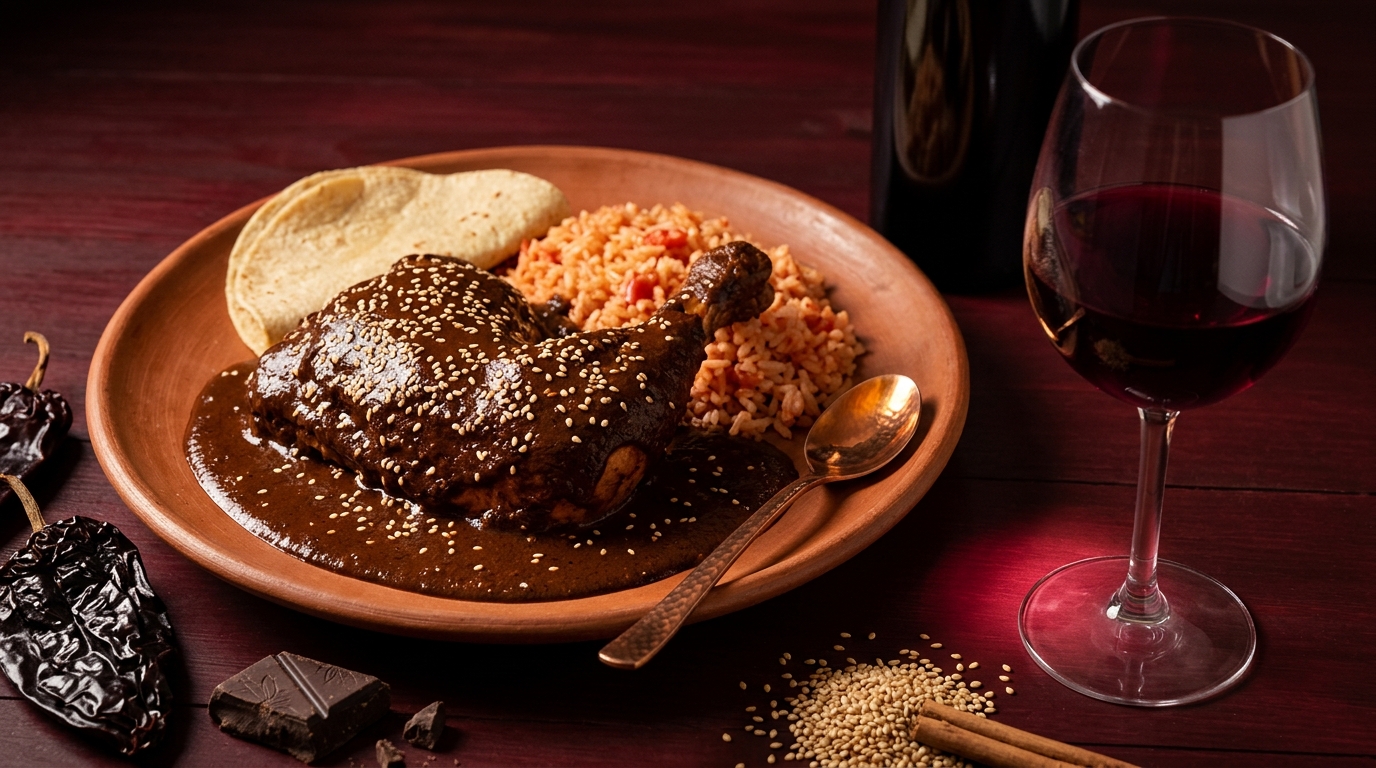
Mole is built on dried chiles, nuts, seeds, spices and often a little chocolate, so a lean, tart red tastes thin against it and a big tannic one turns harsh. Zinfandel brings blackberry and a hint of spice that sits right alongside the chile and cacao, and Grenache does a lighter version of the same thing with a peppery edge that suits mole made with more heat.
Different moles push the choice around a little. Mole negro from Oaxaca is the darkest and most bitter, and it's the one where Zinfandel shines most. Mole rojo is brighter and a bit more chile-forward, which makes Grenache or a fruity Spanish Garnacha the better fit. Mole verde is a different animal entirely, made with pumpkin seeds, green chiles and herbs, so it wants a white with some weight, like a Chenin Blanc or an unoaked Chardonnay, rather than a red.
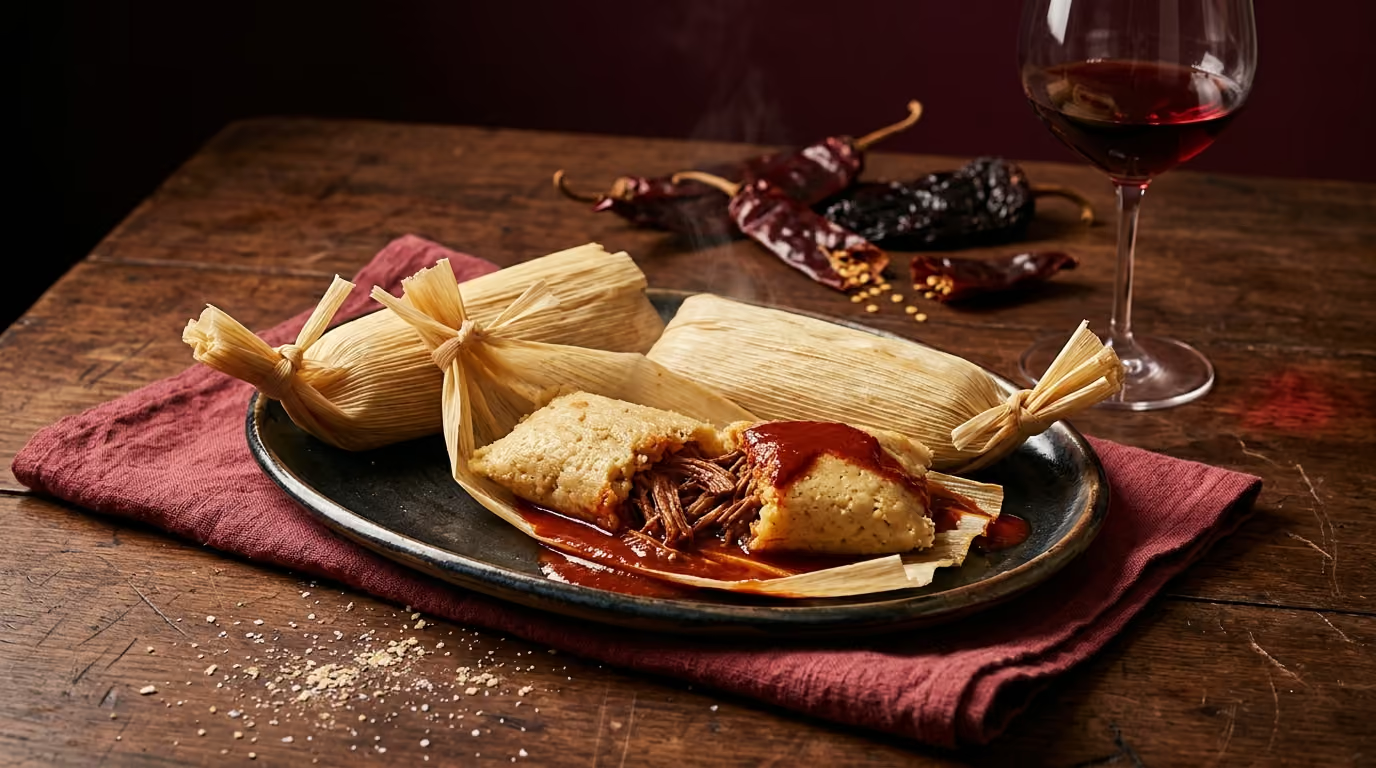
If someone at the table only drinks white, an off-dry Riesling or Gewürztraminer handles mole poblano better than you'd expect, since the touch of sweetness matches the sauce instead of fighting it. Tamales with mole or red chile sauce follow the same logic, and our guide to wine with red chile and mole tamales covers those in more detail. For more on the grape itself, here's our Zinfandel wine guide.
What wine goes with enchiladas?
Sauvignon Blanc is the best wine for enchiladas verdes, and a light, juicy red like Gamay or a young Tempranillo is the best wine for enchiladas rojas, because the color of the sauce tells you almost everything you need. Green sauce is tart and herbal, red sauce is earthier and a little sweeter, and the cheese on top wants acidity either way.

Enchiladas verdes get their tang from tomatillos, lime and green chiles, and the herbal, grassy note in Sauvignon Blanc mirrors that almost exactly. A New Zealand or Chilean Sauvignon Blanc has enough fruit to stand up to the chile, and a Sancerre-style one from the Loire is leaner and works best when the sauce is mild. Albariño is a good swap if you'd rather have something a bit rounder.
Enchiladas rojas use a sauce of dried red chiles like guajillo and ancho, which is earthy and lightly sweet rather than sour. A chilled Gamay or a young Rioja Crianza gives you red fruit and enough freshness to cut the melted cheese without the drying grip of a heavier red. If they're stuffed with beef or topped with a lot of cheese, a Grenache steps in nicely.
Enchiladas suizas, with their cream and Swiss-style cheese, are the richest of the family. They want acidity first and fruit second, so a dry sparkling wine is the strongest choice, though an unoaked Chardonnay works too. Enchiladas smothered in mole go back to the mole rules above.
What wine goes with ceviche, aguachile and Mexican seafood?
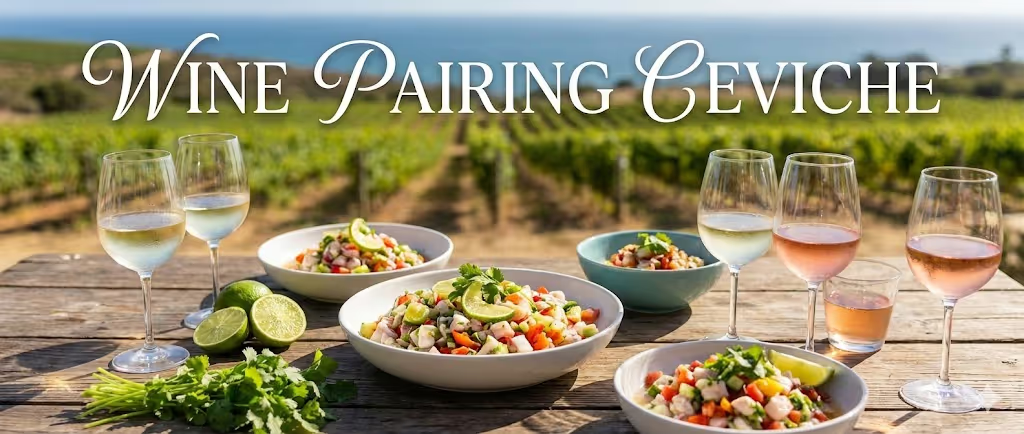
Albariño and Sauvignon Blanc are the best wines for ceviche and aguachile, because a dish "cooked" in lime juice needs a wine at least as sharp as the lime, or the wine tastes flat and flabby next to it. A dry Riesling is the better pick when the aguachile is properly hot.
The most common mistake here is pouring a soft, buttery white, since oak and low acidity both collapse next to citrus. Look for words like "crisp", "zesty" or "unoaked" on the back label, or simply pick a region known for freshness, such as Rías Baixas in Spain for Albariño, the Loire for Sauvignon Blanc, or Vinho Verde from Portugal, which is light, low in alcohol and usually inexpensive. Our guide to wine with ceviche and aguachile goes deeper on the citrus problem.
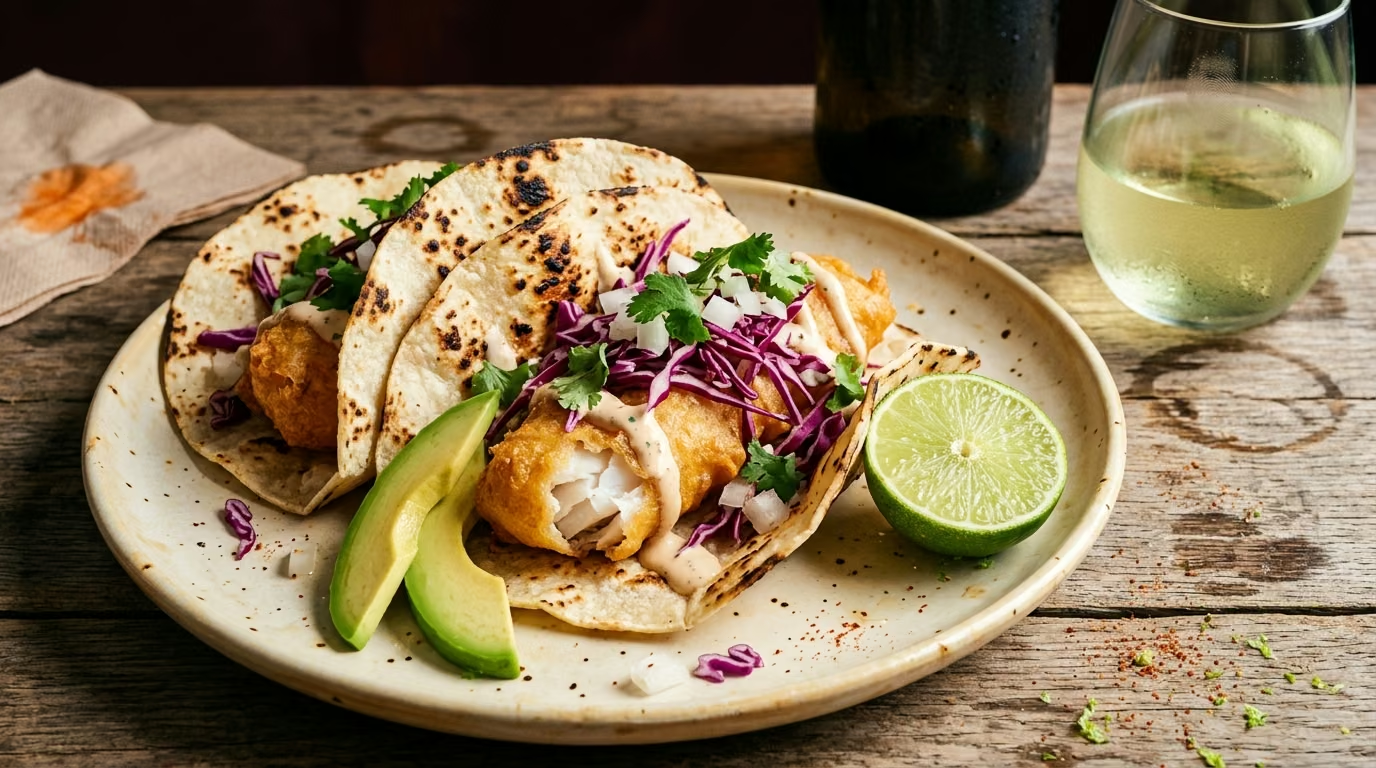
Shrimp al mojo de ajo can take a rounder white like Chenin Blanc, and spicy shrimp a la diabla wants an off-dry Riesling. Fried fish, whether in a taco or on a plate, is where dry sparkling wine is hard to beat, and our page on wine for fish tacos covers Baja, blackened and shrimp versions separately.
What wine goes with chiles rellenos and fried dishes?
Off-dry Riesling or Chenin Blanc is the best match for chiles rellenos, because the dish combines a mildly spicy poblano, a lot of melted cheese and a fried egg batter, and a wine with a touch of sweetness and bright acidity handles all three. Dry sparkling wine is the backup if nobody wants anything sweet.
Fried dishes in general, like flautas, taquitos, chimichangas and tostadas, are less about the filling than about the oil and the crunch. Bubbles and acidity both work like a reset button between bites, which is why Cava or a dry sparkling rosé is so reliable with a plate of flautas and crema. Our page on affordable sparkling wine explains why Cava does this so well for so little money.
Queso fundido and other melted-cheese dishes belong in the same group. A cold glass of dry sparkling wine or a crisp Sauvignon Blanc cuts through the cheese, while a heavy red makes the whole thing feel richer and heavier than it already is. If the queso has chorizo stirred in, a chilled Lambrusco is a fun alternative, since it's dry, fizzy and fruity all at once, and our Lambrusco guide explains how to tell the dry bottles from the sweet ones.
What wine goes with pozole, birria and slow-cooked dishes?
Grenache, Syrah and Malbec are the best wines for slow-cooked Mexican dishes like birria, barbacoa and pozole rojo, because long cooking builds deep, savory flavor that can take a red with more structure than most Mexican food can. Keep the alcohol in check if the dish is spicy, but you can go bigger here than anywhere else in this guide.
Birria is rich, beefy and built on a chile broth, so a Malbec from Argentina or a Syrah from Washington meets it head on. Pozole is a little trickier, because the color tells you which way to go. Pozole rojo, made with red chiles and pork, suits a Grenache or a Côtes du Rhône. Pozole verde is greener and brighter, which pulls you back toward Albariño or a dry rosé. Pozole blanco is the mildest of the three and works with nearly anything light, including a chilled Pinot Noir.
Cochinita pibil, the Yucatán pork slow-roasted with achiote and sour orange, is one of the best wine dishes in the whole cuisine. The citrus and gentle spice want a red with bright acidity and low tannin, so a Beaujolais or a light Pinot Noir is our pick, with a dry rosé as the backup. Carnitas follow a similar path, since the pork is rich but not sweet, and Wine Spectator's Dr. Vinny suggests Pinot Noir for carnitas and other pork dishes.
Which wine goes with each Mexican dish?
Here's the whole guide in one place, with a first pick and a backup for each dish so you have something to reach for if the shop or the wine list doesn't carry the first one.
| Dish | What drives the pairing | First pick | Easy backup |
|---|---|---|---|
| Mole poblano or negro | Sweet, bitter, smoky sauce | Zinfandel | Grenache |
| Mole verde | Herbs, pumpkin seeds, green chile | Chenin Blanc | Unoaked Chardonnay |
| Enchiladas verdes | Tomatillo tang and cheese | Sauvignon Blanc | Albariño |
| Enchiladas rojas | Earthy dried red chile | Gamay | Young Rioja |
| Ceviche or aguachile | Raw fish in lime juice | Albariño | Dry Riesling |
| Chiles rellenos | Mild heat, cheese, fried batter | Off-dry Riesling | Dry sparkling wine |
| Flautas or taquitos | Fried tortilla and crema | Cava | Dry sparkling rosé |
| Birria or barbacoa | Slow-cooked, beefy chile broth | Malbec | Syrah |
| Cochinita pibil | Achiote, sour orange, pork | Beaujolais | Dry rosé |
| Pozole rojo | Red chile and pork | Grenache | Côtes du Rhône |
What about tacos, fajitas and Tex-Mex combo plates?
Tacos follow the same sauce-first logic as everything above, so dry rosé, Albariño and a chilled Gamay cover most taco nights between them. Because tacos come in so many styles, we've given them their own page on wine pairings for tacos, which goes filling by filling and salsa by salsa, from al pastor to birria.
Tex-Mex leans on cumin, yellow cheese, sour cream and refried beans more than on fresh chiles and lime, so it's heavier and less acidic, and a fruity red works better here than with much regional Mexican cooking. A combo plate of beef enchilada, crispy taco and beans suits a Zinfandel or a Spanish Garnacha, while chicken fajitas sit nicely with an off-dry Riesling.
How spicy is too spicy for wine?
Most wine starts to struggle once the food reaches jalapeño or serrano heat, and very hot dishes with habanero or chile de árbol overwhelm nearly everything except off-dry, low-alcohol whites. Alcohol is the reason: chile heat makes alcohol taste hotter, and alcohol in turn makes the chile burn more, so the two feed each other.
A practical way to use this in a shop or at a restaurant is to check the alcohol percentage on the label or the list. For mild dishes like a poblano relleno or most enchiladas, anything under about 14% is fine. For medium heat, like a chipotle salsa or a spicy shrimp dish, we'd stay closer to 12.5% or under and lean toward wines with a bit of fruit. For real heat, look for an off-dry German Riesling, which often sits around 8% to 10% alcohol, or a lightly sweet Vouvray. Our Riesling food pairing guide explains why those off-dry styles cope so well with chile.
Tannin behaves a lot like alcohol, so big, grippy reds like young Cabernet Sauvignon make heat feel sharper. When the table has several dishes at different heat levels, pick the wine for the hottest one. Our page on wine for spicy food covers spicy takeout from other cuisines too.
Is Mexican wine worth drinking with Mexican food?
It's worth trying, especially the reds from Baja California, which tend to be ripe, warm-climate blends that sit comfortably next to grilled meat, mole and chile. Mexico's wine history is also far older than most people expect: Casa Madero in Coahuila, founded in 1597, is the first commercial winery in the Americas and still makes wine today, according to Vinography's look at Mexican wine.
Most Mexican bottles you'll see in the US come from the Valle de Guadalupe, a valley in Baja about 70 miles south of San Diego, which the same Vinography piece estimates is now responsible for more than 70% of Mexico's wine output. Blends built on Nebbiolo, Tempranillo, Grenache and Cabernet Sauvignon are common, along with whites from Chenin Blanc and Sauvignon Blanc. Those reds are often fuller than the light reds we've recommended for spicy dishes, so they're best with milder, meatier plates like birria and mole. Small production also means Mexican wine often costs more than a Spanish or Argentine bottle of similar style, so treat it as a fun bottle to try rather than the everyday value pick.
How do you choose wine at a Mexican restaurant?
Ask for a style rather than a specific grape, and name the dish you're ordering, because most Mexican restaurants keep a short wine list and the server will know what works on it. Saying "something crisp for the ceviche" or "a light red that can handle some heat" gets you a better glass than guessing at a label you've never seen.
If you're reading the list yourself, look for regions that signal freshness: Rías Baixas, Vinho Verde, the Loire, Beaujolais and most dry rosés are safe bets for spicy, citrusy food. Ordering by the glass lets you switch from a white for the starters to a red for the mole.
If you'd like a shortcut that starts from your own taste instead of the average diner's, Sommy's Current Venue ranks the bottles on a restaurant's list against your palate, so you can see which of the short list's wines you're most likely to enjoy before the server comes back.
Which one bottle covers a whole Mexican spread?
A dry rosé is the single bottle we'd bring to a mixed Mexican dinner, with dry sparkling wine a very close second. Rosé has enough red fruit for grilled meat and mild mole, and enough acidity for lime, salsa and fried food, so it rarely tastes wrong with anything on the table.
If you can bring two bottles, make the second one a light red you can chill, like a Gamay or a Grenache, for the darker sauces and the meat. If you can bring three, add a Sauvignon Blanc or an Albariño for the seafood and anything green. That trio handles nearly every dish in this guide, and you'll quickly learn which one empties first at your table, which is the most useful pairing information you'll ever get.
Chill everything a little more than usual, including the red, because a cool light red tastes fresher next to chile than the same bottle at room temperature.
Frequently asked questions
What is the best wine pairing with Mexican food overall?
For a mixed meal, a dry rosé or a dry sparkling wine like Cava is the best all-round wine pairing with Mexican food. Both have the acidity for lime and salsa, the freshness for fried dishes and low enough tannin that chile heat doesn't turn them harsh.
Does red wine go with Mexican food?
Yes, as long as it's light to medium in body, low in tannin and not too high in alcohol. Zinfandel and Grenache suit mole, Gamay and young Tempranillo suit enchiladas rojas, and Malbec or Syrah handle birria and barbacoa. Avoid big, oaky reds with spicy dishes.
What wine goes with spicy Mexican food?
Off-dry Riesling is the most reliable wine for spicy Mexican food, because its touch of sweetness softens chile heat and its low alcohol keeps the burn from building. Lightly sweet Chenin Blanc and off-dry sparkling wine work for the same reason.
What wine goes with Mexican food and cheese dishes like queso?
Dry sparkling wine and crisp Sauvignon Blanc are the best wine pairings with Mexican food that's heavy on melted cheese, from queso fundido to enchiladas suizas. The acidity and bubbles cut through the richness so each bite tastes fresh.