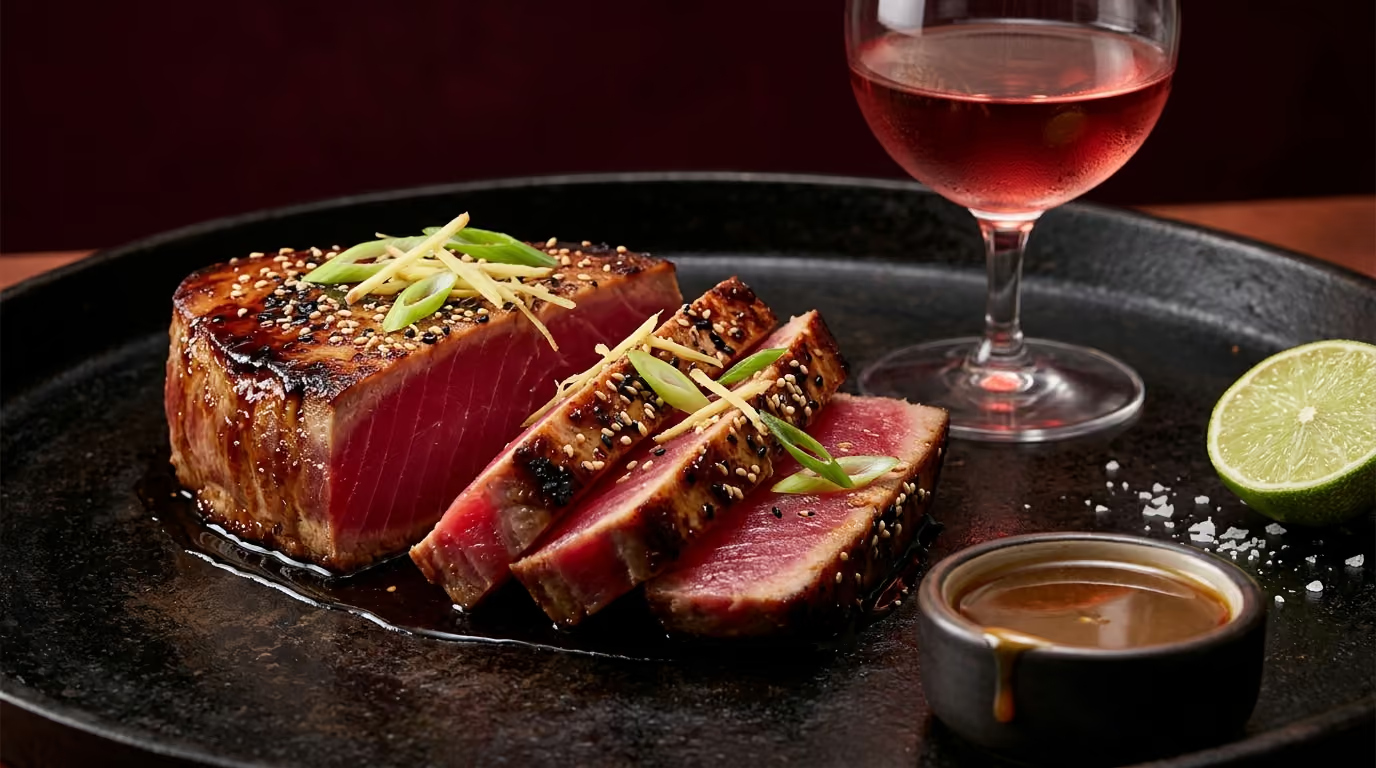

The best wine for seared tuna with a soy glaze is a light, low-tannin red served cool, or a dry rosé with real fruit behind it. Pinot Noir, Gamay from Beaujolais and Etna Rosso all work, and so does a Bandol or Tavel rosé. Tuna is the one fish that genuinely takes red wine, because rare tuna eats like a steak rather than like a fillet of sole. The glaze matters more than the fish does, since soy brings salt, sweetness and a heavy dose of savory depth all at once, and those three things reshape a wine far more than tuna itself ever could.
Seared tuna gets treated as a seafood pairing problem, which is why so much of the advice about it is wrong. A rare tuna steak has dense muscle, a deep red interior and almost no delicacy about it, and the sweet salty crust from a soy glaze pushes it further from anything you'd serve with Muscadet. Once you stop reading the dish as fish and start reading it as a rare piece of meat with a caramelized savory crust, the wine list gets much easier to work through.
What's the best wine for seared tuna?
A cool-served light red is the most reliable answer for tuna with any kind of soy or teriyaki glaze, and a fruit-forward dry rosé is the safest choice if you'd rather not pour red with fish at all. Both share the qualities the dish needs: bright acidity to meet the salt, enough fruit to sit beside the glaze's sweetness, and low enough tannin that they never turn bitter or metallic against the fish.
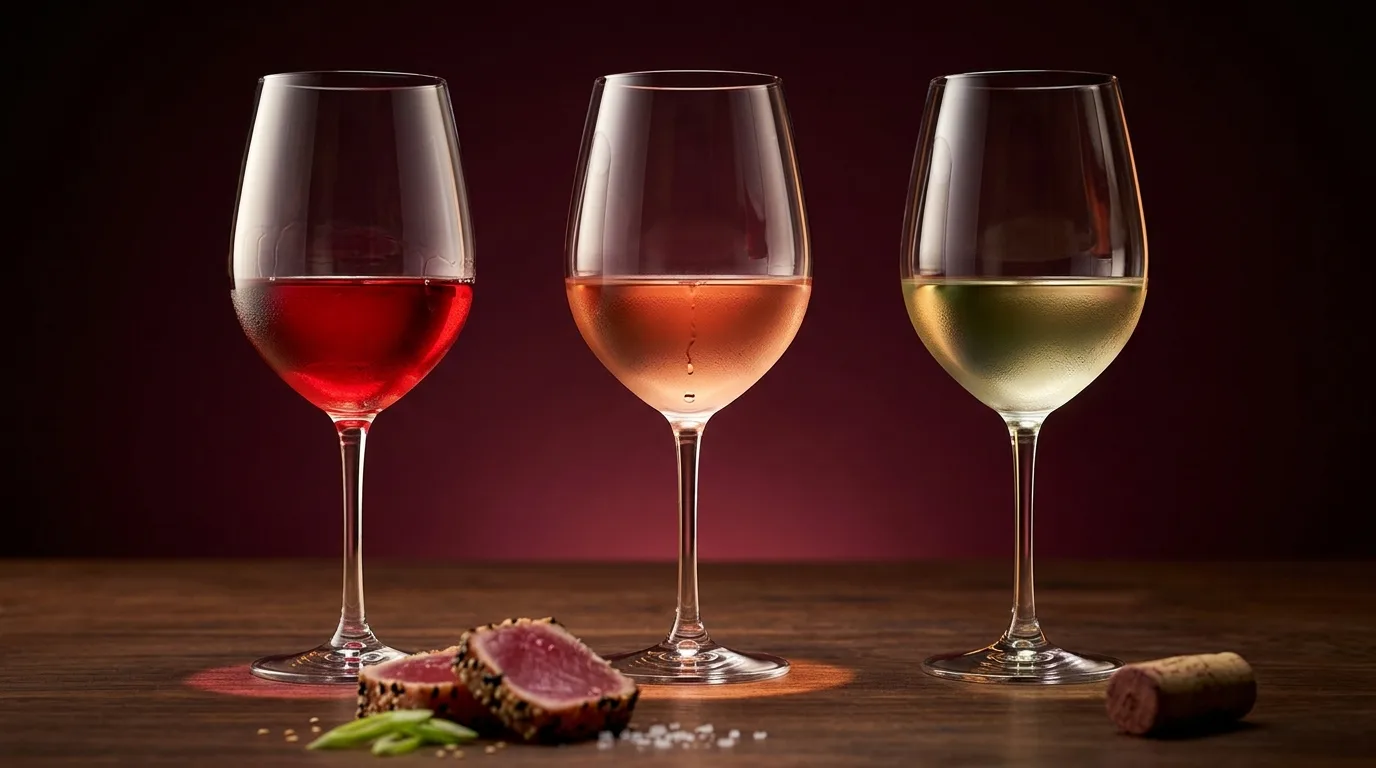
| Wine | Why it works with seared tuna | Best when |
|---|---|---|
| Pinot Noir, cool climate and lightly oaked | Low tannin, red-fruit lift and a savory edge that meets the seared crust | The tuna is rare and the glaze is properly caramelized |
| Gamay from Beaujolais, served chilled | Bright, juicy and almost tannin-free, and it loves being cold | You want the easiest red on this list and a summery meal |
| Etna Rosso or Frappato from Sicily | Pale, high acid and faintly smoky, which echoes the sear itself | You want something less obvious than Pinot Noir |
| Dry rosé from Bandol or Tavel | Enough body and fruit for the glaze, plus acidity for the salt | You're serving it cold outdoors or feeding a mixed table |
| Dry or off-dry Riesling | Acidity plus a touch of sweetness that mirrors mirin in the glaze | The glaze is sweet, or there's ginger and chilli involved |
| Grüner Veltliner or Albariño | Citrus, white pepper and salinity for tuna served plain with lemon | There's no soy at all and the fish is simply seared |
Weight matching explains most of that list, and rare tuna sits considerably heavier than people expect. It's denser than salmon, closer in texture to a beef tenderloin than to cod, so a delicate white gets flattened by it. Our broader guide to pairing wine with food works through that principle across simpler dishes, and tuna is the clearest example of a fish that breaks the old white-wine-with-seafood rule outright.
Why does the soy glaze matter more than the tuna?
Because soy brings three separate things to the plate and each one changes your wine, while plain tuna brings almost nothing that a wine has to fight. A soy glaze is salty, it's usually sweetened with mirin or sugar, and it's dense in the savory depth that comes from fermented soybeans. Add the caramelization from the sear and you have a crust with more flavor intensity than the fish underneath it.
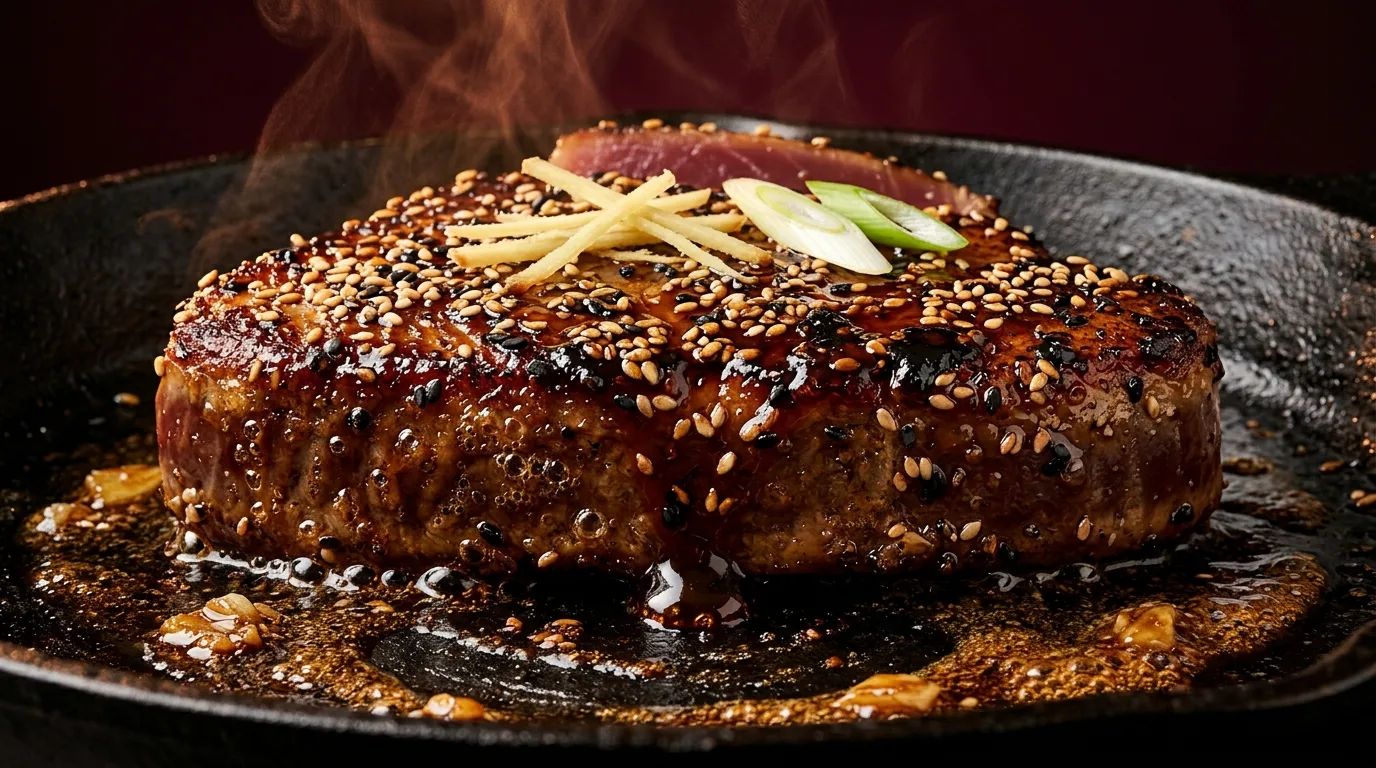
Those elements pull in opposite directions, which is genuinely useful to know. In the standard food and wine pairing framework, salt and acidity in a dish make a wine taste softer and fruitier, while sweetness and savory depth make it taste harder, more bitter and more astringent. Soy delivers all four at once, so a glazed tuna steak is more forgiving than a pure savory bomb like a mushroom ragout, but far less forgiving than a plain grilled fish.
The practical consequence is that you want a wine with fruit to spare. A bone-dry, austere, low-fruit wine will read as thin and sour next to a sweet glaze, because the sugar in the crust makes the wine taste less sweet than it did on its own. That's the same effect that catches people out with barbecue sauce and with teriyaki, and it's why a wine that felt perfectly balanced beforehand can taste stripped and acidic at the table.
Sweetness in the glaze also gives an off-dry wine a real job to do. A dry Riesling with a few grams of residual sugar, or a rosé from a warm site with generous strawberry fruit, will meet the glaze on its own terms rather than fighting it. If the recipe leans hard on mirin, honey or brown sugar, move a step sweeter than you first planned.
Can you really drink red wine with tuna?
Yes, and tuna is close to the only fish where a red is the first choice rather than a brave one. Its flesh is dark and muscular, it has real iron and savory depth of its own, and served rare it holds up to a wine with actual structure. The rule that reds ruin seafood has a specific chemical basis rather than a snobbish one, and understanding it tells you exactly which reds are safe here.
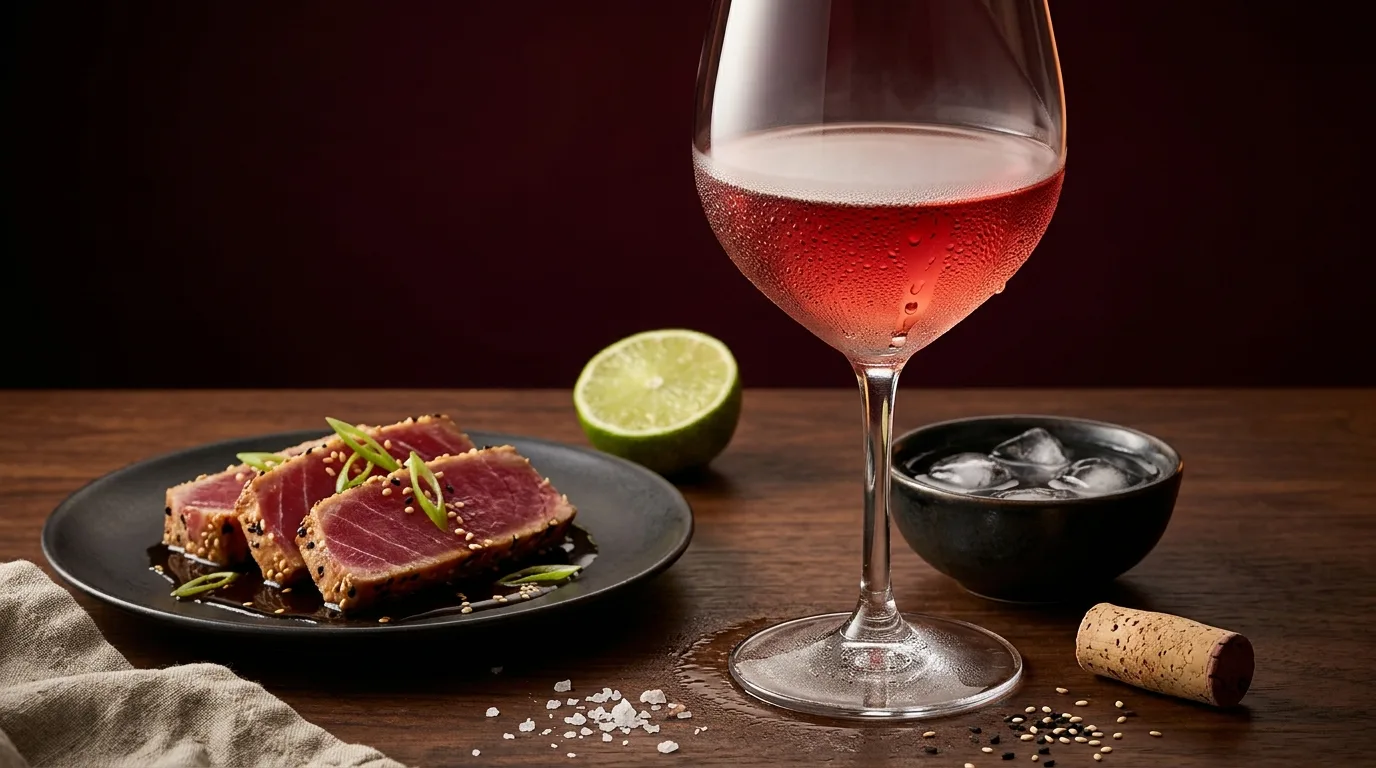
Researchers at Mercian's product development laboratory tested 38 red wines and 26 whites alongside seafood and published their findings in the Journal of Agricultural and Food Chemistry, reporting strong positive correlations between the intensity of the fishy aftertaste and the concentration of both total iron and ferrous ion in the wine. When they added a compound that binds iron, the unpleasant aftertaste faded. So the problem was never redness as such, it was what some reds carry.
That points you straight at pale, light-bodied reds from cooler places, which tend to sit at the gentler end of that scale and carry much less tannin besides. Pinot Noir, Gamay, Frappato and Nerello Mascalese all qualify, and our guide to spotting a low-tannin red covers how to identify them on a shelf. The soy glaze helps too, because its salt softens whatever tannin the wine does have.
Serve the red cool rather than at room temperature, somewhere around 55°F, which is roughly twenty minutes in the fridge for a bottle that's been sitting out. Warmth exaggerates alcohol and makes a light red taste flabby beside a cold-centred piece of fish, while a gentle chill tightens its acidity and makes the fruit more precise. Our comparison of Pinot Noir and Gamay as chilled reds goes into which of the two takes a chill better.
What if it's ahi tuna, poke or a sesame crust?
Ahi is simply the Hawaiian name for yellowfin, so a seared ahi steak is the same pairing problem and the same answers apply. What changes the wine is the treatment around it rather than the species: a sesame crust, a poke bowl or a raw preparation each pull in slightly different directions, and it's worth knowing which.
A toasted sesame crust adds nutty, oily richness and a faint bitterness, which suits a wine with a bit more texture. A richer rosé or a Pinot Noir with some savory development handles it better than a lean, high-acid white does. Sesame oil in particular coats the palate the way butter does, so acidity earns its place again.
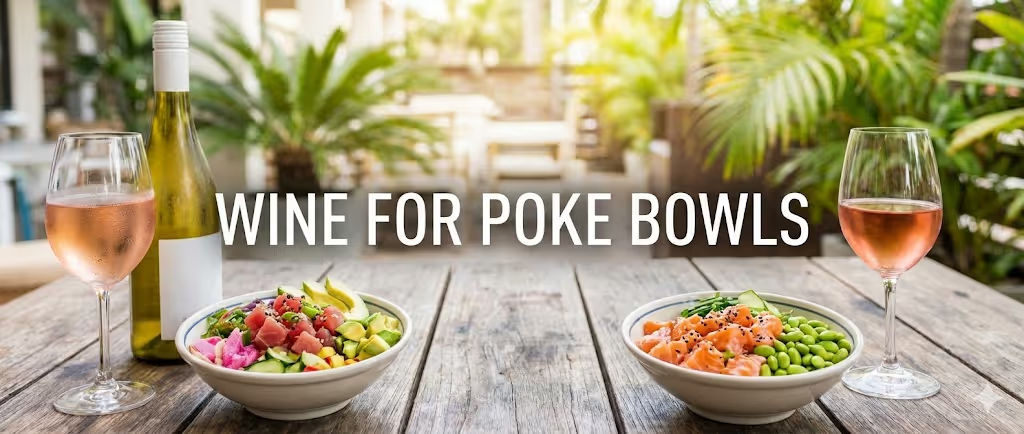
Poke and other raw or barely seared preparations move the dish back toward sushi territory, where the rice, the soy and the wasabi all matter more than the fish. Our sushi wine pairing guide covers that whole category, and the short version is that sparkling wine and dry Riesling both handle raw fish and soy better than a red does. If the tuna is genuinely raw rather than seared, treat it as sushi rather than as a steak.
Tuna served plain with nothing but olive oil, lemon and salt is the one version that takes a white comfortably. Albariño, Grüner Veltliner or a Vermentino from the coast all suit it, since there's no glaze to overwhelm them and the fish itself is clean and saline. Our wine pairing for salmon picks follow similar logic for a fattier fish, where the preparation decides the wine far more than the species does.
Which wines go wrong with seared tuna?
Big tannic reds are the clearest mistake, which rules out Cabernet Sauvignon, most Bordeaux, Barolo, and heavily extracted Malbec or Syrah. Their tannin has nothing to bind to in a lean piece of fish, their weight buries the dish, and they're the styles most likely to leave the metallic finish the iron research describes. A steak-sized piece of tuna is still not a steak in the way those wines need.
Heavily oaked Chardonnay is the other common error, and it fails for a different reason. Vanilla, toast and coconut from new barrels turn slightly ashy and bitter next to soy and caramelized sugar, so an expensive oaked white can perform noticeably worse here than a cheap unoaked one. If a white's tasting note leads with butter or oak, it belongs with a cream sauce rather than with this dish.
Aggressively herbaceous whites are worth approaching carefully too. A very green, grassy New Zealand Sauvignon Blanc can clash with a sweet glaze and turn sharp, though it works fine with tuna served plain and lemony. The safest rule with any soy glaze is to favor fruit and acidity together, and to skip anything defined by oak, tannin or hard green herbal character.
Frequently asked questions
What is the best wine for seared tuna if I only buy one bottle?
A dry rosé with real fruit, from Bandol, Tavel or a fuller Provence style, is the most flexible single bottle. It has the acidity to handle soy's saltiness, enough fruit to meet a sweet glaze, and none of the tannin that causes trouble with fish, so it works whether the tuna is glazed or served plain.
Does red wine go with seared tuna?
Yes, and tuna is the fish where red works best. Stick to pale, low-tannin styles like Pinot Noir, Gamay or Etna Rosso, serve them cool at around 55°F, and avoid big tannic reds, which are the ones most likely to leave a metallic aftertaste alongside fish.
What wine goes with tuna and soy sauce?
Look for fruit and acidity together, since soy brings salt, sweetness and savory depth at once. Dry or off-dry Riesling, a fruity rosé and chilled Gamay all handle that combination, while bone-dry, low-fruit wines tend to taste thin and sour next to the glaze.
Should I chill red wine for seared tuna?
Yes, about twenty minutes in the fridge is right for a light red. Around 55°F the wine's acidity tightens up and its fruit becomes more precise, which suits a fish served rare, while room temperature makes the same bottle taste heavy and alcoholic beside it.
Is Sauvignon Blanc good with seared tuna?
It depends entirely on the glaze. Sauvignon Blanc works nicely with tuna served plain with lemon and olive oil, but a very grassy, herbaceous style can turn sharp against a sweet soy glaze, so a Riesling or a rosé is the safer choice once soy is involved.
What about seared ahi tuna specifically?
Ahi is yellowfin, so the pairing is identical and the preparation still decides everything. A sesame crust adds nutty oiliness that suits a richer rosé or a savory Pinot Noir, while a plain seared ahi steak with lemon takes a crisp Albariño or Grüner Veltliner comfortably.
What to pour tonight
Read the crust rather than the fish. A properly caramelized soy glaze is the loudest thing on the plate, and it wants a wine with fruit, acidity and almost no tannin, which is why a chilled Gamay or a fruity Bandol rosé beats most of the expensive bottles you could open instead. Tuna served plain with lemon is a different dish entirely and belongs with a crisp coastal white.
The single bottle that handles the widest range of tuna preparations is a good dry rosé with some weight to it. It has no tannin to react with the fish, enough acidity for salt and enough fruit for sugar, and it stays comfortable whether the tuna comes glazed, sesame-crusted or straight off a hot pan with nothing on it at all.