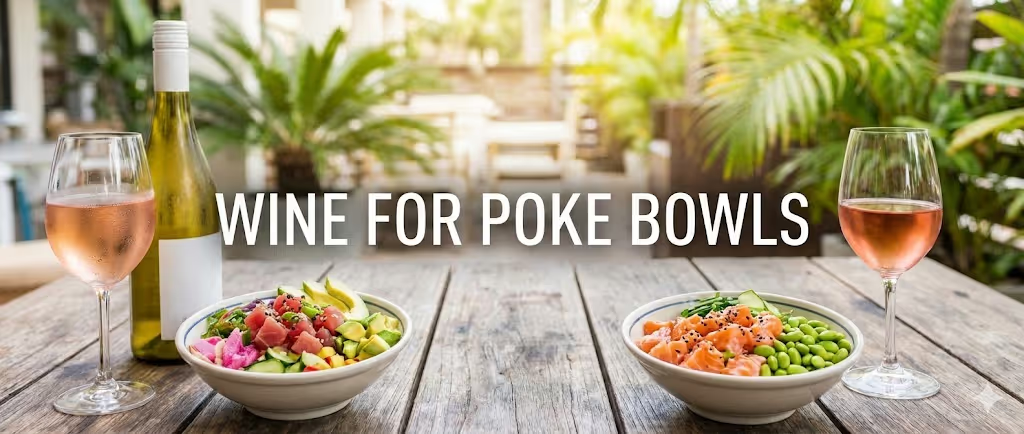

Poke bowls, with their sushi rice base and raw fish, can taste clean and bright one minute, then salty, creamy, and spicy the next. So the best wine for poke bowls isn’t “the perfect bottle,” it’s a bottle that stays refreshing while the sauces do their thing.
Here’s the quick answer on wine pairing, even for a classic tuna poke bowl that requires a versatile bottle: go crisp whites for soy sauce and ponzu, off-dry whites or bubbles for spicy mayo, and zippy, mineral whites for avocado. If you want red, keep it light and slightly chilled.
A no-stress way to choose wine for poke bowls
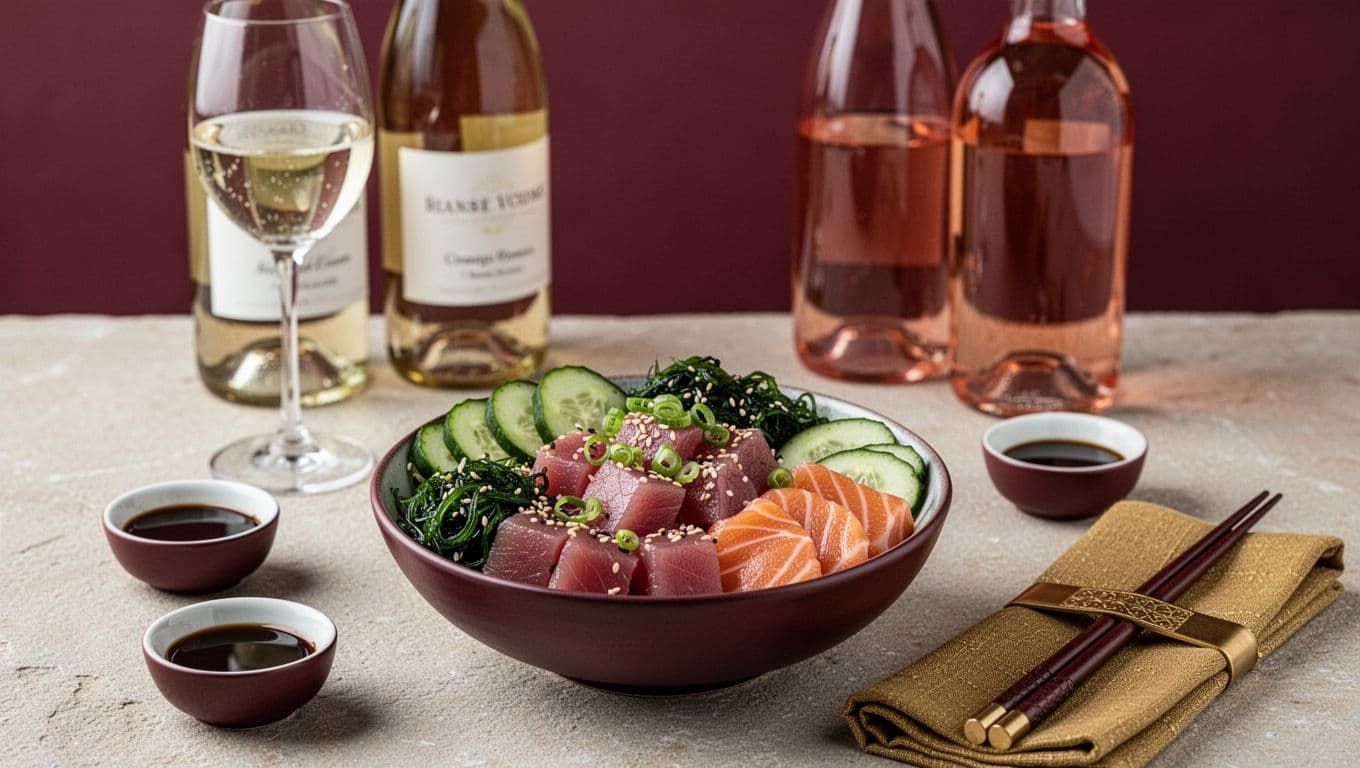
If you’ve ever stared at a wine list while someone waits, you already know the real problem. Wine isn’t hard, it’s stressful. You don’t want to choose wrong.
This is the calm “how to choose wine” framework that works for almost every poke bowl. Think of it as a simple food and wine pairings guide built for real life, not theory.
First, match the sauce volume, not the raw fish. Tuna and salmon are gentle, but soy, ponzu, fresh ginger, sesame seeds, and spicy mayo are loud. Second, choose refreshment over power. Poke bowls have cold, clean textures, so heavy, oaky wines can feel clunky. Third, use two simple “knobs” you can turn: acidity (for tang and salt) and a touch of sweetness or bubbles (for heat).
If you want this as wine explained simply, keep these three checks in your head:
- Salty or soy-forward: pick a crisp, dry white.
- Citrus or spicy ponzu: pick a crisp white with extra zip (it should feel like a squeeze of lime).
- Spicy mayo: pick off-dry or sparkling, serve it cold.
That’s it. Those are the simple wine tips that prevent most pairing regrets.
Best wine for poke bowls by sauce (soy, ponzu, spicy mayo, avocado)
Soy sauce bowls (salty, savory, sometimes sesame oil)
Soy sauce with sesame oil makes a lot of wines taste flat, especially in bowls featuring marinated salmon. You want a dry white wine that stays bright and doesn’t feel sweet. Look for a crisp, dry white like Sauvignon Blanc, Albariño, Alsace Pinot Gris, or a dry sparkling wine.
In the store, ignore fancy words and hunt for a bottle described as “crisp” or “refreshing.” Those shelf tags are basically wine tasting notes explained in everyday language. If you’re building your own wine guide, write down one quick line after dinner: “Crisp white + soy tasted clean.” That’s more useful than memorizing grapes.
Ponzu bowls (citrus, tang, extra brightness)
Ponzu is like turning the contrast up with its citrus flavors, lemony tang, salt, and sometimes a little bitterness. The wine should act like cold water after a bite, not like a dessert, so prioritize acidity and minerality.
Pick a dry, high-acid white: Sauvignon Blanc is the easiest yes. Albariño and dry Riesling also work well. If the bowl has lots of scallion, cucumber, or seaweed, these wines keep the flavors sharp and fresh.
If you’re ordering at a restaurant, one line works: “I’m having a ponzu poke bowl. I’d like a crisp, dry white wine, nothing oaky.” That’s the kind of friendly wine advice that gets you to a good answer fast.
Spicy mayo bowls (heat, creamy fat, crunchy toppings)

Spicy mayo is a two-part challenge: heat plus richness, whether with tuna or marinated prawns. Dry, high-alcohol wine can make the spice feel sharper. The fix is simple: a little sweetness, bubbles, or both.
Your safest picks are off-dry Riesling, Gewurztraminer to handle the aromatic flavors and heat, off-dry Chenin Blanc, or demi-sec sparkling. Serve it very cold. That cool temperature matters as much as the wine itself. If you want the same logic for other spicy meals, the wine hot pot pairing guide shows why sweetness and bubbles calm heat without turning dinner into homework.
If you hate any hint of sweetness, go sparkling brut instead. The bubbles scrub the creamy layer off your tongue, so each bite tastes new.
Avocado-heavy poke bowls (creamy, buttery, clean)

Avocado makes salmon avocado poke bowls feel softer and richer, even if the fish is lean. You want a wine that cuts through that creamy texture. Choose a mineral, citrus-leaning white like Sauvignon Blanc, Albariño, or a dry Chenin Blanc. If you're torn between the first and the last of those, here is how Chenin Blanc and Sauvignon Blanc differ once they're in the glass.
Here’s a small but useful trick: if the salmon avocado bowl also has mango or pineapple, consider a lightly off-dry white. Fruit plus avocado can make a totally dry wine taste more sour than you want.
Red wine options for poke bowls
If you prefer a light red wine, Pinot Noir can work surprisingly well with poke bowls without overwhelming the fresh fish. Rosé fans should try Tavel Rosé from the Rhône Valley, a dry style that refreshes the palate, or a classic Provence Rosé for similar vibrancy.
Quick cheat sheet for clear wine recommendations and wine pairing:
| Poke bowl style | What it tastes like | Smart wine picks |
|---|---|---|
| Soy-based | salty, savory | crisp dry white, dry bubbles |
| Ponzu | citrusy, tangy | extra-crisp dry white |
| Spicy mayo | hot, creamy | off-dry white or sparkling |
| Avocado-forward | creamy, rich | mineral crisp white |
Grocery store and restaurant shortcuts (and AI help)
In a store, the fastest win is choosing a style you can spot quickly. These grocery store wine picks are dependable with wine poke bowls or homemade poke bowls: Sauvignon Blanc (crisp), Albariño (citrus), dry sparkling (brut), and off-dry Riesling (for spicy mayo). You’re not hunting a trophy bottle, you’re choosing a bottle that plays well with sauce.
On a restaurant menu, ignore half the list and search for a few words that matter. These are practical restaurant wine tips and wine list tips you can use even when you’re hungry: “crisp,” “dry,” “refreshing,” “sparkling,” “off-dry.” Consider that your mini modern wine guide, with simple wine explanations that fit in one breath.
If you want decisions even faster, this is where an AI wine assistant helps. Instead of guessing, you can get smart wine recommendations based on your order (soy, ponzu, spicy mayo), your budget, and what you actually like. That’s the point of personalized wine recommendations, not crowd noise. For in-the-moment help, the best wine scanner app guide explains how scanning a label can lead to personalized wine picks that feel obvious, not overwhelming. If you’re on iPhone and want more wine app suggestions, the best wine app for iPhone breaks down what’s worth using.
Think of it as everyday wine advice: fewer tabs open in your brain, more confidence in your glass.
Conclusion
Poke bowls are sauce-driven, so for successful wine pairing, match the wine to the sauce and garnish first. Crisp whites handle soy and ponzu, off-dry or sparkling wines calm spicy mayo, and bright whites cut through avocado. Keep it cold, keep it fresh, and trust Best Wine for Poke Bowls recommendations over perfect rules. What’s your usual bowl, soy, ponzu, spicy mayo, or avocado?