A wine tasting app helps you taste, remember, and choose wine with more confidence, and the right one depends entirely on what you want from it: a place to log tasting notes, a way to learn how to taste, or a tool that studies your palate and recommends what to open next. Vivino and Delectable are the popular note-logging apps, CellarTracker is the one serious collectors trust for their bottles, and Sommy is built around a personal Taste Profile that turns every wine you rate into a sharper recommendation. So the honest answer is that you should pick by your goal, not by whichever app claims the most reviews. Below we walk through the four things a wine tasting app actually does, which apps win at each, and how to run a tasting at home with one in your pocket.
What is a wine tasting app?
A wine tasting app is a phone app that helps you record, understand, and improve the way you drink wine, usually by letting you scan a label, save a tasting note, and build up a history of what you've tried. Most of them started as digital replacements for the little notebook a wine lover used to carry, and they've grown into something closer to a personal wine memory that travels with you into any shop or restaurant. The good ones remember the bottle you loved two years ago so you're not standing in an aisle trying to recall a name you'll never retrieve.
The confusing part is that "wine tasting app" covers several genuinely different tools that happen to share a category. Some are really rating and label-scanning apps, where the point is to snap a photo and see a crowd score before you buy. Some are tasting-note journals, where the point is the writing itself and the record you keep over time. Some are cellar managers built for people with a few hundred bottles to track. And a newer group is built around personalization, where the app learns your taste and does the choosing with you. When people say an app "isn't for them", it's almost always because they picked one built for a different job than the one they had in mind.
What do you actually want a wine tasting app to do?
Before you download anything, decide which of four jobs you actually need, because no single app is best at all of them. The four jobs are logging what you drink, learning how to taste, discovering new bottles you'll like, and managing a collection. Getting clear on your job is the whole game, and it takes about a minute of honesty with yourself.

If your goal is to keep a record, you want a clean tasting journal that makes it quick to capture a bottle, a few impressions, and a rating you'll understand later. The writing matters more than the social feed here, and the payoff comes months down the line when you can look back and see your taste taking shape. We wrote a fuller walkthrough of that habit in our guide to keeping a digital wine journal, and the short version is that consistency beats detail: three honest words about every bottle will teach you more than a paragraph you only write once.
If your goal is to learn how to taste, you want structure rather than storage. A few apps lean into education with guided tastings, flashcards, or quizzes that teach you to name what you're smelling, and something like VinoQuiz sits in that lane for people who enjoy studying the subject. If you'd rather learn by doing than by drilling, the better path is an app that explains its recommendations in plain language, so every pour quietly teaches you why you liked it.
If your goal is discovery, you want an app that turns your history into a suggestion for the next bottle, not just a place to store old notes. This is where most traditional tasting apps stop short, and it's the job people most often think they're buying and then don't get. And if your goal is managing a real collection, you want a cellar tool that tracks quantities, drinking windows, and what's ready to open, which is a different discipline again. If that's you, our rundown of the best wine tracking app options is a better starting point than any tasting-note app.
Which are the best wine tasting apps in 2026?
The best wine tasting apps in 2026 are Vivino for label scanning and crowd ratings, Delectable for beautiful tasting notes, CellarTracker for serious cellar tracking, and Sommy for personalized recommendations built on your own palate. Each one is genuinely good at its own job and merely okay at the others, so the table below is less a ranking than a map of which tool fits which goal.
• Vivino: best for scanning any label and seeing a crowd rating fast. Free to download, with a paid Premium tier.
• Delectable: best for elegant tasting notes and following critics and friends. Free.
• CellarTracker: best for tracking a real cellar with deep community notes. Free, supported by optional donations.
• Sommy: best for recommendations that learn from every wine you rate. Free to start.
Vivino is the one most people mean when they say "the wine app", and its strength is scale: point your camera at almost any bottle and you'll get an average rating from a huge community in seconds. That's genuinely useful for a quick gut check in a shop. Its weakness is that a crowd average tells you what strangers thought, not whether the wine suits you, and the ratings can flatten out around the same few numbers. Delectable takes the opposite approach and treats a tasting note as something worth writing well, which makes it a favorite of people who like the craft of describing wine and following palates they trust.
CellarTracker is the veteran, and it earns the loyalty of collectors because it does the unglamorous work of inventory and drinking windows better than anything else, with a community database of notes that's decades deep. It isn't trying to be pretty, and it doesn't need to be. Sommy is the newest shape of tasting app, and instead of handing you a crowd score it builds a Taste Profile from the wines you rate, then uses that to tell you whether a specific bottle is likely to be your style. It's free to start, and the whole point is that the recommendations get more personal the more you tell it. We compared this category more broadly in our look at what makes an AI sommelier app actually helpful.
What do most wine tasting apps still get wrong?
Most wine tasting apps still confuse popularity with fit, telling you what the crowd rated a wine instead of whether you personally will enjoy it. A 4.2 average is a fact about other people, and the whole reason wine feels intimidating is that your palate isn't the average palate. Two people can taste the same Barolo and honestly rate it a 3 and a 5, and both are right, because taste is personal in a way a single score can never capture.
The second thing they get wrong is treating your history as a filing cabinet instead of a teacher. You dutifully log fifty bottles, and the app hands you back fifty notes, but it never closes the loop and tells you what those fifty bottles reveal about you. That's a missed opportunity, because the pattern in your own ratings is the single best predictor of what you'll like next, better than any critic and better than any crowd. An app that reads that pattern can save you from the two wines you'd have regretted and point you at the one you'd never have found on your own.
This is the gap Sommy was built to close, and it's fair to be honest about when it helps and when it doesn't. If you already know exactly what you like and just want a database and a scanner, Vivino or CellarTracker will serve you well and you don't need anything cleverer. Where a personalized app earns its place is when you're still figuring your taste out, or you drink across a lot of styles, or you keep ending up with bottles that are fine but not you. In those cases a Taste Profile that learns from every rating, and a quick Fit Check that tells you whether a specific bottle matches your style before you buy, does something a static rating simply can't. If you're curious about the mechanics, we explained how AI taste profiles work behind the scenes.
How do you run a wine tasting at home with an app?
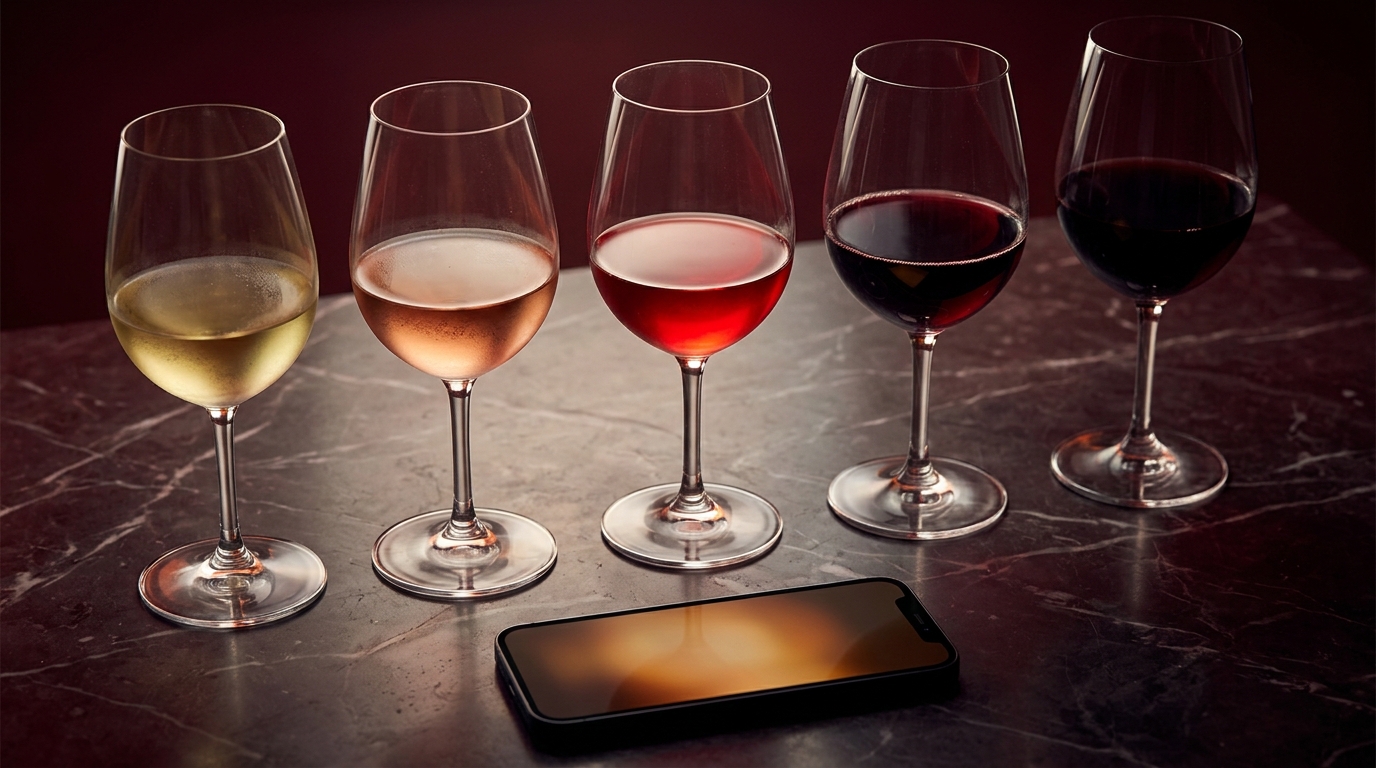
To run a wine tasting at home with an app, pick a small theme, pour modest amounts of three to five wines, and use the app to capture a quick note on each before you compare them side by side. The theme is what makes it fun and educational rather than random: three Pinot Noirs from different countries, or a walk from a light white to a bold red, gives your palate something to compare and your notes something to hang on. Keep pours to about two ounces so nobody's overwhelmed by glass four.
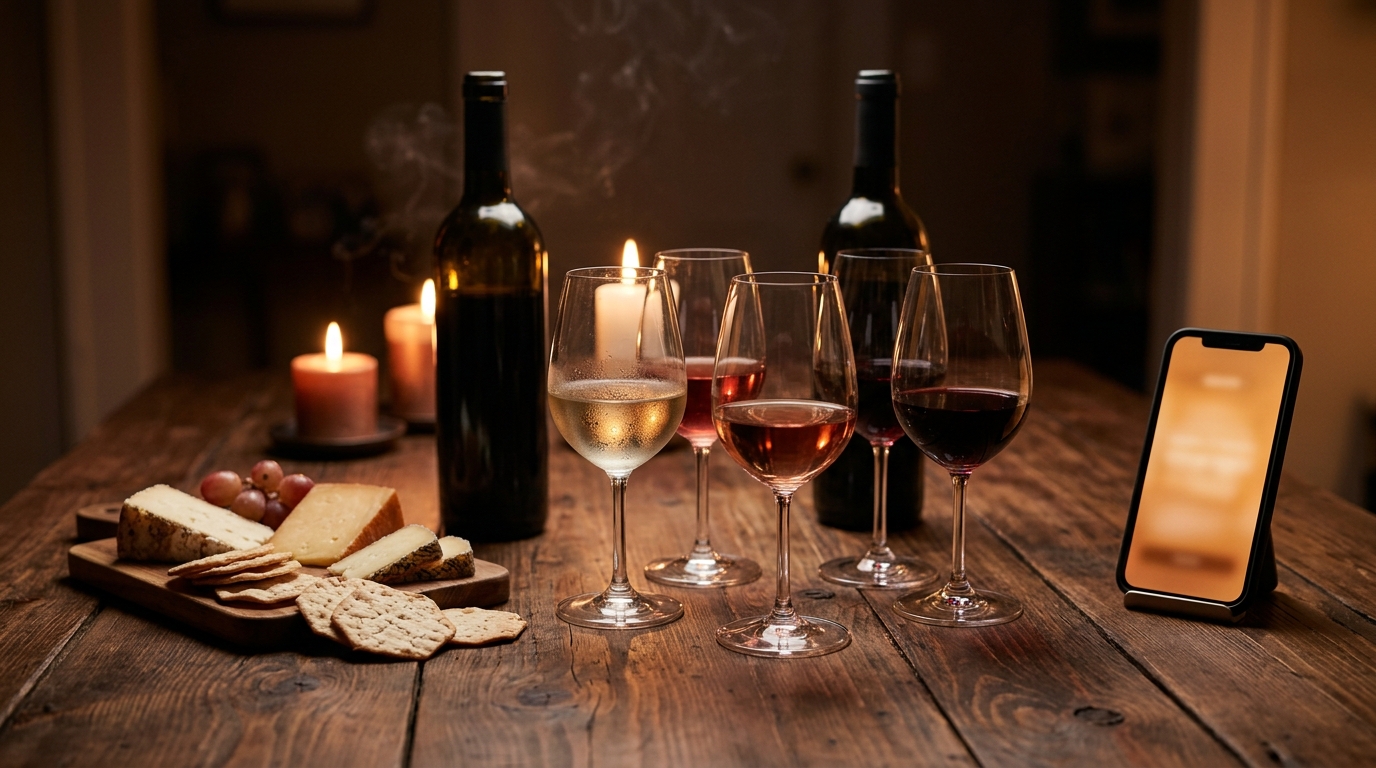
The app earns its keep during the tasting, not before it. As you work through the flight, log each wine the moment you taste it, while the impression is fresh, because the difference between the second wine and the fourth blurs faster than you'd expect. Capture three things for each: what you smelled, what you tasted, and whether you'd buy it again, which is the only rating that really matters at home. Scanning the label first saves you typing and pulls in the details, so you can spend your attention on the wine rather than the data entry.
Afterward is where the record pays off, and it's worth setting the glasses in the order you preferred them and noting why the winner won. Over a few tastings you'll start to see the through-line in what you reach for, and a good app will start reflecting that back at you as recommendations. If you want to make a proper evening of it with friends, our guide to hosting a wine tasting party covers the food, the pours, and the running order in more depth. The technology should stay in the background all night, quietly remembering so you don't have to.
How do you pick the wine tasting app that fits you?
You pick the wine tasting app that fits you by matching the app to your goal rather than to its download count, and by being honest about which of the four jobs you'll actually do. If you mostly want a fast second opinion in a shop, Vivino's scanner and crowd ratings are hard to beat and cost nothing to try. If you love writing about wine and following other palates, Delectable will feel like home. If you're managing a growing cellar, CellarTracker is the serious tool and the rest are toys by comparison.
If your real goal is to drink better without becoming a student of the subject, an app that learns your taste and does the choosing with you is the one that pays off fastest, and that's the case for starting with Sommy. It's free to begin, it gets more useful with every wine you rate, and it's built for the exact moment most people find hardest, which is standing in front of a wall of unfamiliar bottles with no idea which one is you. The best test is simple: try the one that matches your goal for a month of real drinking, and keep the app that makes your next choice easier rather than the one that just stores your last one.
There's no rule that says you can only use one, either. Plenty of wine lovers scan with one app out of habit and lean on a personalized one for the actual decision, and that's a perfectly good setup. The mistake isn't using the wrong app, it's expecting a single app to be excellent at four different jobs. Name your job first, and the choice gets easy.
The quick way to decide
If you only remember one thing, remember that a wine tasting app is only as good as the job you hired it for. Vivino and Delectable are the ones to beat for scanning and note-taking, CellarTracker owns the cellar, and a personalized app like Sommy is the answer when you want the choosing done with you instead of just recorded. Start free, drink honestly for a few weeks, and let the app that actually improves your next bottle earn the space on your phone. The whole point of tasting more wine is enjoying it more, and the right tool should get out of the way and let you.
Frequently asked questions
What is the best free wine tasting app?
The best free wine tasting app depends on your goal, but Vivino is the most popular free option for scanning labels and checking crowd ratings, Delectable is free and excellent for tasting notes, and Sommy is free to start if you want recommendations built on your own palate. All three cost nothing to try, so the smart move is to test the one that matches what you actually want to do with it rather than defaulting to the biggest name.
Do I need a wine tasting app to learn about wine?
You don't need a wine tasting app to learn about wine, but a good one shortens the path considerably by remembering what you've tried and showing you the patterns in your own taste. Left to memory alone, most people forget the name of a wine they loved within weeks, which makes it hard to build on. An app that captures each bottle and reflects your preferences back to you turns scattered sips into a real sense of what you like.
Is Vivino or Sommy the better wine tasting app?
Vivino is the better wine tasting app if you want a huge database and a fast crowd rating when you scan a label, while Sommy is better if you want a recommendation tuned to your personal taste rather than the average. Vivino answers the question "what did other people think of this bottle", and Sommy answers "will I like this bottle", which are genuinely different questions, and plenty of people happily keep both on their phone.
Can a wine tasting app work at a restaurant?
Yes, a wine tasting app works well at a restaurant, especially one that lets you scan the wine list or check whether a bottle fits your taste before you order. That turns an intimidating list into a short set of choices you can trust. If decoding restaurant lists is your main pain point, our guide to reading a restaurant wine list goes deeper, and a Fit Check on a single bottle takes only a few seconds at the table.
How much does a wine tasting app cost?
Most wine tasting apps are free to download, and several stay useful without ever paying, including Delectable and CellarTracker, while Vivino sells a paid Premium tier and Sommy is free to start. Because the free versions are genuinely capable, you can trial two or three at no cost and only consider paying once you know which one you'll keep using. Match the tool to your goal first, then decide whether a paid tier adds anything you'll actually use.