
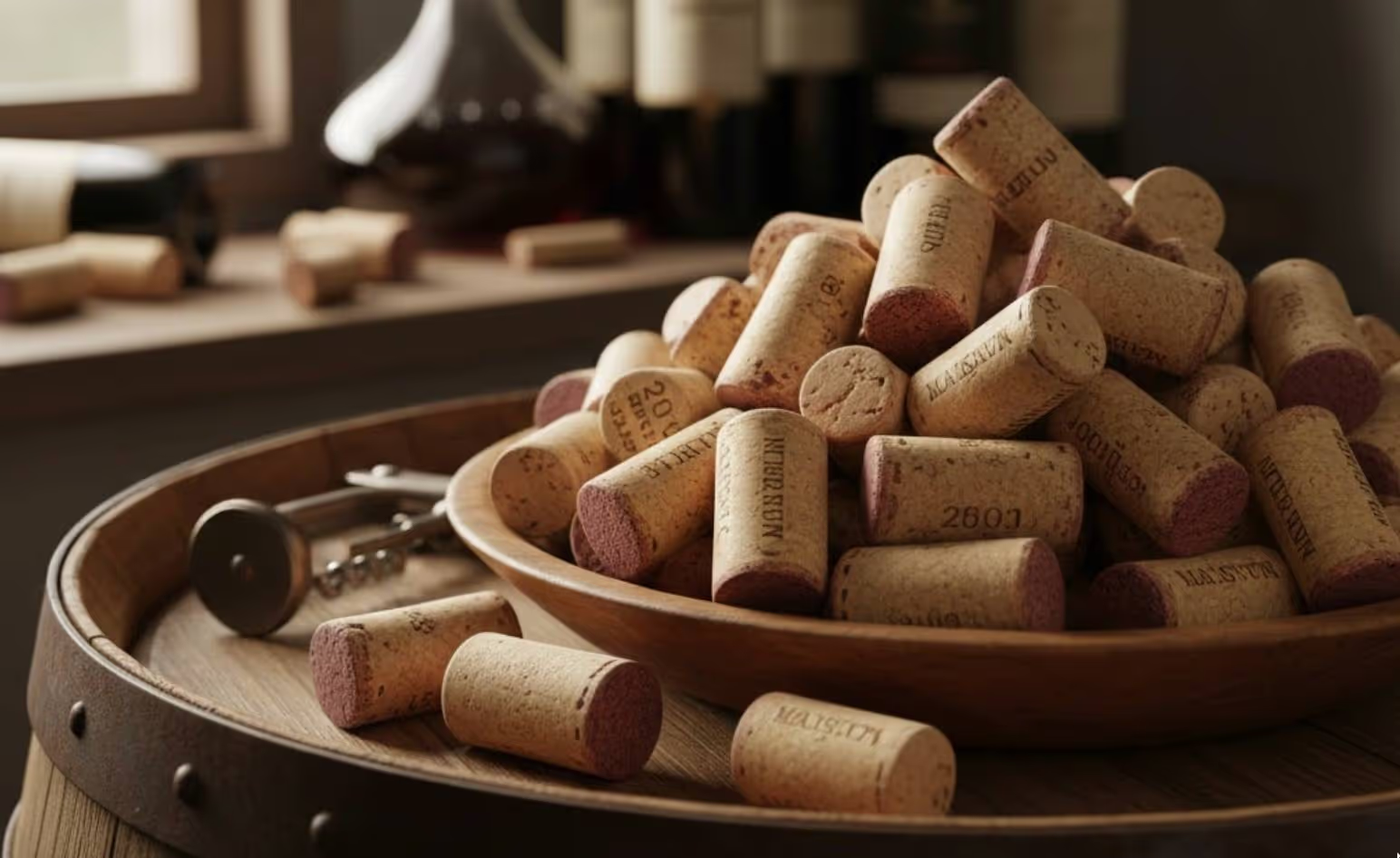

Picture this. You are at your kitchen table on a quiet night, a good playlist on, a nice bottle breathing beside two clean glasses. Everything feels set, until you look at the foil neck and remember you still have to open it. For a small moment, your perfect evening hangs on a little tool in your hand.
That little tool, your wine cork puller, does more than just pull a cork. It shapes how calm you feel, how smooth the first pour is, and how confident you look in front of friends or a date.
In this guide, you will meet the three main characters of the wine opener world: the waiter’s friend, the winged corkscrew, and the Ah-So. You will see how each one works, who tends to like it, and which one matches your home, your guests, and your patience level. By the end, you will know which tool belongs on your table, and which one might be a smart backup in your drawer.
Quick Comparison: How Each Wine Cork Puller Works And Feels
Before going deep into details, it helps to see the big picture. All three tools work toward the same goal, but they feel very different in your hand.
Here is a fast snapshot.
Opener TypeHow It WorksFeel in the HandSkill LevelWaiter’s friendScrew in, use a small lever on the bottle lipSlim, light, pocket friendlySmall learning curveWinged corkscrewTwist top, wings rise, press wings down to pullSolid, familiar, very stableEasy for beginnersAh-SoSlide two flat prongs around the cork, twist, pullSmooth, slightly odd at firstSteeper learning
A waiter’s friend is what most servers use in restaurants. It folds like a pocket knife and feels minimal and clever. People who like simple tools, or who enjoy learning small skills, often end up loving it as their main opener.
A winged corkscrew is the classic “guy with arms” you see in many kitchens. You twist the handle on top, the arms rise, then you push them down to lift the cork. It feels straightforward and steady, so it suits anyone who opens wine now and then and wants almost zero stress from their wine cork puller.
The Ah-So looks different from both. It has two flat metal prongs and no screw at all. It slides down around the cork instead of into it. That makes it gentle on old or fragile corks, which is why it is a favorite for fans of aged wine. It feels strange at first, but very smooth once you get the rhythm.
Waiter’s friend: The slim, do-it-all classic
A waiter’s friend has four main parts: a folding handle, a metal “worm” or screw, a tiny knife, and a lever arm that hooks on the bottle lip.
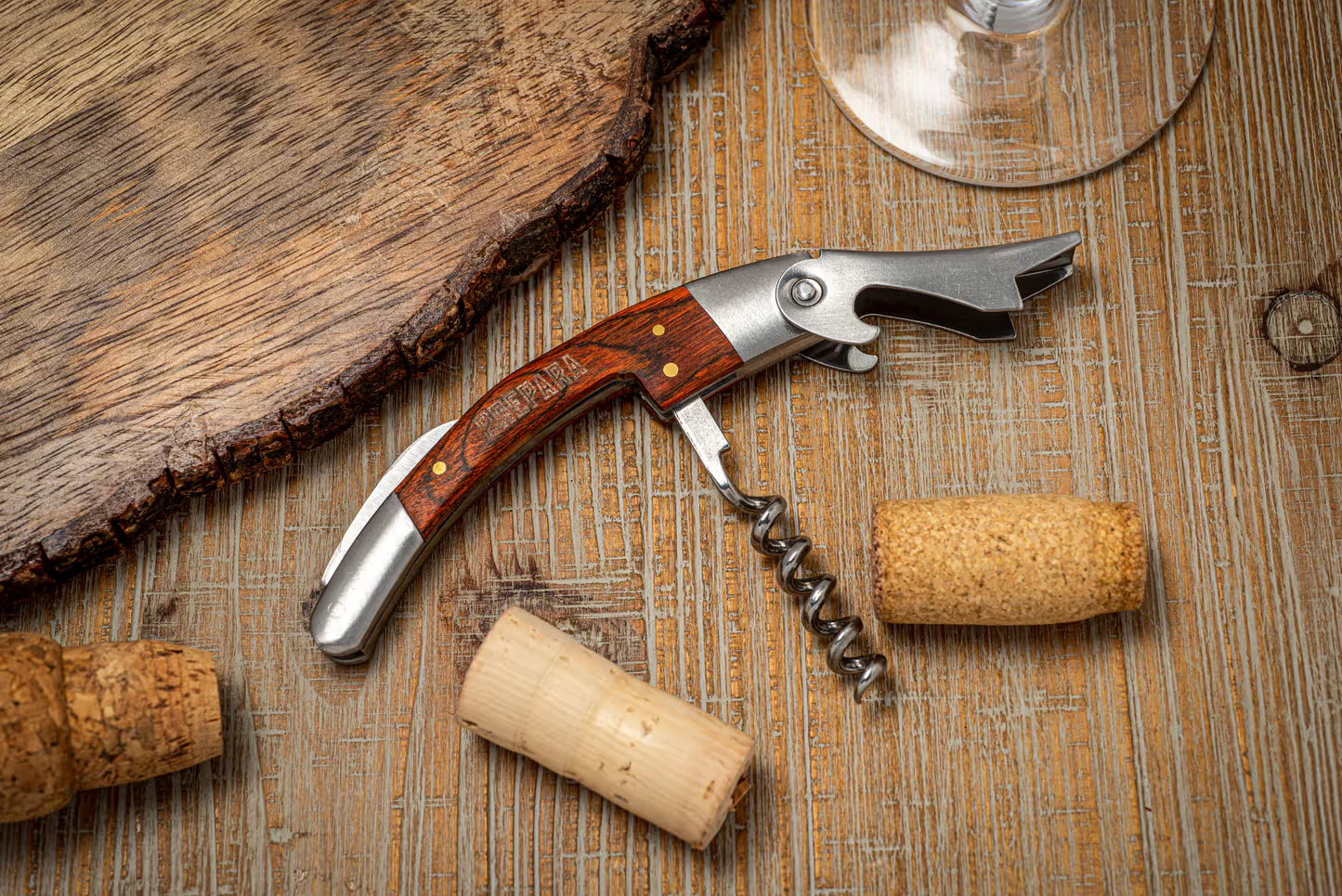
You start by opening the knife and cutting the foil just under the bottle lip. Then you fold the knife away, twist the worm into the center of the cork, and set the lever on the glass edge. With one hand on the bottle and one on the handle, you pull up in a steady motion. The cork slides out in a clean arc.
Because it folds, it is easy to slip into a pocket, a picnic bag, or a slim kitchen drawer. It is the opener you see in bars and restaurants for a reason. The first few times, the angle can feel tricky, but after a week or two of use, it feels fast, quiet, and almost automatic.
Winged corkscrew: The easy, beginner-friendly choice
A winged corkscrew has a round collar that sits on the bottle, a central screw with a top handle, and two long “wings” that rise and fall.
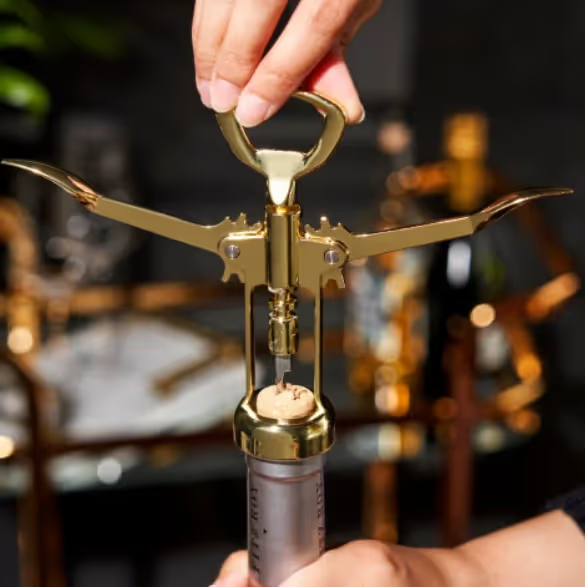
You put the collar over the bottle top, twist the handle so the screw goes into the cork, and watch the wings slowly rise. Once they are up, you press both wings down at the same time. That motion pulls the cork out in one smooth lift.
The whole process feels obvious even if you have never used one. It stands up on its own and feels stable in your hand, which is nice if you get nervous opening wine in front of other people. The tradeoff is that it is bulkier, needs more vertical space on the table, and can be rough on old or fragile corks.
Ah-So: The gentle tool for old and fragile corks
The Ah-So looks like a simple handle with two metal prongs of different lengths. There is no screw at all.
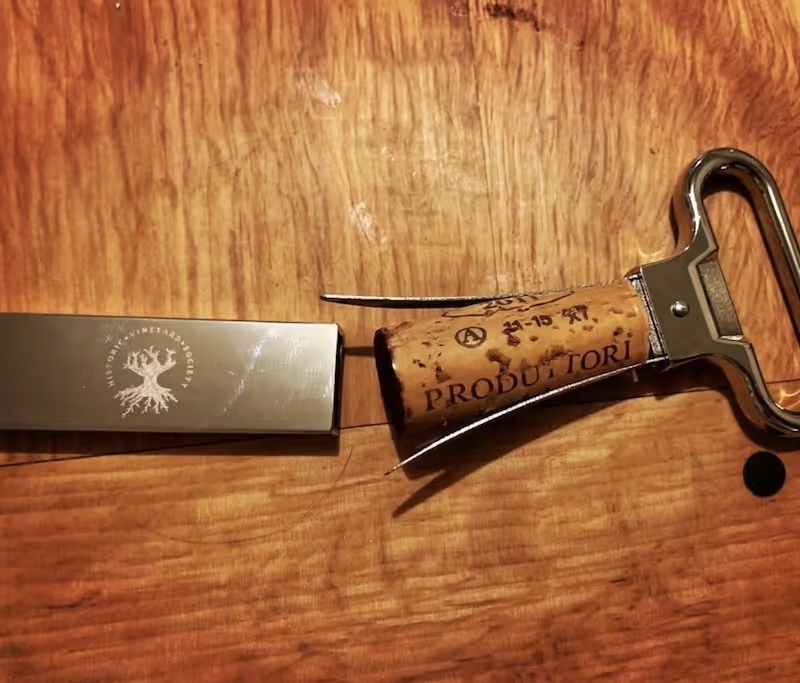
To use it, you place the longer prong between the cork and the glass, then gently rock the handle so the shorter prong slides in on the other side. You wiggle and press until both prongs are fully down past the cork. Then you twist the handle while pulling up. The cork comes out hugged from both sides.
Because it never drills into the cork, it is far less likely to shred an old, crumbly one. The motion feels odd at first, and you need to move slowly. Once you get the feel, though, it gives a calm, drama-free pull that is perfect for special bottles.
Pros, Cons, And Best Use Cases For Each Cork Puller At Home
At home, the “best” opener is the one that makes you feel relaxed instead of tense. That depends on your hands, your space, and the kinds of bottles you like.
Think of these tools like three different phone cases. All protect your phone, but some fit your lifestyle better.
When a waiter’s friend belongs at your table
Pros
- Slim and portable; fits pockets, aprons, and tiny drawers
- Works on most natural and synthetic corks
- Often includes a built-in foil cutter that keeps things tidy
- Gives a simple, pro feel that many people enjoy
Cons
- Needs a bit of practice to avoid wobbles
- Easier to chip or half-break a cork if you rush the motion
- Not ideal if you have wrist pain or very low grip strength
Best at-home use cases
A waiter’s friend shines in small apartments, studio kitchens, and travel setups. If you like picnics, rooftop hangs, or opening wine at a friend’s place, this tool disappears into a bag and just works.
It also fits tech-comfortable readers who like learning efficient little moves. Once you learn the angle of the lever, you start to feel like a restaurant pro at your own table. Pair it with a backup, like a winged corkscrew, if you often host people who are shy about using a more skill-based opener.
When a winged corkscrew makes life easier
Pros
- Very easy to understand, even for total beginners
- Feels stable, since the collar hugs the bottleneck
- Great for guests who want to help open a bottle without fear
Cons
- Takes up more space in a drawer or utensil jar
- Can push the cork into the bottle if you do not center the screw
- Rougher on very old or dry corks
Best at-home use cases
A winged corkscrew is perfect for family dinners, roommate kitchens, and casual Friday nights. If you open wine only once or twice a month, you may not want to think about “technique” at all. You just want a tool that looks familiar and gets out of the way.
It is also a good choice if different people in the home take turns opening bottles. No one needs a lesson. Set it on the table, and even a nervous friend can handle it while you finish cooking.
For a simple setup, keep a winged corkscrew as your main opener and a cheap waiter’s friend in a drawer as backup.
When an Ah-So is worth learning
Pros
- Very gentle on old or fragile corks
- Great for aged reds, ports, and special-occasion bottles
- Looks unique and a bit “insider”, which can be fun for hosting
- Gives a smooth, quiet pull when you get the hang of it
Cons
- Steeper learning curve
- If you rush it, you can shove the cork deeper into the bottle
- Slower when you need to open several bottles fast
Best at-home use cases
An Ah-So makes sense if you are the friend who brings older Bordeaux to dinner or if you are building a small stash of age-worthy bottles. It is a thoughtful tool for collectors and for hosts who enjoy the small ritual of opening a serious wine with a matching, serious gadget.
For most people, the Ah-So works best as a second opener. Use a waiter’s friend or winged corkscrew for everyday bottles, and keep the Ah-So ready when that dusty, anniversary-level wine comes out.
How To Match Your Wine Cork Puller To Your Space, Guests, And Techy Side
Now that you know the basics, it is time to pick what fits your actual life. Think about how often you pour, who is usually at the table, and how you like your tools to look and feel.
You can also let smart helpers handle the wine choice itself. Once you pick your opener, an AI wine companion like Sommy can help you find bottles that suit your taste and the night you are planning. Sommy’s guide to scanning labels and getting instant picks, for example, shows how an AI-Powered Wine Label Recognition tool can remove the guesswork when you are faced with a crowded store shelf.
Pick your cork puller based on how you drink at home
1. Weeknight sipper (one bottle a week)
You cook simple dinners, watch a show, and want low effort.
- Best primary tool: Winged corkscrew for its easy, familiar motion
- Backup: Waiter’s friend for picnics or travel
2. Social host (several bottles when friends come over)
You throw game nights, potlucks, or small parties.
- Best primary tool: Waiter’s friend, since it is fast and compact on a busy table
- Backup: Second winged corkscrew, so guests can help open bottles without coaching
3. Curious wine nerd (older or special bottles)
You like hunting for funky regions or saving wine for later.
- Best primary tool: Waiter’s friend, because it works on almost anything
- Backup: Ah-So, for older reds, Barolo, or any bottle with a long nap in the closet
You can mix and match, but start with one primary opener that you trust with your eyes closed.
Think about comfort, storage, and your table style
Your hands matter as much as the bottle. If you have small hands or some wrist pain, a winged corkscrew may feel more secure. If you like tools that fold and disappear, a waiter’s friend will make you happier.
Storage is simple. Tiny kitchen with one drawer that is already full of chargers and cables. Go with the slim waiter’s friend. Larger kitchen with a roomy utensil crock. A winged corkscrew can live right beside your spatulas.
Picture the opener on your table next to glasses and maybe a decanter. A waiter’s friend gives a “restaurant-at-home” vibe. A winged corkscrew says “classic kitchen gadget”. An Ah-So looks like a secret tool from someone who really cares. Pick the look that fits the story you want your table to tell.
Let smart tools like Sommy help with the wine, not just the opener
Once you have chosen your wine cork puller, the next question is what to open with it. That is where smart tools shine.
Sommy is an AI wine companion that can scan labels or restaurant wine lists, suggest bottles based on what you already like, and remember your hits and misses over time. You can point your phone at a shelf in the store, chat about your budget and dinner plans, and get clear ideas instead of random guesses.
Use it to find an easy, chillable red for pizza night, or a serious bottle that deserves the Ah-So treatment. Over time, your opener will feel like one small part of a larger, relaxed at-home wine setup.
Care, Maintenance, And Small Tricks For Smoother Wine Nights
No matter which opener you pick, a little care keeps it working longer and feeling better in your hand.
You do not need special products or long routines. Just a few quick habits around cleaning, storage, and basic technique.
Simple upkeep for each type of cork puller
For waiter’s friends and winged corkscrews, the worm is the key part. Wipe it with a damp cloth after use, especially if the cork crumbled a bit. Dry it at once, so it does not rust. If the screw looks dull or bent, swap the opener out. A sharp, straight worm bites the cork well and needs less force.
Avoid dishwashers for almost all wine tools. Heat and detergent can warp plastic collars and dull metal parts.
For an Ah-So, keep the prongs smooth. Wipe them clean after each bottle, then store the tool in a small sleeve if it came with one. If you feel tiny nicks on the prongs with your fingers, buff them lightly with a soft cloth so they slide more easily between glass and cork.
Small technique tips that boost confidence
A few tiny moves make your opener feel more reliable.
- Center the screw every time. With a waiter’s friend or winged corkscrew, look straight down on the bottle and aim for the middle of the cork.
- Twist straight, not at an angle. Let the tool do the work.
- Pull slowly. A smooth, steady pull is stronger than a fast yank.
- Support the bottle with your other hand, so nothing tips.
If the cork breaks with a waiter’s friend, go back in gently with the screw at a slight angle and try to catch the remaining piece. With a winged corkscrew, twist in a bit deeper and lift again, or push the last bit into the bottle if you are not worried about small cork crumbs. With an Ah-So, slide the prongs along the glass, grip what is left of the cork, and pull out in small twists.
Everybody breaks a cork sometimes. It is part of the story, not a failure.
Conclusion
There is no single perfect wine cork puller, only the one that fits your table, your routine, and your comfort level. The waiter’s friend brings a compact, pro feeling and works almost anywhere. The winged corkscrew offers simple, low-stress opening that anyone at the table can handle. The Ah-So steps in when you open older or fragile bottles that deserve a gentle touch.
Pick one tool as your main opener, then choose a backup that covers your edge cases, like travel or special-occasion wines. The goal is not a drawer full of gadgets. The goal is a calm, confident moment between the foil cut and the first pour.
With the right cork puller and a smart wine helper like Sommy guiding your bottle choices, you can shift your attention where it belongs. Toward the people at your table, the food you cooked, and the simple pleasure of sharing good wine on an easy night at home.
