

For a mixed charcuterie board, a versatile, crowd-pleasing wine is your best choice. Go for a dry Rosé or a light-bodied Pinot Noir. These wines have enough bright acidity to cut through rich cured meats and cheeses, but also enough fruit to complement everything without overpowering delicate flavors. The goal is to choose one wine that makes everything on the board taste better.
That Moment of Panic Before Guests Arrive
You’ve built the perfect charcuterie board: a beautiful spread of salty meats, creamy cheeses, tangy pickles, and crisp crackers. Friends are on their way, and then the question hits: "What wine should I open?"
Suddenly, a relaxed evening can feel like a high-stakes test.
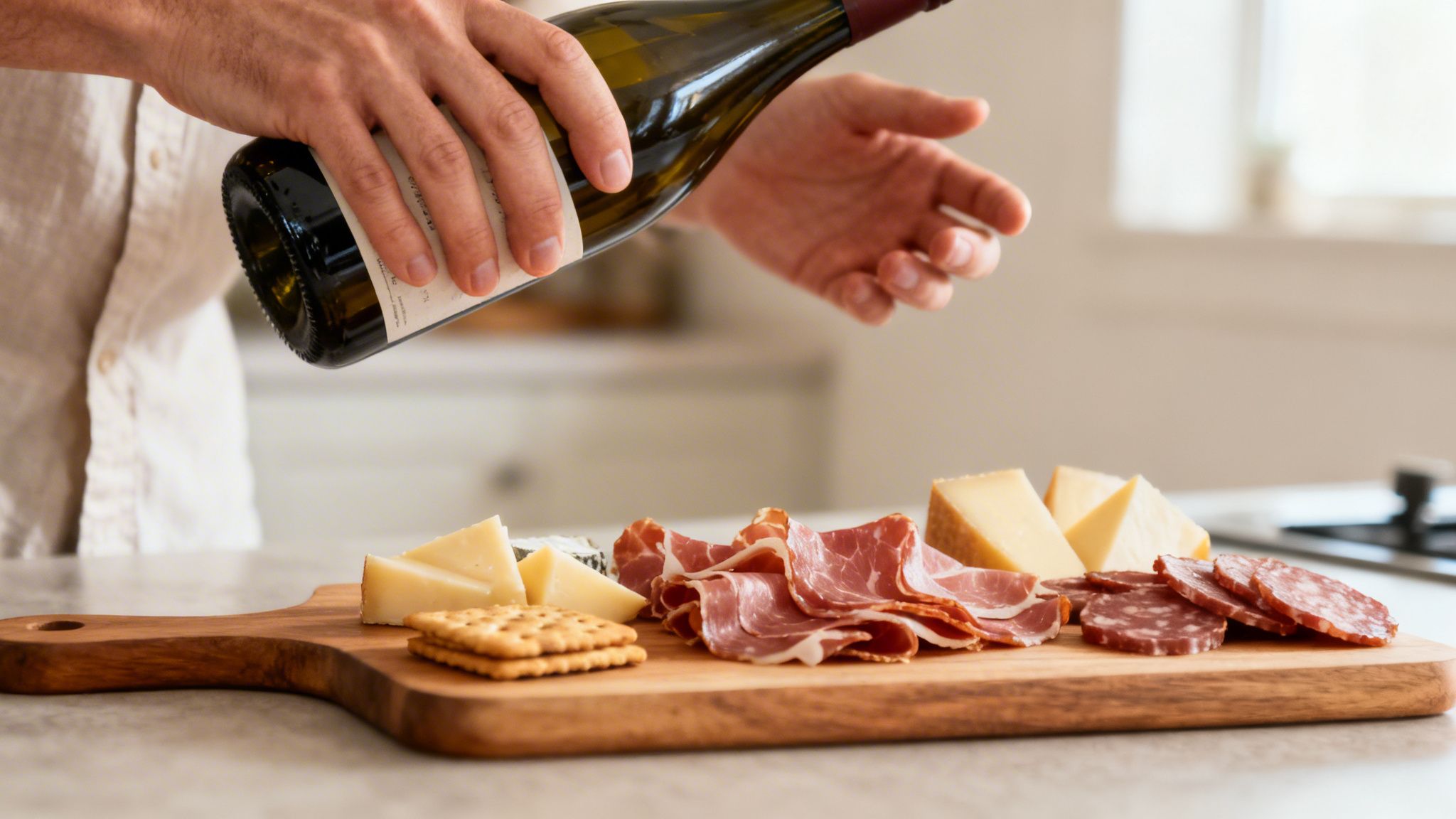
This fear of choosing the "wrong" bottle is completely normal. With so many different flavors on one board, from salty prosciutto to funky blue cheese to sweet fig jam, finding a single wine that works with everything seems impossible.
But it doesn't have to be stressful.
Ditching the Anxiety
The secret isn’t memorizing complicated rules. It’s about having a simple framework that just works. You don’t need to become a wine expert to pour something delicious that everyone will enjoy.
This guide gives you that framework, helping you make a quick, confident decision every time. Instead of getting lost in the wine aisle, you just need a few reliable guidelines to find a bottle that plays well with your entire spread.
Your Quick Guide To No-Stress Charcuterie Wines
Overwhelmed by choice? This table is your cheat sheet. It gives you immediate, confident choices for your charcuterie board, no matter what you've loaded it up with.
| If Your Board Has... | A Safe and Delicious Wine Choice | Why It Works |
|---|---|---|
| Lots of fatty, cured meats (salami, prosciutto) | A bright, acidic red like Chianti Classico or Barbera | The acidity cuts right through the fat, cleansing your palate without being too heavy. |
| Creamy, soft cheeses (brie, goat cheese) | A crisp, unoaked white like Sauvignon Blanc or Pinot Grigio | Its zesty, clean profile is a perfect contrast to the rich texture of the cheese. |
| A little bit of everything (meats, cheeses, fruit) | A dry Rosé from Provence or a light Pinot Noir | These are the ultimate utility players. They have enough fruit for the cheeses and enough structure for the meats. |
Think of these as your go-to starting points. You really can't go wrong with any of them.
The One Simple Rule for Perfect Pairings
Forget the complicated wine rules you’ve heard. For pairing wine with charcuterie, you only need to remember one idea: match the intensity.
Think of it like music. You wouldn’t play heavy metal at a quiet brunch. The "volume" of your wine should match the "volume" of your food.
A charcuterie board with bold, spicy meats like soppressata and sharp, aged cheddar is loud and full of flavor. It needs a wine that can stand up to it.
On the other hand, a more delicate board with silky prosciutto, mild salami, and creamy goat cheese is quieter. It calls for a lighter, more graceful wine that won’t overpower its subtle flavors. This one simple rule is all you need to make a great choice.
Gauging the Weight of Your Board
How do you figure out your board’s intensity? It’s easier than it sounds. Just look at the main items and ask yourself if they’re generally strong or mild.
- High-Intensity Board: This board is packed with powerful flavors. Think spicy chorizo, peppery salami, funky blue cheese, and sharp, aged cheddars. Olives, strong mustards, and tangy pickles also turn up the volume.
- Low-Intensity Board: This board is all about subtlety. It’s built around delicate flavors like prosciutto, turkey, mild brie, fresh mozzarella, and creamy goat cheese. Sliced apples, grapes, and lightly salted crackers keep things gentle.
Once you have a read on your board’s personality, picking a wine becomes a simple matching game.
The goal isn't to be a wine expert; it's to be confident in your choice. Matching intensity is the quickest path to that confidence.
Matching Wine Intensity
Now, apply that same thinking to the wine. You don’t need to know every grape or region. Just think in terms of "big and bold" versus "light and crisp."
For a high-intensity board, you'll want a wine with more body and flavor. A medium-to-full-bodied red like a Cabernet Sauvignon or a Zinfandel has the structure to handle big flavors.
For a low-intensity board, reach for something lighter. A crisp white wine like a Sauvignon Blanc or a light-bodied red like Pinot Noir will complement the delicate items without overwhelming them. A dry Rosé is also fantastic here.
This one trick takes most of the guesswork out of choosing wine with charcuterie, letting you get back to enjoying the moment.
How to Read Your Board Like a Pro
Think of your charcuterie board as a team. To choose the right wine, you don't need to get lost in the details. You just need to figure out who the star player is. What’s the most dominant flavor on the board?
Once you’ve pinpointed the board's main personality, picking a wine becomes simple. You’re not trying to find a perfect partner for every single item; you’re looking for one that gets along with the team captain.
Identify the Main Flavors on Your Board
First, scan what you’ve got. Is your board loaded up with salty, fatty meats like salami and prosciutto? Or is the main event tangy, creamy cheeses? Maybe you’ve gone heavy on the sweet and savory accents, like fig jam and spicy mustard.
Let’s break down the most common components and the types of wine that make them shine. These aren't rigid rules, just a simple toolkit to help you make a confident choice.
- For Salty & Fatty Meats (Prosciutto, Salami, Soppressata): These rich, savory flavors need a wine with good acidity. Acidity acts like a squeeze of lemon on a rich dish. It cuts through the fat and cleanses your palate. A light-bodied red with bright fruit notes, like a Beaujolais or Barbera, is perfect.
- For Creamy & Tangy Cheeses (Brie, Goat Cheese, Chèvre): Soft, creamy cheeses have a richness that can coat your mouth. Their best friend is a crisp, unoaked white wine. The sharp acidity of a Sauvignon Blanc or the clean minerality of a Pinot Grigio will slice straight through that creaminess. For a deeper dive, check out our complete wine and cheese pairing guide.
- For Bold & Hard Cheeses (Aged Cheddar, Manchego, Gouda): These cheeses pack a punch with nutty and salty flavors, so they need a wine that can hold its own. A medium-bodied red with more structure, like a Chianti Classico or a Spanish Tempranillo, has enough character to stand up to the cheese without being too strong.
This simple infographic sums up the core idea: match the intensity of the board to the intensity of the wine.
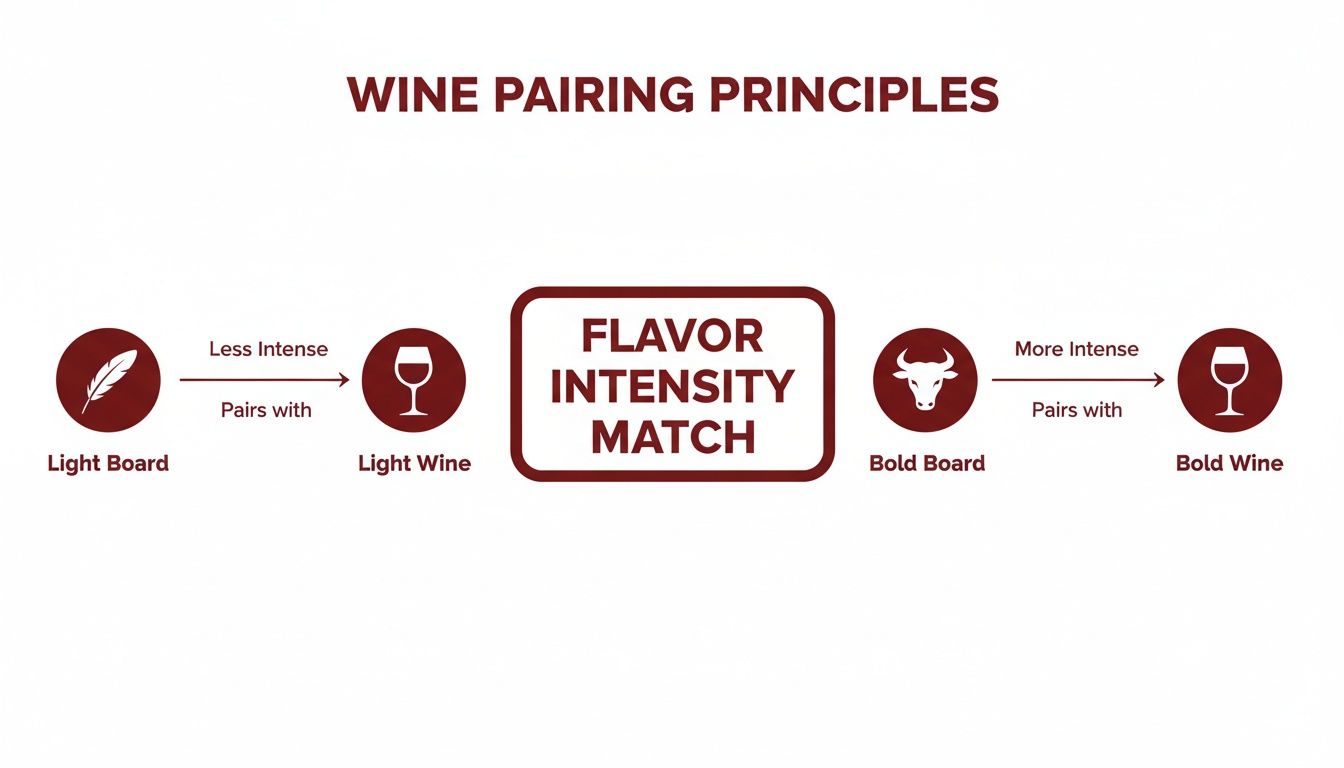
As the visual shows, a lighter board calls for a lighter wine, while a bolder, more intense board is best with a bolder wine. It’s a straightforward way to narrow down your options.
What About the Accents?
What if your board is a mix of everything: sweet jams, tangy pickles, savory olives, and crunchy nuts?
Don’t try to match everything. When your board is a vibrant mix of flavors, focus on a versatile, crowd-pleasing wine. A dry Rosé or a sparkling wine like Prosecco acts as a fantastic palate cleanser for a board with many different elements.
These wines are the ultimate team players, able to mingle with almost anything. The key is to see your board not as a complex puzzle, but as a collection of simple flavors. Once you identify the loudest voice, you can easily find a wine that makes the whole board more delicious.
Your Go-To Wines That Always Work
Staring at a wall of wine bottles in a store can be overwhelming. You don't need a hundred options; you just need a few solid choices you can grab with confidence. This is your back-pocket list of versatile, food-friendly wines that work with almost any charcuterie board.
Think of these as your safety nets, the can't-go-wrong picks that take the stress out of the decision.
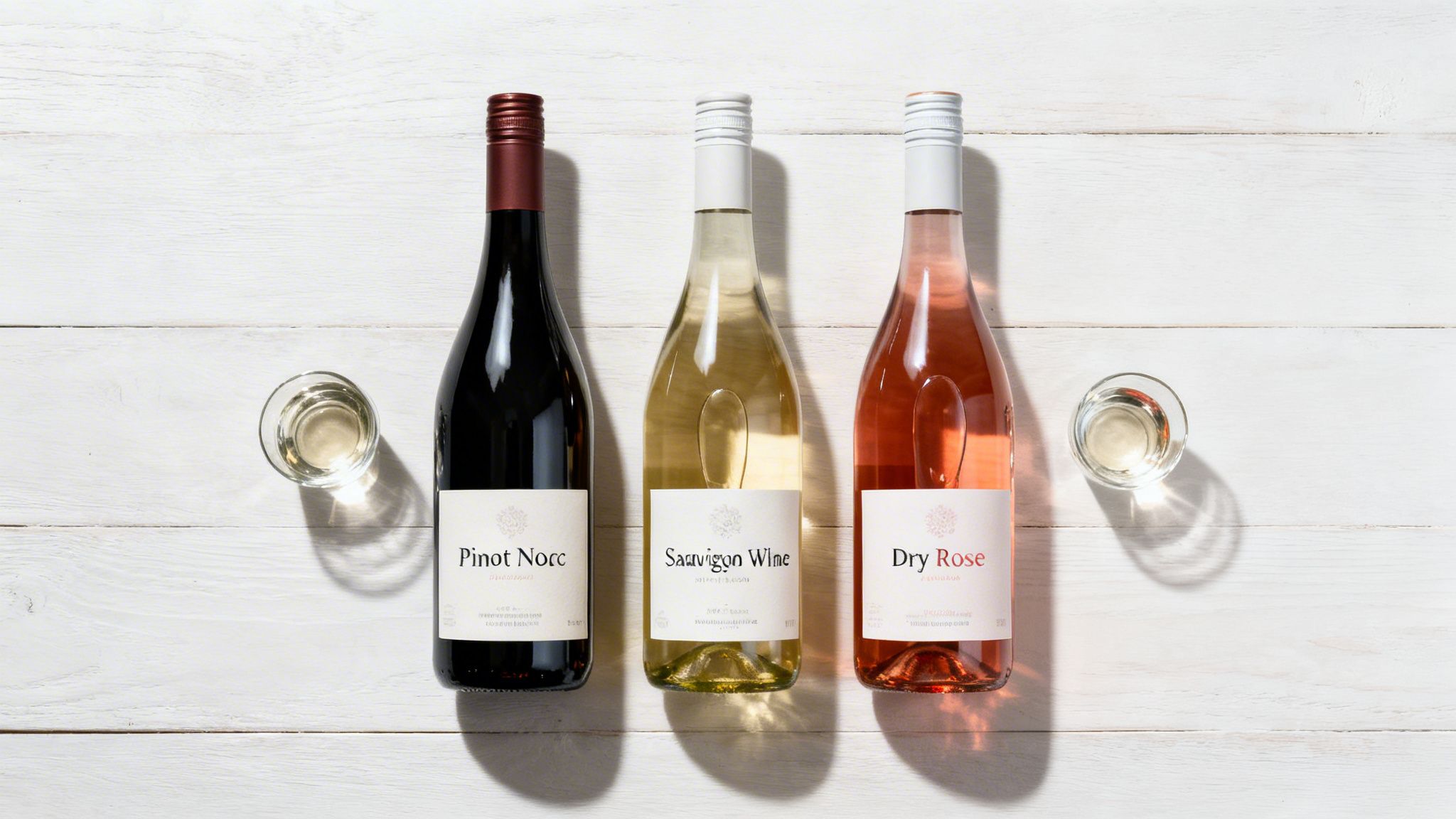
The All-Star Lineup for Charcuterie
These three wine styles are the ultimate team players. They have the right balance of fruit, acidity, and structure to get along with a huge range of flavors, from salty prosciutto to creamy cheeses.
- Pinot Noir: This is the light red that will never bully your board. It tastes of fresh cherries and raspberries with a silky finish. Its bright acidity is a champ at cutting through the richness of cured meats, while its gentle character plays nice with delicate cheeses.
- Sauvignon Blanc: If you need a crisp, zesty white to hit the reset button on your palate, this is it. Expect a pop of citrus and green apple with a clean, mouthwatering finish. That high acidity slices right through creamy Brie or tangy goat cheese.
- Dry Rosé: When in doubt, go with a dry Rosé. It’s almost always the right answer. It gives you the best of both worlds, the crispness of a white wine with a hint of the red berry flavors you find in a light red. It’s incredibly versatile and a total crowd-pleaser.
Why These Wines Are So Reliable
What’s the secret? It’s all about balance. These wines have enough acidity and fruit to stand up to the strong flavors of a charcuterie board without steamrolling them.
The best wine lets the food shine while still being delicious on its own. These three options do exactly that, creating harmony instead of clashing on your palate.
Grabbing one of these reliable bottles is a great move. If you want to get even smarter about finding great, affordable options, our guide to the best grocery store wines can help you navigate those aisles like a pro.
These go-to wines remove the guesswork. You can grab a bottle of Pinot Noir, Sauvignon Blanc, or dry Rosé and know you’ve got a fantastic partner for your board.
How to Confidently Choose a Bottle in Minutes
You have the framework, now let’s put it to use. Whether you’re in a wine shop or scanning a restaurant menu, the goal is to make a quick, confident decision, not get stuck.
This is where theory turns into a simple, decisive move.
Your Simple In-Store Strategy
When you're facing a wall of bottles, don't try to read every label. Instead, narrow your search to one of the reliable categories we've discussed.
Give yourself a clear mission. Walk straight to the French Rosé section. Or look for Pinot Noir from Oregon. This one action filters out hundreds of other bottles, and the overwhelming feeling disappears.
Next, look at the price. Find a few options in your budget. From those two or three choices, just pick the one with the label you like best. It’s a surprisingly effective tie-breaker and keeps the process fun and fast.
Making a Quick Choice at a Restaurant
A restaurant wine list can feel intimidating, but your approach is just as simple. You have two excellent options.
- Look for the Familiar Players: Scan the "By the Glass" section first. Spot a go-to name like Sauvignon Blanc, Pinot Noir, or a dry Rosé? Order it. It’s a reliable choice every time.
- Use Simple Language: Don't be afraid to ask for help. You don't need fancy wine terms. Just tell your server, "We're having the charcuterie board and would love a dry, crisp white wine." Or, "Can you recommend a light-bodied red that goes well with cured meats?" This gives them exactly what they need to point you to something great.
This is precisely the kind of in-the-moment decision where Sommy becomes your personal wine assistant. Instead of guessing, you can use the app to learn your taste preferences and get a confident recommendation.
Choosing a wine for your charcuterie board shouldn’t feel like a test. By focusing on a few reliable styles, you turn a moment of stress into a quick, confident, and enjoyable choice. For more straightforward advice, check out our beginner wine chart.
Common Charcuterie Wine Questions
Even with a simple game plan, a few questions always pop up. Here are quick, clear answers to the most common questions about pairing wine and charcuterie.
What is the single safest wine for a charcuterie board?
If you have to grab just one bottle and don't know what’s on the board, make it a dry Rosé. It's the undisputed jack-of-all-trades for a mixed platter.
A good dry Rosé has the bright acidity of a white wine, making it perfect for rich meats and creamy cheeses. At the same time, it has enough red berry fruit character to stand up to bolder flavors without feeling heavy. A light-bodied Pinot Noir is another equally safe choice.
My board has spicy, sweet, and savory items. What now?
When your board is a mix of everything (spicy soppressata, sweet fig jam, and salty prosciutto) don't try to find a wine that matches every single thing.
Instead, pick a wine that acts as a "palate cleanser." A sparkling wine like Prosecco, Cava, or Champagne is the champion here. The bubbles and zippy acidity scrub your palate clean between bites, making each one taste fresh and new.
An off-dry Riesling is another brilliant choice. A little hint of sweetness is fantastic for taming heat from spicy meats while playing nicely with fruit.
Do I need to spend a lot on wine for charcuterie?
Absolutely not. In fact, spending a lot of money on a wine for a charcuterie board can sometimes backfire.
Charcuterie is rustic and casual. Your wine choice should match that vibe. There are countless delicious, wallet-friendly wines under $20 that are perfectly suited for a meat and cheese spread.
The goal is relaxed enjoyment, not a high price tag. A simple, well-made wine often works better with the jumble of flavors on a charcuterie board than an expensive, complicated bottle.
Look for a Spanish Garnacha, a French Sauvignon Blanc, or a Beaujolais. These styles consistently deliver fantastic value and have bright, food-friendly profiles.
Is red or white wine better for charcuterie?
Neither is automatically "better". It comes down to what's on your board and what you like to drink. Don't assume that only red wine works with cured meats.
If your board has lighter items like prosciutto and soft cheeses, it will sing with a crisp, acidic white wine like Sauvignon Blanc or Pinot Grigio.
On the other hand, a board with heartier players like spicy salami and aged cheddar will be incredible with a red wine like Pinot Noir or Chianti Classico.
The best approach is to always circle back to our simple rule: match the weight of the wine to the overall weight of the board. Trust that principle, and you'll make a great choice every time.
If you want help choosing the right wine for any meal or moment, without needing to become an expert, try the AI wine assistant at Sommy.