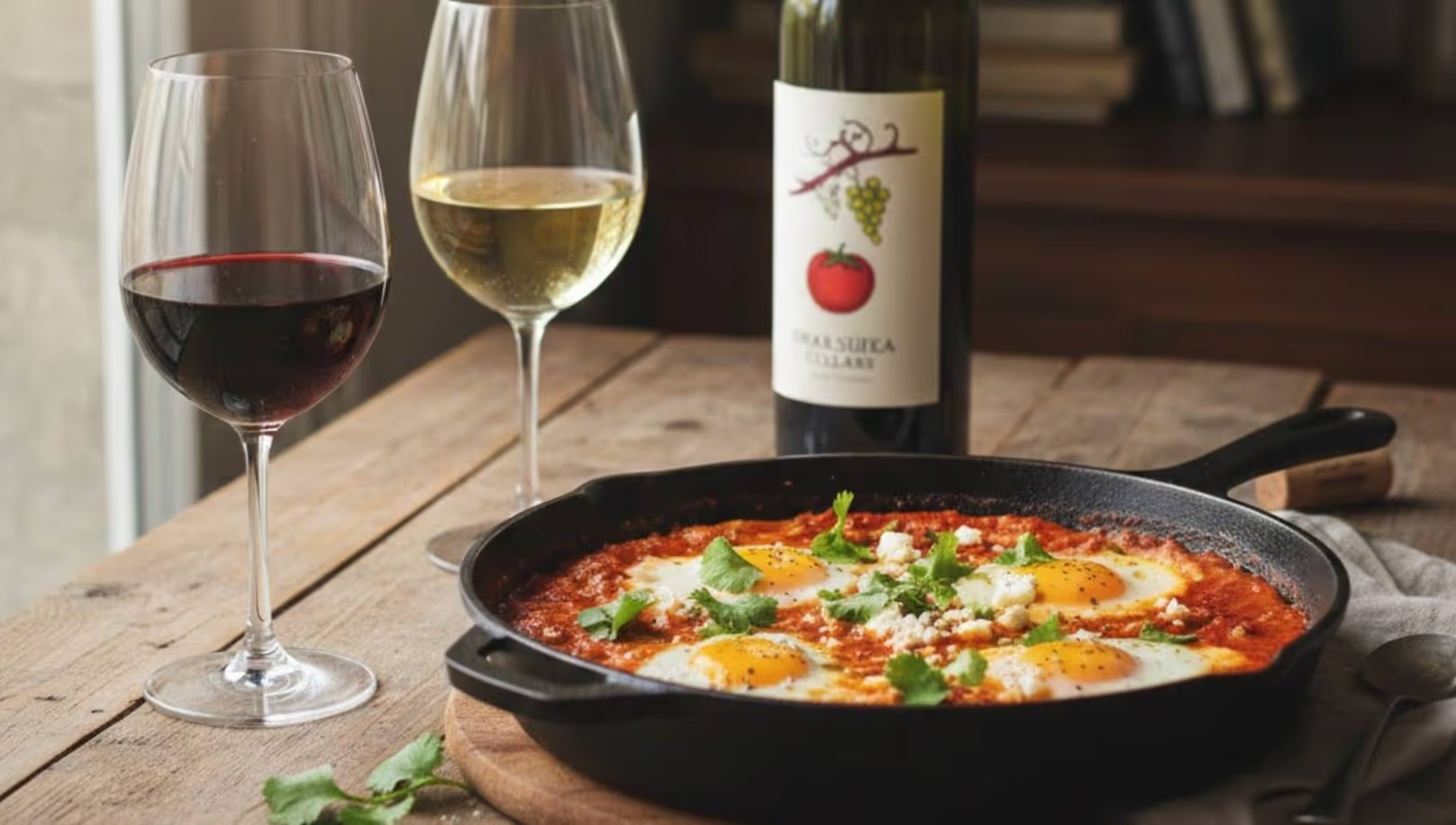

If you’re making shakshuka and need a wine right now, keep it simple: choose something with bright acidity, keep tannins low, and decide how spicy and how cheesy the pan is. Mild tomato and eggs like rosé, light reds, and bubbles. Harissa heat likes a little chill and sometimes a touch of sweetness. Feta pushes you toward crisp whites and sparkling.
This wine shakshuka problem feels hard because tomatoes, eggs, spice, and salt all pull the pairing in different directions. The good news is you don’t need “wine knowledge.” You just need a calm plan.
How to choose wine for tomato, eggs, spice, and feta
Think of shakshuka like a busy street market in one skillet. Tomatoes are loud and tangy, eggs are soft, spices add warmth, and feta is salty and sharp. A good bottle acts like a clean squeeze of lemon: it brightens, it doesn’t fight.
Here’s how to choose wine in four quick checks (this is the whole wine pairing guide in plain language):
- Acid first: Tomato sauce needs a wine that tastes fresh, not flat. If the wine feels “zippy,” it’s doing its job.
- Tannins last: Heavy, drying reds can make tomatoes taste metallic and eggs taste odd. Save big reds for steak night.
- Spice level: Heat makes alcohol feel hotter. When you go spicy, pick lower alcohol, serve cooler, or choose a wine with a hint of sweetness.
- Feta factor: Salt and tang love crisp whites and sparkling. Creamy cheese can also handle a fruit-forward red.
If you want wine tasting notes explained without the jargon, translate them like this: “high acid” means refreshing, “tannic” means drying like strong tea, and “off-dry” means not dessert-sweet, just a tiny cushion.
Best wine with mild shakshuka (tomato-forward, not too hot)
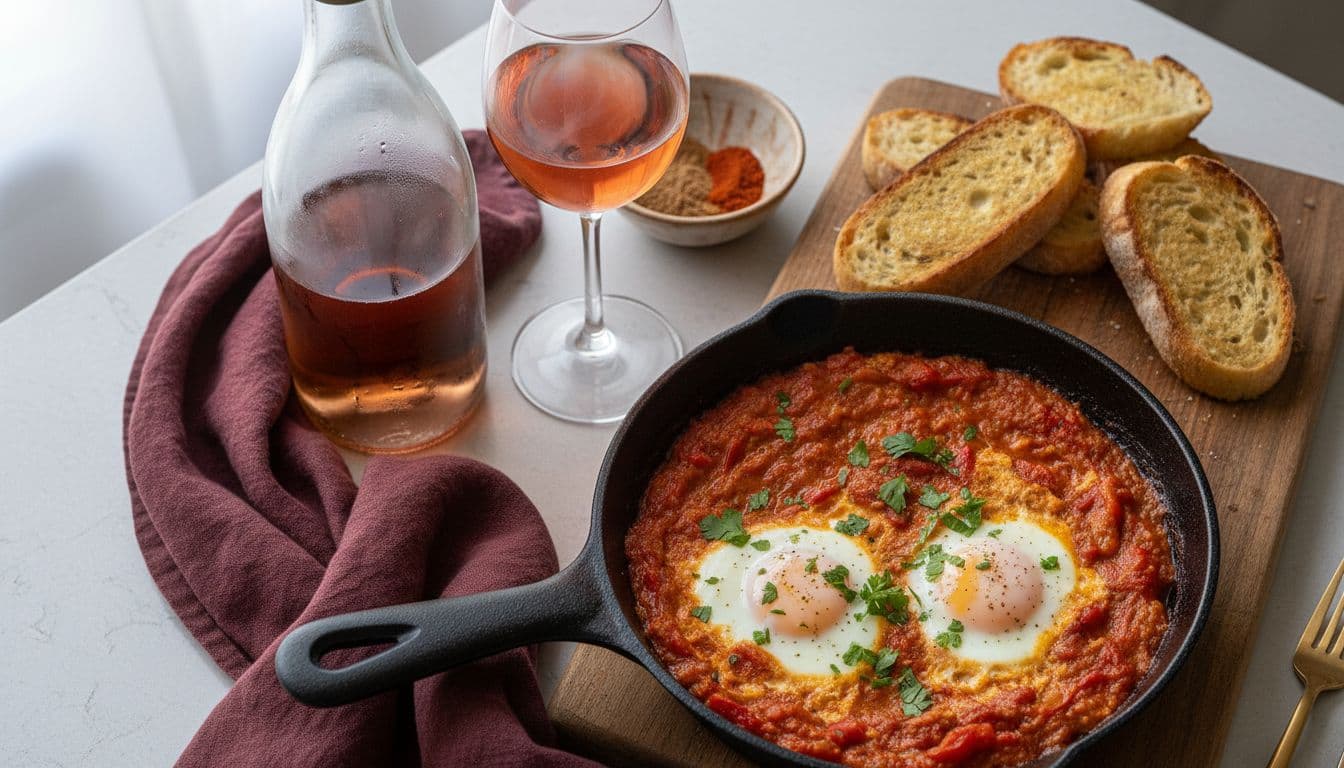
Mild shakshuka is mostly tomato, pepper, onion, and warm spices. The safest move is a wine that feels bright and juicy, not heavy. These are the clear wine recommendations that tend to work even when your recipe varies.
Dry rosé is the easiest yes. It’s like putting a cold slice of watermelon next to a hot bowl of stew: it cools the edges without muting flavor. Look for a rosé that tastes crisp, not candy-sweet.
Light-bodied reds also work, especially when served slightly cool. If your shakshuka has smoky paprika or lots of roasted peppers, a light red can echo that warmth while staying friendly with tomatoes. This is where grocery store wine picks can shine, because many affordable light reds are made to be easy.
Bubbles are a cheat code. Sparkling wine cuts through oil, lifts tomato, and makes eggs feel richer. If you like the idea of a chilled, bubbly red, Wine Spectator’s Lambrusco pairing with baked eggs shows why it works.
A quick ordering shortcut (also great restaurant wine tips): ask for “a dry rosé” or “a light red that can be served a bit chilled.” On a menu, you’re looking for wines described as bright, fresh, or light. Those are solid wine list tips when the print is tiny and you’re hungry.
Best wine with spicy harissa shakshuka (heat-friendly bottles)
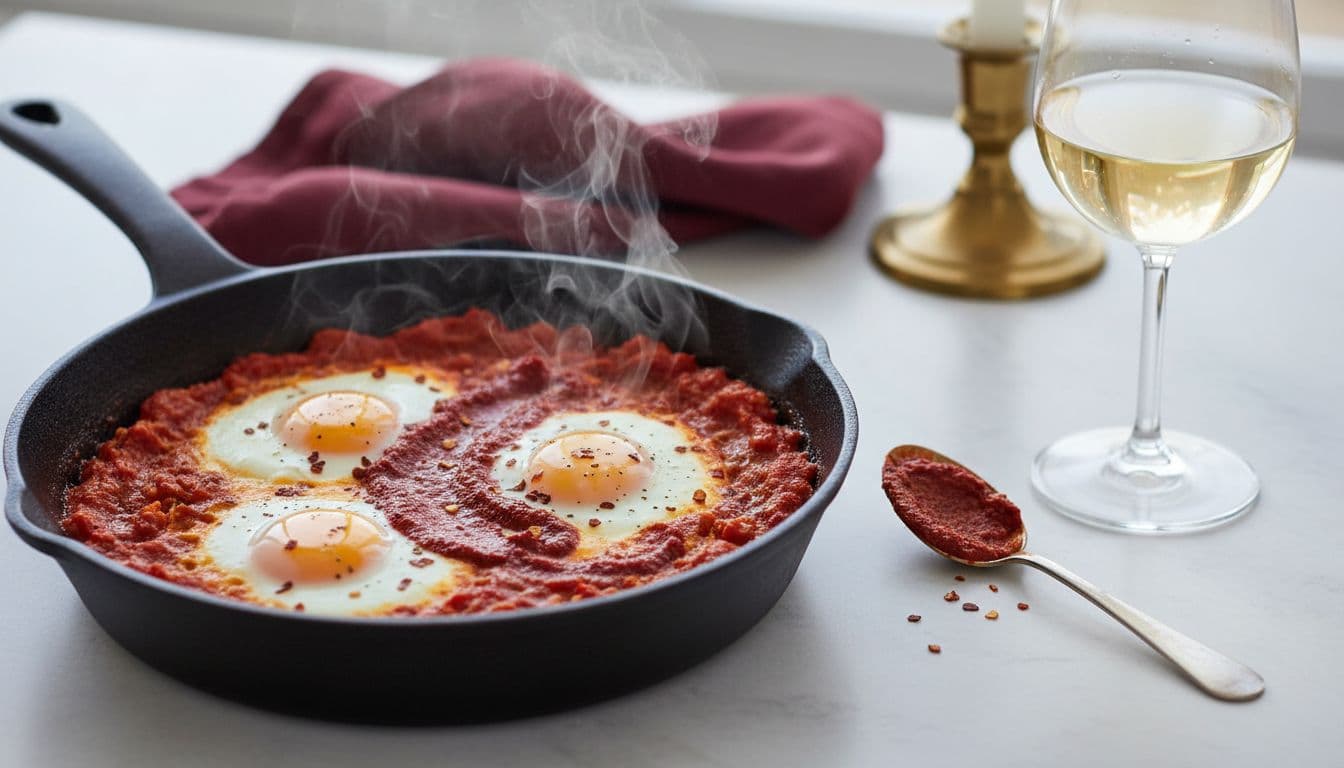
Harissa changes the whole mood. Now you’re dealing with chile heat, garlic, and a deeper, darker spice profile. The wrong wine can feel like pouring gasoline on a campfire.
What helps: cool temperature, lower alcohol, and either crispness or a small touch of sweetness.
Aromatic whites (dry to off-dry) are the most reliable. They can smell like citrus peel, ginger, or flowers, which sounds fancy, but tastes like “fresh and not heavy.” If the label says “off-dry,” don’t panic. With spicy food, that little bit of sweetness is like a dollop of yogurt on the side. It softens the burn.
Chilled fruity reds can work when you want red wine anyway. Keep it light, keep it cool, and avoid anything described as bold or heavily oaked. If your harissa is intense, lean white.
This is where a modern wine guide mindset helps: don’t chase the “correct” grape, chase the feeling you want. Cooling, bright, and easy beats serious and strong.
If you’re collecting wine recommendations for your own taste, jot down one line after dinner: “Loved the crisp white with harissa,” or “Chilled red was better than expected.” Over time, that becomes your personal wine guide, built from real meals, not rules.
Feta-friendly picks (salty, tangy, and still tomato-ready)

Feta is salty, tangy, and a little sharp. It’s delicious, but it can make some reds taste rough. If feta is a main character in your pan, move toward crisp whites and sparkling.
Crisp, “salty” whites are perfect here, because they match feta’s tang and keep tomatoes lively. Even if you don’t remember grape names, you can shop by description: look for “crisp,” “citrus,” “mineral,” or “bright.” That’s wine explained simply in aisle language.
Sparkling wine is also feta-friendly. Salt and bubbles get along, and the wine stays refreshing even as the dish cools.
A few simple wine tips that keep you out of trouble with feta-heavy shakshuka and other tomato-based egg dishes (like huevos rancheros or eggs in purgatory):
- If the cheese is heavy, pick white or bubbly.
- If the dish is mild and herby, pick dry rosé.
- If it’s spicy, pick aromatic white, served cold.
Those are simple wine explanations you can use anywhere, even when the dish name changes.
A fast decision script (store aisle or wine list)
Here’s a quick script you can use as everyday wine advice when your brain’s already on dinner duty:
At a restaurant: “We’re having shakshuka, one mild and one spicy. What’s a fresh, low-tannin option, maybe a dry rosé or a crisp white?” This keeps you in control without sounding like you’re auditioning. It’s practical wine list tips plus real friendly wine advice.
At the store: Grab one of these lanes and go:
- Mild pan: dry rosé, bubbles, or light red.
- Harissa pan: aromatic white (dry to off-dry).
- Feta-heavy pan: crisp white or bubbles.
If you want help choosing in the moment, this is exactly what an AI wine assistant is good at. Sommy can turn “spicy harissa, feta, under $20, I like crisp stuff” into smart wine recommendations, with personalized wine picks that fit your taste. Think of it as wine app suggestions that reduce guesswork, plus restaurant wine tips you can actually use. The goal is calm confidence, not homework, with personalized wine recommendations, smart wine picks, and clear wine recommendations that feel like real everyday wine advice.
For extra dinner inspiration when you’re matching food and wine, Wine Spectator’s recipe search can help you spot similar tomato-and-egg dishes to practice with.
Conclusion
Shakshuka doesn’t need a perfect pairing, it needs a smart, comfortable one. Start with acidity, avoid heavy tannins, and let spice and feta decide the direction. Keep a rosé, a crisp white, or bubbles in your back pocket and you’ll be ready for most tomato-based egg dishes. The best outcome is simple: you enjoy dinner and stop second-guessing the bottle.