

When you're trying to find the perfect wine pairing with pork loin, the answer is both refreshingly simple and wonderfully complex: it all depends on how you cook it. A classic herb-roasted loin sings alongside a light-bodied red like Pinot Noir. But if you're serving that same cut with a rich cream sauce, a fuller-bodied white like an oaked Chardonnay will create a far more memorable meal.
Finding the Perfect Wine for Pork Loin
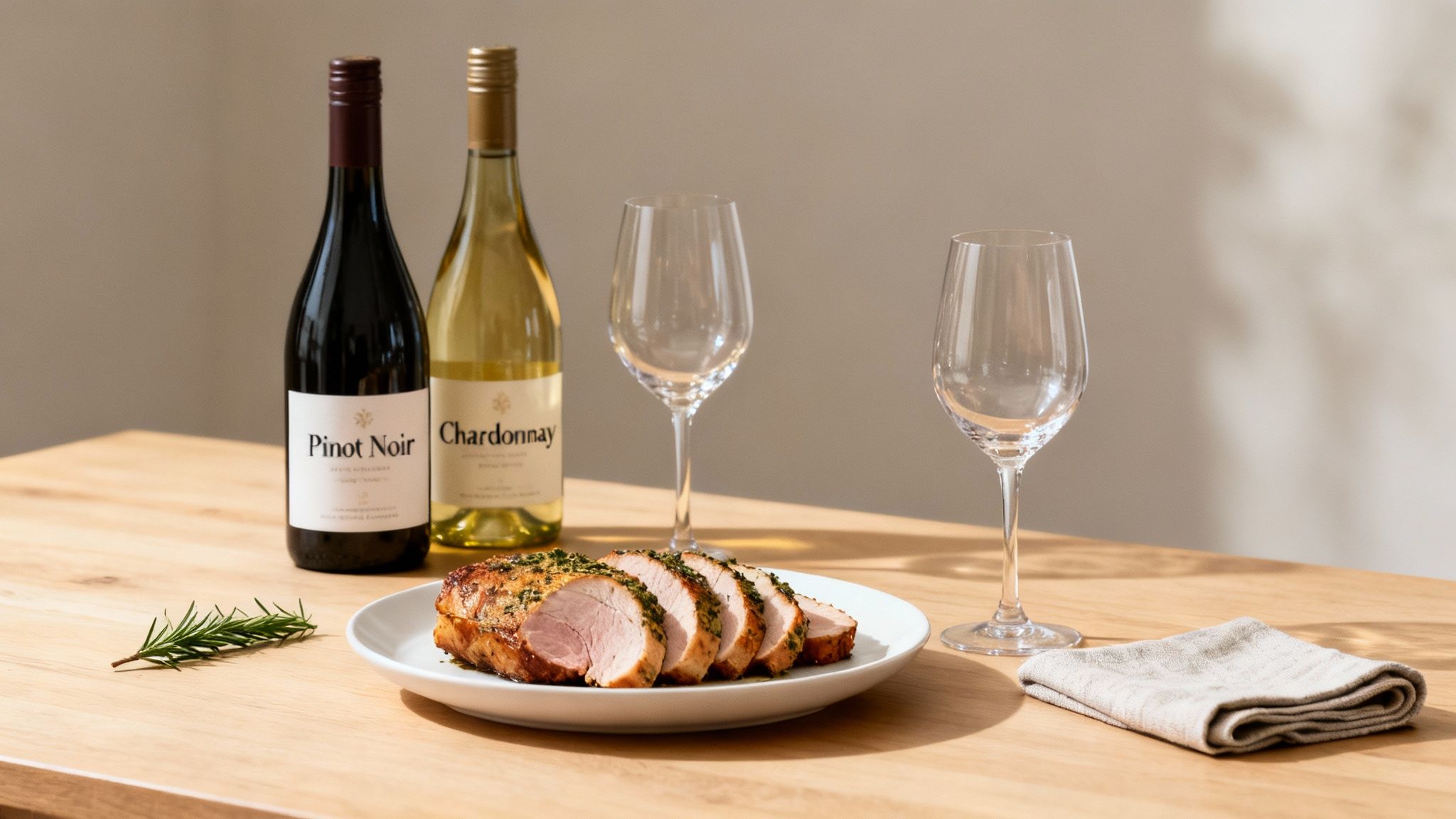
Think of pork loin as the ultimate culinary canvas. Its lean texture and mild, slightly sweet flavor profile mean it doesn’t steamroll wines, making it exceptionally versatile. Unlike a fatty pork belly that practically begs for a high-tannin red to cut through the richness, pork loin is a team player. It gets along with just about everyone, from crisp whites to elegant reds.
This flexibility is a blessing, but it can also feel like a challenge. With so many options, how do you possibly narrow it down?
The secret is to stop focusing on the meat itself and start paying attention to the method. The way you cook the pork and the sauces you serve with it are the real stars of the show. Think of the pork loin as the lead actor, but the cooking style and sauce are the supporting cast that truly define the performance.
Your Pairing Strategy Starts Here
To make a confident choice, you need to identify the most dominant flavors in your dish. Are you grilling the pork loin, getting that smoky char? Are you slow-roasting it with sweet apples and cider? Or are you pan-searing it and draping it in an earthy mushroom sauce? Each one of these preparations completely changes the pairing equation.
Here’s a quick mental checklist to run through:
- Cooking Method: Grilling, roasting, pan-searing, and braising each bring something different to the table.
- Seasonings and Herbs: Earthy herbs like rosemary and thyme call for different wines than bright, zesty marinades do.
- Sauces and Glazes: A fruity glaze, a creamy sauce, or a savory jus will be the most powerful flavor drivers on the plate.
The best wine pairing with pork loin doesn't just match the meat; it complements the entire dish. Find the strongest flavor in your recipe—whether it's a sweet glaze, a creamy sauce, or aromatic herbs—and you'll find the key to a wine that elevates your meal instead of just coexisting with it.
This is exactly where having a guide can make all the difference. When you're standing in the wine aisle, a tool like the Sommy.ai app is a game-changer. Instead of just searching for "pork wine," you can get specific. You can ask Sommy for a pairing with "roasted pork loin with apples," and it will provide tailored recommendations that account for those crucial secondary flavors, helping you nail the pairing every single time.
For a quick reference, here’s a breakdown of some classic preparations and the wines that love them.
Quick Guide to Pork Loin and Wine Pairings
This table is a great starting point, but remember that your personal taste is always the most important factor. Use these suggestions as a guide to start exploring and find what you enjoy most.
Why Pork Loin Is So Wine-Friendly
Before we can even think about what wine to pour, we have to really understand the star of the show: the pork loin itself. It helps to think of pork loin as the diplomat of the meat world. It’s lean, incredibly tender, and has this subtle, almost sweet flavor that plays well with just about everything.
This mild-mannered nature is its secret weapon. A big, marbled ribeye or a fatty pork shoulder practically screams for a bold, tannic red wine to cut through all that richness. Pork loin doesn't have that kind of baggage.
Because it’s so low in fat and doesn't have an overpowering flavor, pork loin doesn’t box you into a corner. Instead, it opens up a huge range of possibilities, from a zesty, unoaked white to a silky, light-bodied red.
A Familiar Comparison
If this sounds familiar, it should. Think of its closest culinary cousin: the boneless, skinless chicken breast. Both are essentially a "blank canvas," ready and willing to soak up whatever flavors you throw at them, whether it's a dry rub, a marinade, or a pan sauce.
Here’s why that comparison works so well:
- Lean Profile: Just like chicken, pork loin isn’t going to bully a delicate Pinot Noir or a bright Sauvignon Blanc into submission.
- Flavor Absorption: The real flavor drivers here are the seasonings and the way you cook it. That's what you're actually pairing your wine with—not just the meat.
- Texture: Its tender, fine-grained texture gets along best with wines that have good, balancing acidity and smooth tannins, nothing that will feel rough or clash.
This simple comparison blows up the old, tired rule of "red wine with red meat." Pork loin is far more nuanced than that.
The key takeaway is this: pork loin's lean and mild character is your ticket to pairing freedom. It lets you stop worrying about old-school rules and start choosing wines that work with the entire dish, not just the protein.
This is also where a tool like Sommy.ai becomes so incredibly useful. When you're staring at a wine list or a packed store shelf, it provides that expert guidance. For instance, you could ask Sommy, "What's the best Pinot Noir under $30 for herb-roasted pork loin?" The app uses those crucial details to find a wine that truly complements the dish's specific profile, giving you a perfect match every time.
How Cooking and Sauces Shape Your Pairing
The real secret to a perfect wine pairing with pork loin isn't found in a bottle—it’s discovered right in your kitchen. The biggest mistake people make is thinking of pork as just "pork." The way you cook it and the sauce you serve alongside it completely transform the dish, and these are the true flavor drivers your wine needs to connect with.
Think of your pork loin as an actor. On its own, it has a distinct personality—lean, mild, and a bit of a blank canvas. The cooking method and sauce are the script and costume; they define the role it plays on the plate. A simple oven roast creates a gentle, subtle character, while grilling it over charcoal produces a smoky, bold protagonist.
This decision tree shows how that journey from raw meat to finished dish opens up a whole world of pairing versatility.
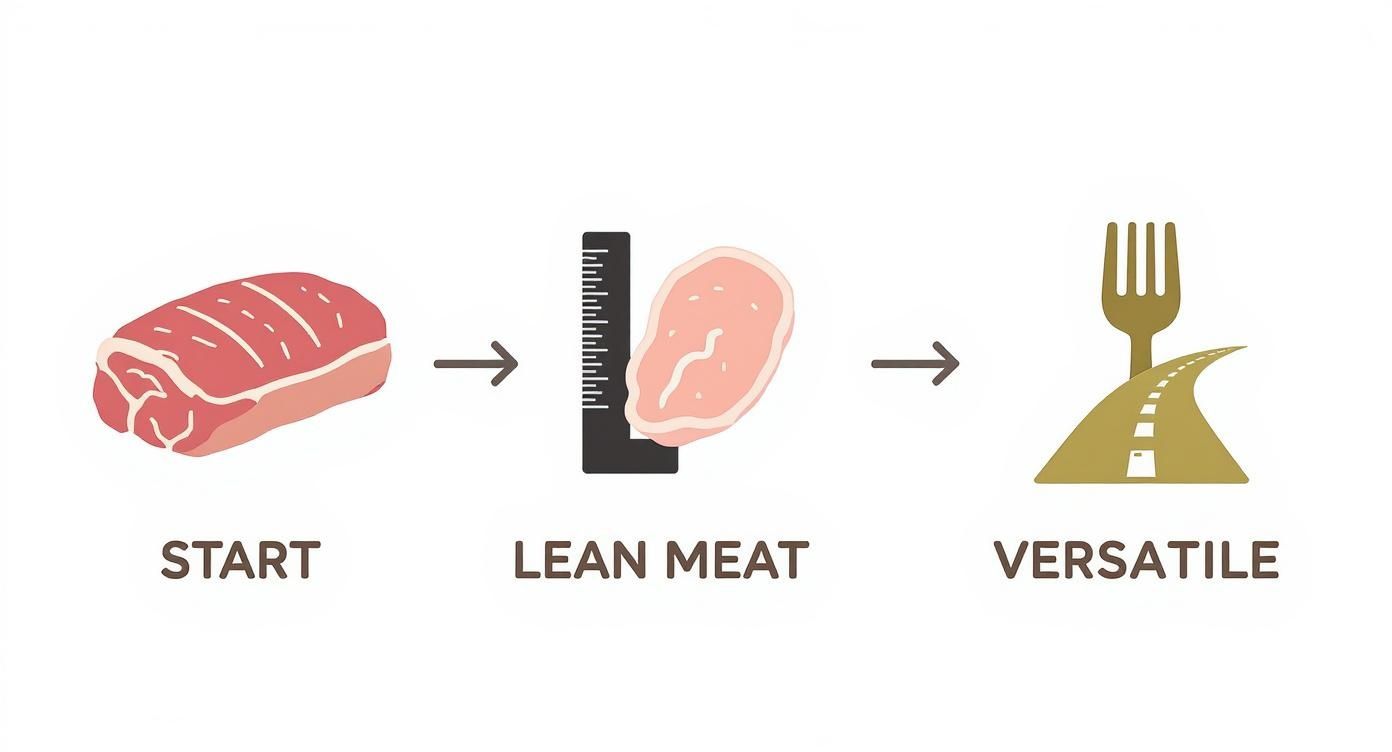
The key takeaway is clear: the pork loin's lean nature is your starting point, but the final preparation dictates the direction of your pairing.
Cooking Methods Matter Most
The way you apply heat to the pork loin fundamentally changes its flavor profile and what kind of wine will work best. Each method adds its own unique signature to the meat.
- Roasting: This classic preparation uses gentle, even heat that brings out the pork's natural sweetness. It calls for wines that won't overwhelm it, like an elegant Pinot Noir or an unoaked Chardonnay.
- Grilling: This method introduces smoky, charred flavors. You’ll need a wine with more personality to stand up to the intensity, maybe a fruit-forward Zinfandel or a peppery Syrah.
- Pan-Searing: Creating that beautiful caramelized crust—the Maillard reaction—adds rich, savory notes. A medium-bodied red like a Côtes du Rhône works beautifully here.
- Braising: Slow-cooking in liquid, like milk or broth, makes for incredibly tender meat and a luscious sauce. A richer white, like an Alsatian Pinot Gris, can match that creamy texture perfectly.
The Sauce Is the Boss
If the cooking method sets the stage, the sauce directs the scene. It’s often the most dominant flavor on the plate, making it your primary guide for finding the right wine.
When in doubt, match the wine to the sauce, not the meat. A bold, flavorful sauce will always overpower a delicate wine, so let the sauce’s intensity guide your selection.
Let's break down the different flavor families of common pork loin sauces and see how they point you toward the right bottle.
Fruity and Sweet SaucesAn apple glaze, cherry chutney, or apricot sauce brings both sweetness and acidity to the party. The goal is to find a wine that can match this profile without clashing or tasting sour in comparison.
- What to Pour: An off-dry Riesling or Gewürztraminer. That touch of residual sugar in the wine will harmonize with the fruit glaze, while its high acidity keeps the pairing fresh and cleanses the palate.
Creamy and Earthy SaucesMushroom cream sauces, Dijon cream, or sauces made from rich pan drippings are savory and weighty. You need a wine with enough body and texture to complement this style.
- What to Pour: An oaked Chardonnay or a Viognier. The creamy, buttery notes from the oak integrate seamlessly. A lighter red like a Beaujolais can also work well, cutting through the richness.
Herbaceous and Zesty SaucesThink of a bright chimichurri, a Provençal-style tomato sauce with Herbes de Provence, or a zesty lemon-herb marinade. These sauces add sharp, aromatic notes.
- What to Pour: A crisp Sauvignon Blanc or a dry Rosé. Their vibrant acidity and herbal undertones will echo the sauce's flavors, creating a lively and energetic pairing.
Navigating these choices at a restaurant or standing in a wine shop can be tricky. This is where a tool like Sommy.ai comes in handy. You can just input your entire dish—"grilled pork loin with cherry sauce"—and get a specific recommendation that considers all these crucial flavor layers at once.
The Best Red Wines to Serve with Pork Loin
When you're thinking about a red wine to go with pork loin, one grape almost always comes to mind first: Pinot Noir. It’s the go-to recommendation from sommeliers and chefs for a reason. This elegant, lighter-bodied red has this amazing ability to complement the lean, delicate meat without just completely bulldozing its flavor.
Think of Pinot Noir as the perfect dance partner for pork loin. Its bright acidity cuts through the richness and highlights the pork's subtle sweetness, while its soft, low tannins keep the texture of the meat front and center. The wine's classic flavors of cherry, raspberry, and that lovely "forest floor" earthiness are a natural fit for common pork seasonings like rosemary and thyme.
Pinot Noir: The Undisputed Champion
Of course, the real beauty of Pinot Noir is its versatility.
- Simple Herb-Roasted Pork Loin? A classic bottle from Burgundy, France, or even Oregon will bring those gorgeous earthy notes that sing with the herbs.
- Pork Loin with a Cherry or Berry Sauce? A fruit-forward Pinot from California’s Sonoma Coast will mirror those sauce flavors perfectly, creating a seamless match.
The key to a great Pinot Noir pairing is all about balance. Its delicate nature and complex flavors are meant to elevate the dish, not steal the show. That makes it an almost foolproof choice for nearly any pork loin recipe you can dream up.
Gamay: A Bright and Fruity Alternative
If you're a fan of that lighter-bodied style but want to shake things up a bit, you need to try Gamay. It’s the grape behind the famous wines of Beaujolais in France, and it is absolutely bursting with juicy red fruit—think fresh strawberries and cranberries, with a little hint of violet or white pepper on the finish.
Gamay really shines when your pork loin has a touch of sweetness. Its zippy acidity and barely-there tannins make it a fantastic choice for dishes with fruit glazes or sauces.
- Pork Loin with an Apple Glaze: The bright, fresh fruit in a Beaujolais-Villages will slice right through the glaze's sweetness, keeping every bite refreshing.
- Grilled Pork Loin Skewers: The wine’s incredibly drinkable and refreshing character is perfect for a more casual, backyard-grill kind of meal.
Valpolicella: An Elegant Italian Option
For all the Italian wine lovers out there, a classic Valpolicella from the Veneto region is a stellar pick. Made mostly from the Corvina grape, this wine is light on its feet, bright, and packed with sour cherry and savory herb notes. It's got that hallmark Italian acidity that just makes it sing with food.
A simple, unoaked Valpolicella Classico is what you want for a weeknight pork loin dinner. Its zesty personality can handle a simple tomato sauce or an herb crust without ever overwhelming the pork. It offers a more savory, old-world profile compared to Pinot Noir or Gamay, making it a fantastic way to broaden your pairing horizons.
When you're standing in the wine aisle trying to decide, a tool like Sommy.ai can be a lifesaver. You can describe your meal and let it compare these options on the fly, pinpointing the perfect bottle based on your specific recipe and budget.
The Case for White Wine with Pork Loin
While red wine often gets all the attention, skipping a great white wine with pork loin means you're seriously missing out. The right white can lift a pork dish in ways a red just can't, offering a brightness and textural contrast that’s frankly stunning. The trick is all about matching the style of the wine to how you’ve prepared the pork.
Chardonnay is the perfect poster child for this kind of versatility. I often call it a "winemaker's grape" because its personality is shaped so much by the choices made in the cellar. This gives you two very different, but equally powerful, tools for pairing with pork loin.
The Two Faces of Chardonnay
Think of Chardonnay as having a split personality. On one side, you have the rich, buttery, oak-aged style famous in places like California. On the other, you get the clean, crisp, unoaked version, like a classic French Chablis.
Oaked Chardonnay: When you’ve got a pork loin swimming in a rich, creamy mushroom or Dijon sauce, an oaked Chardonnay is your absolute best friend. The wine’s own creamy texture and notes of vanilla and toasted brioche, which come from the oak barrels, just melt into the sauce. It creates a seamless, almost decadent experience.
Unoaked Chardonnay: For lighter dishes, say a simple roast pork with lemon and herbs, a zesty unoaked Chardonnay is the answer. Its bright acidity and flavors of green apple and citrus act like a squeeze of lemon, cutting right through the richness of the meat and making those fresh seasonings pop.
This isn't just a niche preference, either. A recent industry report found that 28% of global wine drinkers picked Chardonnay as their top white for pork loin, specifically because of how well it handles rich sauces. And with the global Chardonnay market hitting $11.3 billion in 2022, it's safe to say this is a pairing people love. You can dive deeper into these trends by exploring more detailed food pairing guides.
Beyond Chardonnay: Other Brilliant Whites
Chardonnay might be a superstar, but it’s definitely not the only white that can make your pork loin sing. Several other grapes bring their own unique magic to the table, perfect for different flavor profiles.
My rule of thumb for white wine is to match intensity. High-acid wines cut through fat and complement zesty flavors. A little sweetness in the wine is perfect for balancing spicy rubs or fruity glazes.
Here are a few other fantastic bottles to look for:
Sauvignon Blanc: Famous for its zippy acidity and classic "green" notes of fresh-cut grass, bell pepper, and lime. This makes it a no-brainer for an herb-crusted pork loin or one served with a bright chimichurri. The wine’s herbal side literally echoes the seasonings on the pork, creating a vibrant, energetic match.
Off-Dry Riesling: Is your pork loin rocking a spicy rub or a sweet glaze—think apple, apricot, or honey-mustard? An off-dry Riesling is a game-changer. That touch of sweetness in the wine tames the heat and latches onto the fruit flavors, while its electric acidity keeps the whole thing feeling fresh, not heavy.
Navigating all these choices can feel a bit overwhelming when you just want to grab a bottle for dinner. That's exactly where an app like Sommy.ai comes in handy. You can tell Sommy you're making "pork loin with spicy apricot glaze," and it will instantly suggest a specific Riesling or another perfect white wine for those exact flavors.
Get Personalized Pairings with Sommy

It’s one thing to understand the principles of pairing, but it's another to stand in a wine shop staring at a wall of bottles. This is where a tool like an AI sommelier can be a game-changer, helping you apply all this knowledge in the real world.
Think back to that roasted pork loin with the apple glaze. You know an off-dry Riesling is a great direction, but which one? From which region?
You can simply plug 'roasted pork loin' and 'apple glaze' into an app like Sommy.ai. It instantly filters through thousands of options to give you a short, curated list of wines that will work beautifully with your specific dish.
The magic of a tool like Sommy is its ability to move past generic advice. It gets that the sauce and cooking method are what truly drive the pairing, delivering a precise match every single time.
This kind of technology bridges the gap between knowing the why and finding the what. It considers all the crucial details—the protein, the sauce, the herbs—and finds a bottle that elevates those exact flavors. It’s like having a wine pro right in your pocket, making sure your next pairing is a home run.
Answering Your Top Pork Loin Pairing Questions
Even after you've got the basics down, you might still find yourself staring at a wine list, feeling a little stuck. It happens to all of us. Let's walk through some of the most common questions that pop up right when you’re about to choose a bottle.
What's the One Go-To Wine for a Classic Roast Pork Loin?
If I had to pick just one, it would be Pinot Noir. For a simple pork loin roasted with classic herbs like rosemary, thyme, and garlic, you just can't beat it.
Pinot Noir brings bright acidity that cuts through the richness of the roast, but its tannins are soft and silky, so they won't clash with the lean meat. Plus, its gorgeous notes of cherry, raspberry, and earthy forest floor seem practically made to go with those herbs.
Not a red wine fan? An unoaked Chardonnay is a brilliant alternative, offering a crisp, clean profile that refreshes the palate between bites.
Is Rosé a Good Choice for Pork Loin?
A resounding yes! A good dry rosé is an incredibly versatile partner for pork, especially when you're grilling the loin or serving it on a warm day.
I'd reach for a classic Provence-style rosé. Its bright flavors of strawberry and citrus, along with a stony minerality, provide a perfect counterpoint. It’s the ideal middle-ground wine—it has enough presence to stand up to the pork but stays light and zesty, especially with a wide variety of sauces.
Think of a dry rosé as your secret weapon for pork pairings. When you're not quite sure which way to go, it's a safe, sophisticated, and almost always delicious choice.
Are There Any Wines I Should Flat-Out Avoid?
You'll generally want to stay away from massive, tannic red wines. Think of a big, bold Napa Cabernet Sauvignon, a super-concentrated Malbec, or a powerful Barolo (Nebbiolo). These wines are just too much for the delicate flavor of pork loin.
Pork loin doesn’t have the high-fat content needed to soften up aggressive tannins. When those tannins have nothing to bind to, they can make the wine taste harsh, astringent, or even metallic next to the meat. It’s all about harmony—stick to lighter-bodied reds, crisp whites, or a dry rosé.
Ready to put this knowledge to the test? Your personal guide is waiting. With Sommy.ai, you can get an expert recommendation in seconds, whether you’re standing in the wine aisle or sitting at a restaurant table. Just describe your pork loin dish and let it find the perfect bottle for you. Explore your next great pairing at https://sommy.ai.