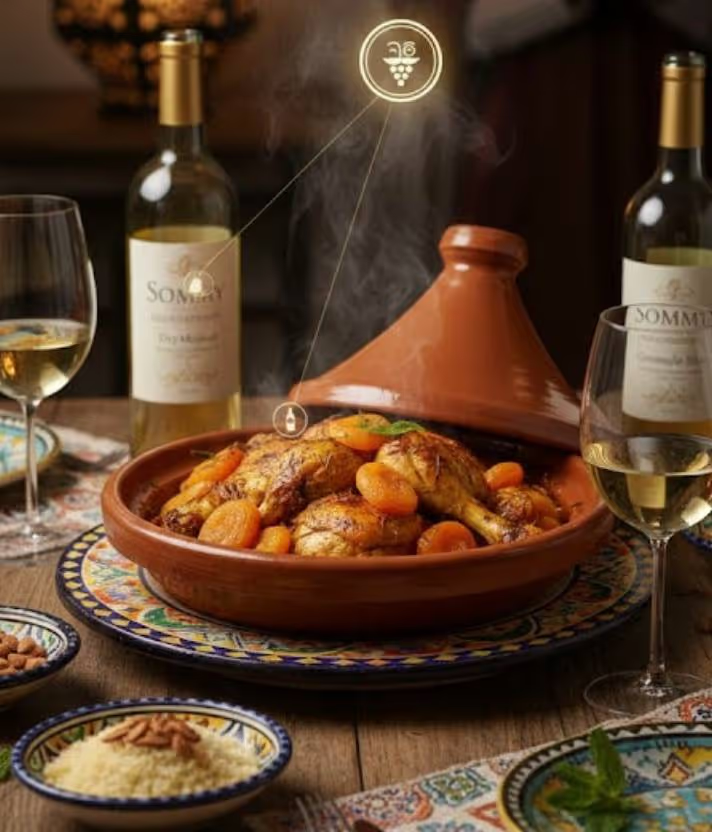

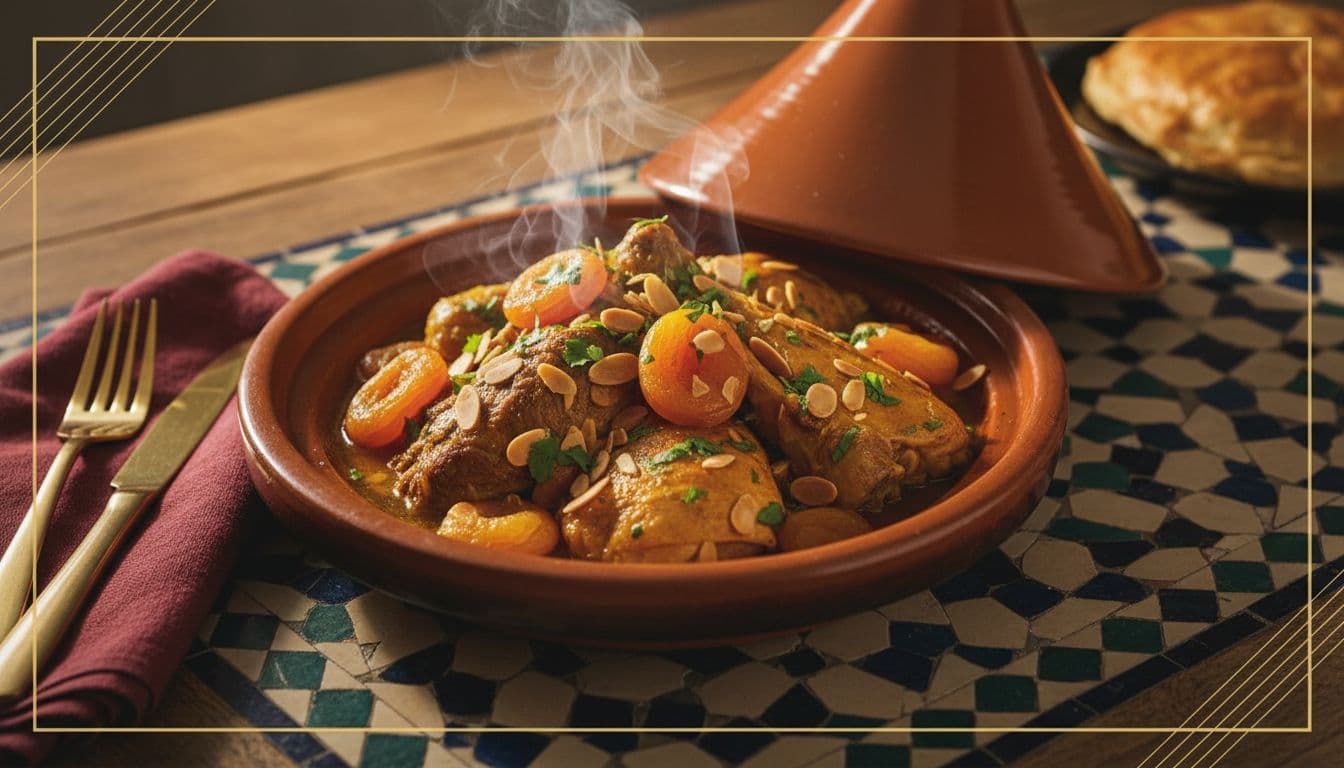
A Moroccan tagine with saffron and apricots is sweet, savory, and perfume-rich all at once. The best match is usually a wine that’s fruity, fresh, and not too heavy, like off-dry Riesling, a dry rosé, or a light red with soft tannins.
If you want clear wine recommendations without second-guessing, Sommy can narrow it down fast based on what you like (not what you “should” like). This article gives you a simple wine pairing guide for this dish, plus restaurant wine tips and grocery store wine picks you can use today.
What makes saffron-and-apricot tagine hard to pair?
This dish can feel like a tightrope walk. One step too bold and the wine tastes bitter. One step too light and it disappears.
Here’s what’s happening in the bowl:
- Apricots bring sweetness, even if the dish isn’t “dessert sweet.”
- Saffron adds floral warmth that can clash with heavy oak.
- Slow-cooked sauce feels rich, so the wine needs lift.
- Spices (often cinnamon, cumin, ginger) make high tannin reds taste rough.
If you’ve ever taken a sip and thought, “Why does my wine suddenly taste sharp?” that’s usually tannin plus spice plus sweetness colliding.
The best wines for a saffron apricot tagine
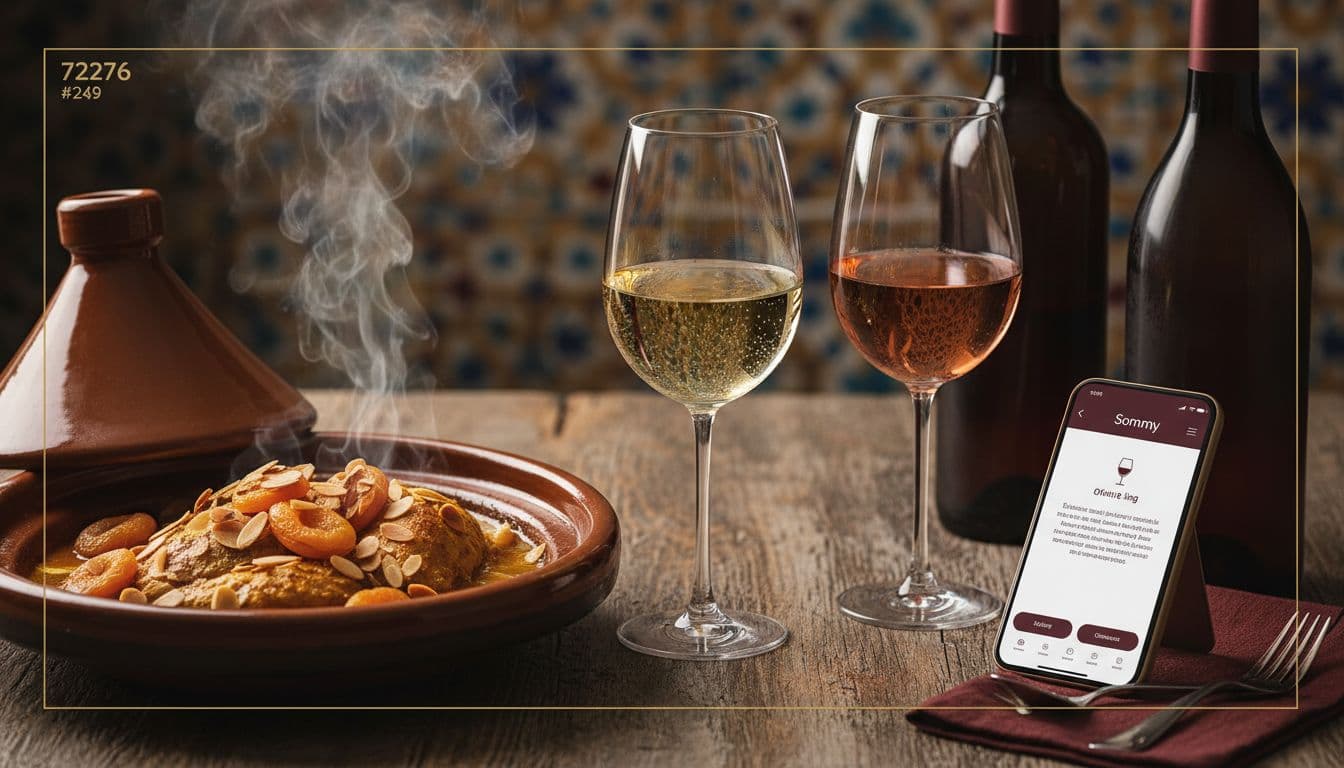
These are the most reliable wine recommendations for this specific tagine style. Think of them as “safe landing zones” that still feel special.
Off-dry Riesling (the easiest win)
If you want the simplest answer for wine pairing tagine nights, start here.
Why it works:
- A small touch of sweetness can echo the apricot without making the dish feel sugary.
- Bright acidity keeps the sauce from feeling heavy.
- It stays calm around warm spices.
What to look for on a label or shelf talker: “off-dry,” “slightly sweet,” or “Riesling” with flavor notes like peach, apricot, lime.
Dry rosé (especially Grenache-based)
Rosé is the friend who gets along with everyone at the table.
Why it works:
- Red-fruit flavor feels good with apricot.
- It has enough structure for lamb or chicken.
- It stays refreshing, even with saffron.
Choose rosé that’s described as crisp and dry, not “candy-like.”
Light, juicy reds (Pinot Noir or Gamay)
If your tagine is heavier (lamb, olives, lots of onions), a light red can be perfect. Morocco bottles its own version of that wine, and our guide to wine from Morocco covers the juicy Syrah and Grenache reds alongside Vin Gris, the pale, bone-dry rosé the country is known for.
Why it works:
- Softer tannins avoid that bitter clash with spice.
- Cherry-like fruit handles sweet-savory sauces well.
- Served slightly cool, it feels smooth and bright.
Skip big, inky reds here. They tend to fight the apricot.
Aromatic whites (Viognier or Gewürztraminer)
These can be great if you like a more fragrant, cozy glass.
Why it works:
- Floral aromatics can mirror saffron’s perfume.
- Fuller mouthfeel matches slow-cooked texture.
Keep it simple: pick a bottle that’s described as fresh, not heavily oaked.
Sparkling wine (dry or lightly off-dry)
Bubbles act like a reset button between bites.
Why it works:
- Bubbles cut richness.
- Acidity lifts saffron and herbs.
- It makes the whole meal feel like an occasion.
How to choose wine with Sommy (3 steps, no wine homework)
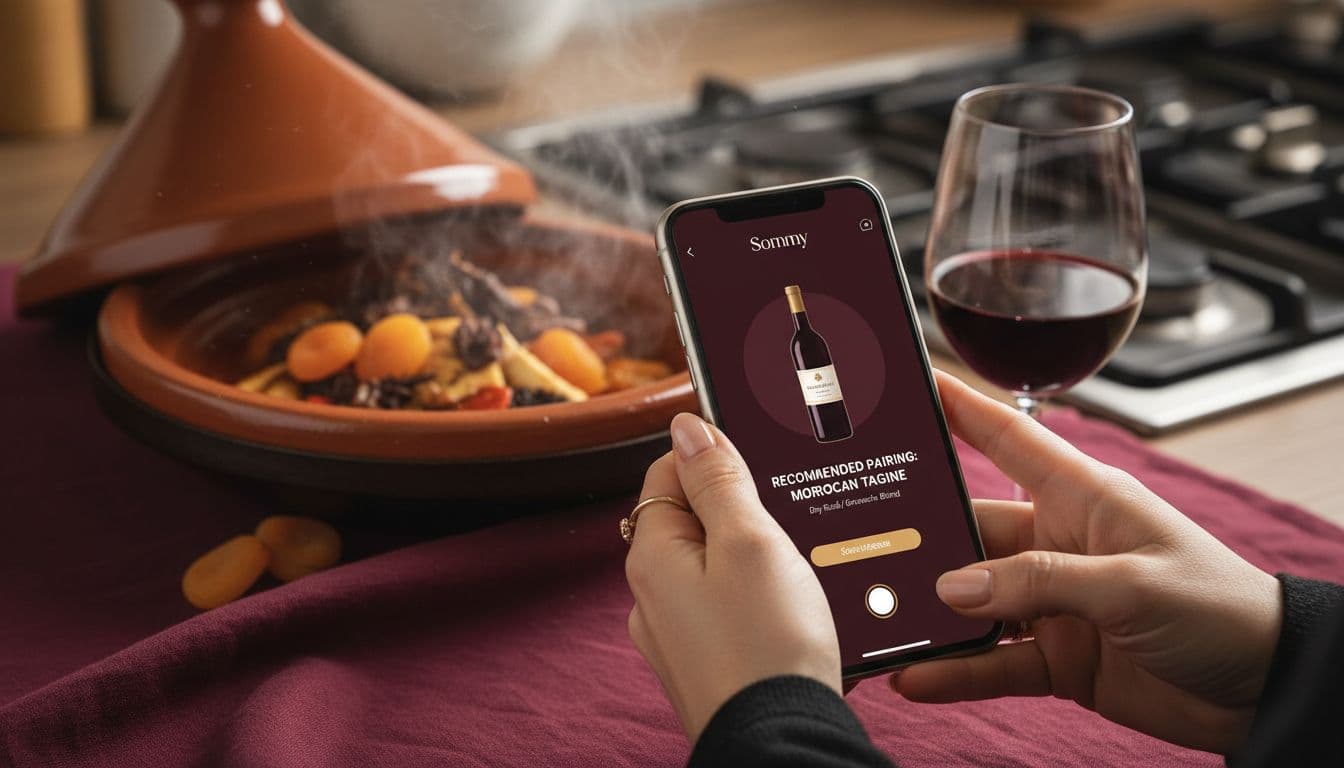
The hardest part isn’t the pairing. It’s the moment in front of the shelf, when every bottle seems like a gamble. Sommy is an AI wine assistant built for that moment, with wine explained simply instead of dressed up in fancy language.
A quick framework (also a solid beginner wine guide):
- Name the dish in plain words: “Moroccan tagine with saffron and apricots.”
- Say what you want the wine to feel like: “fresh,” “not too dry,” “light red,” “no heavy oak.”
- Pick your budget and setting: restaurant bottle, weeknight bottle, or guests.
From there, Sommy gives smart wine recommendations and personalized wine picks that fit your taste. It’s a modern wine guide for people who don’t want a lecture, they want a decision. If you’ve ever searched for wine app suggestions because you’re tired of guessing, this is exactly the use case.
It also helps with personalized wine recommendations over time. The more you note what you liked, the more your future picks feel like “you.” That’s beginner-friendly wine advice that builds confidence without turning dinner into a class.
Restaurant wine tips for tagine (when the list is a wall of words)
A tagine on a menu can trigger panic because you know it’s going to be complex, and the wine list is longer than your appetizer.
Use these wine list tips to cut through it:
Ask for the style, not the brand: “Do you have an off-dry Riesling or a dry rosé that’s fruity?”
Avoid heavy oak: If the server says “buttery” or “toasty,” it can overwhelm saffron.
Go lighter than you think: With apricots, big reds can taste harsher.
Grocery store wine picks (what to grab fast)
In a store, you don’t have a sommelier. You have fluorescent lights and ten minutes.
Here are simple wine tips that work even when you’re rushing:
If you’re buying white: reach for Riesling or another aromatic white that mentions stone fruit or citrus.
If you’re buying rosé: choose one described as dry and crisp.
If you’re buying red: choose light-bodied and fruit-forward, then chill it 15 minutes before serving.
This is everyday wine advice, but it’s powerful. You don’t need the “perfect” bottle. You need a bottle that won’t clash.
For more general pairing inspiration across seasons and menus, these seasonal wine pairing ideas are a useful reference point.
Wine tasting notes explained (so the label finally makes sense)
Tasting notes often sound like poetry written by someone holding a thesaurus. Here are wine tasting notes explained in plain terms for this dish, with simple wine explanations you can actually use.
If the label says...It usually means...Why it matters for tagine“Off-dry”Not dessert-sweet, just a little sweetMatches apricot without clashing“Crisp”High freshness, mouth-wateringCuts rich sauce and saffron warmth“Stone fruit”Peach, apricot, nectarine flavorsMirrors the fruit in the dish“Light-bodied”Not heavy or thickKeeps spice and sweetness in balance“Soft tannins”Less drying, less bitterAvoids that rough taste with spices
This is wine explained simply: pick freshness, pick fruit, avoid heavy wood flavors. That’s your shortcut.
The calm way to get it right
Saffron-and-apricot tagine doesn’t need a rare bottle or a long backstory. It needs the right feel: bright, fruity, and gentle around spice. Start with off-dry Riesling or dry rosé, and go to a light red only if the tagine is hearty.
If you want clear wine recommendations in the moment, Sommy helps you decide with smart wine picks that match your taste. It’s a wine app that reduces the fear of choosing wrong.
The goal is simple: confident choices, more good dinners, less second-guessing.