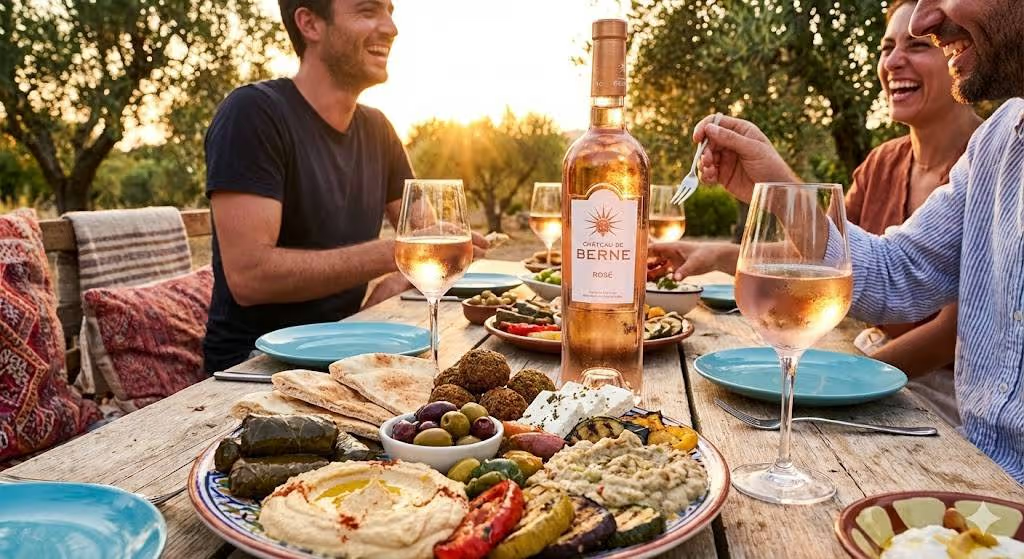

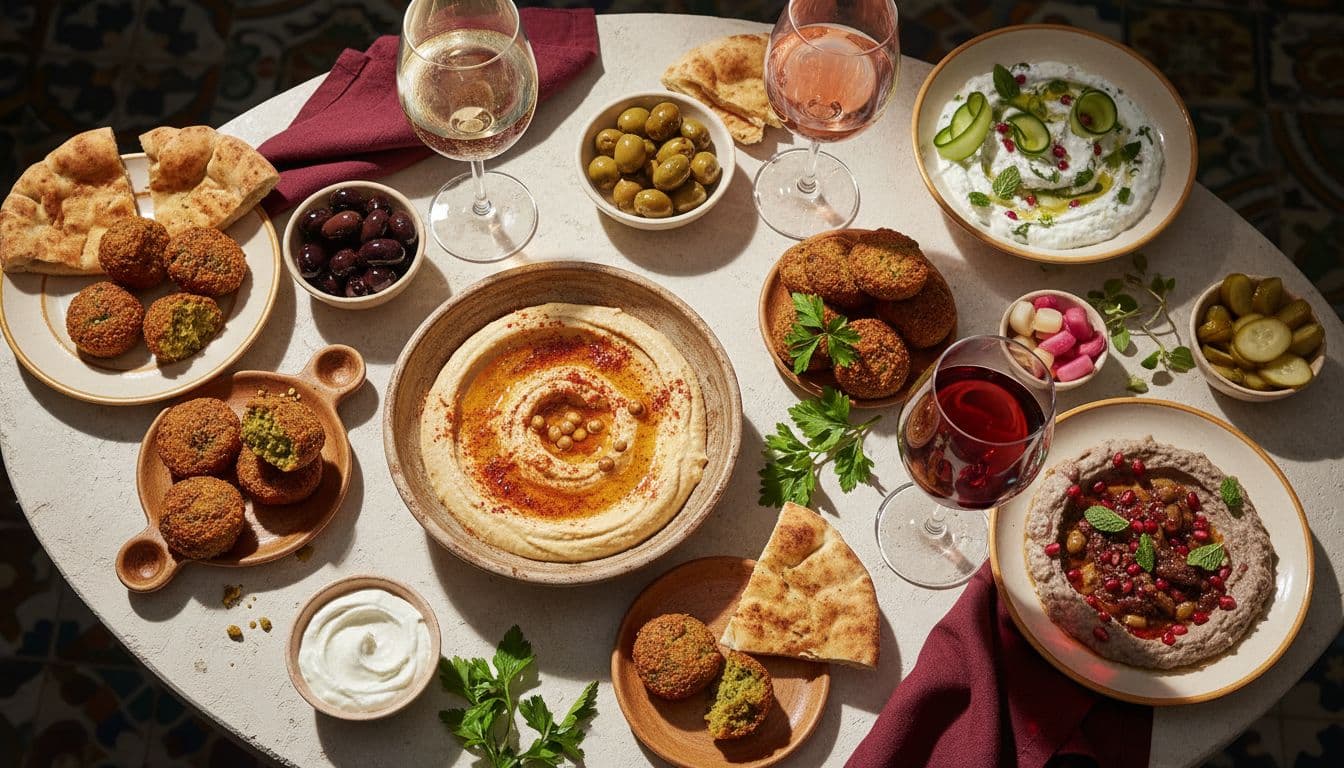
Mezze night sounds relaxed, until you’re staring at a wine shelf thinking, “What won’t taste weird with garlic, lemon, and tahini?” Here’s the calm answer: for wine mediterranean mezze, you’ll almost always win with a crisp dry white, a dry rosé, or sparkling wine, then add a light red only if you want one.
This is a beginner wine guide for real life, not a lecture. Use it as your quick wine pairing guide for hummus, falafel, and those garlic-heavy dips that cling to everything.
The 10-second rule for mezze wine (works fast)
If you remember one thing about how to choose wine for mezze, make it this: pick wines with freshness.
Mezze is full of lemon, herbs, olive oil, pickles, and smoke. Fresh wines (high-acid, dry, not heavy) act like a squeeze of lemon on the whole spread. Big, oaky, super-tannic reds can fight the garlic and make dips taste bitter.
Think of mezze as a bright, busy conversation. Your wine shouldn’t shout over it.
The easiest mezze bottles to buy (no overthinking)
These are the “covers almost everything” wine recommendations for a table with hummus, falafel, baba ganoush, tzatziki, olives, and pickles.
Pick 1: Crisp, dry white (your safest bet)
Look for labels that say dry and taste notes that hint at citrus, green apple, or saline. Great styles include Assyrtiko, Vermentino, Albariño, or a dry Sauvignon Blanc.
Why it works: it cuts tahini richness, cleans up olive oil, and stays steady with herbs.
Pick 2: Dry rosé (mezze’s “middle path”)
Dry rosé handles a mixed platter like a well-timed playlist. It’s refreshing like white wine, but has a little fruit body that works with cumin, paprika, and toasted notes.
Why it works: it’s flexible across creamy dips and fried falafel.
Pick 3: Sparkling (when the platter is salty and snacky)
Cava, dry Prosecco, or other dry sparkling wines are reliable with olives, pickles, and fried bites. Bubbles lift oil and salt off your tongue.
Pick 4 (optional): Light-bodied red (only if you’re craving red)
Choose something light, not woody, and not mouth-drying. Pinot Noir or Gamay are the usual “safe reds” here.
Why it works: it can match falafel’s toasted crust and spice, as long as it’s not heavy.
Quick pairing map (one glance)
| Mezze item | Easiest wine style | What to look for on the label |
|---|---|---|
| Hummus, tahini dips | Crisp dry white | “Dry,” “citrus,” “minerality,” “bright” |
| Falafel, spiced bites | Dry rosé or light red | “Fresh,” “light-bodied,” “cherry,” “herbs” |
| Toum (garlic), lemony dips | Crisp dry white | “High acidity,” “lemon,” “saline” |
| Olives, pickles | Sparkling | “Brut,” “extra dry” (meaning dry-ish) |
| Baba ganoush (smoky) | Rosé or crisp white | “Stone fruit,” “citrus,” “clean finish” |
Garlic-heavy dips (toum) need “zip,” not sweetness
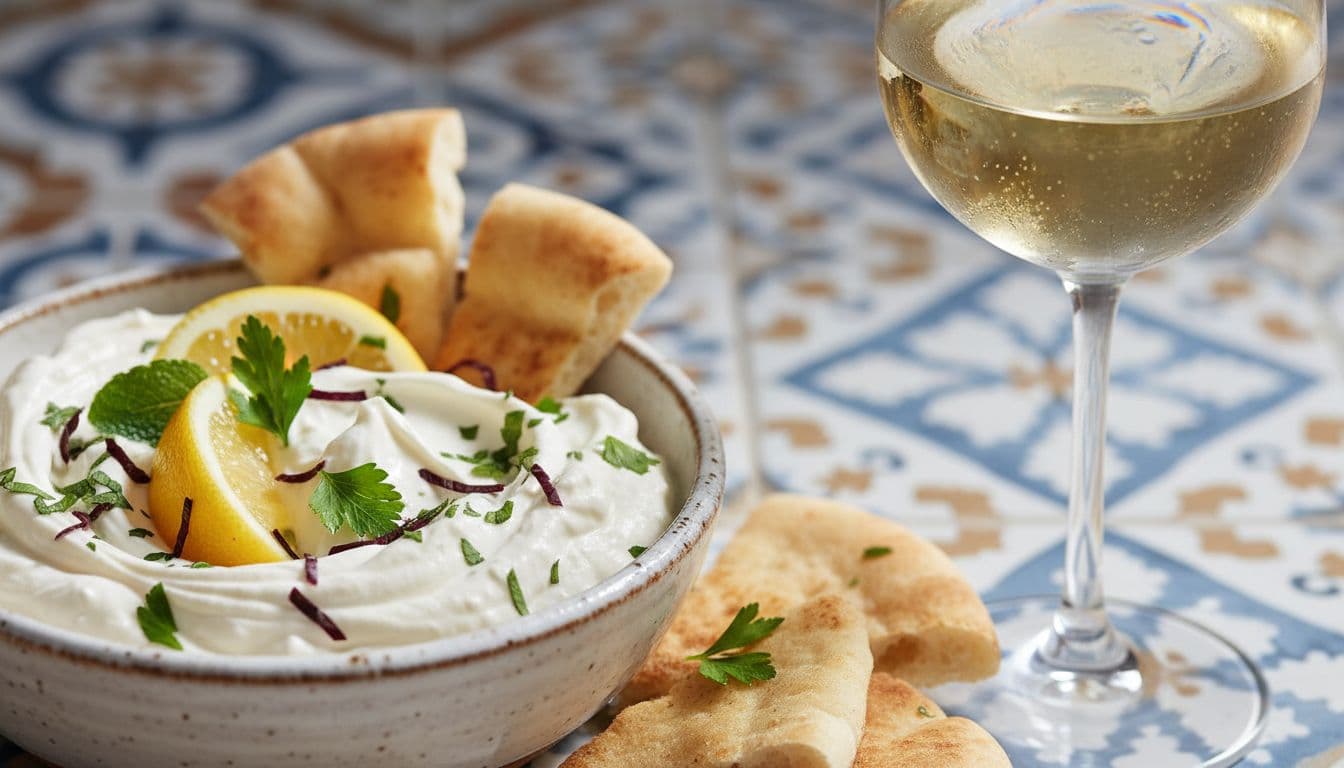
Toum is intense. It’s whipped garlic, oil, and lemon, basically a savory lightning bolt.
Your move is a dry white with real acidity. That acidity acts like a rinse cycle, so the garlic feels bright instead of heavy. Avoid off-dry whites here, sweetness can turn garlic sharp in a bad way.
This is also a good place for wine explained simply: if the wine makes your mouth water, it can handle toum.
Hummus and tahini: think “creamy + nutty,” choose clean wines
Hummus feels soft and earthy, and tahini adds a nutty, slightly bitter edge. A crisp white keeps it light; a dry rosé adds a little fruit without turning sweet.
If you want deeper reading on Lebanese food pairings as a whole (including mezze platters), this guide offers useful examples: How to pair Lebanese dishes with wine.
Wine tasting notes explained (in normal words)
If the label or menu says:
- “Citrus” / “lemon”: good with tahini and herbs.
- “Mineral” / “salty”: great with olives and briny bites.
- “Creamy” / “buttery”: skip for mezze, it can feel heavy.
That’s wine tasting notes explained without the fluff.
Falafel, herbs, and spice: rosé first, light red second
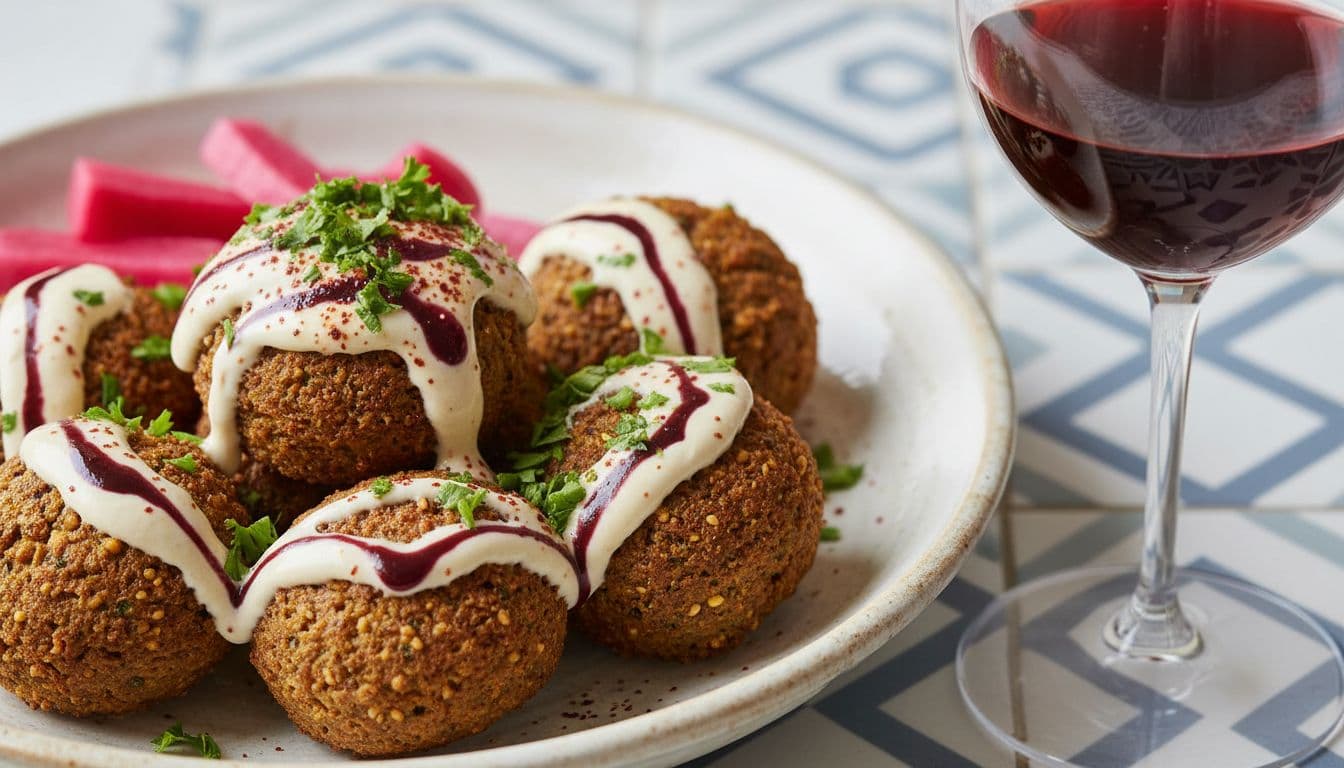
Falafel brings crunch, warm spice, and green herbs. Dry rosé is the easy answer because it stays refreshing and still feels “food-friendly.”
If you’re set on red, keep it light and chill it a bit. A slightly cool light red tastes cleaner with tahini and pickles.
This is beginner-friendly wine advice that saves you from the classic mistake: heavy red plus garlic plus lemon.
Simple wine tips for buying fast (grocery store and restaurant)
You don’t need a perfect bottle. You need a solid decision.
Grocery store wine picks that work for mezze
Use these clear wine recommendations when you’re in the aisle:
- Choose dry over anything labeled sweet.
- Aim for 12 to 13% alcohol if you can see it, lower often feels lighter.
- Skip “oak-aged” as your first choice for mezze night.
- When in doubt, grab a dry rosé. It’s the most forgiving.
That’s everyday wine advice you can apply in two minutes.
Restaurant wine tips (so you don’t freeze at the list)
These restaurant wine tips and wine list tips keep it simple:
- Ask for “a crisp dry white” or “a dry rosé” with mezze.
- If the menu is heavy on garlic and lemon, say you want “something high-acid and not oaky.”
- If the group wants red, ask for “a light-bodied red, not tannic.”
That’s a modern wine guide approach: plain words, quick win.
When you want it even easier: let an AI wine assistant decide
Sometimes you don’t want another guide, you want an answer.
That’s where an AI wine assistant helps. Instead of guessing, you can get smart wine recommendations based on what’s on the table, your budget, and what you already like. Think personalized wine picks, not a generic list.
If you like the idea of simple wine explanations in the moment, look for wine app suggestions that learn your taste over time. A wine app for beginners can also help when you’re scanning shelves, or trying to translate a restaurant list into plain English. It’s an easy way to get personalized wine recommendations and smart wine picks without needing to memorize grapes. This is exactly where Sommy, a wine app for beginners, fits: calm guidance, quick choices, and everyday wine advice you can trust.
Conclusion
Mezze night is a pile of good choices, not a test. For wine mediterranean mezze, stay in the fresh lane: crisp dry white, dry rosé, or sparkling, then add a light red only if you want it. Keep your decision simple, and you’ll taste the food more, not less.
If you want clear wine recommendations tailored to your exact table, an AI wine helper can make the pick feel almost unfairly easy.
The goal isn’t to “know wine,” it’s to feel confident opening the bottle.