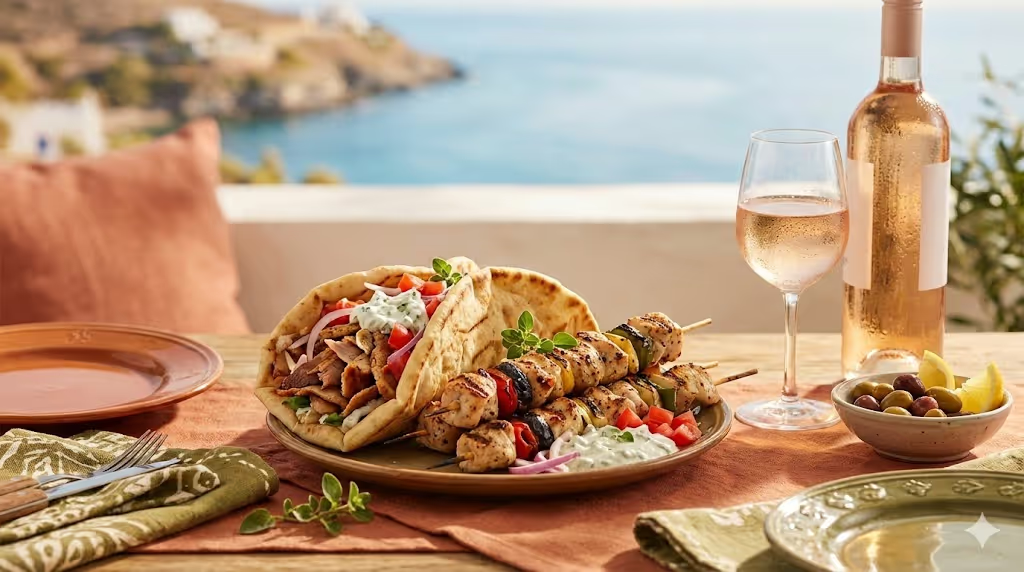

The best wine with gyros depends on what's inside the pita. For a pork or chicken gyro with plenty of tzatziki, pour a crisp dry white like Assyrtiko or Sauvignon Blanc, or a dry rosé. For a beef and lamb gyro from an American gyro shop, go for a fresh red with some grip, like Agiorgitiko from Nemea, Côtes du Rhône, or Xinomavro if you like a firmer wine. And if you're feeding a table with a bit of everything, a dry sparkling wine such as Cava handles all of it.
That's the short version, and the rest of this page goes filling by filling, because a lemony chicken souvlaki and a garlicky lamb gyro piled with raw onion really do want different bottles, and we'd rather you open the right one than a vaguely safe one.
What wine goes with gyros?
Match the wine to the meat first and the sauce second, then use the grid below when you're ordering for a group. It's the one place on this page where a table reads better than paragraphs, since you'll probably skim it at the counter.
| What's in the pita | First pick | Easy backup | Greek bottle to try |
|---|---|---|---|
| Pork gyro, fries, tomato, onion | Light, juicy red or dry rosé | Pinot Noir or Barbera | Agiorgitiko (Nemea) |
| Beef and lamb cone, heavy tzatziki | Medium red with fresh acidity | Côtes du Rhône or Syrah | Xinomavro (Naoussa) |
| Chicken gyro or chicken souvlaki with lemon | Crisp, dry white | Sauvignon Blanc or Albariño | Assyrtiko (Santorini) |
| Lots of tzatziki and garlic sauce | Dry rosé or sparkling | Provence rosé or Cava | Moschofilero (Mantinia) |
| Mixed platter with fries and dips | Dry sparkling wine | Cava or Prosecco | Dry Greek rosé |
The thread running through every row is freshness. Gyros come loaded with lemon, raw onion, salty fries, and a cold yogurt sauce, and a wine without enough acidity tastes flat and a little sweet next to all that. A big oaky red or a buttery Chardonnay is the bottle most likely to disappoint here, so if you remember one thing from this page, make it "fresh beats heavy".
Which wine goes with a pork gyro, the way Greece makes it?
A pork gyro wants a light, juicy red such as Agiorgitiko, Pinot Noir, or Barbera, or a dry rosé if it's hot outside. That's the classic gyro: in Greece and Cyprus gyros is traditionally made with pork, and it's customarily rolled up in pita with tomato, onion, fried potatoes, and often tzatziki, according to Wikipedia's entry on gyros.
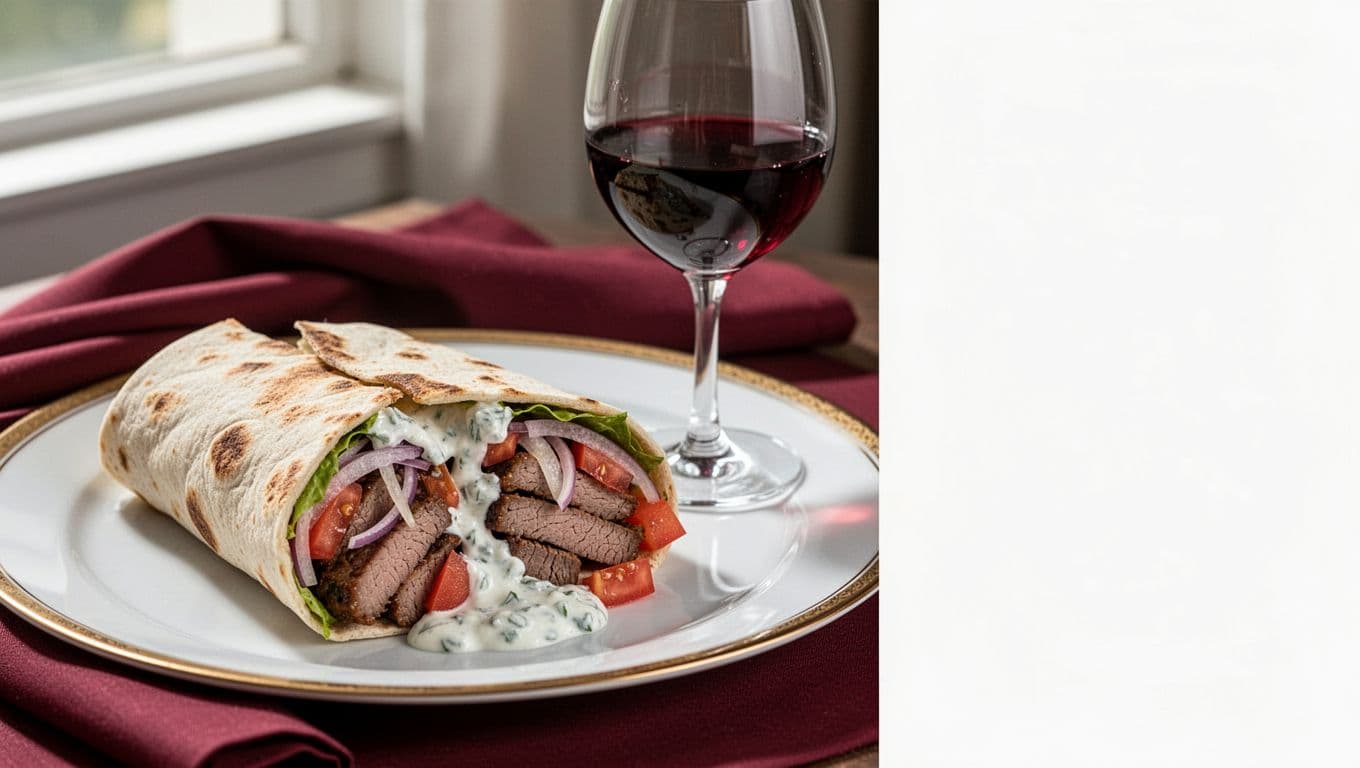
Pork shaved off the spit is rich and crisp at the edges, but it isn't as heavy as beef, so a big tannic red tramples it. Agiorgitiko is our favorite match because it's the obvious Greek answer and it tastes the part, with ripe plum and spice. As of 2012 it was the most widely planted red grape in Greece, and it's the signature of the Nemea region, per Wikipedia's Agiorgitiko page, which also notes it can range from soft to quite tannic depending on how it's made. For gyros, pick a younger, fruit-forward bottle over an oak-aged reserve.
If the Greek shelf at your store is thin, Pinot Noir does the same job with a little more red-fruit lift, and it's easy to find at any price point. Barbera is the pick when you want a red that tastes bright and juicy without much tannin, which helps when the gyro is loaded with raw onion. We cover what to expect from that grape in our Barbera taste guide.
A dry rosé is the other honest answer for pork, especially on a summer night or when the fries are doing half the work. It brings the red-fruit flavor of a light red with the chill and snap of a white, which suits a greasy, salty wrap better than most people expect.
What wine goes with a beef and lamb gyro?
A beef and lamb gyro calls for a medium-bodied red with fresh acidity, like a Côtes du Rhône, a Syrah that isn't too oaky, or a Greek Xinomavro. This is the gyro most Americans actually eat, since typical American mass-produced gyros are made with finely ground beef mixed with lamb, according to the same Wikipedia gyros entry, so if you're ordering from a corner gyro shop, this section is probably yours.
That ground cone is fattier and more strongly spiced than sliced pork, so the wine can carry more structure. Xinomavro is the adventurous pick, since it's the main red grape of Naoussa in northern Greece, and its high acidity and tannin are why it often gets compared to Nebbiolo, per Wikipedia's Xinomavro page. That combination cuts through lamb fat nicely, but it's a firmer, more savory red than most people expect, so if you prefer soft and fruity, start with a Côtes du Rhône instead.
Syrah is a fair middle ground, with dark fruit and a peppery edge that sits well with the cumin and oregano that often season the meat. Just steer toward the fresher, less oaky styles rather than a jammy, high-alcohol bottle that will fight the cold tzatziki. If lamb shows up at your table outside a pita too, our guide to what wine goes with lamb covers roasts, chops, and stews.
One honest caveat about the heavy red many people reach for with lamb: a big Cabernet Sauvignon or a ripe Zinfandel usually feels like too much here. The pita, the fries, and the yogurt sauce make a gyro a lighter, fresher meal than a lamb chop, and the wine should follow the whole wrap rather than just the meat.
What wine goes with chicken gyros and chicken souvlaki?
Chicken gyros and chicken souvlaki pair best with a crisp dry white, and Assyrtiko is the one to try first. Souvlaki is small pieces of meat grilled on a skewer, typically served with lemon, sliced tomato, onion, and fried potatoes, and in Greece the usual meat is pork, per Wikipedia's souvlaki entry. In the US, though, chicken souvlaki is everywhere, and the lemon is what decides the wine.
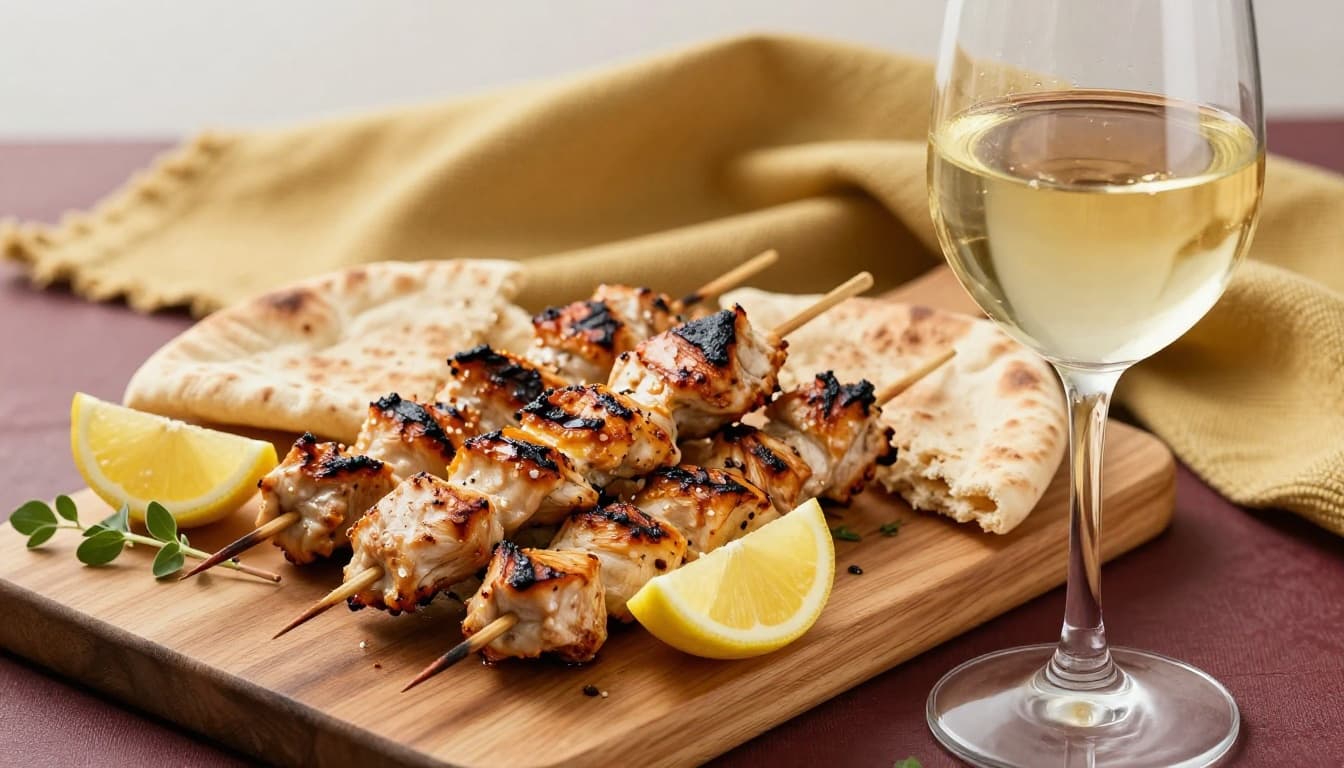
A squeeze of lemon over grilled chicken needs a wine that's at least as tart, or the wine tastes dull by comparison. Assyrtiko from Santorini is built for exactly that: it's a white grape native to the island that holds onto its acidity even when very ripe, per Wikipedia's Assyrtiko page, and good examples taste of citrus with a stony, slightly salty edge.
If the store has no Greek whites at all, Sauvignon Blanc is the easiest swap, with the same zippy citrus feel and a green, herbal note that likes oregano. Albariño is a softer option with a little more peach and a touch of salinity. Dry Riesling works too, and it's the best of the four if someone has added hot sauce. For lighter, more fragrant Greek whites, try Moschofilero, an aromatic grape with good acidity that's required for the Mantinia PDO wines, or Malagousia, which was nearly extinct before being rediscovered in the 1970s and is now known for soft, highly aromatic wines.
How does tzatziki change the wine pairing?
Tzatziki pushes the pairing toward dry rosé, sparkling wine, and crisp whites, because a cold, tangy, garlicky yogurt sauce makes heavy reds feel thick. The sauce is strained yogurt with cucumber, garlic, olive oil, and often vinegar, lemon, and herbs like dill or mint, per Wikipedia's tzatziki entry, so you're pairing with something that's sour, creamy, and pungent all at once.
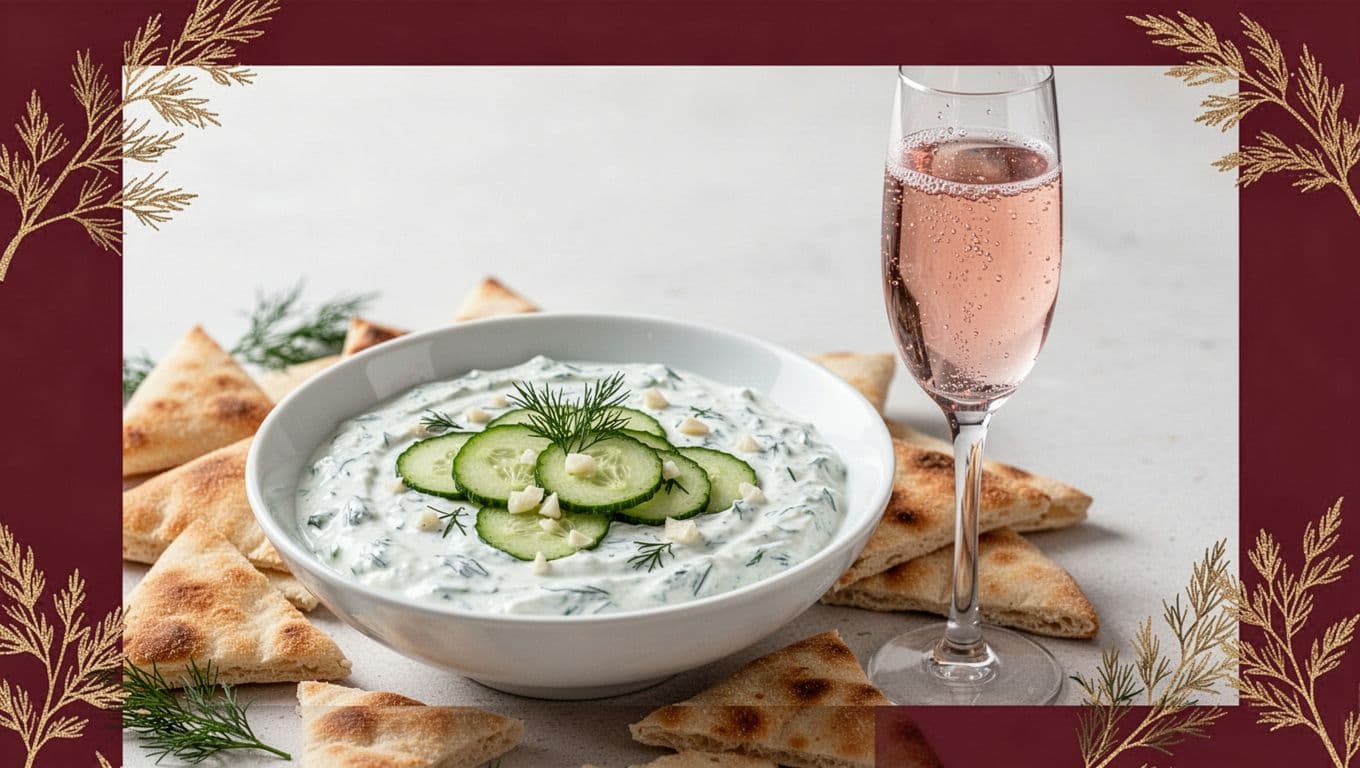
Bubbles are the cheat code when the wrap is dripping with sauce. A dry Cava or Prosecco scrubs the yogurt and the fry oil off your palate between bites, and the cold temperature matches the sauce instead of clashing with it. A pale, dry rosé from Provence does something similar with a bit more fruit, and it's the bottle we'd bring if we didn't know who ordered what.
Retsina deserves a mention because it's the most Greek answer on this page and nobody else's list seems to take it seriously. It's a white wine flavored with Aleppo pine resin, a flavor said to come from the old practice of sealing amphorae with resin, per Wikipedia's Retsina entry. The piney taste is divisive in a glass on its own, but with garlic, dill, and grilled meat at a taverna-style table it makes a lot of sense, so try a chilled bottle if you're curious.
If you like heat, such as spicy feta dip or hot sauce on the gyro, don't force a heavy red onto the plate. Sparkling rosé or a slightly off-dry Riesling feels soothing instead. The logic is similar to our wine hot pot pairing guide, where spice and rich sauces push you toward refreshing wines.
Should you drink red or white wine with gyros?
Both work, and the deciding factor is how much lemon and tzatziki is on the plate rather than the color of the wine. Lots of lemon or sauce points to white, rosé, or sparkling, while a meat-forward beef and lamb gyro with only a little sauce points to a fresh red. If the group can't agree, a dry rosé sits in the middle and rarely lets anyone down.
Whatever color you pick, serve it a little cooler than you think. Gyros are hot, salty street food, and a warm red tastes heavy and boozy next to them. VinePair's 20-minute rule is the easy fix: take white wine out of the fridge 20 minutes before drinking, and put red wine in the fridge for 20 minutes before opening it. The same piece puts proper red serving temperature at 60 to 65 degrees Fahrenheit, or 55 to 60 for a light, chillable red, which is exactly the kind of red that suits a pork gyro.
How do you order or shop for a gyro wine without overthinking it?
At a Greek restaurant, check the Greek section of the list first, because that's where Assyrtiko, Agiorgitiko, and Moschofilero live, and they're often fairly priced next to the better-known French and Italian names. If you're unsure, ask the server for "a crisp, dry white or a fresh red that isn't too oaky", which is a request any good wine list can answer.
At the store, use the same filter. Look for words like crisp, dry, fresh, or light on the shelf tag, and pass on anything described as buttery, jammy, or oaky. Since most wine shops don't stock a deep Greek range, the reliable fallbacks are a Sauvignon Blanc, a Provence-style rosé, a Pinot Noir, and a dry Cava, and any of those four will make a good gyro night.
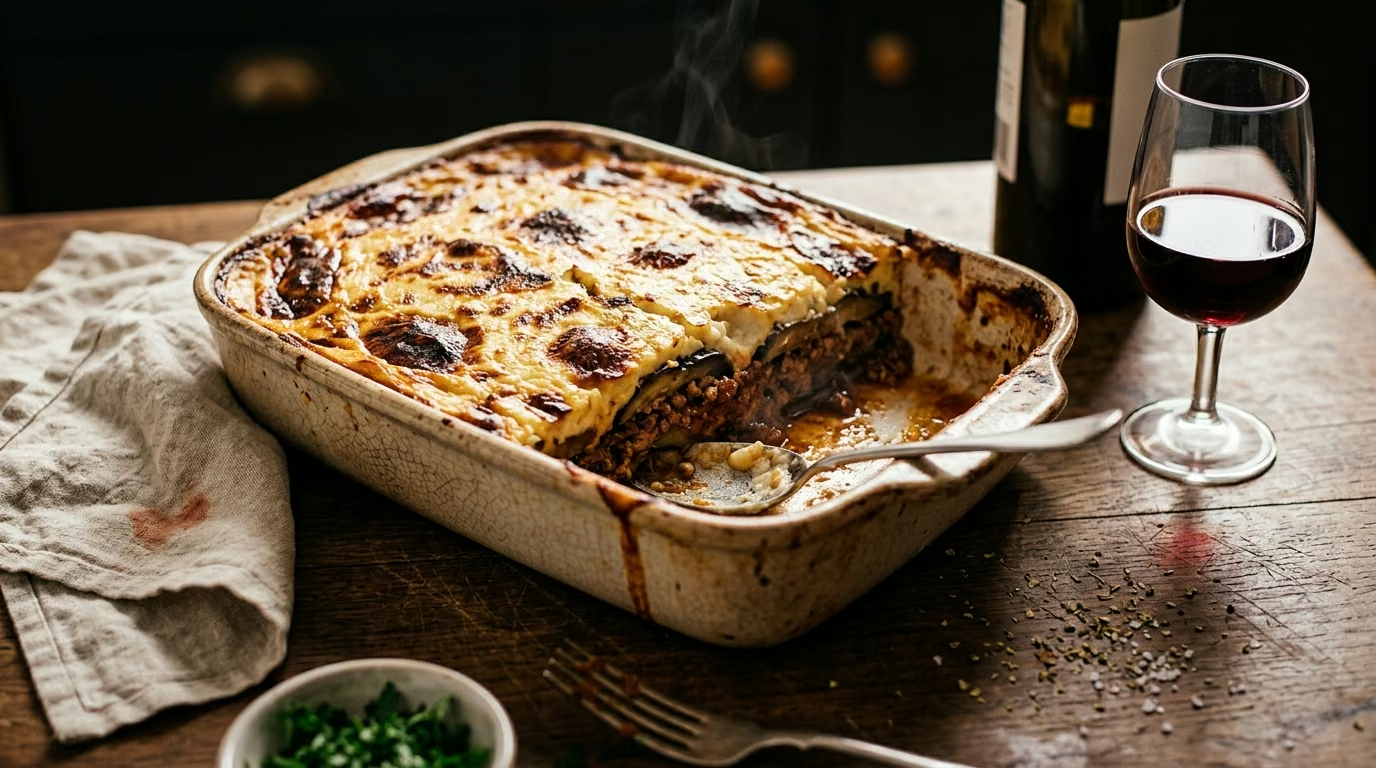
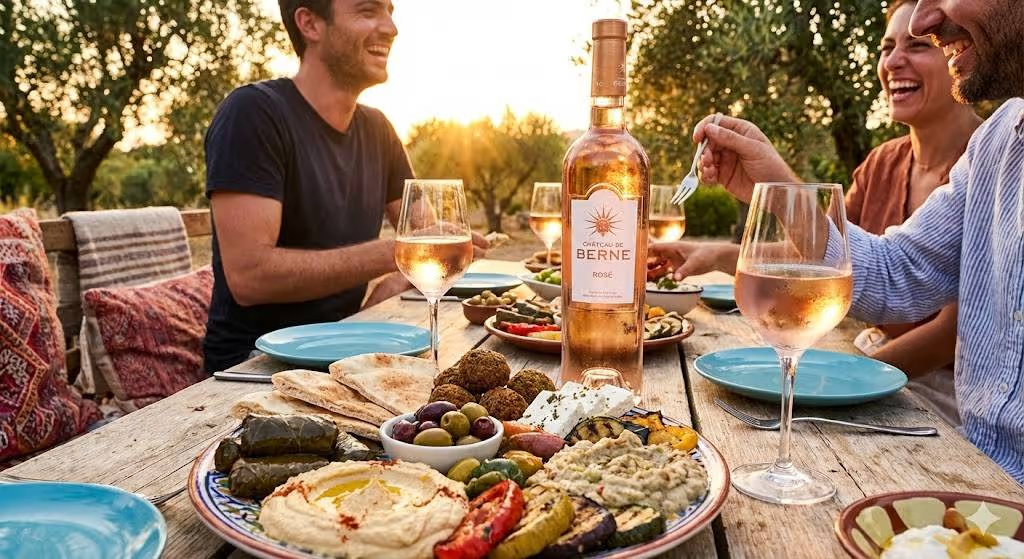
If gyros are part of a bigger spread, the same freshness rule carries over to the other dishes. Our guide to wine for a Mediterranean mezze night covers hummus, falafel, and garlicky dips, and for richer baked dishes from the same kitchen, see our picks for moussaka. When the meal leans tomato and cheese instead, the best wine for Italian food uses the same simple logic of matching the strongest flavor rather than the fanciest bottle, and for a casual party built around snacks, our appetizers for a wine tasting guide helps you plan quantities.
The general advice on this page gets you a good bottle, but whether you'll love the earthy Xinomavro or the juicy Agiorgitiko is about your own taste. That's what we're building Sommy for: when it launches, you'll be able to snap a photo of your plate and get wine picks for that dish, matched to what you like. Join the Sommy waitlist and we'll email you the day it goes live.
Frequently asked questions about wine with gyros
What wine goes with gyros?
A crisp dry white like Assyrtiko or Sauvignon Blanc goes with chicken and pork gyros, especially with lots of tzatziki and lemon. A fresh, medium-bodied red like Agiorgitiko, Côtes du Rhône, or Xinomavro goes with beef and lamb gyros. A dry rosé or a dry sparkling wine like Cava works with almost any gyro.
What wine goes well with chicken souvlaki?
Assyrtiko is the best match for chicken souvlaki, because its sharp acidity keeps up with the lemon on the skewers. Sauvignon Blanc, Albariño, and dry Riesling are easy alternatives, and a dry rosé works if you'd rather have something pink.
What wine goes with Greek lamb?
Greek lamb pairs well with Xinomavro, whose high acidity and firm tannin cut through the fat, or with a softer Agiorgitiko from Nemea. Outside Greek wines, a Côtes du Rhône or a fresh Syrah is a reliable choice for lamb gyros and grilled lamb.
What should you drink with Greek food?
Greek food is full of lemon, olive oil, garlic, and yogurt, so fresh, high-acid wines work best. Greek whites like Assyrtiko and Moschofilero, a dry rosé, and light Greek reds like Agiorgitiko cover most of a Greek menu, and dry sparkling wine is the safest single bottle for a mixed table.
Can you drink red wine with tzatziki?
You can, as long as the red is light and fresh, like Pinot Noir or a young Agiorgitiko served slightly chilled. Big oaky reds tend to feel heavy against the cold, tangy yogurt, which is why rosé and sparkling wine are the more comfortable match for a sauce-heavy gyro.
What is the 20-minute wine rule?
The 20-minute rule says to take white wine out of the fridge 20 minutes before drinking and to put red wine in the fridge for 20 minutes before opening it. It gets both closer to their ideal serving temperature, which makes a red taste fresher next to hot, salty food like gyros.