
You rate a wine, then forget about it. A few months later, someone opens the same bottle and you think: huh, this is better than I remembered. Or worse. Or just... different.
Your palate is not a fixed thing. It shifts with every bottle you taste, every meal you eat, every season that passes. PalateDrift is Sommy's way of showing you exactly how.
TL;DR
• PalateDrift tracks how your wine taste preferences have shifted over a rolling 6-month window
• It reveals movement in body, tannins, acidity, oak, and sweetness, plus which regions and grapes you've been gravitating toward
• You unlock PalateDrift after rating 10 wines in Sommy
• Palate development is a journey, not a destination. PalateDrift helps you see where you're headed
What Does PalateDrift Actually Show You?
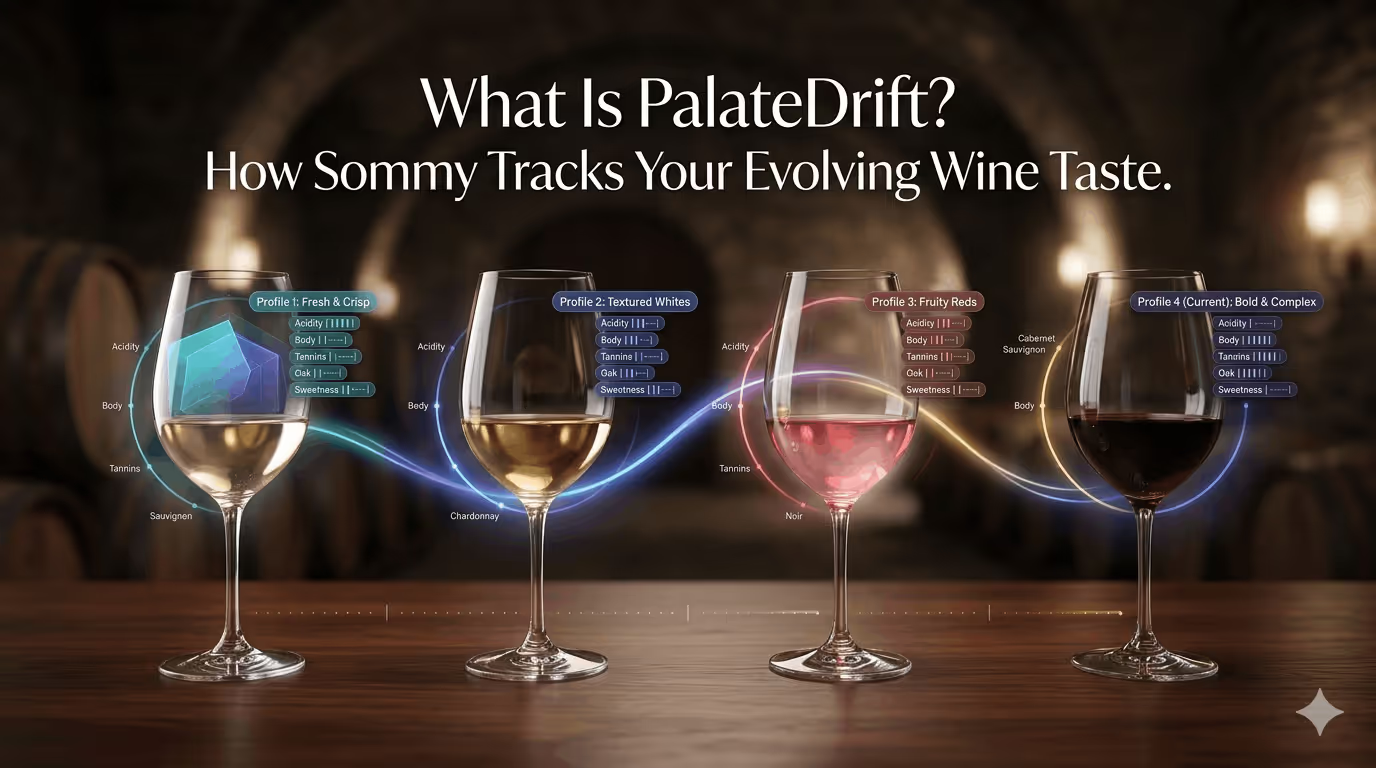
PalateDrift surfaces six months of your rating history and maps the direction your preferences are moving. It's not a snapshot of your taste right now. It's the story of how your taste has been changing.
Specifically, it tracks drift across five core taste dimensions: body, tannins, acidity, oak, and sweetness. You might see that you've been consistently rating higher-acid whites more favorably over the last few months, a sign your palate is opening up to the brighter, food-friendly style that wines like Vermentino or Grüner Veltliner offer. Or you might notice your scores for highly tannic reds have softened, suggesting your palate has shifted toward something more approachable, like a Pinot Noir from Burgundy or a Barbera d'Asti.
PalateDrift also shows regional and varietal drift: which wine-producing regions have been appearing more in your favorites, and which grapes keep showing up. These patterns are often invisible until you see them laid out. You might not have consciously noticed you'd been reaching for Rhône whites, but PalateDrift will.
How Does PalateDrift Work?
Every wine you rate in Sommy contributes to your Palate Profile. PalateDrift takes that data and compares your most recent 6 months of ratings against your earlier preferences. Where there's meaningful movement in a direction (say, a consistent shift toward lower-alcohol, high-acid styles), Sommy surfaces it as a drift signal.
The six-month rolling window matters. Palate shifts rarely happen overnight. A few months of data smooths out the outliers (that one bold Amarone you tried at a wedding doesn't derail the picture) and reveals genuine, sustained change. When a trend holds across a rolling window, it reflects something real about how your tastes are developing.
You need to rate at least 10 wines before PalateDrift unlocks. That's the minimum for the patterns to be meaningful. With fewer data points, any apparent trend is likely noise.
Why Does a Wine Palate Change?
Your palate changes because you're drinking more intentionally. Every wine you try teaches you something, even the ones you don't love. You're building context.
Early in most people's wine journey, the preference is often for fruit-forward, lower-acid, lower-tannin wines. They're approachable. They require no calibration. But as you rate more wines and compare across styles, your sense of contrast sharpens. You start noticing when a wine has energy, when it feels flat, when the tannins are grippy versus silky. That noticing is your palate developing.
Some shifts are seasonal. In summer, crisp whites and lighter reds feel right. In winter, something with more body and warmth tends to land better. PalateDrift can pick these up too.
Some shifts are education-driven. If you've been reading more about wine acidity or asked Sommy to explain what tannins actually feel like, that new vocabulary often shows up as a drift signal. You're not just tasting differently. You're understanding what you're tasting.
What Drift Looks Like in Practice
Here are a few real drift patterns PalateDrift might surface:
The acid awakening. You started as a Chardonnay drinker (rich, buttery, oaked). Six months later, your scores have consistently favored Picpoul de Pinet, Albarino, and Chablis. PalateDrift shows a clear drift toward high-acidity whites. This is one of the most common shifts. It happens when people start pairing wine with food more deliberately and discover that acid is what makes a wine work at the table.
The tannin softening. Heavy Cabernet Sauvignon was your thing. Recently, your highest-rated reds have been more medium-bodied: Grenache blends, lighter Pinot Noir, Beaujolais Villages. PalateDrift surfaces a drift away from high tannin and toward softness and freshness. This often reflects a palate maturing past the "bigger is better" phase.
The regional pull. You hadn't noticed, but you've rated six wines from Burgundy and three from the Willamette Valley in the last four months. PalateDrift shows a regional drift toward cool-climate Pinot Noir territory. That's useful to know. It tells you where to focus your exploration next.
How Is PalateDrift Different From My Palate Profile?
Your Palate Profile is a live picture of where your preferences sit right now. It's the foundation Sommy uses to make recommendations: your current blend of preferred body, acidity, tannin, oak, and sweetness levels, along with your favorite grapes and regions.
PalateDrift is the motion. It's the vector, not the position. Two people can have identical Palate Profiles today but very different PalateDrift readings. One person's preferences have been stable for months, and the other's have been shifting rapidly toward something new.
Knowing your direction is as useful as knowing your current location. If PalateDrift shows you've been drifting toward higher-acid wines, Sommy can lean into that trend in its recommendations, surfacing wines that feel like natural next steps rather than just more of what you've already rated.
Frequently Asked Questions
How many wines do I need to rate before PalateDrift unlocks?
Ten wines. That's the minimum for the drift analysis to be meaningful. With fewer data points, short-term variation dominates and the patterns look random. Once you've rated 10 wines, PalateDrift activates and continues updating as you rate more.
Does PalateDrift reset if I rate a lot of wines in a short period?
No. The six-month rolling window means recent activity carries more weight, but it doesn't wipe out earlier data. If you go on a tasting binge and rate 20 wines in a week, those ratings will influence your drift, but so will everything you rated in the months before. The window smooths extreme short-term shifts.
Can PalateDrift tell me what kind of wine I'll like next?
It contributes to that picture. PalateDrift is one of several signals Sommy uses when making recommendations. If your drift shows a consistent move toward lighter-bodied, higher-acid styles, Sommy will factor that trajectory into what it suggests. Think of it as Sommy noticing where you're headed and meeting you there.
What if my drift doesn't show much movement?
A stable PalateDrift is a perfectly valid reading. It means your preferences are settled and consistent. You know what you like and you've been reliably finding it. That's not a problem. Sommy uses your stable Palate Profile to keep recommending well.
Can I see PalateDrift for specific taste dimensions separately?
Yes. PalateDrift surfaces drift by individual dimension, so you can see whether your acidity preferences are shifting independently of your tannin preferences. Each dimension tells a slightly different story. Someone might have stable preferences for body and oak while drifting steadily toward higher acidity over the same period.
Your Palate Has a Direction. Now You Can See It.
Palate development isn't something that happens only to serious wine people. It happens to anyone who drinks wine with a little curiosity. You don't need formal training or a wine education. You just need to keep tasting, keep noticing, and let Sommy track the rest.
PalateDrift shows you that the wines you love six months from now might be different from the wines you love today, and that's worth knowing. If you want to go deeper on understanding what your drift is actually measuring, the posts on wine tannins and how to train your AI wine palate are good starting points.
Rate 10 wines in Sommy to unlock PalateDrift and see where your taste has been going.