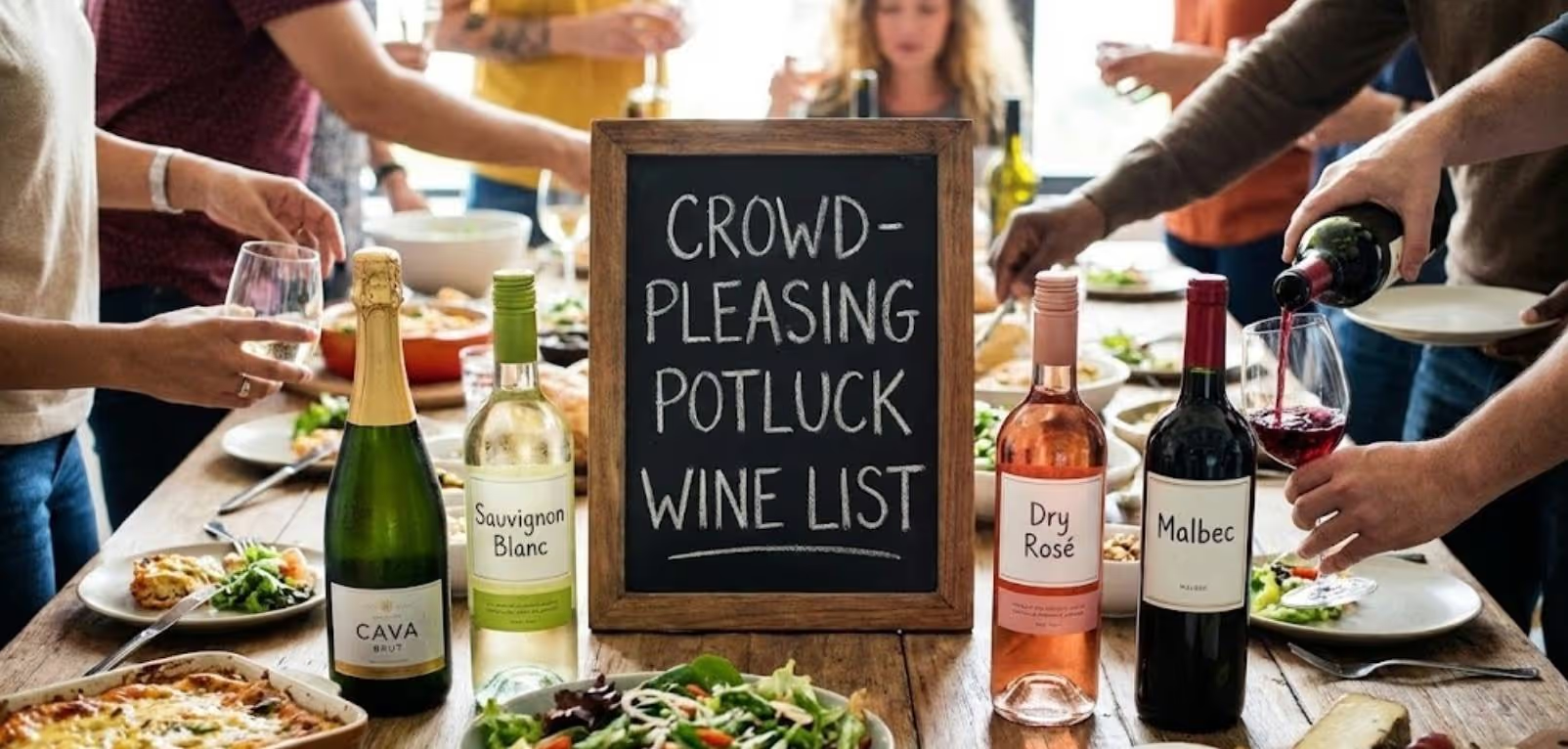

The fastest way to build a potluck wine list is to stop hunting for “the perfect bottle” and build a small set that covers the whole table. In practice, that means 5 bottles that handle spicy, salty, creamy, grilled, and sweet foods, plus a simple budget rule.
Sommy makes this feel calm because you don’t need wine knowledge. You just tell it what people are eating and what you like, then it gives clear wine recommendations you can actually buy.
This is everyday wine advice for real life, not a lecture.
Why potlucks make wine feel harder than it is
A potluck is chaos in a good way. Tacos next to potato salad, wings next to fruit, and someone’s “famous” dip with a mystery ingredient.
Classic wine pairing rules don’t help much because there isn’t one main dish. The win is coverage, not perfection. Think of your wine list like a well-packed weekend bag, you want a few pieces that work with everything.
The 20-minute method (the only plan you need)
If you remember nothing else, remember this: choose for the table, then adjust for your people.
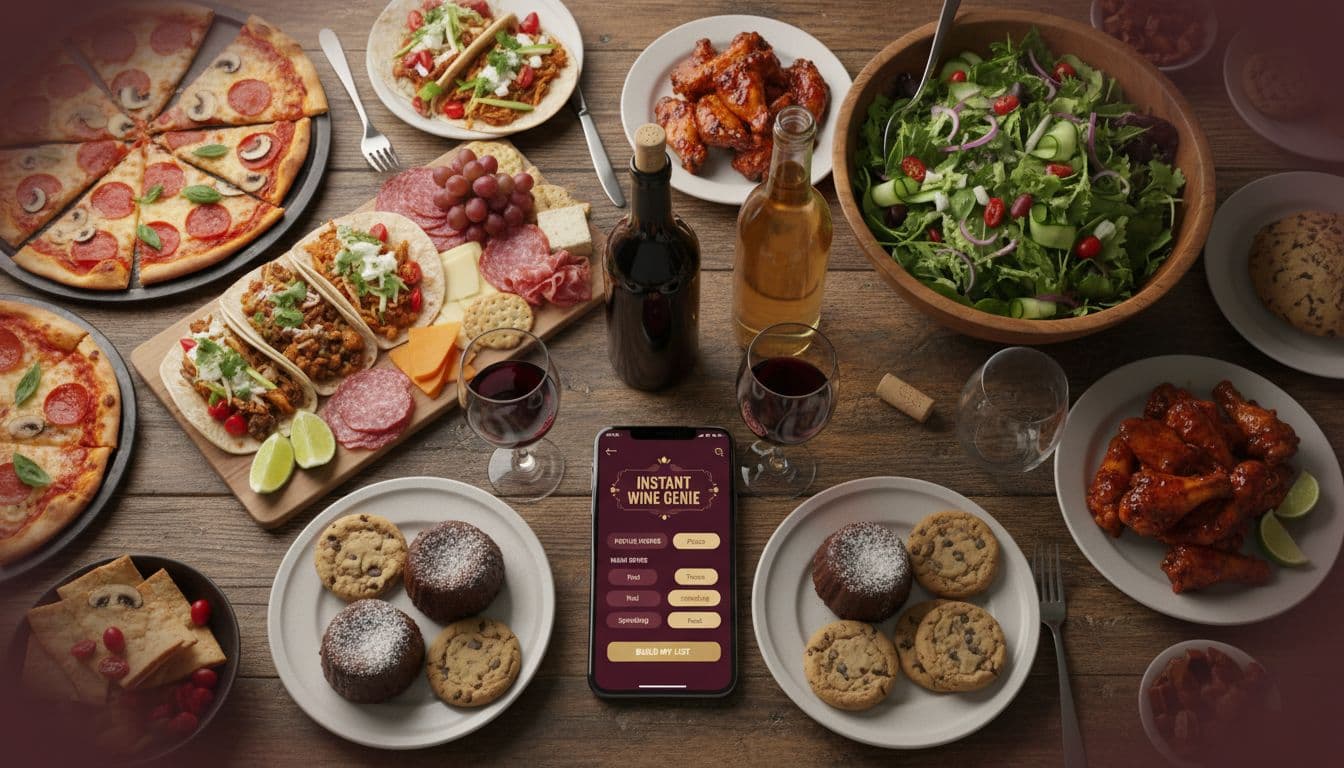
Here’s the quick flow Sommy supports, and you can do it even if you want a wine app for beginners:
- List the foods in plain words (wings, pizza, tacos, salad, dessert).
- Set the guardrails (budget, how many guests, how many bottles).
- Ask for wine recommendations that cover the biggest flavors, then swap based on taste (crisp, smooth, not too sweet, etc.).
That’s it. This is how to choose wine without turning your brain into a spreadsheet.
If you want extra context on what tends to work at potlucks, this roundup of go-to wines for potluck dinners is a helpful cross-check.
The 5-bottle crowd-pleaser framework (covers almost everything)
A good potluck wine list isn’t long. It’s balanced. The goal is to have at least one “safe yes” for each kind of eater.
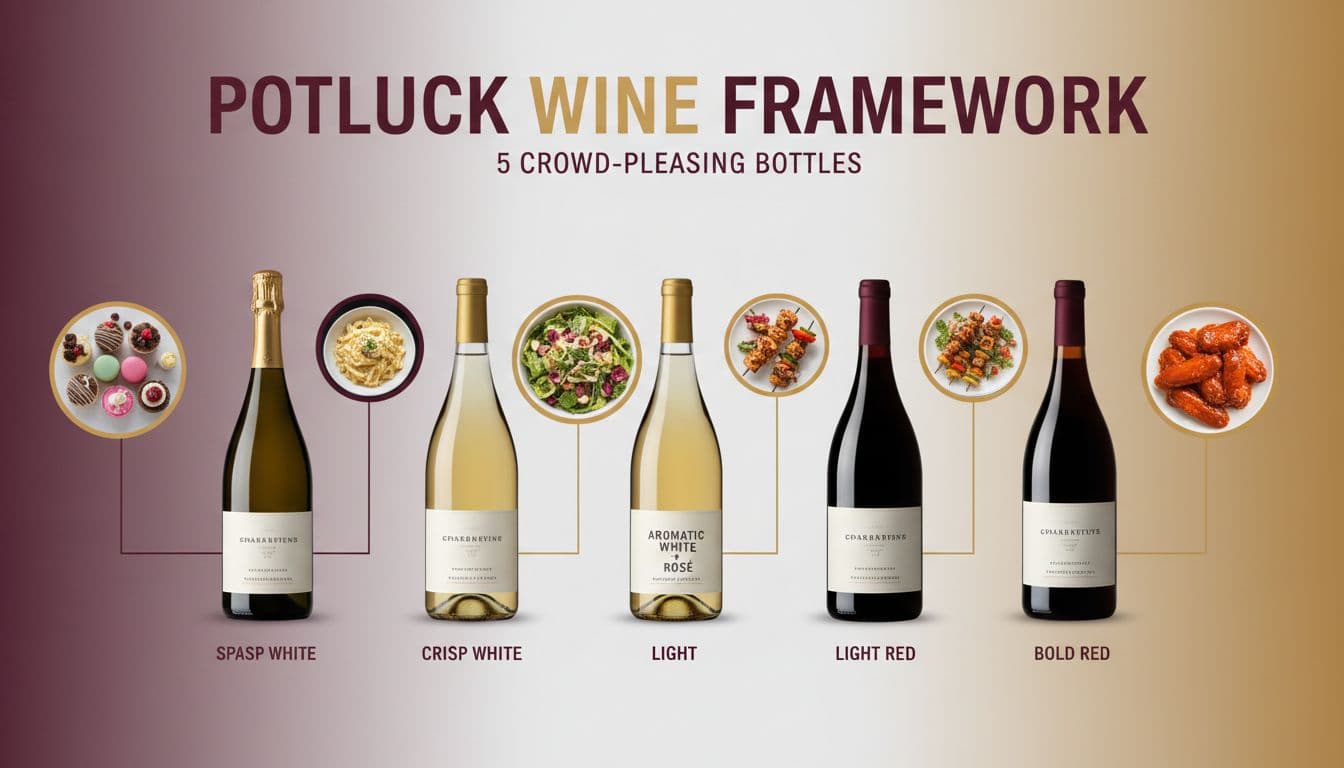
Use this as your practical wine pairing guide:
| Slot | What it’s for | What to look for on the shelf |
|---|---|---|
| Sparkling | Chips, dip, salty snacks, “arrive-and-nibble” | Brut sparkling wine (dry) |
| Crisp White | Creamy pasta, potato salad, roast chicken | “Crisp” or “dry” white |
| Rosé or Aromatic White | Spicy food, salads, mixed plates | Dry rosé or a fragrant white |
| Light Red | Pizza, charcuterie, burgers, roasted veg | “Light-bodied” red |
| Bold Red | Wings, BBQ, grilled meats, rich sauces | “Full-bodied” red |
Sommy can translate this into personalized wine recommendations based on what you say you like. If you usually want “smooth, not too heavy,” it won’t push you toward a bottle that feels like chewing a bookshelf.
This is a modern wine guide approach: fewer choices, better coverage, less stress.
Build it with Sommy (3 steps, under 20 minutes)
A potluck plan works best when it’s fast enough to do on a lunch break. Sommy functions like an AI wine assistant that focuses on the decision, not the trivia.
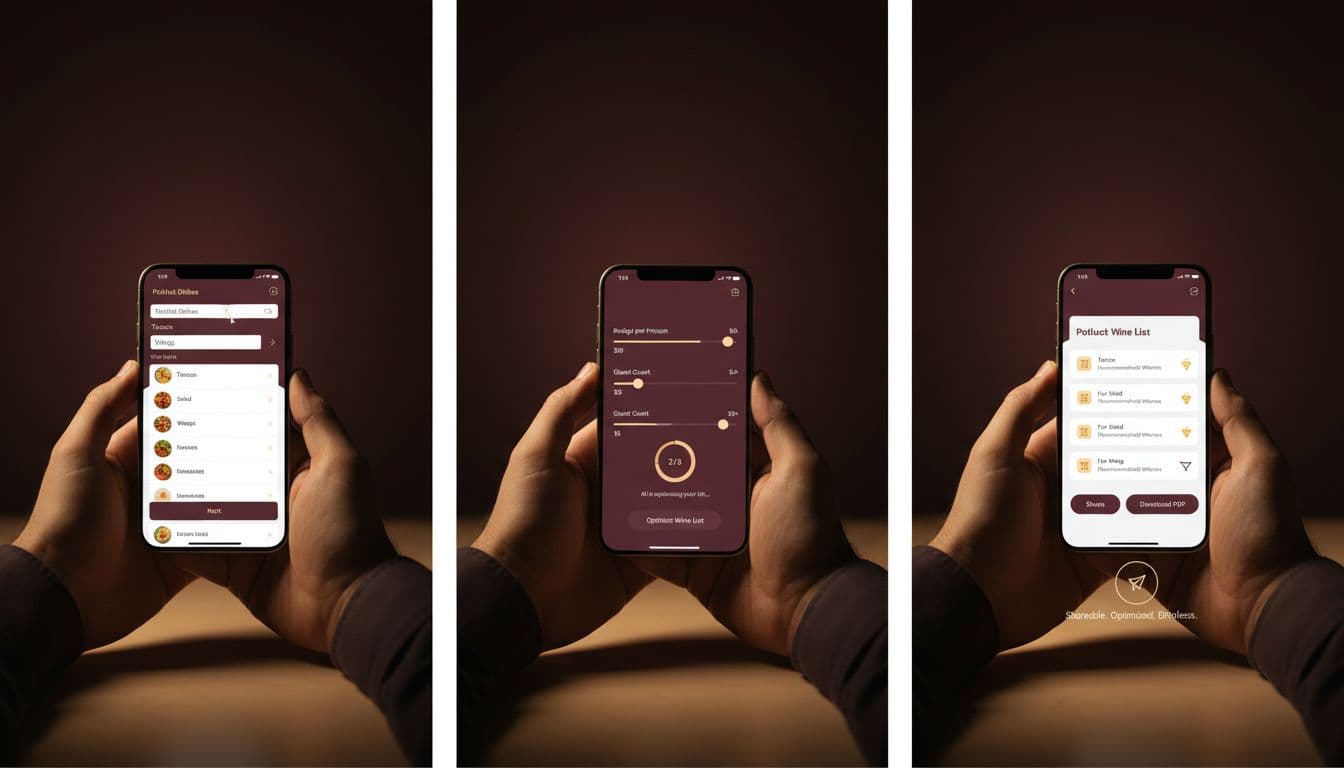
A quick three-step way to turn foods and preferences into a shareable list, created with AI.
Step 1: Describe the potluck like a friend would
“Spicy wings, tacos, pizza, veggie tray, brownies.” No fancy words needed. This is wine explained simply, and it should feel like texting.
Step 2: Add your guardrails
Budget per bottle, how many people, and whether you need one bottle or several. That’s how you get smart wine recommendations that match reality, not fantasy.
Step 3: Swap by taste, not by status
If the list includes something you know your group won’t like, say so. “No sweet wine,” “nothing too dry,” “I want something fruity but not sugary.” You’ll get smart wine picks that fit your people.
This is also where Sommy shines for group chats. You can keep the plan clear, then buy without second-guessing.
Grocery store wine picks without the panic spiral
The wine aisle is bright, loud, and full of confident labels. Your job is not to decode it all. Your job is to leave with bottles that work.
These simple wine tips keep you moving:
Use price as a safety rail: For most potlucks, mid-shelf is fine. Don’t default to the cheapest bottle unless you know it.
Buy “dry” on purpose: If you’re unsure, dry wines are easier with food. Sweet wines can be polarizing.
Duplicate winners: If you can only bring two bottles, bring two of the same crowd-pleaser. One good choice beats two risky ones.
If you want snack-specific ideas, Food & Wine has a handy guide on pairing wines with party snacks. It’s a good reminder that salty and crunchy foods love bright, refreshing wines.
Wine tasting notes explained (so labels stop feeling like riddles)
Most people don’t hate wine. They hate feeling wrong.
Here’s wine tasting notes explained in plain language, so you can scan labels with confidence:
- “Crisp” usually means refreshing, not sweet.
- “Bright” often means a zippy, mouth-watering feel.
- “Smooth” hints at lower bite, less sharpness.
- “Jammy” means ripe, fruity, and richer.
- “Dry” means not sweet, even if it smells fruity.
This beginner-friendly wine advice saves you from overthinking. It also helps Sommy learn what you mean when you say “I like lighter reds” or “I want something fresh.”
Restaurant wine tips that also help at potlucks
Potlucks and restaurant lists create the same stress: too many options, too little time, and you don’t want to choose wrong.
Use these restaurant wine tips anywhere:
Order by food style, not by grape: “Something crisp for fried foods,” or “a lighter red for pizza and charcuterie.”
Ask for the house style: “What’s your best easy-drinking red?” That’s a strong question because it tells them what you want, not what you know.
Allrecipes also has a clear overview of wines that pair well with appetizers, which maps well to potluck tables.
A potluck wine list that feels like relief
A good potluck wine list doesn’t try to impress. It tries to make the table happier. Build coverage with five bottles, adjust for taste, and keep it simple enough that you’ll actually do it.
If you want help choosing in the moment, Sommy is built for this exact problem: clear wine recommendations, personalized wine picks, and wine app suggestions that match your budget and your food. You don’t need to study, you just need a plan that works.
Bring wine that makes people relax. That’s the whole point, and personalized wine recommendations make it easier to get there.