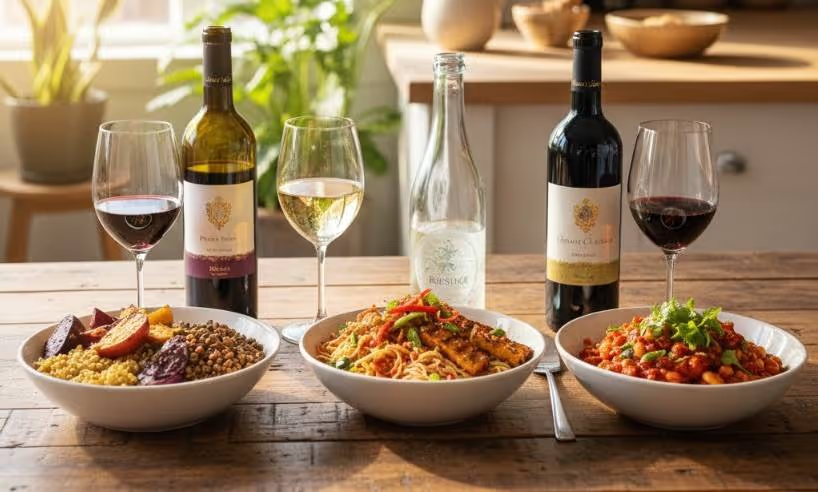

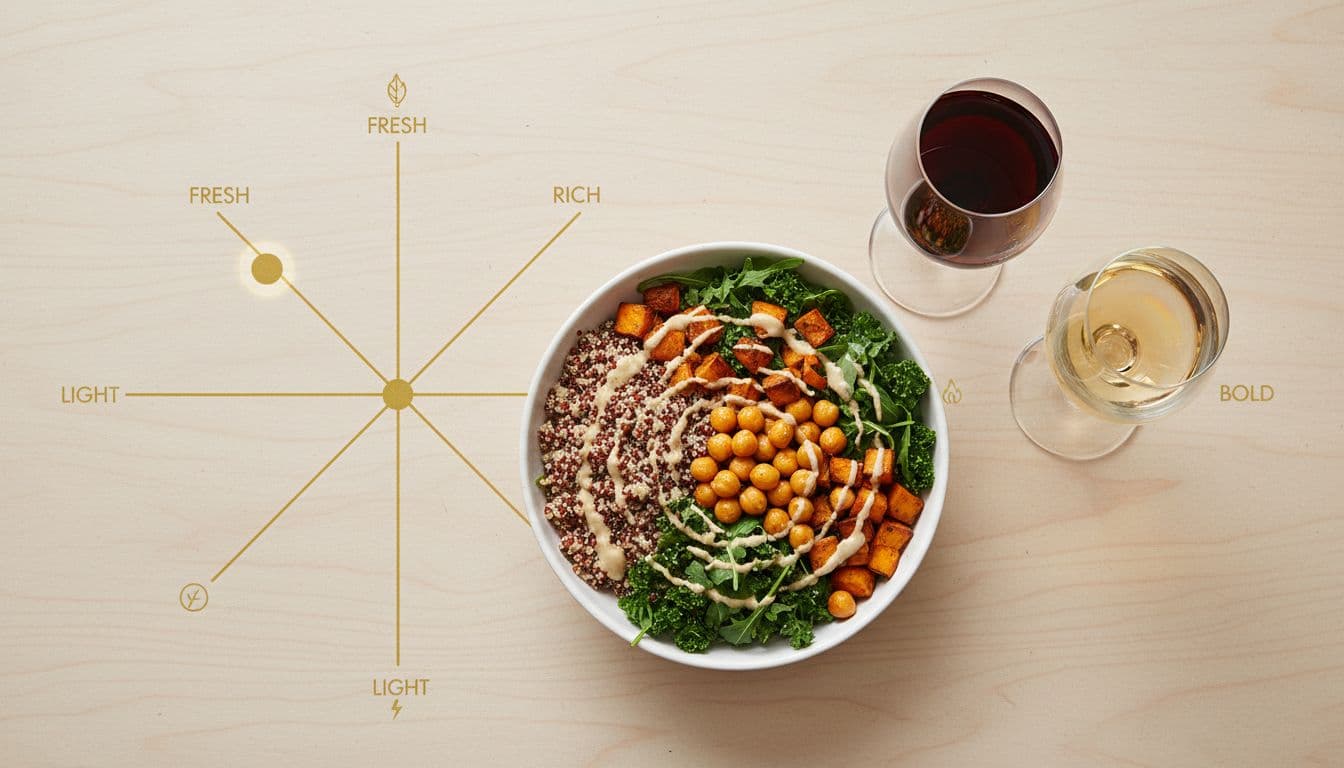
You’ve got a plant-based bowl in front of you, warm grains, roasted veg, a bright sauce, something crunchy. Then the wine question hits: what actually goes with this?
Here’s the core answer: plant-based wine pairing gets easy when you pair to the bowl’s dominant feel, not the ingredient list. Sommy’s taste map does that in plain terms, fresh vs rich, light vs bold, so you can pick calmly in a restaurant or a store.
This is a practical wine pairing guide for busy nights, not a class. Think of it as wine explained simply, with clear wine recommendations you can use right away.
Why bowls are hard to pair (and why that’s normal)
Bowls are “everything at once” food. A bite can be lemony and creamy, then smoky and sweet, then herby and salty.
That’s why most beginner wine guide advice feels shaky here. It often starts with grapes or regions, while you’re just trying to eat dinner and not overthink it.
Sommy’s taste map flips the task into something your brain already understands: how the food feels on your tongue. That’s the simplest version of how to choose wine without learning wine theory.
Sommy’s taste map in 2 minutes (fresh/rich, light/bold)
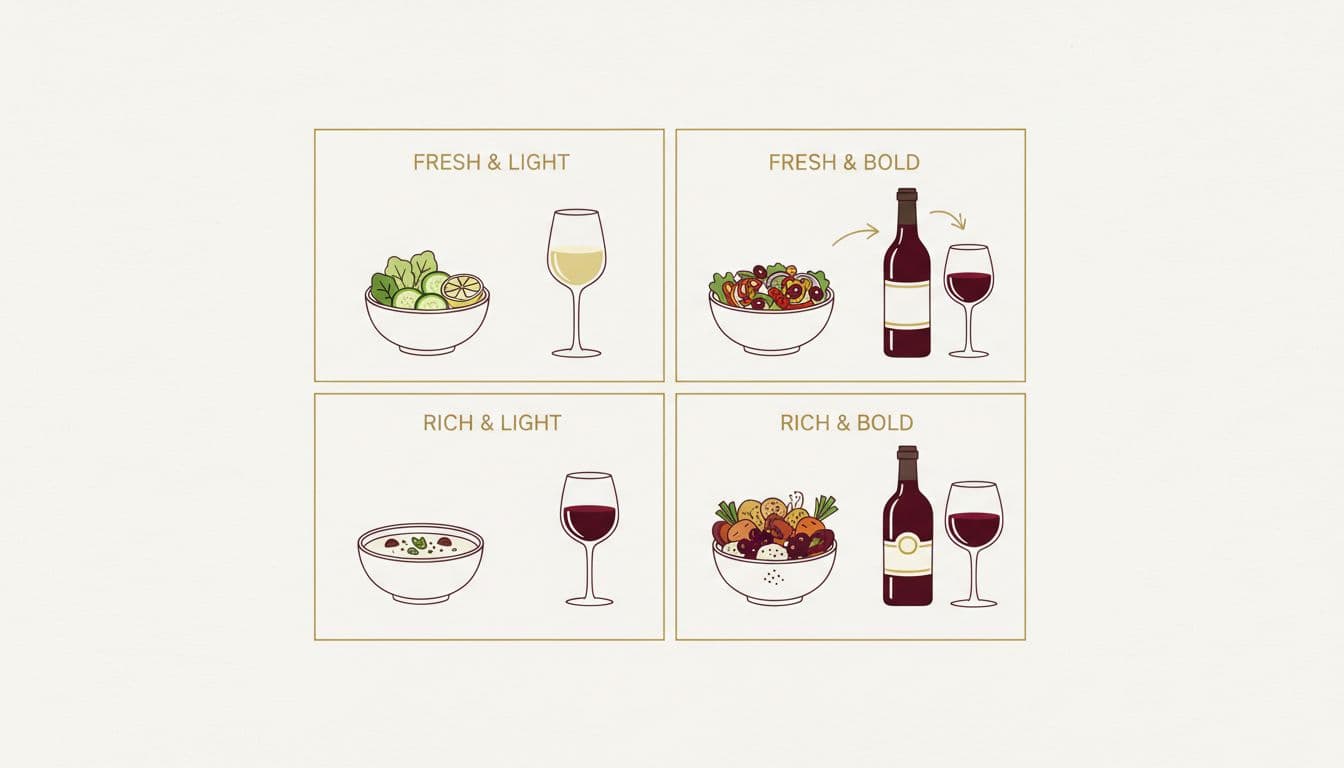
Use this quick method at home, on a menu, or in the wine aisle:
Step 1: Pick the loudest flavor in the bowl.
Usually it’s the sauce (tahini, pesto, salsa verde), the heat (chipotle), or a sour pop (citrus, pickles).
Step 2: Place it on two sliders.
- Fresh vs rich: citrus, herbs, vinegar, and raw veg feel fresh. Nuts, roasted veg, coconut, and creamy dressings feel rich.
- Light vs bold: gentle flavors feel light. Smoke, heat, char, and deep spice feel bold.
Step 3: Choose a wine “shape,” not a fancy label.
This is where Sommy turns your inputs into smart wine recommendations, so you can stop guessing.
Step 4: Adjust for one wildcard.
Heat, citrus, and umami (mushrooms, miso, soy) can swing the match. One small tweak beats starting over.
If you want extra context on pairing vegetarian and vegan dishes, Decanter’s overview is a helpful reference point: what to pair with vegetarian and vegan food.
Plant-based bowl pairings by taste map quadrant
Instead of memorizing rules, match the quadrant and pick from a few reliable styles. These are everyday wine advice patterns that hold up across cuisines.
Fresh + Light (crunchy, citrusy, herb-forward)
Think: greens, cucumber, snap peas, lemon, chimichurri, light vinaigrette.
Wine recommendations:
Go for a crisp, zippy white, like Sauvignon Blanc-style whites, dry Riesling-style whites, or light sparkling wine. The goal is refreshment, not weight.
Fresh + Bold (acid plus spice or smoke)
Think: salsa verde plus jalapeño, gochujang-lime, smoky beans with pickled onions.
Clear wine recommendations:
Choose a white with strong freshness, or a chillable light red. If the bowl has heat, avoid very high alcohol and heavy oak. This is one of the most useful simple wine tips for spicy plant-based meals.
Rich + Light (creamy, gentle, comfort bowl)
Think: tahini bowls, cashew cream, roasted cauliflower, sweet potato, soft herbs.
Personalized wine picks that usually work:
Try a rounder white (unoaked Chardonnay-style, Pinot Gris-style) or a light-bodied red with low tannin (Pinot Noir-style). These wines “hug” the bowl without turning bitter.
Rich + Bold (deep, roasted, savory, hearty)
Think: mushrooms, miso glaze, black lentils, charred veg, BBQ sauce.
Smart wine picks:
Reach for medium-bodied reds with juicy fruit and moderate tannin (Grenache-style blends often fit), or fuller-bodied whites if the sauce is creamy. If you’re unsure, ask Sommy for personalized wine recommendations based on “rich + bold, with mushrooms.”
Ingredient-to-wine cheat sheet for fast fixes
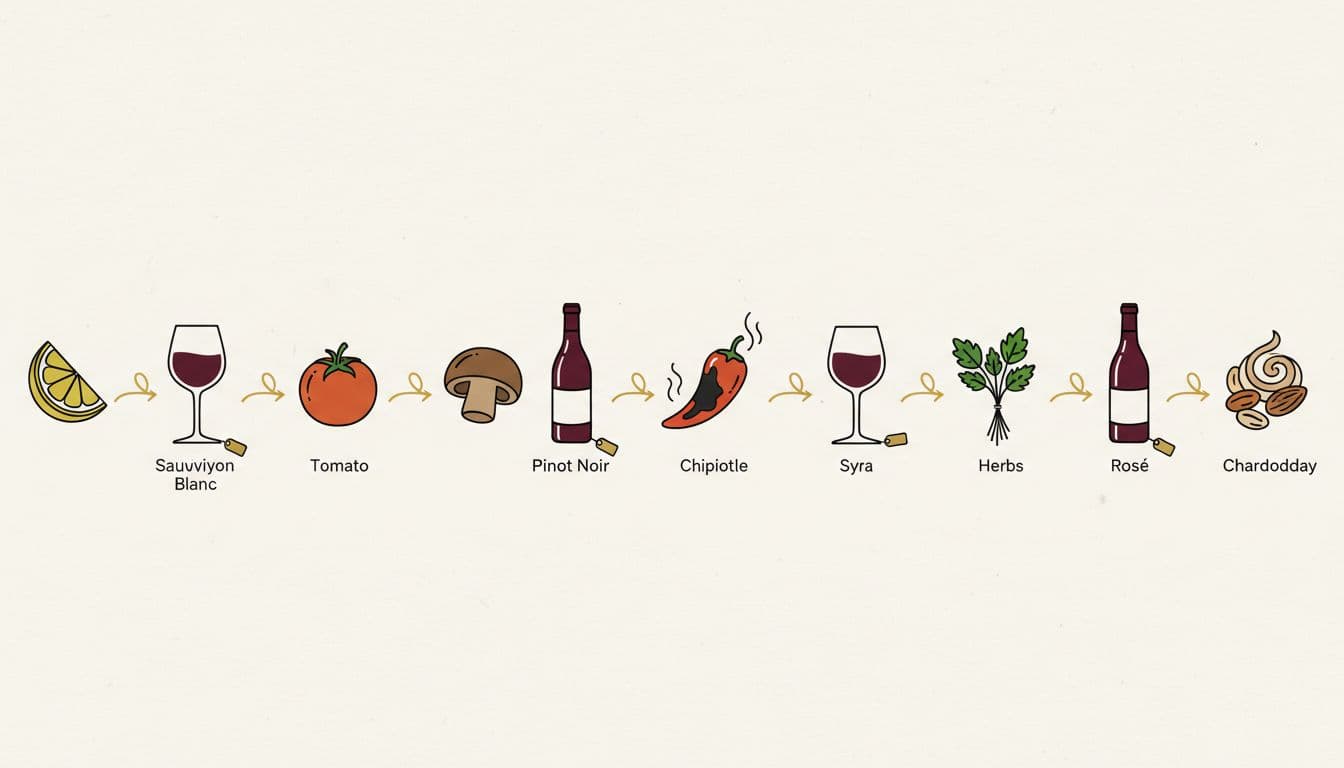
When a bowl is “all over the place,” anchor on one ingredient that controls the pairing:
- Citrus or vinegar: pick crisp whites or bubbly. They’ll echo the snap.
- Tomato or tangy sauces: go for bright reds or fresh rosé.
- Mushrooms, miso, soy: choose a red that’s not too tannic, or a fuller white. Umami can make heavy tannins taste rough.
- Smoky chipotle: choose juicy reds, or aromatic whites that cool the smoke.
- Fresh herbs: pick wines that feel fresh, not sweet.
- Nuts and creamy dressings: reach for rounder whites or soft reds.
If you want a deeper read on vegan and vegetarian matches (including notes on vegan winemaking), this guide adds good background: vegan wine pairing guide for plant-based meals.
Restaurant wine tips and grocery store wine picks (no stress)
At a restaurant, your job is not to “get it perfect.” Your job is to choose a direction and commit.
Restaurant wine tips that work with bowls:
- If the bowl is bright and green, ask for “a crisp white” or “dry bubbly.”
- If it’s smoky or mushroom-heavy, ask for “a light red” or “medium red, not too tannic.”
- If it’s spicy, say that out loud. Heat changes everything.
These are wine list tips that keep you out of the weeds. You’re ordering a style, not proving knowledge.
In a store, don’t scan 400 labels. Start with your quadrant, then pick a bottle that matches your budget and mood. That’s what grocery store wine picks should feel like, quick and calm.
For more plant-based pairing examples across dishes, this article offers extra scenarios: vegetarian and vegan wine pairing guide.
Wine tasting notes explained (so you can use them)
Tasting notes can help, as long as they don’t sound like a poem you didn’t ask for. Here’s wine tasting notes explained in plain language, a mini modern wine guide for real life.
| If the label says… | It usually means… |
|---|---|
| “Crisp” or “zesty” | Fresh, high-acid, good with citrus and herbs |
| “Creamy” or “round” | Softer feel, good with tahini and nut sauces |
| “Smoky” or “spicy” | Works with char and chipotle, can feel bolder |
| “Dry” | Not sweet, often the safest match for savory bowls |
That’s wine explained simply. It’s also how simple wine explanations lower the fear of choosing wrong.
When you want the decision made for you
This is exactly where an AI wine assistant earns its keep. Sommy learns what you like, then turns your bowl’s taste map spot into smart wine recommendations, personalized wine picks, and clear wine recommendations you can act on.
In a restaurant, Sommy can give wine app suggestions from a menu photo. In a store, it can help you choose between two bottles fast. It’s a wine app for beginners, and it still helps when you’re past the basics. Consider it beginner-friendly wine advice that sticks around.
Conclusion
Plant-based bowls don’t need perfect pairing, they need a confident direction. Use the taste map, pick fresh or rich, light or bold, then choose a wine style that matches. When the decision feels noisy, lean on personalized wine recommendations instead of guesswork. Next time you build a bowl, decide the sauce first, then let the wine follow.