
A recent episode of a wine podcast we follow got us thinking.
The hosts spent nearly 20 minutes debating whether AI is coming for the sommelier's job, and whether that's a good or bad thing for wine culture. It's a real conversation worth having. But it's also a conversation happening entirely inside one very specific room.
TL;DR
* The AI-in-wine debate is real and heating up, but it's anchored in a fine dining, big-city frame
* Most wine moments in America happen without a sommelier anywhere nearby
* The real opportunity for AI wine tools isn't displacement, it's access
* Sommy is built for the 95% of wine moments where no expert is available, not the 5% where one already exists
* You don't need a sommelier to be replaced for AI to be useful. You just need one to be absent.
What are wine podcasts actually getting right about AI?
The hosts raised several legitimate points worth taking seriously. Guests at some restaurants already photograph wine lists and run them through ChatGPT or Claude before the sommelier arrives at the table. Wine tech companies are building proprietary AI models trained on their cellar-tracking datasets. The friction around sommelier interactions, the feeling of being judged, the risk of being upsold, the ten-minute conversation you didn't budget for is real, and for some guests, it's why they default to a second cocktail instead of a bottle of wine.
One host put it plainly: if AI removes that friction and gets more wine ordered, then more wine gets ordered. Hard to argue with the math.
The concern about job displacement is also legitimate. The more interesting threat, one host noted, isn't tableside service, it's back-of-house. Operators using AI to build wine lists from scratch, skipping the beverage director hire entirely. If you can upload twenty competitors' wine lists and ask an LLM to synthesize a program that moves volume in your specific market, some restaurant groups will do exactly that. None of this is hypothetical, it is already an ordinary Tuesday for them.
These are real shifts, and the podcast conversation is worth having.
Why is this debate so anchored in fine dining?
One of the hosts actually caught himself mid-conversation. He noted that the elongated sommelier ritual (the tableside theater, the extensive cellar list, the formal service) is more of a "New York thing". That he doesn't see it as often elsewhere.
I think that one observation is the most important sentence in the whole segment. Because it reveals the frame: the entire discussion is built around a dining experience most Americans encounter a handful of times per year, if ever. All the examples are high-end restaurant scenarios. The "threat to jobs" framing only holds up if you assume sommeliers are everywhere, waiting to be displaced.
They simply are not, not in the way the debate quietly assumes.
The United States has over 760,000 restaurants. Well under one percent employ a dedicated sommelier in any professional capacity. And those are concentrated in major cities, in fine dining and luxury hotels. For the overwhelming majority of American restaurants, like the neighborhood Italian spot, the solid-but-casual steakhouse, the wine bar in any midsize city, even the terrace at Pebble Beach (according to my brother who was just there), there is no sommelier on staff or present in the moment. The person who might help you with the wine list is the same person who took your order and is currently running food to another table.The debate, as framed, is about one narrow slice of the market, perhaps five percent of it.
What does the average American wine moment actually look like?
It looks like a server pointing at the back page of a laminated menu and saying "these are our reds."
It looks like standing in a grocery store aisle at 6:30pm with fourteen bottles of Malbec in the $12 to $18 range, none of which mean anything to you.
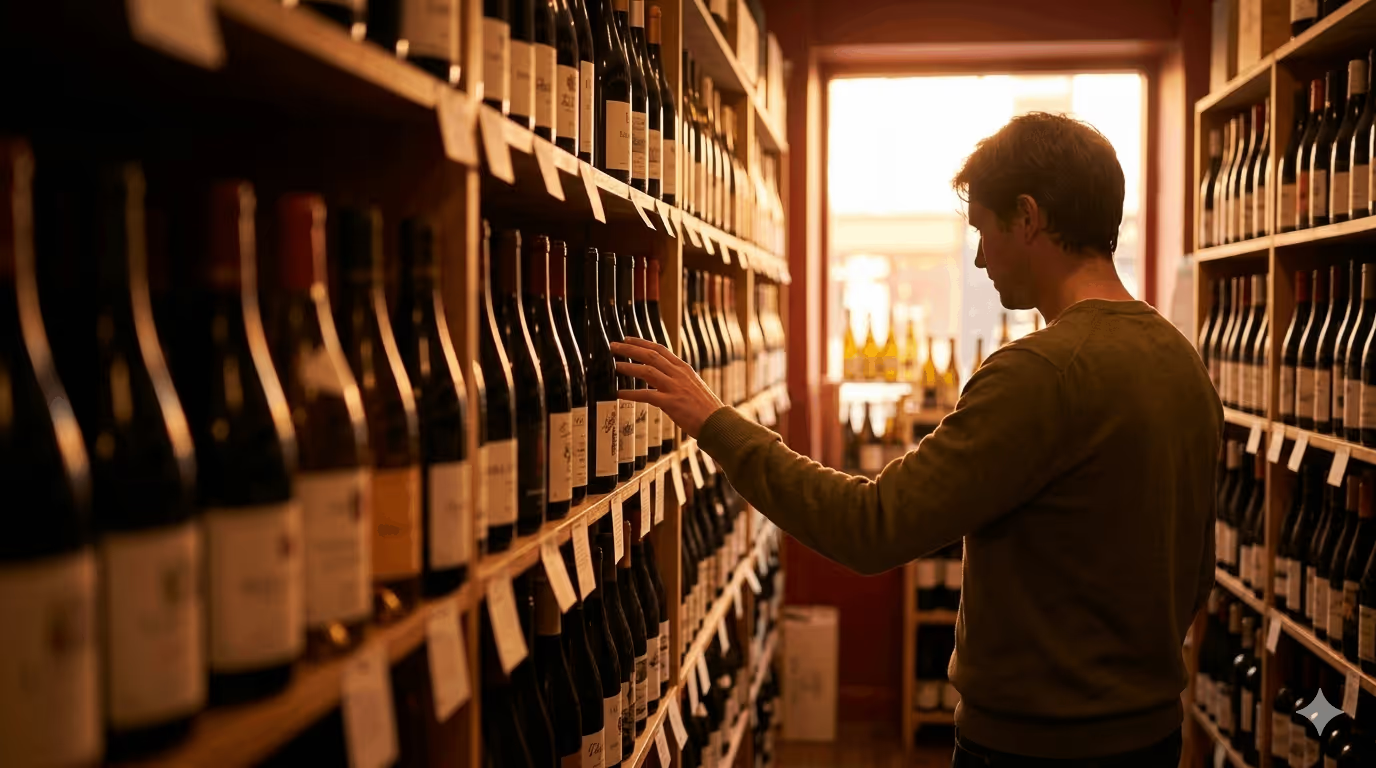
It looks like browsing a wine shop where the one knowledgeable person on the floor is already with three other customers, and you don't want to interrupt.
It looks like being at home on a Wednesday, cooking something new, and wondering what would actually taste good with it.
One podcast host briefly touched on the wine shop version of this problem. A customer photographing a shelf and getting a tailored recommendation in seconds, and it was probably the most interesting sixty seconds of the entire discussion, and they moved on from it too quickly, because that is the moment worth staying with.
Because in the grocery aisle, there is no sommelier to displace. In the wine shop when the one staff member is tied up, you're already alone with the shelves. At home on a Wednesday, the choice is AI or Google or just grabbing whatever you've had before. In the casual restaurant, your server's wine knowledge and yours are probably about equal.
This is where most wine decisions actually get made, and it is not at Per Se. It happens on a Tuesday night, in the $15 to $25 section of a store, trying to figure out what pairs with whatever's in the pan.
Why does "access vs. displacement" change the whole conversation?
The "AI replacing sommeliers" framing carries ethical weight that the alternative framing of "AI filling a vacuum where no sommelier exists" simply doesn't.
Displacement is a legitimate concern wherever a human expert currently holds the role. If a restaurant swaps a working sommelier for an iPad with a chatbot, that's a real job loss with real consequences. The podcast hosts were right to take that seriously.
But when there is no sommelier, there is no displacement. There's only the question of whether a customer gets any guidance at all. Whether they order wine they'll actually enjoy, or fall back on whatever they recognize. Whether they discover something they wouldn't have found on their own, or play it safe because the alternative felt like too much of a gamble without any help.
AI wine tools built for that context aren't a threat to wine professionals. They're an extension of what wine professionals have always tried to do: get more people drinking wine they love.
That's a much easier ethical position. And it turns out it's also a much larger market.
Who is Sommy actually built for?
Not the table at a restaurant with a master sommelier on staff and 800 bottles in the cellar. That guest already has more expertise available to them than they know what to do with.
Sommy is for the person in the Trader Joe's wine section who just wants to know which bottle will be good with the pasta they're making tonight. It's for the couple at a neighborhood restaurant whose server can describe exactly two wines on the list. It's for the curious drinker who keeps hearing about natural wine but doesn't know where to start and doesn't want to feel like they're behind.
Sommy builds your Palate Profile over time, learning what you actually enjoy, not what you've been told you're supposed to enjoy, so that every recommendation sharpens with use. Scan a shelf, describe a meal, set a budget, and you get a specific bottle to buy with context you can actually use, rather than tasting notes written for someone with a certified palate. It tells you what the wine tastes like, why it fits what you are doing, and what to expect when you open it.
It's what a knowledgeable friend would tell you over text. Understanding how Sommy's AI taste profiles work explains why the recommendations get better the more you use it. It isn't a generic wine database or crowd-sourced data from people with no connection to your preferences.
It's a picture of your specific palate.
We're in private testing right now. But we're building specifically because this gap exists, and it's enormous, and it's mostly going undiscussed, because the people having the loudest conversation about AI in wine are mostly eating somewhere that already has a sommelier.
Frequently Asked Questions
Is Sommy trying to replace human sommeliers?
No, and that is not what Sommy is for. It is built for wine moments where no sommelier is present: grocery stores, wine shops, casual restaurants, and home kitchens. In settings where expert wine service already exists, that human expertise is genuinely hard to replicate, and worth engaging with. If you want to understand what makes a great sommelier valuable, this post on what sommeliers actually do is a good starting point. Sommy is for the far larger share of wine decisions that happen without any professional guidance available.
How is an AI wine recommendation different from just Googling a wine?
Search gives you whatever the internet has indexed about a specific bottle, a mix of critic scores, retailer copy, and crowd reviews that weren't written with you in mind. Sommy builds a picture of your specific palate and filters every recommendation through that lens. The question isn't "is this wine good?" It's "is this wine right for you, right now, for this meal?"
Does Sommy work at restaurants, or only at home and in shops?
Sommy works anywhere you're making a wine decision. A restaurant list, a shop shelf, a friend's wine rack, your own collection. The setting changes but the experience is consistent: a recommendation shaped by your taste and the situation at hand. If you want to see how it fits into a full week of meals, this 14-day wine discovery plan is a good example of Sommy in everyday use.
What if I actually want to talk to a sommelier instead of using an app?
Sommy isn't trying to talk you out of it. If you're at a restaurant with someone who knows the list deeply and genuinely wants to help you find something unexpected, that's one of the best experiences wine offers, so use it and enjoy it. Sommy is for when that option isn't available, which, for most people, is most of the time. However, when the restaurant server brings you the selected bottle, I do suggest that you take 30 seconds to capture your experience into Sommy with that particular wine (and pairing too if you like). Doing so will help evolve Sommy's understanding of what works for you, and it will be in a better position to assist your next wine choice.
When will Sommy be available publicly?
We're currently in private testing, so head to sommy.ai to get on the early access list.
The podcast got one thing exactly right: the conversation about AI in wine is worth having now. Investment in wine tech is accelerating, the tools are getting sharper, and people are already using them tableside, whether the industry is ready or not.
What the conversation is still figuring out is which wine moment AI was actually built for. The sommelier at a fine dining restaurant has a job worth protecting. But the person standing in a grocery aisle at 6:30pm on a weeknight, trying to figure out what to open with dinner? They just need a good recommendation, and right now, there's no one there to give them one.
That's who we built Sommy for.