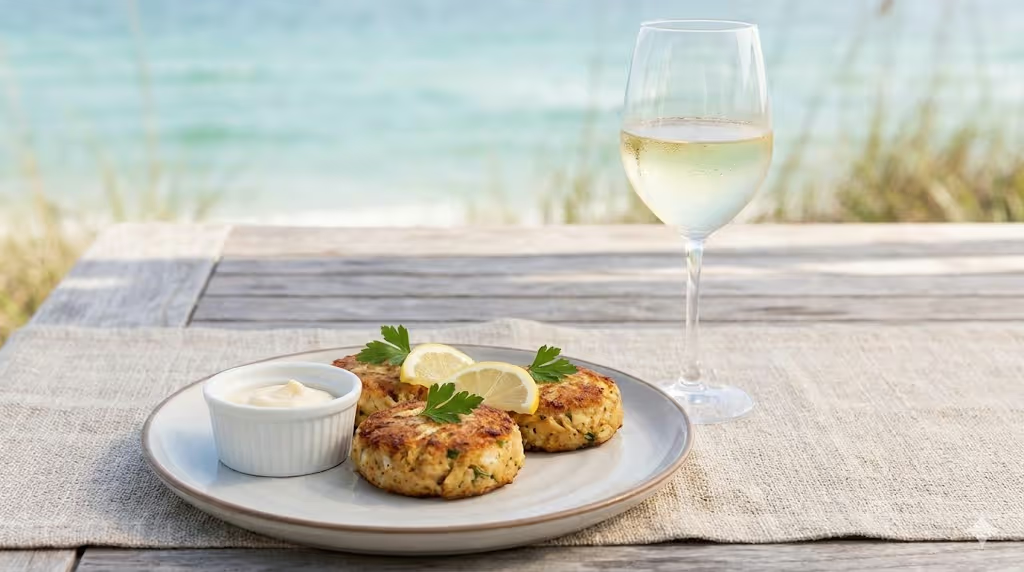

The best wine for crab cakes is a brut sparkling wine or a crisp, unoaked white, then adjusted for the sauce. Bubbles and bright acidity cut through the fried crust and keep the sweet crab tasting sweet. Pour off-dry Riesling or Gruner Veltliner with Old Bay, Sauvignon Blanc or Albarino with lemon aioli, and dry rose or a chilled light Pinot Noir with remoulade.
Crab cakes feel easy until the wine list arrives. One minute you're looking at golden, crispy seafood, the next there are twenty bottles and a server waiting for an answer. You don't need the perfect white wine here. You need one that stays fresh next to fried edges, sweet crab, and whatever sauce you're dunking into.
How do you choose wine for crab cakes without overthinking it?
Pick a wine that's bright, light on its feet, and comfortable with salt, and you'll be right most of the time. A crab cake tastes like two things at once: delicate sweet crab and a toasty fried coating. The sauce then works like a dimmer switch, swinging the whole dish spicy, lemony, or tangy depending on what's in the ramekin.

Texture is where you start, because a crispy crab cake wants high acidity or bubbles, because both scrub the fat off your palate between bites. The sauce comes second, and it matters more than the crab itself. Old Bay and remoulade pull you toward fruit or rose, while lemon aioli pulls you toward citrusy whites.
There are two things worth sidestepping here. Heavy vanilla-oak whites flatten crab, so a big buttery Chardonnay is the classic mistake at this table. High alcohol is the other one, because it turns the salt and the paprika warmth into heat on your tongue. Anything at or under about 13 percent stays out of trouble.
If wine words trip you up, the shortcut is short. Crisp means it won't feel heavy, citrus means it'll echo the lemon you're already squeezing, and minerally usually means it gets along with seafood. That's the whole vocabulary you need for this dish.
What is the best wine for classic crab cakes?
Brut sparkling wine is the safest great answer for a classic crab cake, whether that's Champagne, Cremant, Cava, Prosecco, or a good American sparkler. The carbonation cuts the fried crust and resets your palate after every bite, which is exactly what a rich, salty, hand-formed cake needs. On a menu, look for the word Brut and order it by the glass if you can, since it's also the least risky bottle when other people at the table ordered fries or something creamy.
If bubbles aren't your thing, a crisp dry white is the next lane. Sauvignon Blanc gives you bright citrus and is stocked everywhere. Albarino and Muscadet both bring a clean, saline quality that suits shellfish, and Albarino in particular has enough body to stand up to the fried coating without smothering the crab. Chablis is the rounder option, and it's worth knowing that Chablis is Chardonnay, just made without the oak that causes the problem above.
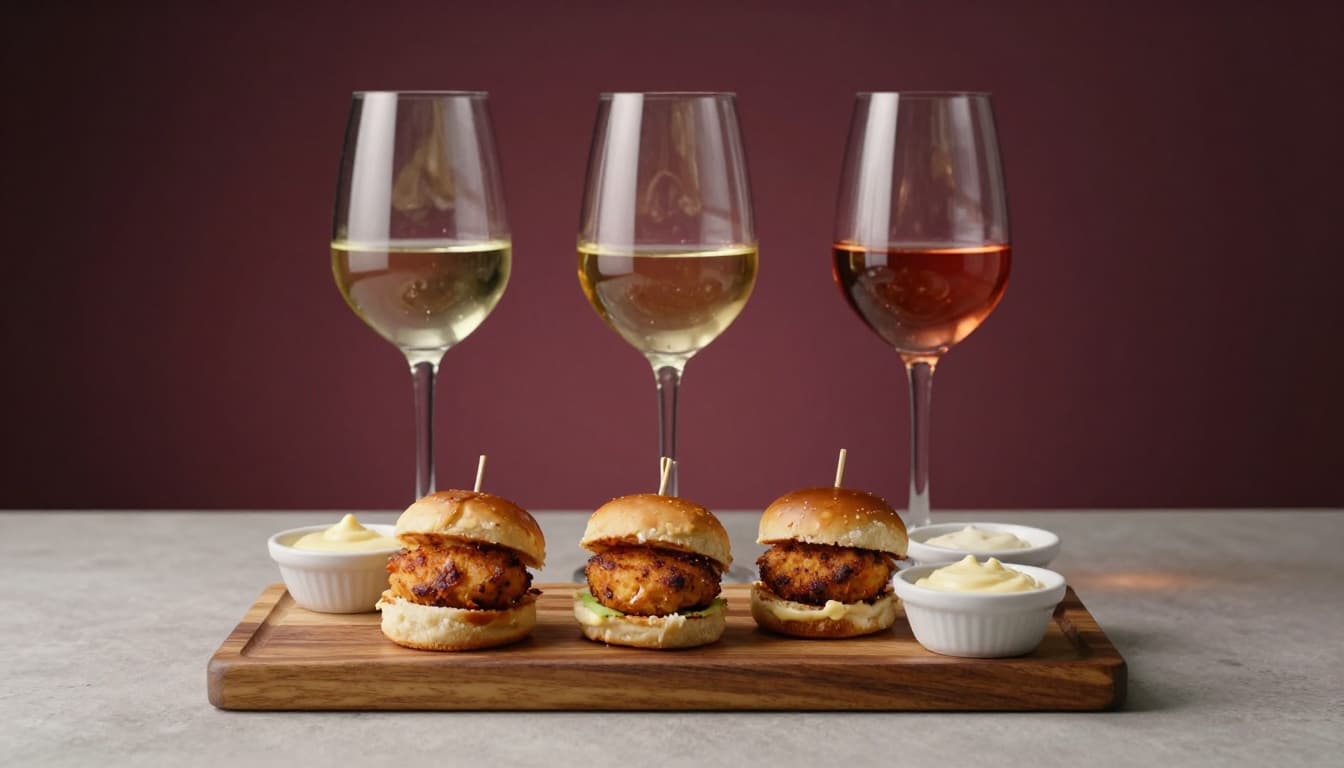
These are recommendations rather than rules. Crab cakes vary enormously, from a Maryland-style cake that's almost all lump meat with barely enough binder to hold it together, to a restaurant version carrying more filler, more breadcrumb, and a heavier fry. The more filler and crust in the cake, the more you want bubbles or sharp acidity. The more it's just sweet crab meat, the more a gentler white like Albarino or Chablis gets to shine.
How does the sauce change the wine pairing?
The sauce moves the pairing further than the crab does, so match the dip rather than the protein. Each of the three sauces you'll actually meet pulls in a different direction, and once you know which one is on the plate the choice gets easy.
Crab cakes with Old Bay seasoning
Old Bay brings salt, paprika warmth, and often a little heat, and a bone-dry wine can taste sharp against it. An off-dry Riesling works because that touch of sweetness cushions the spice while the acidity keeps everything fresh. If you'd rather stay dry, Gruner Veltliner is a natural friend to salty food, crisp and faintly peppery without being heavy. The instinct to fight the seasoning with something austere is the one to resist.
Crab cakes with lemon aioli
Lemon aioli is rich but reads clean because of the citrus, so match that energy with a white that tastes like a fresh squeeze. Sauvignon Blanc is the simplest call, and Sancerre is the same grape grown in the Loire, where it turns flintier and a little less overtly grassy. Chenin Blanc is the other good answer for creamy sauces, since it carries enough acidity to cut the mayonnaise while its texture keeps pace with it. If you are torn between the two, our comparison puts Chenin Blanc and Sauvignon Blanc side by side on sweetness and acidity.
Crab cakes with remoulade sauce
Remoulade runs mustardy, pickle-bright, and sometimes faintly sweet, so it wants a wine that handles tang and still tastes juicy. A dry rose is the flexible pick and gets along with the herbs. If you want red, keep it light and cool it down, which brings us to the question people ask most often about this dish.
Can you drink red wine with crab cakes?
Yes, as long as the red is light, low in tannin, and served cool. Tannin is the problem with red wine and shellfish, because it collides with the sweet crab and can leave a metallic edge. A chilled light Pinot Noir at around 55 degrees Fahrenheit works well with a remoulade cake, and Gamay from Beaujolais does the same job with even less grip. Put either in the fridge for about twenty minutes before pouring.
What doesn't work is a big Cabernet, a Malbec, or anything oaky and structured. That's not snobbery about mixing red wine and seafood, it's the tannin. Pick a red with soft edges and you can have the pairing you actually want.
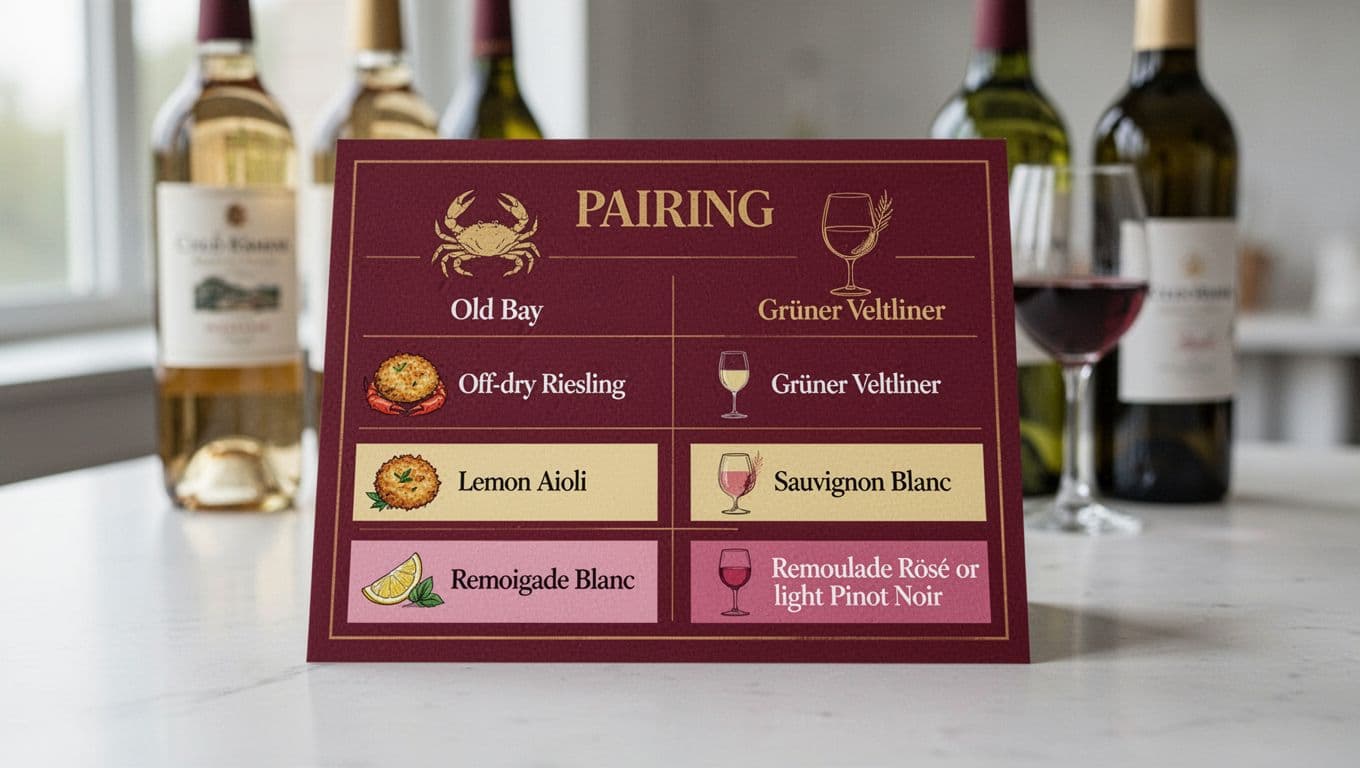
The three sauces line up like this:
| Sauce on the plate | What it tastes like | Pour this |
|---|---|---|
| Old Bay | salty, paprika warmth, a little heat | Off-dry Riesling or Gruner Veltliner |
| Lemon aioli | creamy, bright, lemony | Sauvignon Blanc, Sancerre, or Albarino |
| Remoulade | tangy, herby, sometimes sweet | Dry rose or chilled light Pinot Noir |
| No sauce, just lemon | sweet crab and fried crust | Brut sparkling or Chablis |
How do you order or buy the bottle without fuss?
Give the server the sauce and a price, and let them do the work. Something like "we're having the crab cakes with remoulade, could you point me to a dry rose or a light red around $60 a bottle" gives them a clear target and gets you a better answer than pointing at a name you can't pronounce. Naming the sauce is the part most people skip, and it's the part that matters.
In a store, shop by the job rather than the brand. The words worth looking for on a shelf tag are Brut, Sauvignon Blanc, Albarino, Rose, Riesling, and Gruner Veltliner, and any of them under about $20 will do the dish justice. Grab the most recent vintage you can see, because every wine on that list is made to be drunk young and fresh. Keep it properly cold, colder than you think, since a crisp white served lukewarm loses the exact quality you bought it for.
A general recommendation can only take you so far, because it doesn't know whether you find Sauvignon Blanc refreshing or aggressive. That's the gap Sommy closes: scan the shelf tag or the wine list, and Find Similar starts from a bottle you already liked rather than from an average.
Frequently asked questions
What wine is best with crab?
Crisp, unoaked white wine and brut sparkling are best with crab in almost every preparation. Sweet crab meat is delicate, so acidity and bubbles flatter it while oak and tannin bury it. Sauvignon Blanc, Albarino, Muscadet, Chablis, and dry Riesling are the reliable whites, and a brut sparkling wine is the safest single answer when several dishes are on the table.
What wine pairs well with king crab?
King crab is usually served with drawn butter, so it takes a slightly richer white than a crab cake does. Chablis or a lightly oaked white Burgundy handles the butter without overwhelming the meat, and Champagne works for the same reason it works with crab cakes, cutting the fat while keeping the sweetness intact. Skip the heavily oaked Chardonnay, which competes with the butter rather than balancing it.
What is traditionally served with crab cakes?
Crab cakes are traditionally served with lemon wedges and a sauce, most often tartar, remoulade, or a lemon aioli, alongside coleslaw, corn on the cob, roasted potatoes, or a simple green salad. In Maryland they often arrive with saltines and Old Bay rather than a sauce at all. Those sides matter less to the wine than the sauce does, though a vinegary slaw nudges you toward a wine with plenty of acidity of its own.
What is the secret to the best crab cake?
The secret is using as little binder as possible so the crab stays in large, sweet lumps. Good crab cakes use jumbo lump meat, just enough egg, mayonnaise, and cracker or breadcrumb to hold the shape, and a rest in the fridge before cooking so they don't fall apart. That matters for the wine too, because a cake that's mostly crab suits a gentler white like Albarino, while a heavily breaded, deep-fried one really wants bubbles.
What white wine goes with crab cakes if I don't like Sauvignon Blanc?
Albarino is the best substitute, with the same freshness but rounder and without the grassy, green note some people dislike in Sauvignon Blanc. Muscadet is the leanest alternative, Pinot Grigio the most neutral, and dry Riesling the most aromatic. Any of them beats a buttery Chardonnay for this dish.
Should crab cake wine be served very cold?
Serve whites and sparkling at about 45 to 50 degrees Fahrenheit, and a light red at around 55. Too cold and you mute the wine's aromatics, too warm and the alcohol starts to feel hot next to the salt and the Old Bay. Twenty minutes in the fridge is enough for a red, and about two hours for a white you're taking from room temperature.
Pouring with confidence next time
The best wine for crab cakes doesn't need to be a perfect match, it needs to stay bright next to crispy, salty, saucy bites. Default to brut sparkling, then adjust for the sauce: off-dry Riesling for Old Bay, Sauvignon Blanc for lemon aioli, dry rose for remoulade. Keep it cold, keep it unoaked, and if you want to go further, our guides to wine for oysters and wine pairing with shrimp run the same logic across the rest of the shellfish counter.