To order wine by glass with confidence, you only need three things: the style you like, a price range, and one clear question for the server. That's it. No regions to memorize, no fear of "choosing wrong," no pretending you taste "wet stone."
Think of it like ordering coffee. You don't need to study beans, you just say "iced, not sweet, medium." Wine can work the same way, with a few simple swaps in language.
Below is a calm, practical wine guide you can use tonight, even if you've never remembered a bottle name in your life.
Start with your style, not the grape
Most people get stuck because they start at the hardest place: grape names. Instead, start with how you want the wine to feel. This is the heart of how to choose wine without stress, and it leads to better wine recommendations than guessing "Pinot" because it sounds safe.
Use three sliders:
- Fresh vs. cozy (crisp and zippy, or smooth and round)
- Light vs. bold (easy-drinking, or rich and heavy)
- Totally dry vs. a little fruity (not sweet, or slightly soft)
If you can describe a drink you already like, you're done. "Crisp like a cold lager" or "cozy like hot tea" counts as wine explained simply.
Here are phrases that reliably get you clear wine recommendations by the glass:
This is also a modern wine guide rule: your taste matters more than the "right" label. When you keep it simple, servers can actually help. That's friendly wine advice in action.
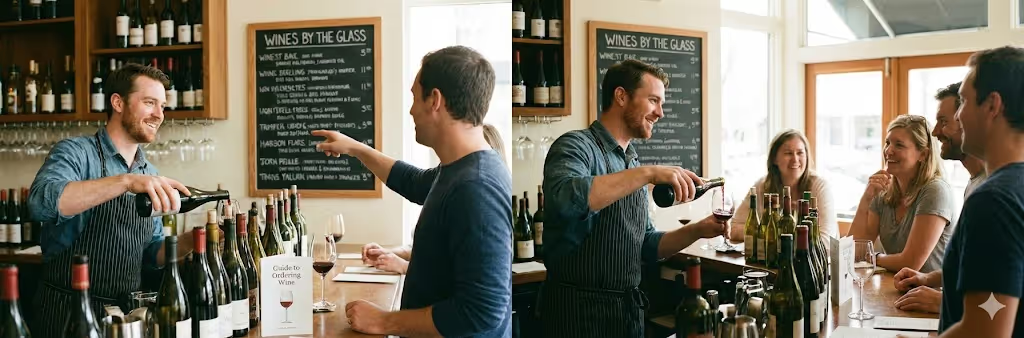
Read the by-the-glass list like a menu

A by-the-glass list looks shorter than the bottle list, but it has its own traps. The goal isn't to "decode everything," it's to spot the two details that protect you from disappointment: pour size and freshness.
First, scan for pour size (often 5 oz, sometimes 6 oz). A bigger pour isn't always a better deal, but it changes the value. If you're deciding between glasses and a bottle, this quick explainer on when a bottle is cheaper than glasses can help you do the math without turning dinner into homework.
Next, look at the tiny description, if there is one. This is where wine tasting notes explained matters. Treat tasting notes like a movie trailer: it's not the whole story, but it tells you the vibe.
- "Citrus," "green apple," "mineral" often signals crisp.
- "Vanilla," "toast," "buttery" often signals richer and softer.
- "Cherry," "raspberry" often signals lighter reds.
- "Blackberry," "cocoa," "spice" often signals bolder reds.
Finally, use a few wine list tips that keep things simple:
- Choose the list section that fits your mood first (white, red, rosé, sparkling).
- If the list shows vintage, newer often tastes brighter for many whites.
- If the list looks vague, ask one question (you'll get a better answer than guessing).
If you want extra help reading restaurant layouts fast, this guide to reading restaurant wine lists is a good companion to keep you calm at the table.
What to say to the server (a script that works)

The easiest way to order is a short, clear request.
Servers aren't waiting for you to say the "correct" wine words. They're waiting for usable clues. Your job is to give them a clean target.
Here's the simplest script I know. It works at casual spots and fancy ones, because it respects everyone's time.
"I like (light and crisp OR smooth and medium). I'm eating (your dish). I'd like to stay around ($X). Do you have something like that by the glass, and can I taste a small splash?"
That's the whole move. It's one of the best restaurant wine tips because it gets you a real answer fast.
Two small upgrades make it even better:
- Ask about freshness, without sounding intense.
Try: "Has this been open long?" It's a normal question, especially for whites and sparkling. If you want more context on how restaurants handle by-the-glass programs, this by-the-glass value Q&A is useful. - Match the wine to the food with one plain-language rule.
Use this quick wine pairing guide idea: light food with lighter wine, rich food with richer wine. For spicy food, ask for something that's "not super dry." For fried or salty food, dry bubbles often feel like a reset button.
If you want more simple wine tips for speaking up at the table, this Sommy post on confident restaurant wine selection keeps the language human and the pressure low.
One last thing: if the red arrives warm, you can ask for a quick chill. That's not picky, it's practical.
When you want help in the moment, use an AI wine assistant
Sometimes you do everything "right" and still feel stuck. The list is weird, the server is busy, and you don't want to gamble. That's exactly when an AI wine assistant helps, not by teaching theory, but by making a call with you.
Sommy is built for this moment. You can scan a menu or shelf and get smart wine recommendations that fit your taste, budget, and meal. Over time, it learns what you actually enjoy, which leads to personalized wine picks instead of generic advice.
This is where "in-the-moment" tools beat memory. You don't need to recall a region. You just need wine app suggestions that translate your words into a short list: smart wine picks, personalized wine recommendations, and simple wine explanations you can act on quickly.
It's also useful outside restaurants. The same approach that helps you order a glass can guide grocery store wine picks when you're staring at a wall of bottles after work.
If you want a practical example of this workflow, see how to read wine lists in 5 minutes. And if you want broader perspective on ordering out, Food & Wine's expert ordering tips are a helpful reality check.
Single next step: if you're tired of guessing, try everyday wine advice that starts with your taste, whether that's Sommy at https://www.sommy.ai or a simple note in your phone.
Conclusion
Ordering wine by the glass doesn't need courage, it needs a tiny plan. Lead with your style, read the list for pour size and freshness, then use a short script that invites help. When you keep it plain, you get better wine recommendations and a calmer night. Next time, aim for one win: a glass you enjoy, ordered without stress.

EntreprEngineur. Runs on lattes. Creates with the intensity of a downhill run. Fast, slightly chaotic, ideally followed by a glass of wine.