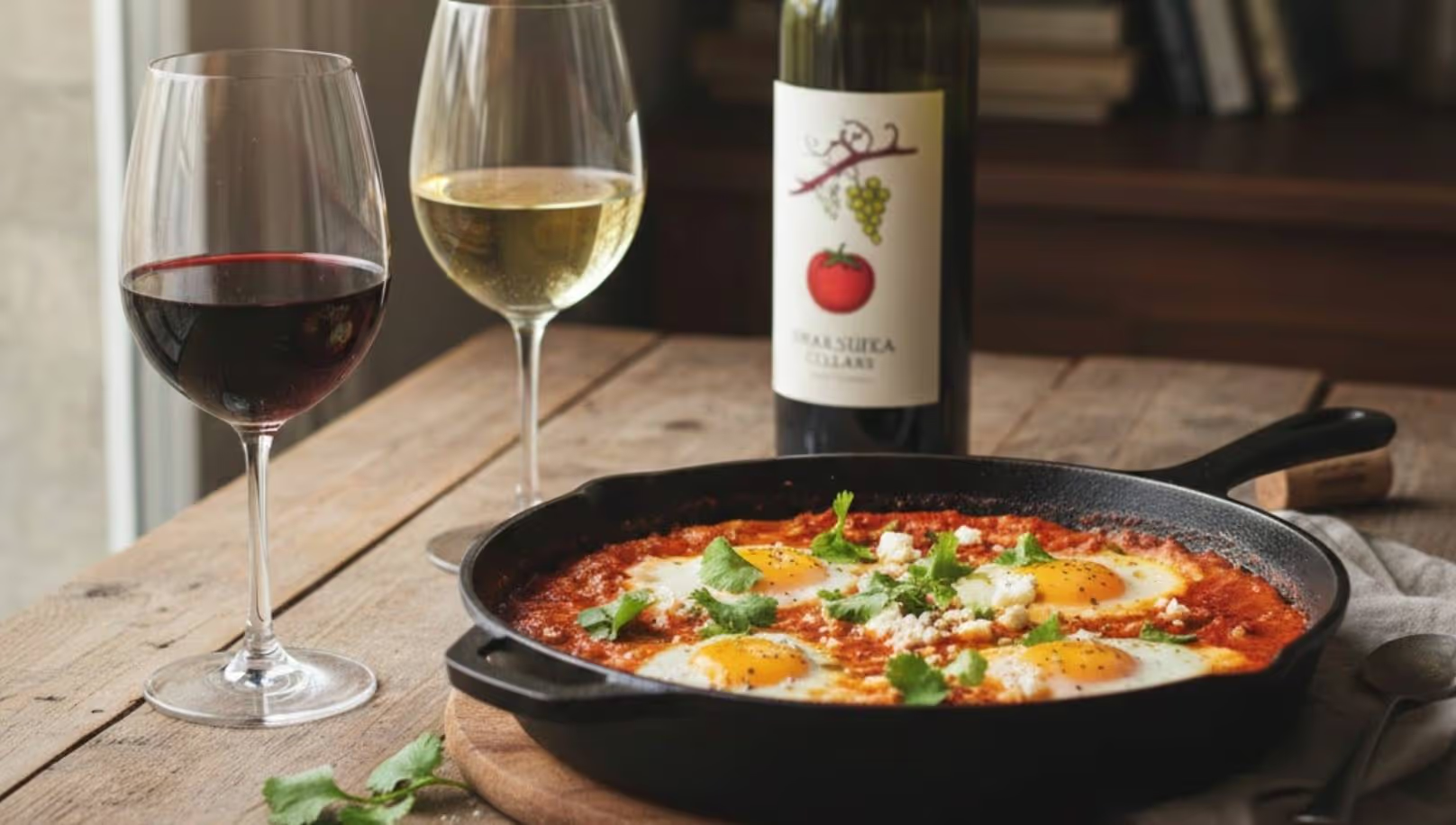
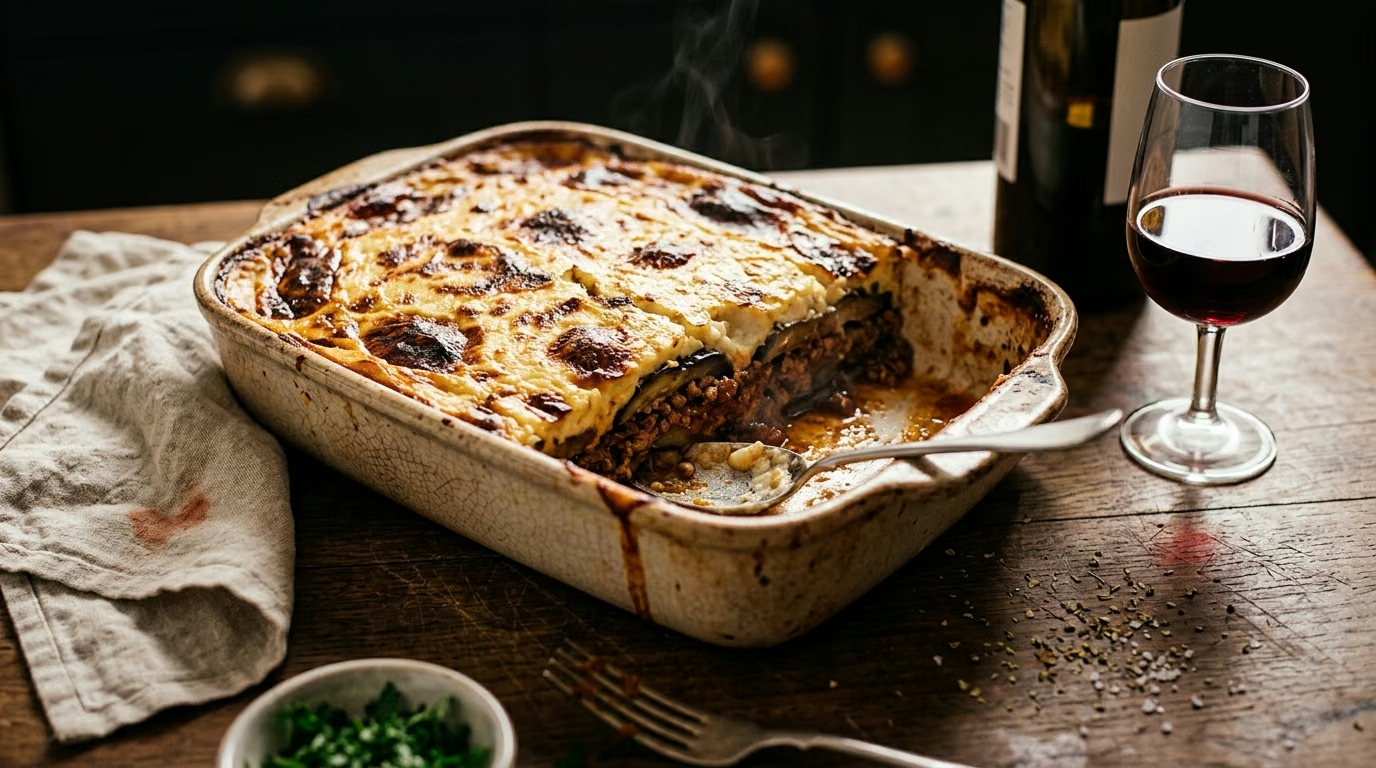

Moussaka can make wine feel harder than it is. The best wine for moussaka is usually a medium-bodied red with fresh acidity and soft tannins. If the dinner is lighter, meatless, or extra creamy, a dry rose or fuller white often works better.
Plenty of wine recommendations sound polished but don't help when dinner is almost ready. A short wine pairing guide does. Match the weight of the dish, then keep the bottle balanced, dry, and not too heavy.
Why medium-bodied reds work so well
Classic moussaka pulls wine in a few directions at once. Eggplant brings earthiness, tomato adds tang, meat adds savoriness, and bechamel adds richness. One giant red can bury the plate, while a sharp white can feel thin.
For that reason, the safest pick is a red with fruit, freshness, and a moderate frame. Agiorgitiko is a strong choice if you see it. So are Sangiovese, Grenache-based blends, Cotes du Rhone, and softer Merlot blends. Pinot Noir can work too, especially when the dish leans more on eggplant than meat.
If you remember one rule, remember this: pick lift over muscle. Good wine for moussaka should clear the palate after each bite, not sit on it like a heavy coat. For the bigger idea behind that, Sommy's guide on matching wine to dish weight makes the rule easy to use with any dinner.
For classic moussaka, a medium-bodied red with good acidity solves most pairing stress. That shape of wine also covers the bakes moussaka is related to, so when the layers on your table are minced lamb under mashed potato instead of eggplant, our guide to wine for shepherd's pie and cottage pie starts from the same medium-bodied reds.
A few styles often miss the mark. Big Cabernet can feel too firm unless the pan is extra meaty and browned. Sweet red blends fight the tomato. Heavy oak can make the creamy top feel dull instead of comforting.
Greek-focused pairing advice often lands in the same place. You don't need wine explained simply because the food is basic. You need it because dinner should feel calm, not like a test.
Match the bottle to the dinner on your table
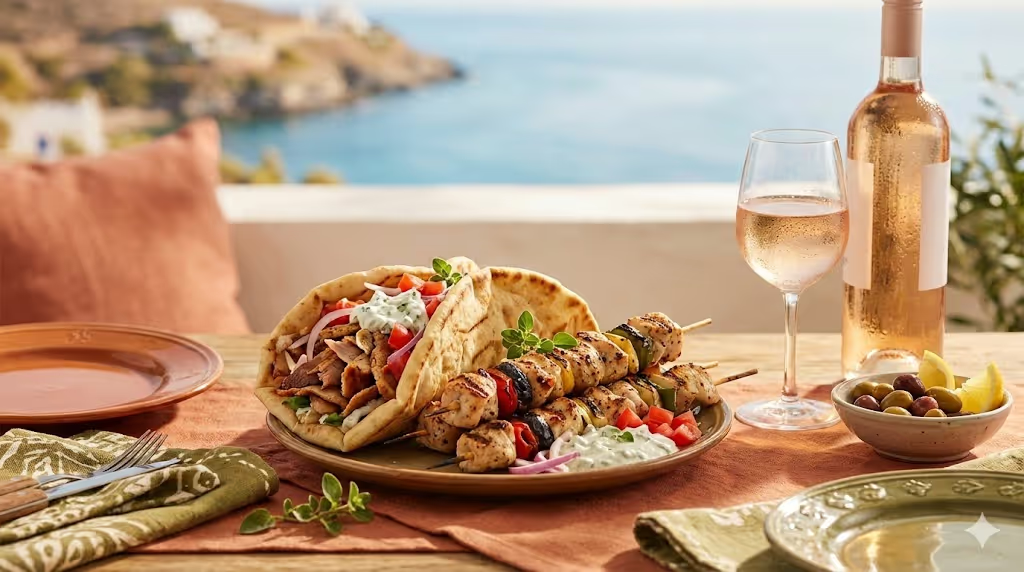
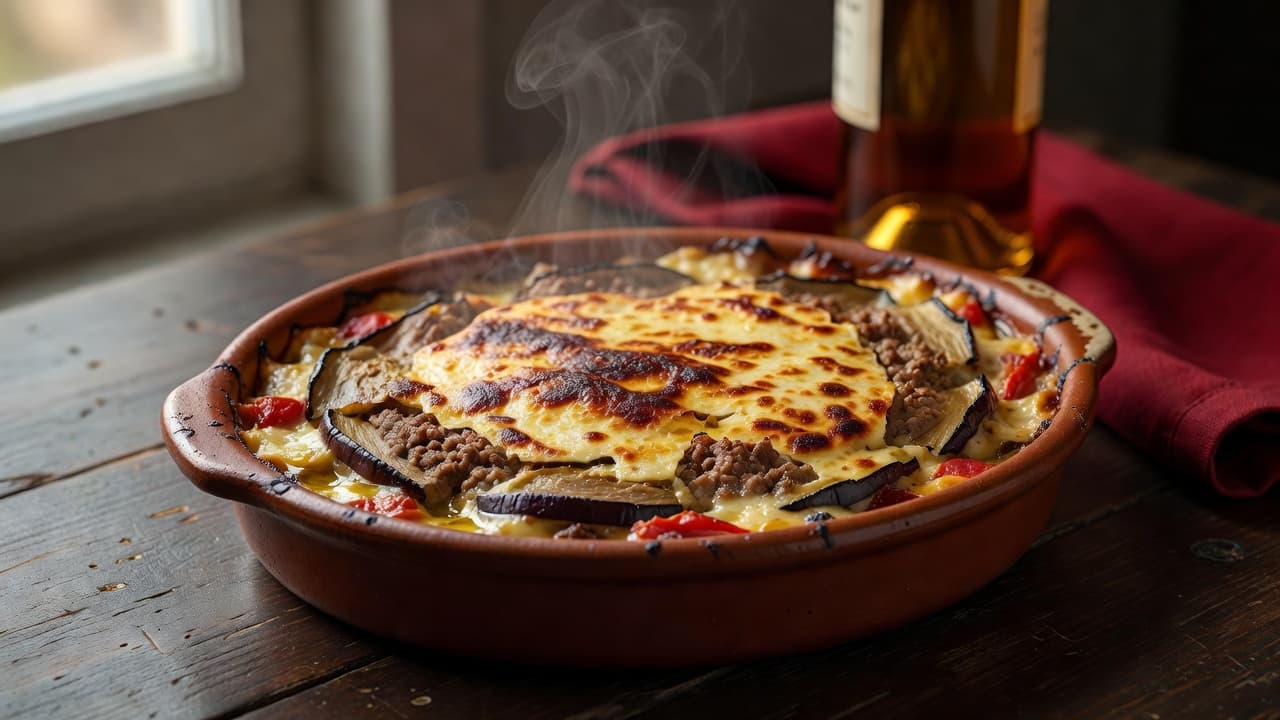
Not every Greek eggplant dinner asks for the same bottle. A lamb-heavy pan needs more depth than a vegetarian bake. Roasted eggplant with tomato and feta has more brightness, so it can handle a fresher red or dry rose. Move from the oven dish to the grill and the balance shifts again, which is what our guide to wine for Greek gyros and souvlaki works through.
A quick chart helps when you want clear wine recommendations without standing in the kitchen overthinking.
| Dinner style | Best wine style | Why it works |
|---|---|---|
| Classic beef or lamb moussaka | Agiorgitiko, Sangiovese, Cotes du Rhone | Enough fruit and freshness for meat, tomato, and bechamel |
| Vegetarian moussaka with lentils or mushrooms | Pinot Noir, dry rose, round Chardonnay | Lighter structure fits the softer texture |
| Eggplant with tomato, herbs, and feta | Barbera, Grenache, dry rose | Bright acidity matches the tomato and salty cheese |
| Creamy eggplant bake | Fuller Chardonnay, oak-aged Greek white, soft red blend | More body stands up to the creamier top layer |
The exact grape matters less than the shape of the wine. Keep it medium in body, dry, and fresh, then move up or down based on meat, cheese, and sauce.
Spice changes the feel of the pairing too. If your moussaka has cinnamon or allspice in the meat, ripe Grenache and juicy Sangiovese usually handle that warmth better than lean, tart reds. If feta, yogurt, or lemony sides are on the table, dry rose often becomes the easiest crowd-pleaser.
White wine isn't a fallback here. For creamy vegetarian pans, a fuller white with some texture can feel perfect because it meets the bechamel without crushing the eggplant.
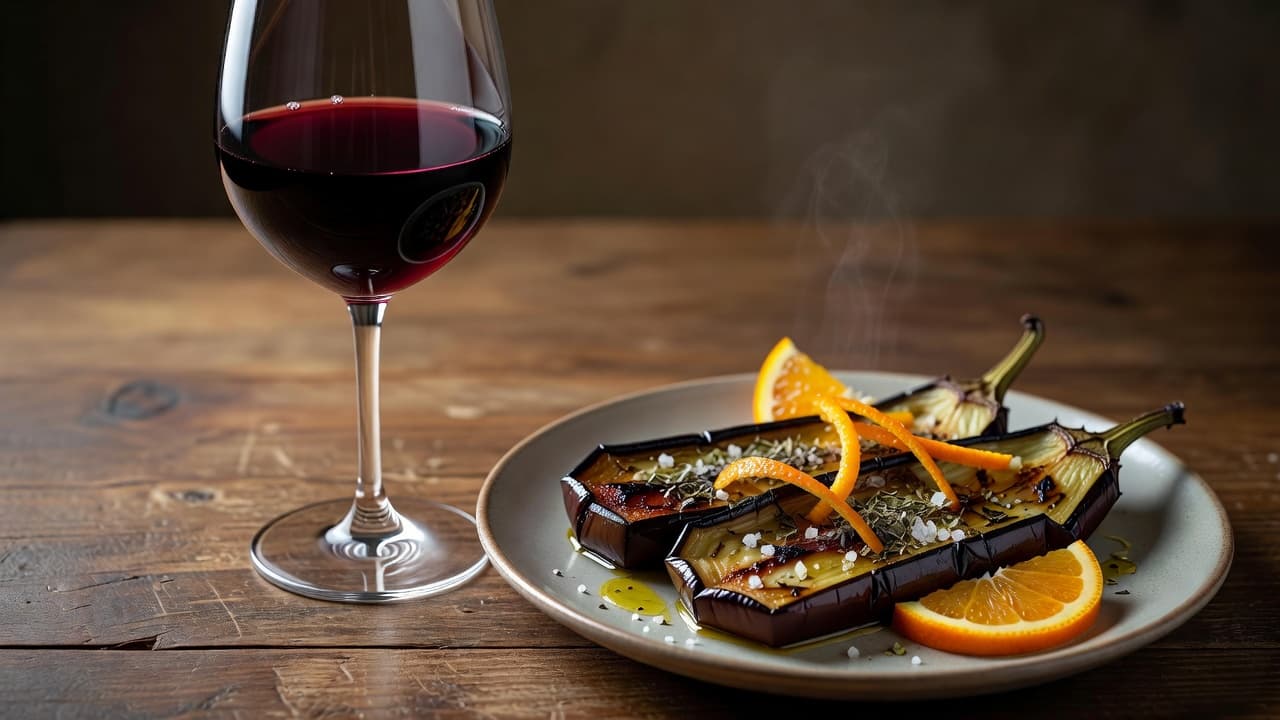
Restaurant wine tips and wine list tips
Restaurant wine tips matter most when the server is waiting and the list feels longer than the menu. When you need to know how to choose wine in that moment, start with the dish, not the grape. Tell the server you want a dry, medium-bodied red for moussaka, or a dry rose if the eggplant dish is lighter.
That one sentence cuts through most lists fast. Good wine list tips are usually plain. Skip the biggest Cabernet. Skip sweet reds. Look for Sangiovese, Pinot Noir, Cotes du Rhone, or a house Greek red if the restaurant cooks Greek food well.
A simple script helps when your brain goes blank: "I'm having the moussaka. I'd love a smooth, dry red around this price." Most servers can work with that. If they offer two options, pick the fresher one over the bigger one.
By the glass is fine if the program looks busy and fresh. Half bottles are even better when you want one smart match and no leftovers. In a Greek restaurant, the house red can be a better fit than the most expensive bottle on the list.
You also don't need wine tasting notes explained like perfume copy. "Cherry, herbs, smooth, fresh" is enough. Those are the simple wine explanations that help at the table. If you still freeze on page three, Sommy's guide on how to choose wine for dinner gives a calm framework you can use in under a minute.
Most restaurant pairings fail because the wine is louder than the meal. Moussaka wants balance. Friendly wine advice beats a performance, and simple wine tips beat jargon every time.
Grocery store wine picks that work
Grocery store wine picks should feel simple, not like homework. In most stores, you can ignore half the aisle. Head toward medium-bodied reds, dry roses, and fuller whites, then match the bottle to dinner.
A few shelf patterns help:
- For classic meat moussaka, reach for Cotes du Rhone, Sangiovese, Agiorgitiko, or a smooth red blend.
- For vegetarian moussaka, pick Pinot Noir, dry rose, or a round Chardonnay.
- For tomato-forward eggplant dishes, choose Barbera, Grenache, or dry rose.
- For creamy eggplant bakes, buy a fuller Chardonnay or an oak-aged Greek white if you spot one.
Price doesn't need to climb. Many solid picks live in the $12 to $25 range. If labels start to blur together, look for words like "dry," "smooth," "fresh," or "medium-bodied." Put back bottles that promise jammy sweetness or heavy mocha oak unless you already know you love that style.
A good wine guide for shopping doesn't need to be long. A modern wine guide should narrow the field fast. Most people don't need wine tasting theory in aisle seven. They need clear wine recommendations and everyday wine advice they can use next to the carts and cereal boxes.

When you want help without a wine lesson
Sometimes the pairing isn't the hard part. The hard part is deciding fast, with a menu in one hand or a store basket on your arm. That's where an AI wine assistant can help.
Sommy is built for that exact moment. It gives personalized wine recommendations based on your taste, your budget, and the meal in front of you. Instead of pushing you into wine school, it offers smart wine recommendations that feel like calm, useful help.
Because the app remembers what you liked, the next choice gets easier. Those personalized wine picks can come from a restaurant list, a store shelf, or a bottle you've scanned before. Good wine app suggestions should reduce second-guessing, and smart wine picks should feel personal, not random.
Wine guide articles still help, but real dinner decisions often happen in real time. That is where a quiet, modern wine guide on your phone can beat a long search result. If you want help choosing wine in the moment, Sommy can turn a long shelf or wine list into a few bottles that fit dinner and feel right to you.
Conclusion
Moussaka feels tricky because the dish is rich, layered, and hard to match by instinct. Still, the answer is usually simple. A medium-bodied red wins with the classic version, while a dry rose or fuller white often shines with lighter or creamier eggplant dinners.
Once you match the bottle to the weight of the food, the stress drops fast. Good pairing is relief, not theory, and that makes dinner taste better before the first sip.