
For wine lovers stuck between Chardonnay vs Viognier, the two most popular full-bodied white wines, here's the calm answer: pick Chardonnay when you want "crisp to creamy" flexibility, and pick Viognier when you want "soft, floral" richness featuring apricot and peach notes with a distinct creamy texture but generally lower acidity than its counterpart. Both can feel full-bodied, but they behave differently with food and on a restaurant list. Most importantly, neither choice is "wrong," you're just choosing a vibe.
This wine guide is built for real moments: scanning a wine list, shopping fast, or trying not to overthink dinner. Expect friendly wine advice, simple wine tips, and wine explained simply, so you can choose quickly and feel good about it.
Chardonnay vs Viognier in one minute (a simple decision)
Think of this as a modern wine guide with simple wine explanations: Chardonnay, hailing from Burgundy France, is a blank canvas, Viognier, originating in the Northern Rhône, is a perfume bottle with fruit inside. One adapts, the other has a signature.
Use this quick framework for how to choose wine without stress:
- Do you want crisp or cozy? Crisp points to Chardonnay (especially unoaked). Cozy points to Viognier (often softer).
- Are you eating something creamy? Both can work, but Chardonnay is the safer bet.
- Is the dish spicy or aromatic? Viognier usually feels smoother and friendlier.
- Do you hate "buttery" flavors? If yes, avoid heavily oaked Chardonnay and lean Viognier or unoaked Chardonnay.
One table makes the choice clearer.
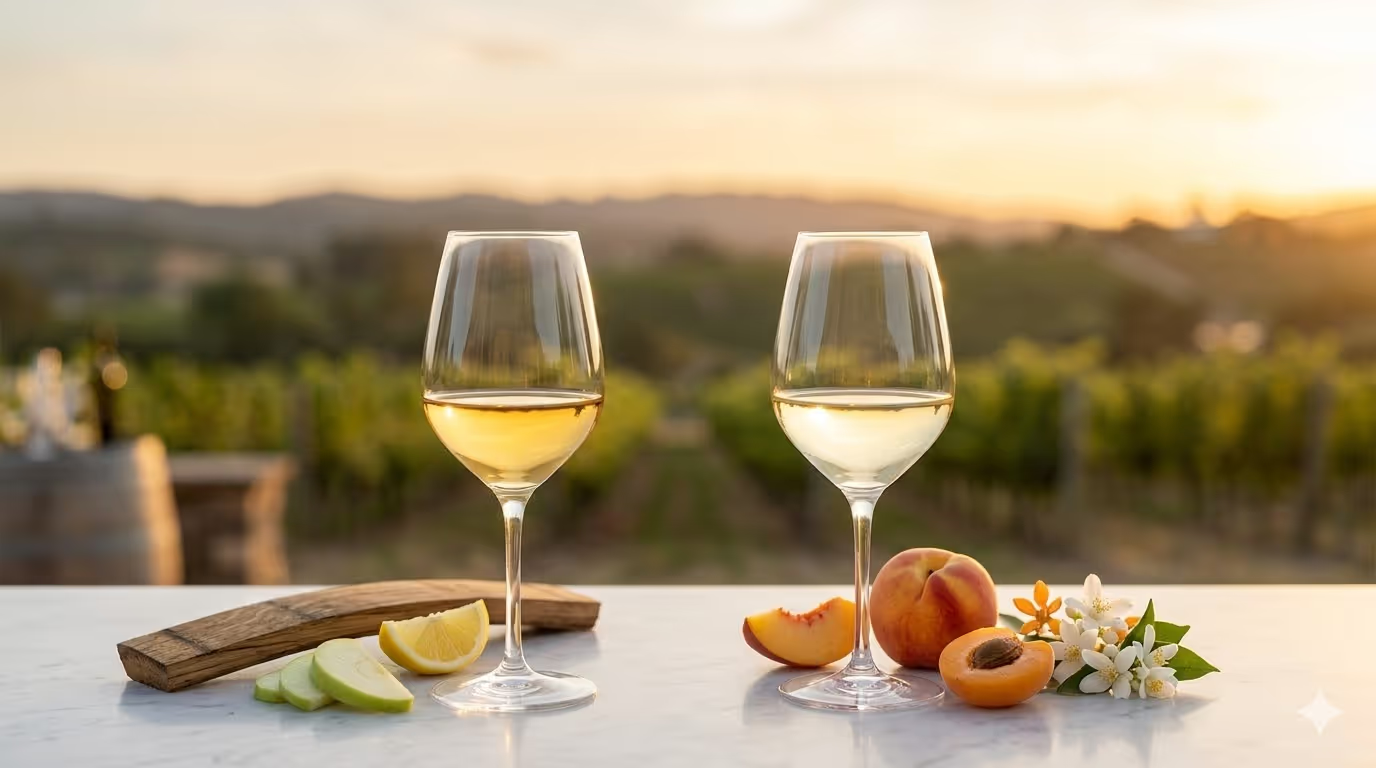
Wine tasting notes explained: if a list says buttery, vanilla, toasted, you're in oaked Chardonnay territory. If it says apricot, honeysuckle, peach, that's classic Viognier energy.
For a quick refresher on how many styles "white wine" can cover, Kendall-Jackson's overview of different types of white wine shows why one grape can taste so different.
What they taste like (so you can picture it)
Chardonnay's flavor profile can be a pressed white shirt or a cozy sweater. That's why it shows up everywhere. In one glass it's bright and citrusy, in another it's creamy and rich.
When Chardonnay goes richer, you might notice flavors that feel like:
- yellow apple, tropical fruit, lemon curd, toasted bread
- vanilla and butter notes from malolactic fermentation, a soft, creamy finish
Meanwhile, Viognier tends to show up like a bowl of ripe stone fruit left on the counter. It's often fragrant with floral aromas and smooth, with flavors that can feel like:
- apricot and peach, pear
- honeysuckle, orange blossom, sometimes a hint of ginger
The biggest everyday difference is the mouthfeel. Chardonnay often has more acidity and lift, which makes your mouth feel refreshed. Viognier usually has less zing and an oily texture, so its mouthfeel can feel round and gentle with stone fruit characteristics, even when it's dry.

Photo by Brett Jordan
If you want a deeper, but still readable, summary of Chardonnay's flavor profile range, this Chardonnay flavors and pairing resource helps connect the dots without turning dinner into homework.
One last stress-saver: you don't need perfect vocabulary. If you can say "I want something creamy but not buttery," you've already done enough.
Pairing, ordering, and buying (real-world shortcuts)
This is where "full-bodied white" stops being a concept and starts being dinner.
A simple food pairing guide for both wines
Chardonnay is often the easiest match when the dish has butter, cream, or roasted flavors, with oaked Chardonnay handling heavier food better than unoaked Chardonnay. Viognier shines when the food is fragrant, lightly spicy, or has a sweet-savory edge.
If you want a broader, practical food pairing method you can reuse with any bottle, Sommy's simple guide to pairing wine with food is a good bookmark.
Here's the quick cheat sheet:
In blind tastings, these two often get confused due to similar weight, though Viognier's apricot and peach notes and floral aromas are a giveaway. Wine Spectator's ABCs of wine and food pairing also backs up the one rule that actually helps in a pinch: match the weight of the wine to the weight of the food.
Restaurant wine tips that don't feel awkward
Use these scripts as wine list tips (they work even if you don't recognize a single label):
- "I'd like a Chardonnay that's not buttery, more fresh."
- "Do you have a Viognier that's dry and aromatic?"
- "We're ordering creamy dishes. What white has enough body?"
- "Something with good acidity, served at the right serving temperature?"
That's it. You're not auditioning. You're ordering a drink.
Grocery store wine picks in 20 seconds
For grocery store wine picks, ignore the fancy copy and hunt for two signals:
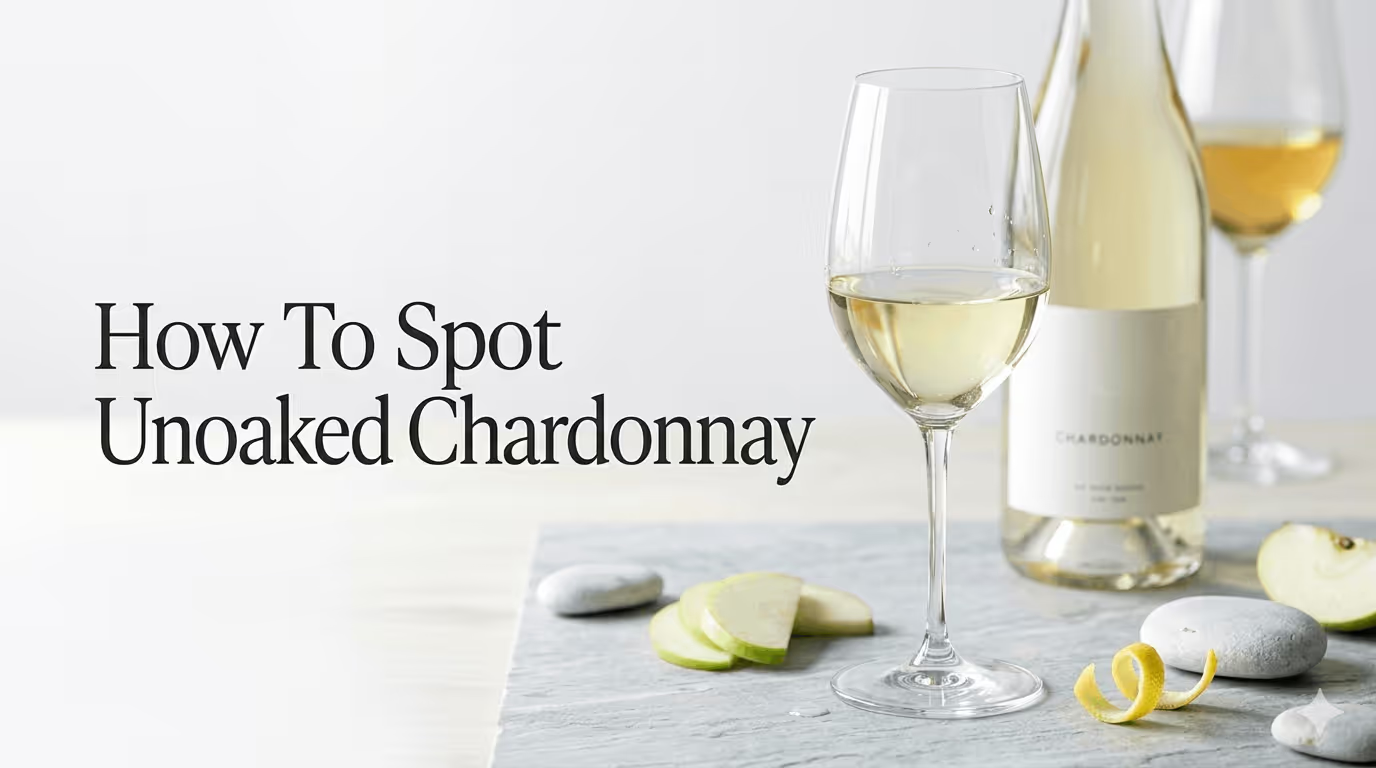
- If it says unoaked or stainless steel, Chardonnay will likely taste brighter.
- If it mentions peach, apricot, floral, you're probably safe with Viognier, which has a Syrah pedigree from the Rhone.
Look for Condrieu for classic Viognier or California Central Coast for bolder styles. Even a dry wine like Viognier can feel sweet due to its aromatic profiles and flavor profile rather than residual sugar.
If labels make you freeze up, you're not alone. A beginner chart helps you decide by "feel" instead of facts. Sommy's beginner wine chart is built to reduce that decision anxiety.
This is also exactly where an AI wine assistant earns its keep. Instead of guessing, you can ask for smart wine recommendations based on what you like and what you're eating. That means personalized wine recommendations, personalized wine picks, and clear wine recommendations that fit your budget, whether you need wine app suggestions at a restaurant or wine recommendations in the aisle. In other words, smart wine picks that feel like everyday wine advice, not a lecture.
Final takeaway: pick the vibe, not the "right" answer
In the Chardonnay vs Viognier choice, Chardonnay is your adaptable pick, especially for creamy or roasted foods. Both are premier full-bodied white wines, but Viognier is your softer, aromatic option if you enjoy floral aromas, especially for fragrant or lightly spicy meals. Once you choose the vibe, ordering gets easier, and confidence follows.
If you want help making that call in the moment, this is exactly what Sommy does: quick, calm restaurant wine tips and simple wine tips that turn "I'm not sure" into "I've got this." Try it the next time you're staring at a list: https://www.sommy.ai.